

Water conservation takes center stage at 2025 Colorado Water Congress in Steamboat Springs
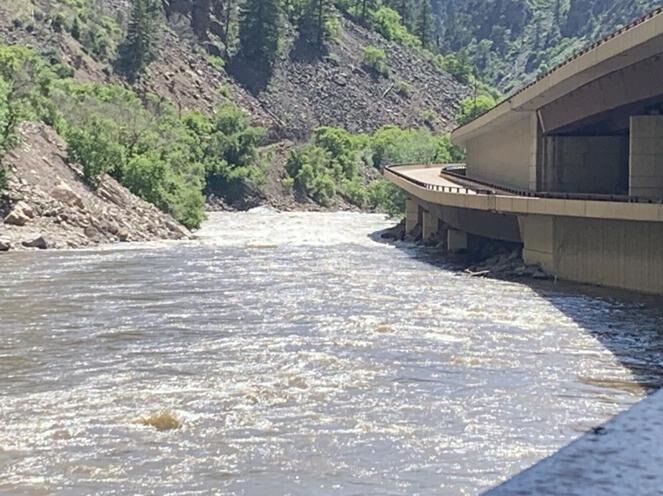
As the Lee Fire tears through more than 137,000 drought-parched acres in northwest Colorado — now the fifth largest wildfire in state history — hundreds of water experts and policymakers gathered just miles away in Steamboat Springs for the 2025 Summer Colorado Water Congress Conference
“It’s a great turnout this year,” said the Water Congress’s membership director, AnnaLee Taylor. “We have a record attendance with over 500 attendees joining us for it this year.”
The Colorado Water Congress provides an avenue for experts to meet and share, as the state confronts water issues.
Kicking off the conference was “Pathways to a Pool: How to Make Voluntary Conservation Add Up,” which, moderated by former Colorado Gov. Bill Ritter, included hydrologists, tribal consultants, western agriculture representatives and conservationists on the panel.
The workshop highlighted voluntary conservation practices being implemented that experts said are achieving measurable results in the Colorado River Basin, including seasonal fallowing, split-season irrigation and crop switching.
“People often ask me when I was in office what things I could have done a better job at, and one of them is water,” said Ritter. He added that with 80% of the basin’s consumptive use going to agriculture, “it’s important to have a plan on conservation where agriculture is concerned.”
Taking the podium first was Dan Waldvogle, program officer for Conscience Bay Research and Western States Ranches, who explained that the state’s water problem stems from the fact that “we never had the water we thought we had at the beginning,” referring to the 1922 Colorado River Compact, which divided the river’s water between the Upper and Lower Basin states and which grossly overestimated the river’s water supply.
This led to allocating more water than was available.
“With the Upper Basin states using 4.5 million acre-feet per year and the Lower Basin states 8.5 million, the math doesn’t add up. We’re one bad or even average year away from disaster,” he said.
Waldvogle added that there is a statistical chance that Lake Powell could hit its minimum power pool threshold as soon as December 2026. The solution, he said, and one currently being touted by water policy makers, is the move toward a supply-driven model. But constituents need to agree on the modeling and how to estimate that flow, including what percentage of water to shepherd past Lee’s Ferry at the Glen Canyon Dam and what happens if that amount falls short, he said.
Waldvogle displayed a quote from Scott Cameron, senior advisor to the Secretary of the Interior: “Having senior water rights does not give you a free pass for what’s happening in the greater community.”
All the Upper Basin states need to get involved, he added, with New Mexico, Utah, and Wyoming all farther ahead in the process than Colorado is in some of these decisions.
Water conservation programs
The first day’s discussions also tackled the biological, economic and social factors to consider when designing such conservation programs, as well as how to sustain the viability of farms, ranches, and rural communities — all while balancing increased water demands.
Saying the state needs to conserve between 2 and 4 million acre-feet of water per year, Seth Mason, principal hydrologist for Lotic Hydrological, presented his case analyzing strategies to measure the effectiveness of various conservation programs and assessing the likelihood of people to participate in them willingly.
One technique is analyzing geographic predictors of conserved consumptive use (CCU), with “most of the state’s agriculture occurring in mid-elevation ranges of between 6,000 and 8,000 feet,” he said.
The higher the elevation, his team found, the less likely ranchers are to conserve water. One of the keys, he said, is changing users’ hearts and minds and shifting attitudes about conservation.
“Attitudes toward conservation are a critical constraint,” he said, adding they create “significant uncertainty in the scaling up of conservation efforts.”
He added that having a unified voice is also essential.
“Until we have a cohesive, collective vision, it’s going to be hard to move the CCU needle,” he said.
Dan Mooney, an assistant professor of agricultural and resource economics at Colorado State University, explained the importance of voluntary irrigation curtailments and how they positively affect CCU.
“They’re potentially a major contributor to a pool, in particular for livestock operations,” he said, adding his team analyzes how shut-off dates affect everything from grazing periods to forage production.
Depending on the type of business, earlier shut-off dates are less profitable for farmers, even factoring in payments, with cut-offs around July 1 more favorable and profitable.
Following a panel of agricultural providers, who echoed that a one-size solution won’t work and that it’s essential to consider the ecological, wildlife and wetland benefits irrigation provides, Ritter, the former governor, added, “There are barriers to conservation that are embedded deeply into agricultural providers.”
Other presentations included “Forging a Path Forward for Urban/Ag Water Sharing in the Arkansas River Basin,” which was moderated by Agricultural Water Planning Specialist Nora Flynn. On the panel are Colorado Water Conservation Board members.
Moderated by Colorado Attorney General Phil Weiser, the panel featured public interest attorneys representing Colorado in interstate water law.
Meanwhile, Denver Water CEO Alan Salazar moderated a panel discussion on “Conserving Water on the Domestic Side,” sharing how Colorado communities large and small are working to conserve water, make it available for economic development and keep rates affordable.

Colorado farmers begin spring planting season with soaring fertilizer costs and price-gouging fears
Marianne Goodland
marianne.goodland@coloradopolitics.com
Updated 1 week ago
As Colorado farmers prepare their fields for spring planting, many are sounding the alarm over fertilizer prices that have surged far beyond what they say global supply disruptions can explain. With nitrogen costs up 30% in a matter of days,...
Farmworker overtime bill advances after lengthy debate in Colorado Senate
Marianne Goodland
marianne.goodland@coloradopolitics.com
Updated 2 weeks ago
The Colorado Senate on Tuesday narrowly advanced a bill to raise the overtime threshold for agricultural workers, defeating more than a dozen amendments from its leading opponent aimed at rewriting the measure. As introduced, Senate Bill 121 would raise the threshold for...

Colorado Agriculture Day: A feast for the ears, eyes and stomachs
Marianne Goodland
marianne.goodland@coloradopolitics.com
Updated 2 weeks ago
Gov. Jared Polis, legislators and friends of agriculture gathered at the state Capitol on Tuesday to celebrate Colorado Agriculture Day. The annual recognition of the contributions of Colorado farmers, ranchers and agribusiness drew hundreds to the Capitol’s west foyer, where...
Colorado Senate committee advances bill increasing overtime threshold for farmworkers
Marianne Goodland
marianne.goodland@coloradopolitics.com
Updated 2 weeks ago
The struggle to balance farmworker protections with the survival of Colorado’s family farms took center stage Thursday as senators debated two competing overtime bills. The Senate Business, Labor and Technology Committee held a rare double-bill hearing that led to a...

Department of Agriculture warns of packages holding potentially invasive seeds
Michael Braithwaite
michael.braithwaite@gazette.com
Updated 3 weeks ago
Spring planting is around the corner, and the Colorado Department of Agriculture wants residents to know where their seeds are coming from. Officials with the department warned Tuesday that they received reports of unsolicited packages containing plant seeds mailed internationally...
More than 20 Colorado counties receive grants to improve land record-keeping systems
Maren Prince
maren.prince@denvergazette.com
Updated 1 month ago
More than 20 Colorado counties received a total of $2.5 million to improve their land record-keeping systems, according to a Monday news release. The State’s Electronic Recording Technology Board awarded 22 counties with grants ranging from $5,000 to $350,000, according...
JBS strike could trip up Greeley’s economic surge
Hap Fry, Special to The Gazette
hap-fry@gazette.com
Updated 2 months ago
GREELEY – The upward trajectory of Greeley has been hard to match by other Colorado communities in the here and now. The city is on the verge of experiencing dramatic growth and change. Greeley is in the midst of developing a...
A fight over seeds and bees: Colorado Democrats target neonicotinoid pesticides
Marianne Goodland
marianne.goodland@coloradopolitics.com
Updated 2 months ago
Colorado lawmakers are weighing new restrictions on a class of pesticides after Gov. Jared Polis signaled support for a Democratic-backed bill aimed at protecting pollinators — a proposal that has raised sharp worries from farmers who rely on treated seeds...

We tested vapes in Colorado for signs of hemp. This is what we found.
Christopher Osher
chris.osher@gazette.com
Updated 2 months ago
This article was produced for ProPublica’s Local Reporting Network in partnership with The Denver Gazette. Sign up for Dispatches to get our stories in your inbox every week. Leaders in the Colorado marijuana industry have complained in recent years that...
Colorado farmers warn U.S. Sen. John Hickenlooper tariffs and research cuts endanger agriculture
Marianne Goodland
marianne.goodland@coloradopolitics.com
Updated 2 months ago
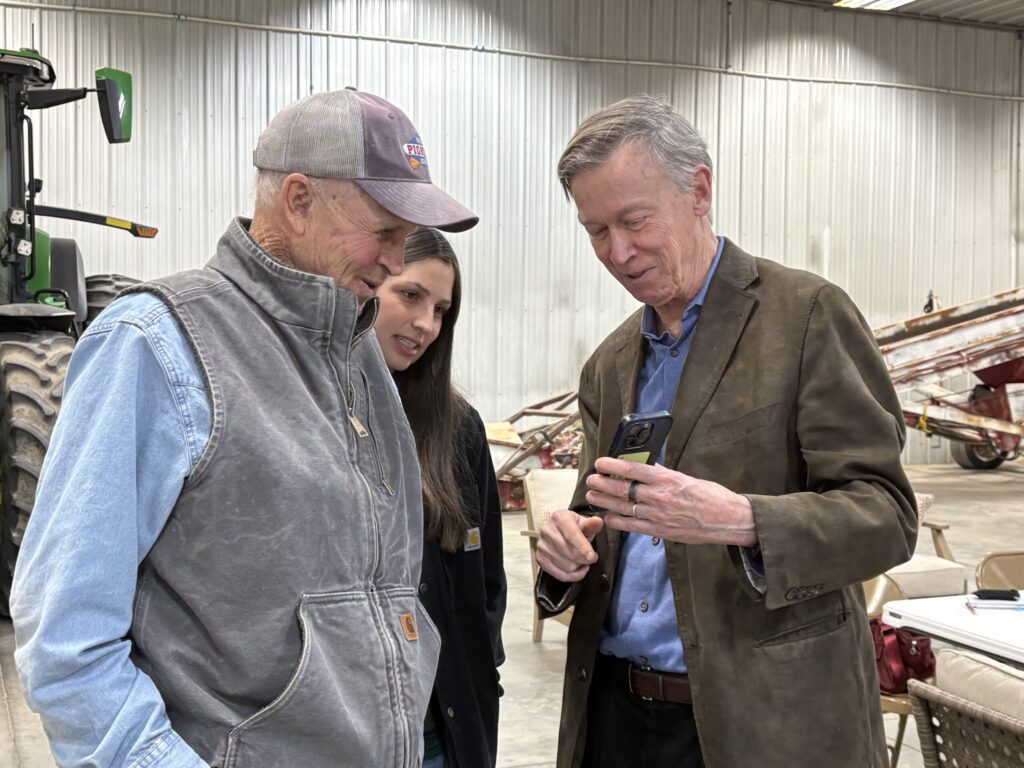
Northern Colorado farmers told U.S. Sen. John Hickenlooper this week that tariffs and President Donald Trump’s decision to import $40 billion worth of beef from Argentina have hurt Colorado’s agricultural industry. But the administration’s cuts to scientific research are almost...
PREV
PREVIOUS

Colorado regulators consider Xcel Energy's proposal for 5,000 MW of new generation
Colorado’s energy regulators are deliberating Xcel Energy’s request to build out new generating resources, even as business groups urged the commissioners to not “artificially” constrain the amount of power that industry experts concluded the state needs. Xcel is asking the Public Utilities Commission to build 5,000 megawatts of new capacity over the next five years. […]

Big cuts, bigger questions: Here's how lawmakers plan to fill $800 million shortfall
Plans are taking shape on how Colorado’s state government will trim $800 million in general fund expenses. The shortfall, according to Democrats, is due to a $1.2 billion loss of income tax revenue, mainly on the corporate side. The state has enough in surplus to cover about a third of that, but then the question […]