

Medicaid providers in Colorado assessing effects of impending changes
Leaders of a trade association that represents 21 community health centers across Colorado, including Peak Vista in Colorado Springs, are “still reeling” from last Thursday’s full Congressional approval of H.R. 1, more commonly referred to as the “One Big Beautiful Bill Act.”
“We’re working to understand the final provisions of the bill,” said Polly Anderson, vice president of strategy and financing for Colorado Community Health Network.
The Trump administration says health care will be strengthened under the bill, “by eliminating waste, fraud, and abuse and blocking illegal immigrants from receiving Medicaid.”
Anderson said the association has just started assessing what the changes will mean for patients and services under Medicaid, a joint state and federal health insurance program for low-income singles and families, pregnant women, children and disabled people.
Modifications include requiring able-bodied recipients to work at least 80 hours a month. Free health care for immigrants who are in the U.S. illegally also will be scaled back, and eligibility for health care subsidies for certain legal immigrants, such as people here on work and student visas, will be narrowed. And, according to some analysts, with 60% of nursing home patients on Medicaid, services for such long-term care patients could be scaled back with the cuts.
Colorado’s 240 community health center sites handle 300,000 Medicaid patients, Anderson said. Of those, the association estimates that between 66,000 and 133,000 could lose Medicaid coverage because of complicated or difficult-to-navigate new requirements.
Statewide, the Colorado Hospital Association and state of Colorado project that 150,000 Coloradans may be dropped from Medicaid benefits.
Impacts won’t be felt for a while, Anderson said, as most of the work reporting requirements take effect in 2027, but states must plan ahead for implementation.
“The best way to implement is behind-the-scenes verification online, using wage data, but that’s tough,” she said. “No matter how simple they try to make it, folks are going to have trouble with complying. It’s going to be complicated to set those systems up and for folks to figure out how to navigate them.”
The sign-up process likely will increase from once or twice a year to as much as monthly, Anderson said.
The federal government and individual states each pay about half of the expenses of subsidized health care. Federal funding is contingent on meeting requirements about what populations must be covered and what services or benefits must be offered. States also are responsible for enrollment and monitoring.
Colorado’s General Assembly could hold a special session soon to discuss strategies for fulfilling the new regulations.
The Colorado Department of Health Care Policy and Financing estimates it will cost the state $57 million to get ready to meet the upgraded reporting requirements and require 3,000 additional staff in county governments to work on eligibility.
Officials at UCHealth Memorial in Colorado Springs, which defines itself as one of the largest providers of Medicaid care in Colorado, expect their patients to be “significantly impacted,” said Cary Vogrin, communications and media relations specialist.
“Often, when people lose health insurance, they are unable to access preventive care, prescription medications and behavioral health care, and these patients turn to hospitals’ emergency rooms,” she said.
As people fall off the rolls, the number of uninsured patients will increase, Vogrin said, which in turn will increase uncompensated care expenses for hospitals.
Last year, UCHealth provided nearly $570 million in uncompensated care and served 300,000 unique patients covered by Medicaid, she said.
The costs to community health centers also will be high, Anderson said. About half of patients seen at community health centers receive Medicaid, 25% are uninsured and the other 25% are on Medicare for people ages 65 and older or have private insurance.
People who lose Medicaid coverage still will need to go to a doctor when they’re sick or for checkups or chronic disease maintenance, Anderson said.
“Health centers will try to care for them without the health insurance reimbursement,” she said.
That will create a potential loss of revenue in Colorado between $313 million and $637 million over the first four years, Anderson said, depending on how many Medicaid recipients no longer have coverage.
Catholic Health Association, which encompasses 2,200 health care operations across the nation, including the CommonSpirit Penrose and St. Francis Hospitals in Colorado Springs, issued a statement that called the changes “a moral failure.”
“(This) will harm everyone who depends on a functioning, equitable health care system,” the statement says. “The impact will be felt in every emergency room, clinic and household struggling to access care in an already strained system.”
While many agree that Medicaid needs to be improved, industry leaders do not blame patients for the fraud, waste and abuse that the new requirements seek to reduce.
“Most experts believe the waste, fraud and abuse comes from unscrupulous providers who are billing Medicaid for services they didn’t deliver,” Anderson said. “There’s little evidence of fraud committed on the individual patient level.”
She argues the rules already in place are sufficient to monitor users and safeguard the program.
Since Medicaid is a “major financer” of Colorado’s health care system, as it reimburses expenses for hospitals, primary care providers, specialists, long-term care facilities, nursing homes, funding decreases will cause cost-shifting and contribute to higher insurance rates for private payers, Anderson said.
Colorado Politics Must-Reads:
-
Medicaid providers in Colorado assessing effects of impending changes
-
Colorado Behavioral Health Administration launches network of safety net services
-
Colorado educators express concern over $80 million federal funding cutoff
-
Colorado Planned Parenthood suspends Medicaid services as federal spending law takes effect


Record snow drought in Western states raises concern for water shortages, wildfires | OUT WEST ROUNDUP
The Associated Press
the-associated-press@coloradopolitics.com
Updated 3 days ago
MONTANA Record snow drought raises concerns A record snow drought with unprecedented heat is hitting most of the American West, depleting future water supplies, making it more vulnerable to wildfires and hurting winter tourism and recreation. Scientists say snow cover...
With the deadline missed, Bureau of Reclamation plans to move forward on Colorado River operations
Marianne Goodland
marianne.goodland@coloradopolitics.com
Updated 19 hours ago
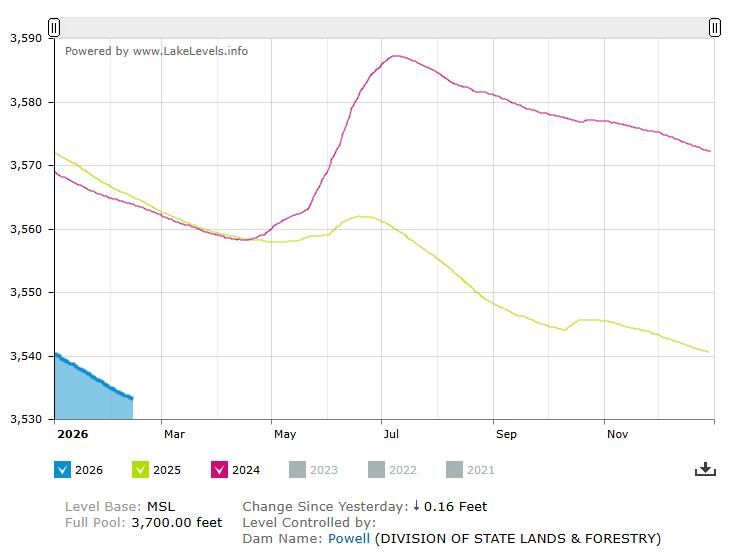
Feb. 14 was no Valentine for the seven states of the Colorado River, which failed to come up with an agreement by that deadline on how to manage the river beginning Oct. 1. The Department of the Interior and the...
Democrat Shannon Bird qualifies by petition for primary ballot in Colorado’s toss-up 8th CD
Ernest Luning
ernest.luning@coloradopolitics.com
Updated 17 hours ago
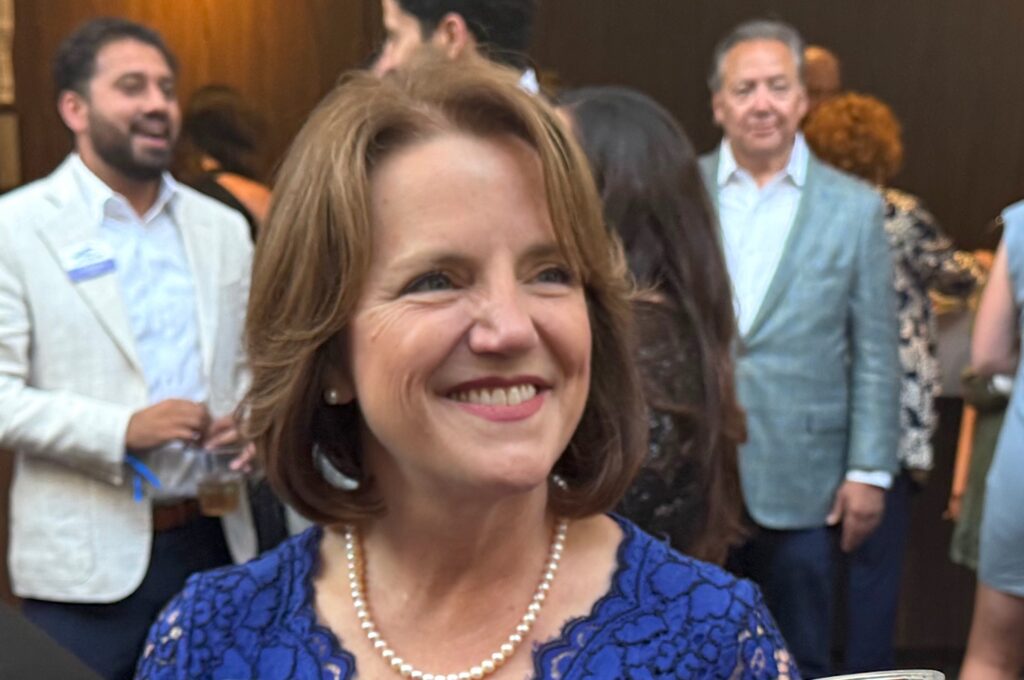
Former state Rep. Shannon Bird has qualified for the Democratic primary ballot in Colorado’s hotly contested 8th Congressional District by submitting a sufficient number of petition signatures, state election officials said this week. The winner of the Democrats’ June 30...

Colorado Supreme Court accepts cases about reliability of gun-to-bullet matching
Michael Karlik
michael.karlik@coloradopolitics.com
Updated 19 hours ago
The Colorado Supreme Court announced on Monday that it will hear two cases questioning the reliability of expert testimony that purports to identify whether a specific bullet was fired from a specific gun. At least three of the court’s seven...
State Rep. Peña outlines significant inequalities in Colorado’s school finance law | A LOOK BACK
Rachael Wright, Special to Colorado Politics
rachael.wright@coloradopolitics.com
Updated 4 days ago
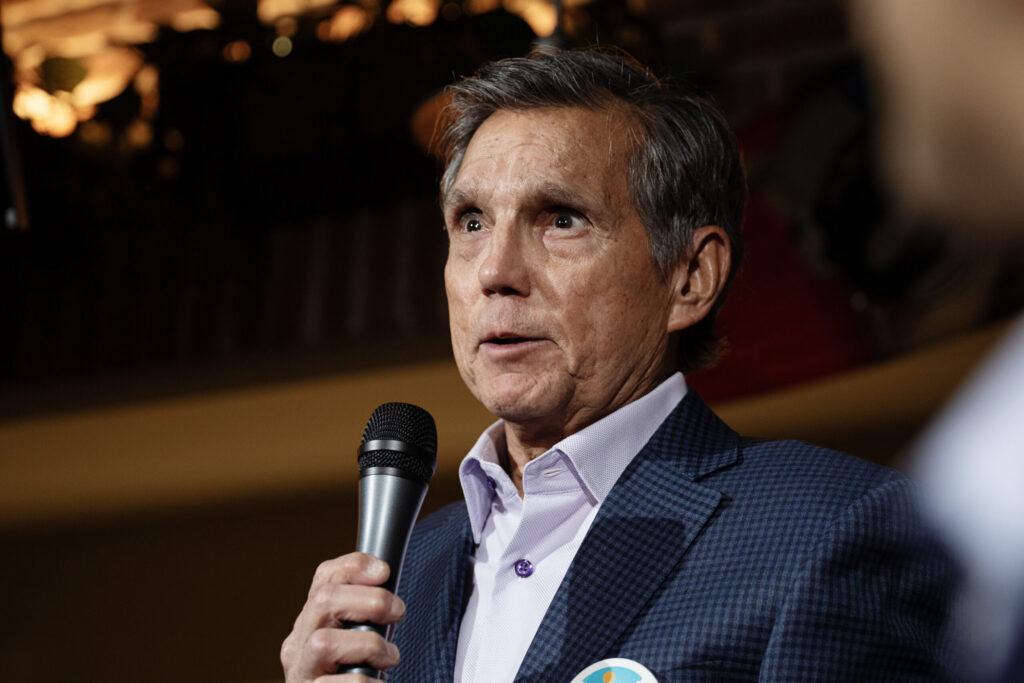
Forty-Five Years Ago This Week: In a guest column published in The Colorado Statesman, House Minority Leader Rep. Federico Peña, D-Denver, wrote that his greatest disappointment with the legislative process was “the inability, or unwillingness, of the General Assembly to...

Colorado Politics Calendar Feb. 16-22
Rachael Wright, Special to Colorado Politics
rachael.wright@coloradopolitics.com
Updated 3 days ago
CoPo’s weekly political calendar will help you find political and public-policy events throughout Colorado. It includes candidate and issue campaign events, public policy meetings, court hearings, state and local party conventions, assemblies, debates, rallies, parades, speaking engagements, traveling dignitary appearances,...

Michael Bennet and ‘the question’ | SONDERMANN
Eric Sondermann
eric-sondermann@coloradopolitics.com
Updated 14 hours ago
The train usually runs only one way. The route goes from the state Capitol to Washington, D.C. State legislators become members of Congress; governors become senators. See Hickenlooper, John. Including our junior senator, no matter his years, a total of...
Colorado District Attorneys unveil 2026 legislative priorities | WHAT’S YOUR AGENDA?
Marissa Ventrelli
marissa.ventrelli@coloradopolitics.com
Updated 3 days ago
Welcome to What’s Your Agenda?: The Colorado Politics’ weekly publication of trade association priorities for the state’s 2026 legislative session. The Colorado District Attorneys’ Council provides training, resources, and legislative support to every prosecutor in the state. In order to...

A day in the life of the Capitol: Capitol M | Week of Feb. 14, 2026
Marianne Goodland
marianne.goodland@coloradopolitics.com
Updated 3 days ago
The lighter side of the Capitol, usually. If you were walking around the Capitol on Feb. 12, there was plenty to see and to be amused (or delighted) by. Let’s start with the high school kids from Greeley’s District 6....
Appeals court clarifies what materials judges may rely on for postconviction decisions
Michael Karlik
michael.karlik@coloradopolitics.com
Updated 2 days ago
Colorado’s second-highest court clarified on Thursday that trial judges who are deciding whether to grant relief to convicted defendants may rely on the materials attached to, or referenced in, the parties’ arguments. In contrast to direct appeals of criminal convictions,...