

Appeals court rejects teacher union challenge to ‘partially effective’ performance rating
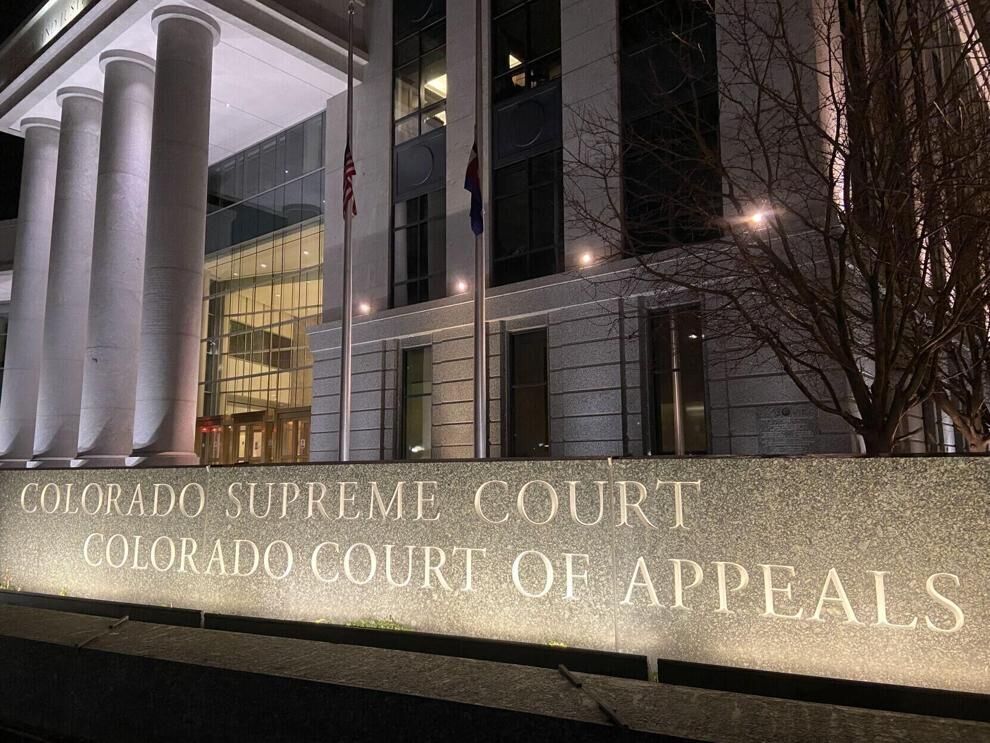
Colorado’s second-highest court on Thursday rejected the claim that the state’s board of education exceeded its authority by allowing a teacher’s “partially effective” performance rating to negatively affect his or her job protections.
A three-judge Court of Appeals panel also concluded the board acted properly in limiting the reasons why a teacher can appeal an “ineffective” rating.
Legislation passed in 2010 established that teacher performance evaluations can result in a rating of “highly effective,” “effective” or “ineffective.” Probationary teachers who demonstrate effectiveness for three years in a row will become non-probationary, meaning they cannot be terminated as easily. However, if a non-probationary teacher receives multiple ineffective ratings consecutively, they revert to probationary status.
In 2012, the Colorado State Board of Education adopted a rule creating a “partially effective” performance standard, which fell into the same category as an ineffective rating.
Since then, multiple teachers challenged the board’s allowance of a partially effective rating to be used as an indicator of ineffectiveness. Twice in 2022, a pair of Court of Appeals decisions rejected those arguments, either because the teachers had not lodged a protest with the board or because the law gave the board discretion to implement a category of “partially effective.”
However, in each instance, the appellate court chose not to designate the opinions as precedent-setting, which would have settled the legal question for all future cases.

Classroom of school
maroke

After the board made technical changes to the rules in 2023, the Colorado Education Association, representing 38,000 educators, challenged the rating system anew.
The board “exceeded its rulemaking authority when (it) causes a loss of non-probationary status by any category other than ‘ineffective,'” argued the union.
Then-Denver District Court Judge David H. Goldberg disagreed, noting lawmakers gave the board the ability to establish “additional performance standards.”
“Defendant acted squarely within its delegated authority by adding a fourth performance standard, partially effective, that falls within the category of ineffective,” he wrote, noting the Court of Appeals had already suggested as much in its non-precedent-setting opinions.
Coincidentally, the panel of judges hearing the appeal of Goldberg’s order had all participated in either of the two prior cases rejecting the challenges to the “partially effective” rating.
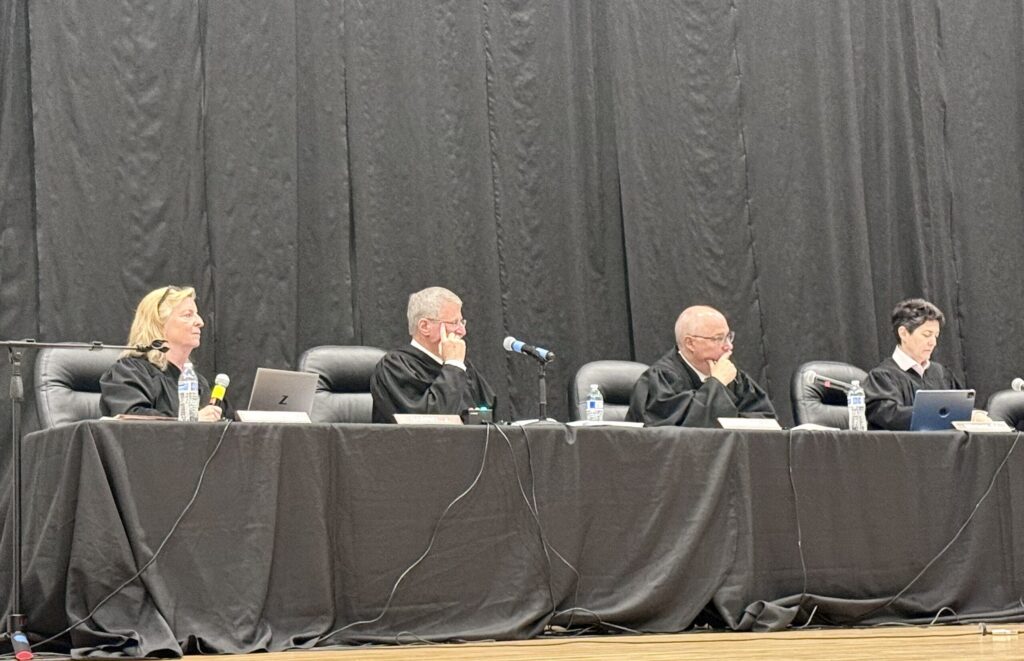
“This is kind of a problem of our own making because we didn’t publish (as precedent) the prior two opinions,” observed Judge Craig R. Welling during oral arguments.
“I think that gave us the opportunity to be here today,” responded attorney Ethan Ice, representing the union.
Ultimately, in an opinion now designated as precedent-setting, the panel reiterated that the board of education acted within its authority by allowing a partially effective performance rating to fall under the umbrella of “ineffective.”
The law does not “prohibit the Board from creating a new performance standard that defines an alternative rating of ineffectiveness,” Welling wrote in the June 12 decision. “Instead, the Act authorizes the Board to both establish new performance standards and define any new performance standard’s rating as either demonstrating effectiveness or demonstrating ineffectiveness.”
The appellate panel also rejected a challenge to a different rule only permitting teachers to challenge their ineffective rating on grounds that their evaluators failed to follow the correct procedure or that the evaluator relied upon inaccurate data.
The legislature similarly “gave the Board a wide berth to develop an appeals process,” Welling noted.
Finally, the panel touched upon an argument the union made in favor of looking skeptically at the board’s interpretation of the law. Last June, the U.S. Supreme Court decided Loper Bright Enterprises v. Raimondo. The case abolished a 40-year-old legal principle known as “Chevron deference” and, as a result, gave judges more authority, at the expense of regulatory experts, to weigh the legality of policy changes.
Welling rejected the idea that the Loper Bright decision gave the Court of Appeals grounds to minimize the board of education’s interpretation of state law. He noted the Colorado Supreme Court has been clear that the federal standard for respecting federal agencies’ rulemaking is not the same for state courts and state agencies.
“Simply put, if Loper is going to have any bearing on the deference Colorado courts may accord Colorado agencies, that change will need to come from the Colorado Supreme Court,” Welling wrote.
The case is Colorado Education Association v. Colorado State Board of Education.
Colorado Politics Must-Reads:


Colorado Springs mother Deborah Nicholls’ murder conviction overturned
Nick Smith
nick-smith@coloradopolitics.com
Updated 44 minutes ago
A Colorado Springs mother convicted in 2008 of murdering her three children in a house fire might get a new trial after a judge ruled that prosecutors withheld key evidence that could have impacted the jury’s verdict. Deborah Nicholls, whose...
Colorado court overturns illegal $7,000 restitution order
Michael Karlik
michael.karlik@coloradopolitics.com
Updated 58 minutes ago
Colorado’s second-highest court overturned a Weld County defendant’s obligation to pay more than $7,000 in crime victim restitution on Thursday because a trial judge failed to issue a legally compliant restitution order at the time of sentencing. In Colorado, as...
Appeals court orders second look at Denver Water’s immunity for cyclist’s injury
Michael Karlik
michael.karlik@coloradopolitics.com
Updated 57 minutes ago
Colorado’s second-highest court ordered another look at a bicyclist’s negligence lawsuit against Denver Water on Thursday, concluding that a trial judge needed to evaluate the utility’s potential immunity using the state Supreme Court’s new guidance. Joseph A. “Joey” Scott alleged...
Labels, duration not definitive proof of ‘intimate relationship,’ Colorado court rules in domestic violence case
Michael Karlik
michael.karlik@coloradopolitics.com
Updated 55 minutes ago
Colorado’s second-highest court clarified on Thursday that the length of a couple’s relationship and the labels they attach to it are not conclusive evidence of whether it is an “intimate relationship” that can give rise to a domestic violence prosecution....

Colorado AG urges Supreme Court to let Boulder climate lawsuit proceed
Marissa Ventrelli
marissa.ventrelli@coloradopolitics.com
Updated 4 hours ago
Colorado Attorney General Phil Weiser has filed a court brief with the U.S. Supreme Court in a lawsuit brought by Boulder city officials seeking to hold oil companies liable for their environmental impact. The case began in 2018, when the...
10th Circuit says landowner cannot sue ex-Routt County judge for statements in decision
Michael Karlik
michael.karlik@coloradopolitics.com
Updated 1 day ago
A Routt County landowner cannot sue a former judge for his allegedly inaccurate statements in a case where the landowner was not a party, the Denver-based federal appeals court decided on Wednesday. Anne Fitzsimmons, who lives in Germany, owns a...

Defendant’s competency in question in El Paso County case involving slain Army police officer
Nick Smith
nick-smith@coloradopolitics.com
Updated 12 hours ago
It will be another 60 days before a 4th Judicial District court determines if a man charged in the shooting death of an Army police officer is competent to proceed in his case. Judge Erin Sokol granted a request Wednesday...
Parole, appeals deadlines and restitution: Colorado justices accept cases
Michael Karlik
michael.karlik@coloradopolitics.com
Updated 2 days ago
The Colorado Supreme Court announced on Monday that it will determine how a defendant’s parole-eligibility date should be calculated in instances where a new trial results in a sentence being imposed retroactively to the date of the original, since-overturned sentence....

Federal judge rejects DOJ bid to force Colorado to hand over voter information
Marissa Ventrelli
marissa.ventrelli@coloradopolitics.com
Updated 1 day ago
A U.S. district court judge has dismissed a lawsuit filed by the U.S. Department of Justice against Colorado Secretary of State Jena Griswold for refusing to provide the agency with personal voter information. Last December, the DOJ’s Civil Rights Division asked...
3 Colorado judges receive unfavorable retention recommendation as one performance commission violates rules
Michael Karlik
michael.karlik@coloradopolitics.com
Updated 2 days ago
Of the 123 Colorado judges standing for retention on the November ballot, citizen-led performance commissions found that three did not meet the required performance standards. However, in an unprecedented move, the commission charged with evaluating Supreme Court and Court of...