

Governor vetoes measures on self-driving vehicles, copays for inmates, ambulance costs
Gov. Jared Polis vetoed several bills on Thursday, including a pair of bipartisan measures aimed at regulating autonomous commercial vehicles and ground ambulance services.
A third bill, supported by the General Assembly’s Democrats, would have prohibited the Department of Corrections from charging inmates copays for medical care.
Commercial vehicles
House Bill 1122, sponsored by Reps. Sheila Lieder, D-Littleton, and Chris Richardson, R-Elizabeth, and Sens. Tom Sullivan, D-Centennial, and Larry Liston, R-Colorado Springs, would have prohibited the use of a self-driving commercial vehicle unless an individual who holds a commercial driver’s license is inside at all times.
The Colorado State Patrol and Colorado Department of Transportation opposed the bill, as did the tech companies represented by the trade organization Chamber of Progress, who say automated vehicles will make roadways “safer, greener, and more efficient.” Workers’ unions like Teamsters Local 455 argue that having a human being behind the wheel is the best way to ensure Colorado’s roads are safe.
The bill received bipartisan support, passing on a 55-9 vote in the House and a 27-8 vote in the Senate.
In his veto letter, Polis said he appreciated the bill sponsor’s intentions, but he believes it could “undermine innovation of future technologies that could increase road safety.”
“Drivers of commercial motor vehicles have a challenging job and we all owe them our gratitude for the important role they play moving goods across our state and country, especially in the face of senseless federal tariffs,” he wrote. “I’m proud of the work we’ve accomplished in recent years to improve safe operations of commercial motor vehicles and safety for all road users. I also appreciate that with any new technology, there is a level of discomfort and uncertainty and that the intention of this bill is to address safety concerns. However, the approach set forth in HB 25-1122 would risk undermining a process that is currently working and instead limit opportunities for innovation that lead to greater safety improvements in the future.”
Inmate copays
Polis also vetoed House Bill 1026, sponsored by Reps. Michael Carter, D-Aurora, and Lorena Garcia, D-unincorporated Adams County, and Sens. Iman Jodeh, D-Aurora, and Nick Hinrichsen, D-Pueblo. The bill sought to repeal medical copays for Department of Corrections inmates and prohibit CDOC from imposing a fee if an inmate failed or refused to attend a medical appointment. If passed, Colorado would have become one of 11 states that do not charge copays for medical care in their prisons.
The bill passed through both chambers on a party-line vote.
In his veto letter, Polis wrote that he believed the bill reflected “a degree of micromanagement of DOC operations that I cannot support, and are better addressed through internal policy changes.”
“DOC must retain the flexibility to determine its own policies and procedures based on the unique circumstances that come with running a state prison system, including those related to health care, and to have the ability to change what isn’t working,” he continued.
While Polis said he did not agree with a statutory prohibition on copays and fees for incarcerated individuals, he did agree that inmates are often in a position where it’s tough for them to afford to pay copays. Those barriers should not exist for “legitimate health needs.”
The same day he vetoed the bill, Polis signed an executive order directing CDOC to review and revise its procedures relating to medical copayments and compile a list of what services or circumstances do not require a copay by Aug. 1. The order also directs CDOC to “enhance” its data collection and analysis regarding fees charged to individuals who refuse or fail to attend or cancel a scheduled medical appointment and submit a recommendation regarding a revised fee policy by Aug. 1.
“While I cannot support legislation that constrains DOC’s ability to adjust departmental policies and procedures based on changing needs, what works and doesn’t work, and circumstances within its facilities, I believe that there is merit in reviewing existing procedures and reducing copayment costs for incarcerated individuals,” Polis said. “As directed in my Executive Order, DOC will reexamine its existing policies and procedures to create a balanced policy approach to address this issue, without statutory limitations that could harm DOC’s ability to operate facilities and conduct its mission safely and efficiently.”
Ambulance regulations
Polis’s final veto of the day was on House Bill 1088, sponsored by Reps. Karen McCormick, D-Hygiene, and Kyle Brown, D-Louisville, and Sens. Mark Baisley, R-Woodland Park, and Kyle Mullica, D-Thornton.
The bill would have set regulations for ground ambulance service billing by allowing local providers to share their rates with the state, which in turn would be required to post the rates online. The bill also set payment rates for out-of-network ambulances and prohibited them from billing individuals covered by health insurance for any outstanding balance not covered by insurance, except in the cases of coinsurance, deductibles, or copays.
In 2022, Congress passed the No Surprises Act, which sought to put a stop to the practice of balance billing or “surprise billing” for health care services from out-of-network providers. However, ground ambulance services were excluded for the bill, meaning patients who rode in an ambulance could still be stuck having to foot the rest of the bill when an ambulance service charges more than their health insurance will cover.
In his veto letter, Polis said he supported the portion of the bill targeting “surprise bills” from ambulance services, but he took issue with the bill’s potential to increase insurance premiums by up to over $2 per member per month.
“I am committed to working with proponents and sponsors to protect Coloradans from surprise bills, but I encourage all parties to work towards a more reasonable reimbursement rate that mitigates premium impacts and nets a better deal for Colorado families,” he said.
Polis also pointed out several drafting issues in the bill that he said made it unimplementable, such as requiring enforcement by the Division of Insurance, which doesn’t have any jurisdiction over ground ambulances. The bill also strikes statutory language regarding reimbursements for private ambulances that he believes could increase costs for patients and creates a “misalignment” among public and private ambulance services.
In a statement on his Facebook page, Brown said he was “deeply disappointed” by the veto.
“This bipartisan bill passed unanimously in both the House and Senate,” he said. “It would protect individuals from large surprise medical bills when they need to use an ambulance. This legislation would have saved people money on health care and without it, consumers will still be on the hook for bills in the thousands of dollars through no fault of their own.
Colorado Politics Must-Reads:


‘CoCo’ would take taxpayers for a ride | John Caldara
Jon Caldara
jon-caldara@coloradopolitics.com
Updated 2 days ago
Colorado wants taxpayers to spend another $4.73 billion on passenger rail. Don’t worry. They have a plan. Which is a little like your brother-in-law announcing he’s launching another exciting restaurant venture after his last three restaurants ended in bankruptcy. Please....
Colorado Politics Calendar July 27-Aug. 2
Rachael Wright, Special to Colorado Politics
rachael.wright@coloradopolitics.com
Updated 4 days ago
CoPo’s weekly political calendar will help you find political and public-policy events throughout Colorado. It includes candidate and issue campaign events, public policy meetings, court hearings, state and local party conventions, assemblies, debates, rallies, parades, speaking engagements, traveling dignitary appearances,...
Armstrong staffer considers congressional bid, DeGette angers rural communities with wilderness act | A LOOK BACK
Rachael Wright, Special to Colorado Politics
rachael.wright@coloradopolitics.com
Updated 2 days ago
Forty-five years ago this week: If the lines were drawn just right, Republican Sen. Bill Armstrong stood the chance of losing his office manager, Ruth Fountain. Fountain admitted she was seriously thinking about running for Colorado’s new congressional seat in...

Colorado districts prepare for school year amid mental health cuts. But will less cellphone distractions help?
Marissa Ventrelli
marissa.ventrelli@coloradopolitics.com
Updated 2 days ago
The signs of a new school year are everywhere — buses in the shop, teachers unpacking boxes, families ticking through supply lists — but behind the familiar rituals, Colorado districts are preparing for a year defined less by routine than...

The through line from Donald Trump to Victor Marx | SONDERMANN
By Eric Sondermann
by-eric-sondermann@coloradopolitics.com
Updated 4 days ago
Over 10 years ago, before Donald Trump could ever defeat Hillary Rodham Clinton, he had to first engineer a hostile takeover of the Republican Party. Prior to his descent of that golden escalator, the previous seven Republican presidential nominees had...
10th Circuit dismisses woman’s lawsuit following 10-year attempt to undo restraining order
Michael Karlik
michael.karlik@coloradopolitics.com
Updated 2 days ago
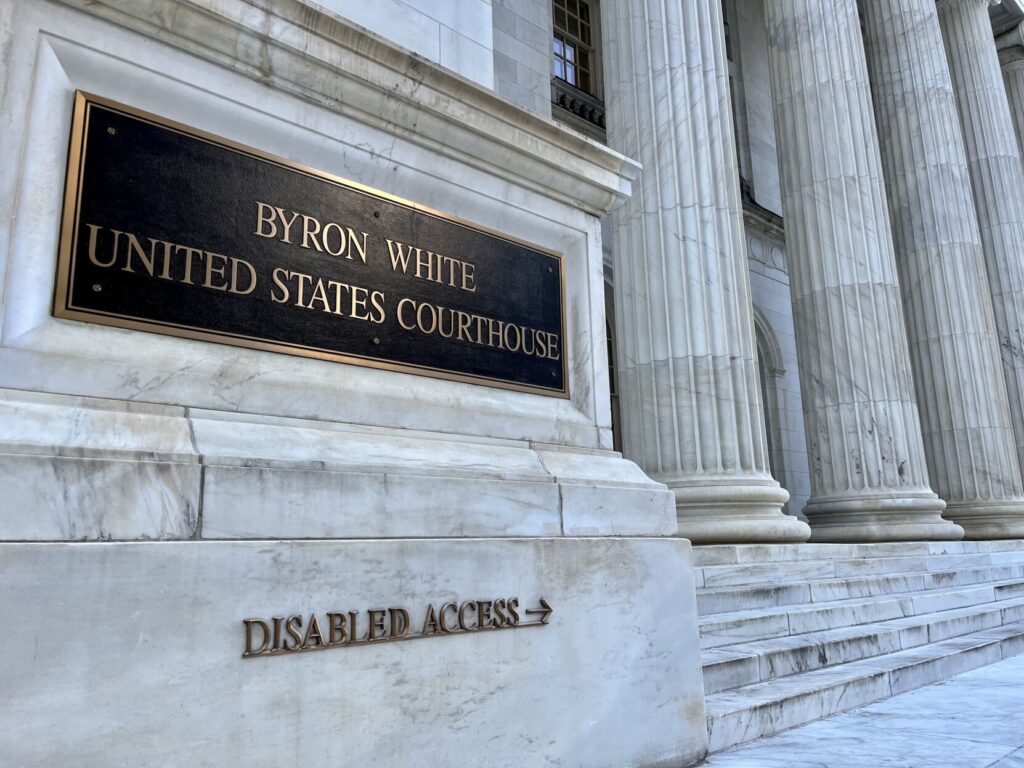
The Denver-based federal appeals court rejected a woman’s challenge on Friday to a restraining order imposed on her more than a decade ago, finding that she cannot credibly claim she will be prosecuted for violating the restraining order through her...
10th Circuit dismisses woman’s lawsuit following 10-year attempt to undo restraining order
Michael Karlik
michael.karlik@coloradopolitics.com
Updated 1 day ago
The Denver-based federal appeals court rejected a woman’s challenge on Friday to a restraining order imposed on her more than a decade ago, finding that she cannot credibly claim she will be prosecuted for violating the restraining order through her...
Surprise candidate Shimon Blau cleared to face off against Melat Kiros in November
Ernest Luning
ernest.luning@coloradopolitics.com
Updated 1 day ago
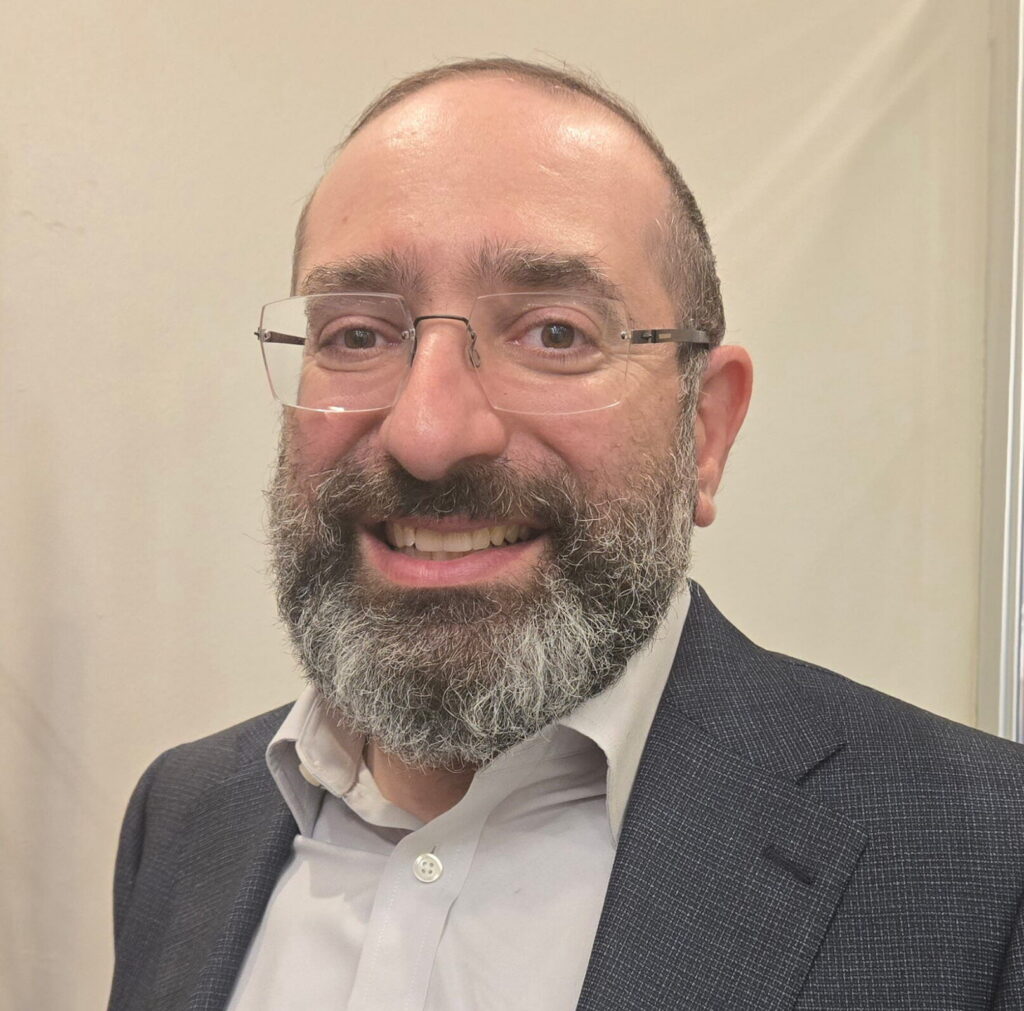
Unaffiliated congressional candidate Shimon Blau, a Denver doctor, has qualified by petition for the general election in Colorado’s 1st District, where Democrat Melat Kiros defeated 15-term U.S. Rep. Diana DeGette in last month’s primary, the Colorado Secretary of State’s Office...

Colorado produce not tied to nationwide cyclospora outbreak, agriculture officials say
Marissa Ventrelli
marissa.ventrelli@coloradopolitics.com
Updated 19 hours ago
There is no indication that the recent outbreak of cyclospora, a fecal parasite that has contaminated food and water across nearly every state, can be linked to produce grown in Colorado, according to the state’s Department of Agriculture. “Colorado growers...

UNC opens College of Osteopathic Medicine
Marissa Ventrelli
marissa.ventrelli@coloradopolitics.com
Updated 1 day ago
The University of Northern Colorado held a grand opening for its new College of Osteopathic Medicine on Friday, with Gov. Jared Polis in attendance to celebrate the culmination of a two-year, $127.5 million project. The project was funded through legislation...