

Drugs and gender transition | Colorado lawmakers wrap up 2025 session
With 48 fewer bills introduced in the 2025 session than last year and a $44 billion budget that closed a $1.2 billion budget shortfall, the 120-day session of the Colorado General Assembly officially wrapped up just before 7:30 p.m. on Wednesday.
Among the last actions in the Senate was a final vote on a proposal to establish more stringent regulations for transportation network companies, such as Uber and Lyft.
Lawmakers significantly amended House Bill 1291 on Tuesday with changes sought mostly by the rideshare companies — notably, making audio-visual recordings optional rather than mandatory.
HB 1291 won a 22-13 vote, with Senate Majority Leader Robert Rodriguez, D-Denver, voting “no,” along with Senate Republicans.
The Senate also tackled gubernatorial nominations to the state’s judicial discipline commission: Mary Mindy Sooter’s nomination failed on a 16-19 vote, with eight Democrats voting “no,” while Jim Carpenter, a longtime Democratic political operative, was approved.
Senate rejects Colorado judicial discipline appointee while approving another
The governor, by law, cannot reappoint a nominee once rejected by the Senate.
The chamber also killed Senate Bill 124, one of the two bills tied to the federal 340B prescription drug program.
As introduced, SB 124 would have required nonprofit hospitals to use their 340B profits to decrease direct out-of-pocket costs for low-income patients. It also would have required covered hospitals to report information related to their 340B participation, such as how profits are being used, payments to third parties and any use of contract pharmacies, to the Colorado Department of Public Health and Environment.
As amended, the bill listed the ways that a nonprofit hospital in the 340B program cannot use those funds, such as for compensation, tax penalties or fines, expenses for advertising or public relations, lobbying costs, travel expenses for the hospital’s board and gifts or entertainment expenses.
On Saturday, the House Health & Human Services Committee added a requirement to SB 124 that 80% of 340B net revenue be spent on patients or capital improvements. But it stripped out all the enforcement and “teeth” from the bill, according to Rep. Eliza Hamrick, D-Centennial, who tried but failed to add that language back in when the bill came up for second reading on Monday in the House.
Those changes didn’t sit well with the bill’s Senate sponsors, who rejected the House amendments and asked the Senate to stick to its version. The chamber did, dooming the legislation.
Two 'complementary' bills to reform Colorado's 340B program win preliminary House votes
Over in the House, Senate Bill 72, the legislation dealing with the drug kratom, won a 48-17 approval and returned to the Senate, which approved the amendments.
The bill will be known as the Daniel Bregger Act, named for the Coloradan who died in 2021 after consuming a combination of kratom, a legal substance with opioid-type effects, and the active ingredient in Benadryl. Bregger had taken the substance, which came in a 5-ounce bottle, for anxiety.
Watered down kratom regulation bill wins approval from Colorado state House
The final bill debated in the House dealt with Senate amendments to House Bill 1309, which codifies gender transition treatments in the statutes and prohibits health plans from denying or limiting “medically necessary” services.
Republicans mounted an unsuccessful last-ditch effort to persuade lawmakers to kill the bill.
Colorado commissioner threatens to shift health insurance funds to immigrants unlawfully living in US


Colorado justices block injured plaintiff from suing, despite alleged concealment by Manitou Springs
Michael Karlik
michael.karlik@coloradopolitics.com
Updated 10 hours ago
The Colorado Supreme Court ruled on Monday that a woman injured on a Manitou Springs sidewalk could not sue the allegedly responsible entity, the city of Colorado Springs, even though she did not learn until too late of an agreement...

Colorado marijuana regulators pledge crackdown on intoxicating hemp
Christopher Osher
chris.osher@gazette.com
Updated 12 hours ago
Citing potential tax avoidance, ‘serious risk to public safety,’ Marijuana Enforcement Division warns companies about swapping illegal chemically converted hemp for marijuana This article was produced for ProPublica’s Local Reporting Network in partnership with The Denver Gazette. Colorado regulators announced...
Rep. Eric Swalwell of California says he will resign after sexual misconduct allegations
Kevin Freking
kevin.freking@associatedpress.com
Updated 15 hours ago
WASHINGTON (AP) — Democratic Rep. Eric Swalwell of California announced Monday he will resign from Congress following sexual assault and misconduct allegations that prompted loud bipartisan calls for him to step down. The decision caps a swift political fall for...

Whistleblower contacted Democrats before filing Trump complaint that led to first impeachment, records show
Kaelan Deese, Washington Examiner
kaelan.deese.washington.examiner@gazetteedit.wpenginepowered.com
Updated 17 hours ago
Newly declassified transcripts from the Intelligence Community’s then-inspector general show that the whistleblower whose complaint triggered President Donald Trump’s first impeachment had prior contact with congressional Democrats before filing the allegation, a newly-surfaced and damning detail that was not disclosed...

Spain pushes China to assume global leadership role
Emily Hallas, Washington Examiner
emily.hallas.washington.examiner@gazetteedit.wpenginepowered.com
Updated 17 hours ago
Spanish Prime Minister Pedro Sanchez on Monday pushed China to embrace a larger role on the world stage as Europe increasingly turns to Beijing amid growing tensions with the United States. Sanchez’s speech at Beijing’s Tsinghua University follows recent moves...
Divided Colorado Supreme Court opens door to experts’ views on children’s truthfulness
Michael Karlik
michael.karlik@coloradopolitics.com
Updated 19 hours ago
The Colorado Supreme Court ruled on Monday that experts may, in certain situations, tell jurors whether child witnesses exhibited signs of being coached by adults, without running afoul of the general prohibition on witnesses testifying about the truthfulness of other...
Colorado becomes first state to ban arrests solely based on field drug test results
Marissa Ventrelli
marissa.ventrelli@coloradopolitics.com
Updated 13 hours ago
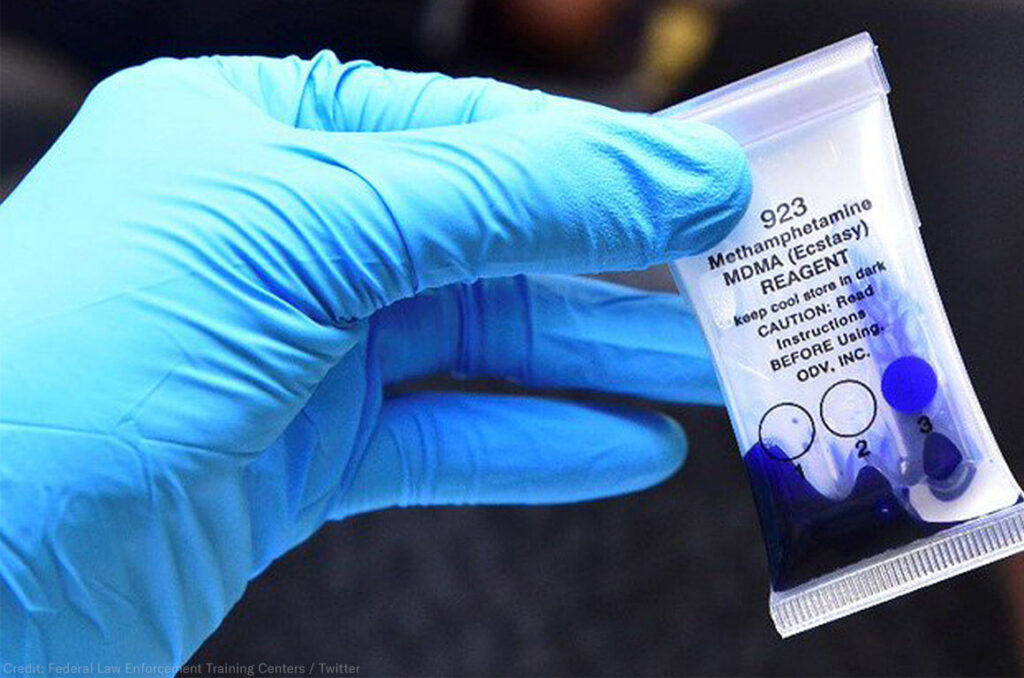
Colorado has become the first state in the nation to prohibit arrests based solely on colorimetric drug tests, also known as field drug tests. Last legislative session, lawmakers passed a bill establishing a working group to make recommendations regarding the use of colorimetric drug...

State Supreme Court to hold oral arguments, federal judges find fault with bond hearings | COURT CRAWL
Michael Karlik
michael.karlik@coloradopolitics.com
Updated 13 hours ago
Welcome to Court Crawl, Colorado Politics’ roundup of news from the third branch of government. The state Supreme Court will resume hearing oral arguments tomorrow, plus some federal judges are raising the alarm about immigration judges’ handling of bond hearings....

Colorado Senate takes up $46.8 billion budget
Marissa Ventrelli
marissa.ventrelli@coloradopolitics.com
Updated 14 hours ago
The battle over Colorado’s proposed $46.8 billion spending plan for next year shifted to the state Senate, which must decide whether to acquiesce to changes made by the House. The senators could also decide to adopt their own changes, which...

JBS plant employees ratify tentative agreement
Nicholas Fogleman
nicholas.fogleman@denvergazette.com
Updated 21 hours ago
Workers at a JBS beef processing plant in Greeley ratified a tentative agreement Sunday, ending months of negotiations over a new contract. The two-year collective bargaining agreement covers nearly 3,800 workers, according to the United Food Commercial Workers Local 7...