

10th Circuit rejects claim that judge pressured defense attorney
The Denver-based federal appeals court concluded last week that a trial judge’s comments urging a criminal defense lawyer to be more cooperative in the presentation of evidence did not negatively affect the defendant’s right to a fair trial.
Prior to trial, lawyers for both sides may agree which pieces of evidence are authentic — meaning they are what they are held out to be — and admissible, which encompasses a range of factors like relevance and hearsay. While a decision about whether to stipulate can be tactical, the effect of agreeing to the evidence ahead of time is to speed up the trial.
After a 2022 trial, jurors convicted Dedric Mayfield of being a felon in possession of ammunition. He received a sentence of 120 years in prison.
Shortly before the trial began, the parties appeared at a conference before U.S. District Court Senior Judge William J. Martínez, who said the prosecution filed 89 exhibits for trial. The defense, in turn, had not stipulated to the authenticity or admissibility of any item on the list.
“That is not acceptable,” Martínez told Mayfield’s attorney. “I don’t know what’s going on here, but I’ve never gone to trial where defense counsel’s refused to stipulate to any exhibit of the government.”
Martínez elaborated that he wanted the defense to agree, “to the maximum extent possible,” that the evidence could come in. He acknowledged there may be a “good-faith basis” to object to specific pieces.
But if no reason existed, “you will be starting on a very bad footing with me if you do not at least, at a minimum, stipulate to the authenticity of these exhibits,” Martínez continued. “Nothing is going to put this jury to sleep quicker and derail the momentum of both sides if we have to plow through the foundational questioning to establish authenticity of an exhibit.”
The defense ended up agreeing to admit much of the government’s evidence.
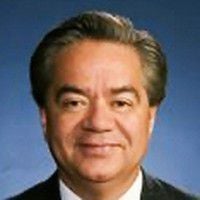
U.S. District Court Judge William J. Martínez
Courtesy photo
On appeal, Mayfield argued Martínez’s admonishment “forced” his attorney into cooperating with the government out of a desire to move the trial along quicker, when there was nothing wrong with withholding the defense’s approval for any piece of evidence.
“At minimum, the court’s mandate had the appearance of implying it would act in a vindictive way against the defense if Mr. Mayfield’s counsel insisted on putting the government to its burden of proof,” wrote attorney Benjamin Miller. “The court’s laser-like focus on efficiency trampled Mr. Mayfield’s trial rights and eased the path for the government to convict him.”
During oral arguments before the U.S. Court of Appeals for the 10th Circuit, a three-judge panel was skeptical of Miller’s claim that Mayfield’s counsel at trial was “on his heels” and deterred from objecting further as a result of Martínez’s comments.
“We do know that when certain things were important to this counsel, they did object,” said Judge Joel M. Carson III. “If we see instances in the record where counsel did object, was not afraid to object, why should we go off the assumption that the rest of the times they didn’t object, it’s because they were scared?”
Carson added that there is “normal cooperation” in a given trial about the anticipated evidence.
“The court has to have the ability to control people from being either a.) lazy or b.) obstructionist,” he said.
The appellate panel noted Mayfield’s attorney did not object to Martínez’s instruction at the time, meaning Martínez could not evaluate the defense’s position that there was a violation of Mayfield’s right to a fair trial or due process. Moreover, wrote Carson in the April 22 opinion, Martínez never prohibited the defense from making any objections going forward.
“To begin with, the district court made clear that it welcomed objections having a good-faith basis. Far from conveying a closed mind, the district court’s comments demonstrated a willingness to entertain good-faith objections,” Carson wrote. “Ultimately, the district court must be able to control the flow of a trial and curtail litigation strategies that might confuse the jury or cause them to lose focus on the proceedings.”
Even assuming Martínez acted improperly, the panel found there was enough evidence — either unchallenged by Mayfield or agreed upon by the defense before Martínez’s comments — for jurors to convict him.
The case is United States v. Mayfield.

Local party leaders, incoming judge among members of judicial performance commission that violated law
Michael Karlik
michael.karlik@coloradopolitics.com
Updated 2 hours ago
A local Democratic leader and 2024 presidential elector. A legislative aide and leader in the Young Republicans. An incoming county court judge freshly appointed by the governor. They are among the eight members of the northeastern Colorado judicial performance commission...
Judge dismisses lawsuit seeking records from Colorado Democratic group
Marianne Goodland
marianne.goodland@coloradopolitics.com
Updated 27 minutes ago
A lawsuit seeking to obtain records from Democratic lawmakers affiliated with a caucus has been thrown out by a Denver District Court judge. On July 17, Judge Ericka Englert dismissed the April lawsuit filed by progressive activist Derrick Blanton, who...
Colorado Springs mother Deborah Nicholls’ murder conviction overturned
Nick Smith
nick-smith@coloradopolitics.com
Updated 21 hours ago
A Colorado Springs mother convicted in 2008 of murdering her three children in a house fire might get a new trial after a judge ruled that prosecutors withheld key evidence that could have impacted the jury’s verdict. Deborah Nicholls, whose...
Colorado court overturns illegal $7,000 restitution order
Michael Karlik
michael.karlik@coloradopolitics.com
Updated 18 minutes ago
Colorado’s second-highest court overturned a Weld County defendant’s obligation to pay more than $7,000 in crime victim restitution on Thursday because a trial judge failed to issue a legally compliant restitution order at the time of sentencing. In Colorado, as...

Appeals court rejects former DougCo commissioner’s legal fee claim
Nicholas Fogleman
nicholas.fogleman@denvergazette.com
Updated 8 hours ago
The Colorado Court of Appeals rejected a former Douglas County commissioner’s bid for reimbursement of attorney fees she incurred while responding to multiple investigations into her conduct. The dispute stemmed from a 2019 anonymous letter sent to county officials alleging...
Appeals court orders second look at Denver Water’s immunity for cyclist’s injury
Michael Karlik
michael.karlik@coloradopolitics.com
Updated 21 hours ago
Colorado’s second-highest court ordered another look at a bicyclist’s negligence lawsuit against Denver Water on Thursday, concluding that a trial judge needed to evaluate the utility’s potential immunity using the state Supreme Court’s new guidance. Joseph A. “Joey” Scott alleged...
Labels, duration not definitive proof of ‘intimate relationship,’ Colorado court rules in domestic violence case
Michael Karlik
michael.karlik@coloradopolitics.com
Updated 1 hour ago
Colorado’s second-highest court clarified on Thursday that the length of a couple’s relationship and the labels they attach to it are not conclusive evidence of whether it is an “intimate relationship” that can give rise to a domestic violence prosecution....

Colorado AG urges Supreme Court to let Boulder climate lawsuit proceed
Marissa Ventrelli
marissa.ventrelli@coloradopolitics.com
Updated 1 day ago
Colorado Attorney General Phil Weiser has filed a court brief with the U.S. Supreme Court in a lawsuit brought by Boulder city officials seeking to hold oil companies liable for their environmental impact. The case began in 2018, when the...
10th Circuit says landowner cannot sue ex-Routt County judge for statements in decision
Michael Karlik
michael.karlik@coloradopolitics.com
Updated 2 days ago
A Routt County landowner cannot sue a former judge for his allegedly inaccurate statements in a case where the landowner was not a party, the Denver-based federal appeals court decided on Wednesday. Anne Fitzsimmons, who lives in Germany, owns a...
Defendant’s competency in question in El Paso County case involving slain Army police officer
Nick Smith
nick-smith@coloradopolitics.com
Updated 1 day ago
It will be another 60 days before a 4th Judicial District court determines if a man charged in the shooting death of an Army police officer is competent to proceed in his case. Judge Erin Sokol granted a request Wednesday...