

Colorado lawmakers propose bills to bolster funding for Medicaid and safety net providers
As funding uncertainty continues for Medicaid and Medicare programs, competing bills in the Colorado legislature aim to find solutions.
According to the Colorado Department of Health Care Policy and Financing, over two million Coloradans receive financial assistance for health care.
Whether through federal programs like Medicaid or Medicare and state-run initiatives like the Insurance Clinic Program and Hospital Discounted Care Program, that care is typically administered by safety net providers, a subsection of health care facilities that provide services to uninsured, underinsured, and low-income patients.
Katherine Mulready, senior vice president of the Colorado Hospital Association, said safety net providers have continuously operated on low margins, but things worsened exponentially in 2023.
In 2020, in response to the COVID-19 pandemic, Congress provided increased Medicaid funding to the states through the Families First Coronavirus Response Act. The act also prohibited states from terminating Medicaid enrollees’ coverage until the end of the public health emergency declared by the Department of Health and Human Services.
The public health emergency was repealed in 2023, resulting in what is known as the “Medicaid unwind.” The move required states to re-determine each recipient’s eligibility. As a result, over 25 million Americans, including 575,000 Coloradans, lost their Medicaid coverage.
Safety net providers: ‘Our capacity is shrinking’
Mulready said safety net clinics in Colorado have seen an increase of anywhere from 25% to 50% in uninsured patients and a 40% increase in charity care costs from 2019, all while 70% of the state’s hospitals are operating on “thin or negative” margins.
Kiara Kuenzler is the CEO of the Jefferson Center for Mental Health, a safety net provider in Jefferson, Clear Creek, and Gilpin counties that serves about 25,000 patients a year.
Kuenzler said she and her colleagues had anticipated a decline in Medicaid enrollment and related revenue after the public health emergency ended. However, she said the reality has been “far more significant” than predicted: last year, they had to use cash reserves to make up for the loss of funds and still ended up with a $7 million loss. Jefferson Center clinics also eliminated 25 positions, deferred non-urgent expenses, and looked to counties, municipalities, and charitable organizations for one-time funds to try to recoup some of the lost capital.
“I have had so much hope over the past five years that our society was finally waking up to the critical importance of behavioral health to the overall well-being of people, families, and communities,” Kuenzler told the Joint Budget Committee during an October listening session. “Today, I am deeply saddened that at a time when people in our communities are relying on us to maintain care for the most complex and the most vulnerable, our capacity is shrinking.”
Kuenzler said the long-term consequences of this fallout are devastating not only for safety net providers but also for patients, who are now unable to receive critical services.
“It is well-established that thoughtful investment in behavioral health, addressing basic needs, and preventive care improves health outcomes and decreases costs,” she said. “We can anticipate that decreasing investment in these areas will lead to more individuals and families struggling with stable housing and homelessness, increased criminal justice involvement, and higher cost care in emergency departments and costs of addressing complex medical conditions resulting from unmet behavioral health and social needs.”
Mulready agreed with the Hospital Association, saying CHA members have experienced a steady increase in uninsured patients visiting the emergency room.
“People delay care because of the fear of cost or their inability to access it, so people ended up in the emergency department more,” she said. According to data collected by CHA, uninsured emergency department visits in Colorado have increased by nearly 100,000 from 2023 to 2024.
Cuts to Medicaid could have ‘devastating consequences’
Mulready said that federal funding plays a huge part in Colorado’s healthcare payment ecosystem — about 60% of the state’s Medicaid funding comes from the feds.
That funding is “very much threatened in Congress right now,” Mulready said, referencing the proposed cuts to Medicaid under a Republican-backed federal budget proposal.
Earlier this week, Gov. Jared Polis and Lt. Gov. Dianne Primavera issued a letter to Colorado’s Congressional delegation urging them to vote against the budget and preserve federal funding for Medicaid.
“Children, hardworking individuals, people with disabilities, seniors, and safety net providers are not political pawns or talking points,” they wrote. “These cuts would mean losing access to lifesaving care with devastating consequences.”
According to the letter, Colorado could lose up to 12,000 jobs, $1.3 billion in state GDP, and $82 million in state and local tax dollars in 2026 if the cuts go through.
While little can be done about the potential cuts to Medicaid, Colorado legislators say they are doing what they can to protect safety-net providers at the state level, in part through two pieces of legislation: House Bill 1174, and Senate Bill 290.
House Bill 1174: Reimbursement Requirements for Health Insurance
House Bill 1174, sponsored by Reps. Kyle Brown, D-Louisville, and Emily Sirota, D-Denver, and Sens. Jeff Bridges, D-Greenwood Village, and Iman Jodeh, D-Aurora, would place caps on the price insurers pay urban hospitals for health services for state employees and those insured in the small group market.
The caps would be implemented in 2026 for state employee plans and in 2027 for small group plans.
Supporters of the measure say it will save the state a significant amount of money and help small businesses. Opponents argue it would simply shift costs to private insurance companies to cover losses from Medicare and Medicaid.
Sirota pushed back against that argument, saying cost-shifting didn’t occur when Oregon adopted a similar law in 2017.
“Decades of evidence tell us that providers can’t raise their price just because another payer pays less,” she told the House Health & Human Services Committee in February.
Some rural hospitals are also concerned about the bill, claiming it could damage the relationship between rural health care centers and their urban counterparts.
Pat Samples, the chief nursing officer at Estes Park Health, said large hospitals and health systems often share best practices, expertise, and resources with rural and critical access hospitals and provide necessary services that smaller hospitals can’t offer.
“This is something that we want to protect, not dismantle,” she said.
The bill has passed through the committee and is has been awaiting second reading on the chamber floor for over a month.
Senate Bill 290: Stabilization Payments for Safety Net Providers
Senate Bill 290, sponsored by Sens. Kyle Mullica, D-Thornton, and Barbara Kirkmeyer, R-Brighton, and Rep. Shannon Bird, D-Westminster, takes a broader approach to addressing the safety net’s financial woes. It proposes creating a provider stabilization fund within the state’s healthcare affordability and sustainability enterprise to administer financial assistance to all safety net providers, urban and rural.
The $60 million would come from the interest earned on the unclaimed property trust fund in the treasurer’s office. Because the funds would be invested in an enterprise, they would not count toward the TABOR limit.
The enterprise is also eligible for additional “gifts, grants, and donations” from outside groups, such as the $40 million that Mulready says Colorado hospitals plan to contribute over the next two years.
Payments for each provider will be based on the proportion of low-income or uninsured patients they serve compared to the total number of low-income or uninsured individuals served by all safety net providers in the state.
According to Mullica, SB 290 resulted from months of collaboration between lawmakers, safety net providers and health care organizations.
Unlike HB 1174, which has stakeholders split, 290 has unanimous support.
“What I’m really proud about 290 is that this is all of us coming together to put a solution forward,” Mulready said. “The legislature has done some other things for the safety net in years past, but often it’s limited to one part of the safety net without benefiting everyone, and sometimes that’s out of necessity.”
Mullica called the bill “a really big deal” that will have an enormous impact on communities across the state.
“The goal of this bill is to provide immediate support — not support next year, not support the year after, support now to make sure that these doors stay open,” he told the Senate Health & Human Services Committee on Thursday.
The bill passed through the committee unanimously and will next be heard by the Senate Finance Committee.


‘Right to repair’ makes sense for Colorado consumers, but critical infrastructure is different | OPINION
Colorado Politics
colorado-politics@coloradopolitics.com
Updated 10 hours ago
By Chris Bresee For many consumer products, the case for “right to repair” is easy to understand. If a phone, tractor, or household device breaks, people want fair access to the tools, parts and information needed to fix it. But...

Colorado shouldn’t risk cutting off access to earned wage access | OPINION
Colorado Politics
colorado-politics@coloradopolitics.com
Updated 10 hours ago
By Tenisha James I live and work in Connecticut, not Colorado — but what’s happening in your state matters to people like me. I’ve already seen how policies that restrict earned wage access (EWA) can play out in real life. And...

Rural education is an advantage — start funding it that way | OPINION
Colorado Politics
colorado-politics@coloradopolitics.com
Updated 10 hours ago
By Denille LePlatt When people talk about rural schools, the conversation too often starts with struggle. I’d like to start somewhere different: with the 135,000 students across Colorado’s rural communities who show up every day with talent, drive and potential...
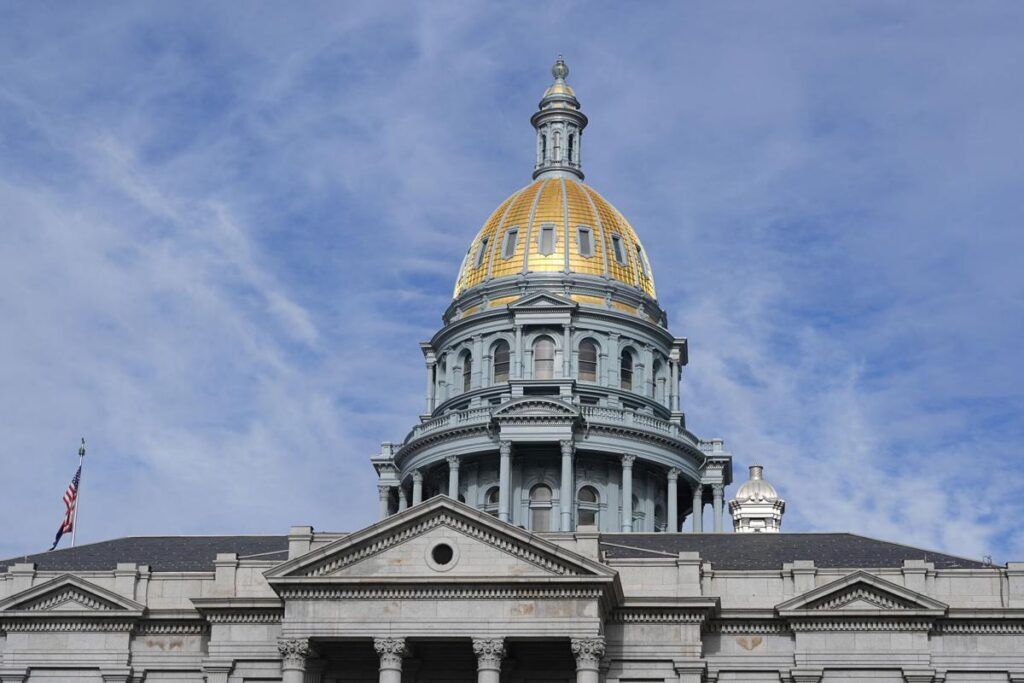
Colorado House pass bill raising threshold for agriculture overtime by one vote
Marianne Goodland
marianne.goodland@coloradopolitics.com
Updated 14 hours ago
The bill that would raise the overtime threshold for overtime pay for certain agricultural workers won the narrowest of votes Thursday in the Colorado House. Senate Bill 121 won a 33-32 vote, a dramatic difference from votes cast Wednesday on...
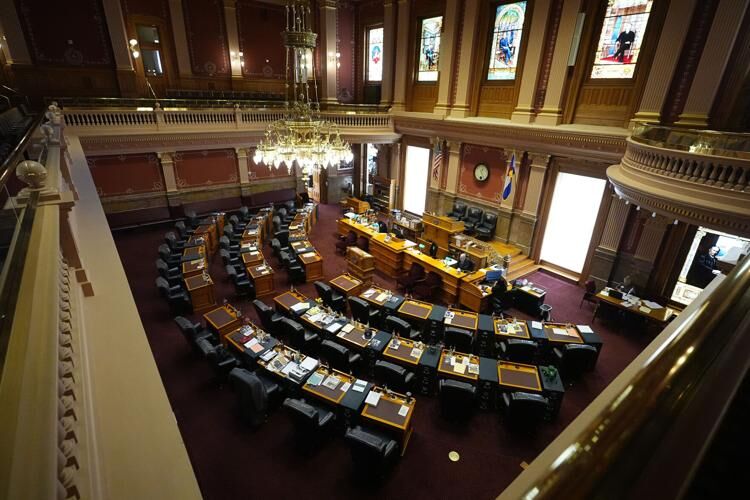
Colorado’s $46.8 billion budget nears finish line
Marianne Goodland
marianne.goodland@coloradopolitics.com
Updated 16 hours ago
The Colorado Senate on Thursday voted largely along party lines to approve $46.8 billion in spending for the next state budget. The spending plan is bigger than what legislators originally approved for the current fiscal year’s budget, driven by increases...

Colorado Senate passes bill for voluntary $5 fee to fund wildlife crossings
Scott Weiser
scott.weiser@gazette.com
Updated 16 hours ago
The Colorado Senate approved bipartisan legislation allowing drivers to voluntarily pay an extra $5 when registering their vehicles to help finance wildlife crossings and reduce the growing number of dangerous collisions between cars and animals on state highways. In 2024...

A proposed Democratic bill would make taking Colorado workers’ IDs a crime
Marissa Ventrelli
marissa.ventrelli@coloradopolitics.com
Updated 17 hours ago
After a narrow 6–5 vote, a bill to bar employers from taking workers’ identification documents is moving to the full Colorado House, sparking questions about how often such intimidation occurs and whether a new state law is necessary. House Bill...
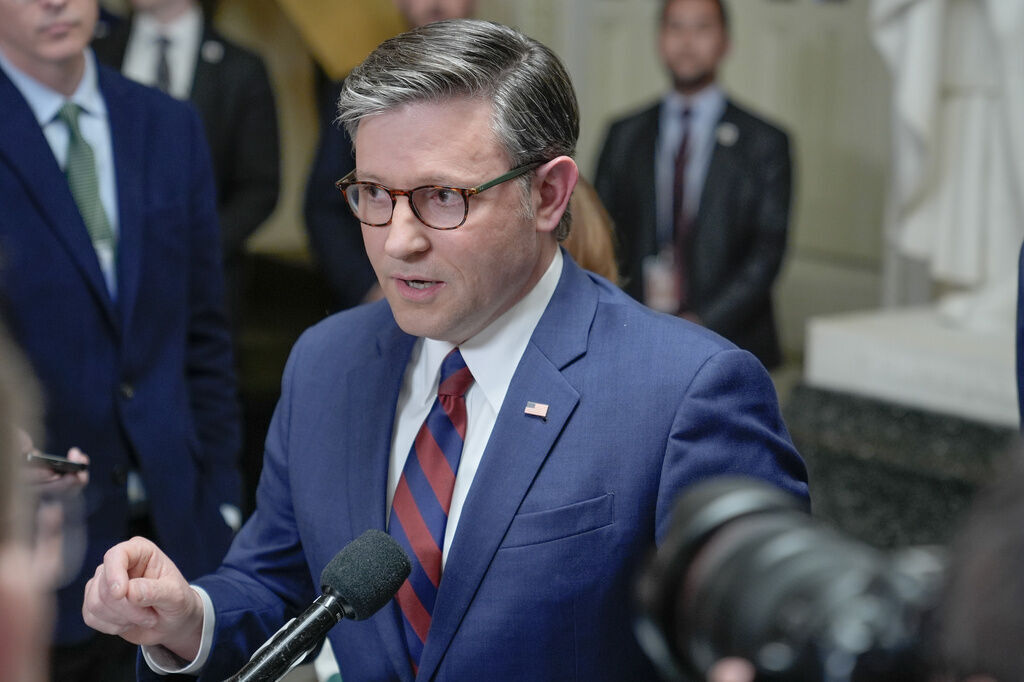
House rejects effort to withdraw US forces from the Iran war as Republicans stick with Trump
Kevin Freking
kevin.freking@associatedpress.com
Updated 21 hours ago
WASHINGTON (AP) — The House rejected a resolution Thursday requiring President Donald Trump to withdraw U.S. forces from the war with Iran unless Congress authorizes military action. It was the latest such vote that fell short of passage as Republicans...
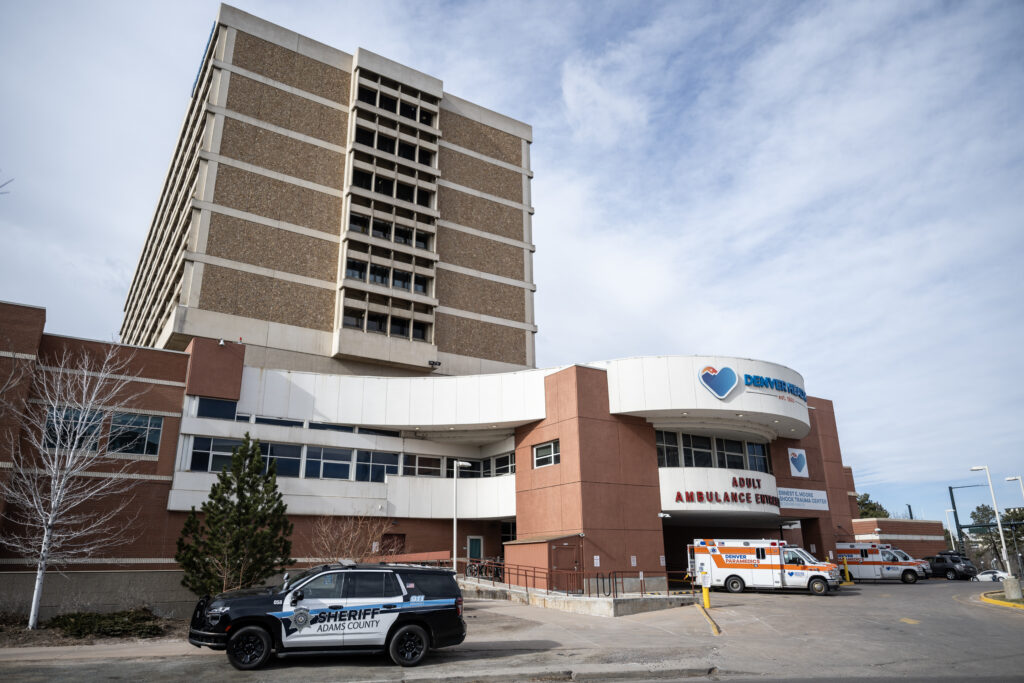
9 Colorado hospitals at risk of closing due to Medicaid cuts
Nico Brambila
nico.brambila@denvergazette.com
Updated 22 hours ago
The $900 billion in Medicaid cuts over the next decade could threaten the viability of more than 400 hospitals nationally and at least nine in Colorado, a new report has found. The hospitals span the Front Range and rural communities,...
Democrats vow to block next Trump Supreme Court pick amid Alito speculation
Ramsey Touchberry, Washington Examiner
ramsey.touchberry.washington.examiner@gazetteedit.wpenginepowered.com
Updated 22 hours ago
Justice Samuel Alito hasn’t tipped his hat on retiring just yet, but Senate Democrats are already entrenched in opposing the confirmation of a successor that would deliver President Donald Trump his fourth lifetime appointment to the high court. Democrats need...