

Downtown Denver geothermal pilot project receives $4.9 million from the Colorado Energy Office
Denver’s Office of Climate Action, Sustainability and Resiliency embarked on a $4.9 million pilot program funded by the Colorado Energy Office to use water instead of electricity to reduce the use of natural gas for heating and cooling in five million square feet of municipal buildings. The effort comes with pursuit of decarbonization goals, and acknowledging that electrification of large buildings in Denver would be “prohibitively expensive,” officials said.
The city will use the award from CEO to study a multisource district thermal water system to provide heating and cooling through a shared water loop for 14 city buildings comprising 5.5 million square feet currently served by Xcel Energy’s downtown steam and chilled water loops.
“Previous studies have explained the major challenges for both the building owners and Public Service – that is, electrification via electric resistance boilers or air-source heat pumps would be prohibitively expensive due to the costs to upgrade the electrical infrastructure within and serving the building,” said Senior Energy Project Manager Drew Halpern in testimony before the Colorado Public Utilities Commission. “Therefore, the city has continued to explore more cost-effective and achievable solutions to this challenge, including scoping a pilot project in our city-owned facilities – a multisource ambient temperature district thermal system.”
By converting the chilled water system to an ambient temperature system that uses both deep geothermal wells and heat from the sewer system, the building’s systems can be converted to water-to-water heat pumps for heating and cooling.
In the winter the loop would operate at higher temperatures, and in the summer lower temps, with the option of adding chilled water to help balance cooling loads.
The hybrid system would use about 500 geothermal wells drilled to a depth of 1,200 feet, distributed across seven locations, sewer heat recovery and supplemental heat pump chillers for temperature regulation. It would include renovation of the old Cherokee Boiler Plant to serve as a central utility plant.
“From our analysis, we project an immediate 83% reduction in GHG (green house gas) emissions after conversion to an ambient loop,” said Halpern.
This will substantially reduce both electrical loads, and natural gas for heating and will avoid the expense and difficulty of installing greater electrical capacity in the downtown core that would be required for full building electrification, city officials said.
“The city sees this approach as the only practical path to achieving full, or even close-to-full, decarbonization of the downtown building stock without a near-complete rebuild of the electric grid alongside corresponding buildout of generation, transmission, and other necessary infrastructure that comes with its own substantial GHG emissions toll,” Halpern added.
The project also estimates saving 80 million gallons of water per year by shutting down Xcel’s downtown steam loop.
“This figure balloons to an incredible estimated 1.4 billion gallons per year when expanded to the entire current steam system,” said Halpern.


Denver Gazette, Centennial Institute cosponsoring Republican gubernatorial debate Tuesday
Vince Bzdek
vince.bzdek@gazette.com
Updated 14 hours ago
The Gazette The Denver Gazette and the Centennial Institute are cosponsoring a Republican gubernatorial debate Tuesday at Colorado Christian University, featuring candidates Scott Bottoms, a Colorado Springs pastor, and longtime GOP insider Barb Kirkmeyer. Candidates will field questions on major...
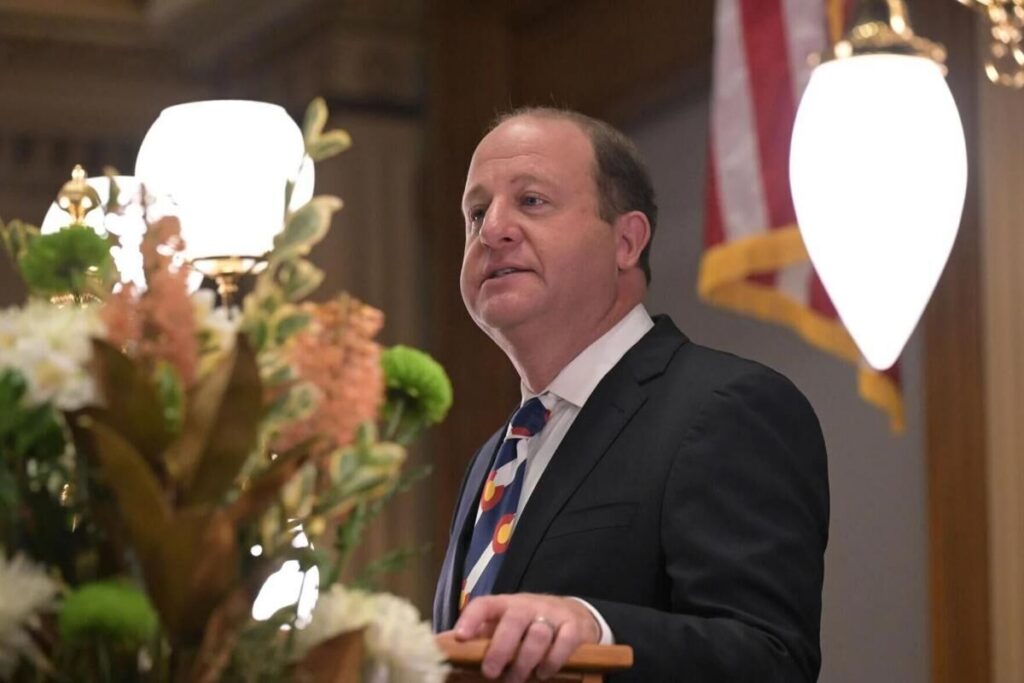
A mistaken commutation and an over-the-top reaction | SONDERMANN
By Eric Sondermann
by-eric-sondermann@coloradopolitics.com
Updated 2 days ago
It seemed an itch that Gov. Jared Polis just had to scratch. After months of hints and speculation, Polis put his signature on a commutation of the prison sentence of Colorado’s election-denying queen, former Mesa County Clerk Tina Peters. True,...

Buchanan’s consideration by White House for FTC causes GOP ruckus | A LOOK BACK
Rachael Wright, Special to Colorado Politics
rachael.wright@coloradopolitics.com
Updated 3 days ago
Forty-five years ago this week: While Republicans back in Colorado were fuming over the fact that Mary Estill Buchanan’s divisive campaign had impeded them from defeating Democrat U.S. Sen. Gary Hart, the former Colorado secretary of state was nonetheless certain she...

Colorado Politics Calendar May 25-31
Rachael Wright, Special to Colorado Politics
rachael.wright@coloradopolitics.com
Updated 4 days ago
CoPo’s weekly political calendar will help you find political and public-policy events throughout Colorado. It includes candidate and issue campaign events, public policy meetings, court hearings, state and local party conventions, assemblies, debates, rallies, parades, speaking engagements, traveling dignitary appearances,...

Tina Peters thanks Polis for shortening her sentence, calls Colorado Democrats’ censure a ‘travesty’
Ernest Luning
ernest.luning@coloradopolitics.com
Updated 15 hours ago
Two days after the Colorado Democratic Party formally condemned Gov. Jared Polis over his decision last week to shorten Tina Peters’ prison sentence for tampering with election equipment, Peters heaped praise on the term-limited Democrat and slammed his party for...
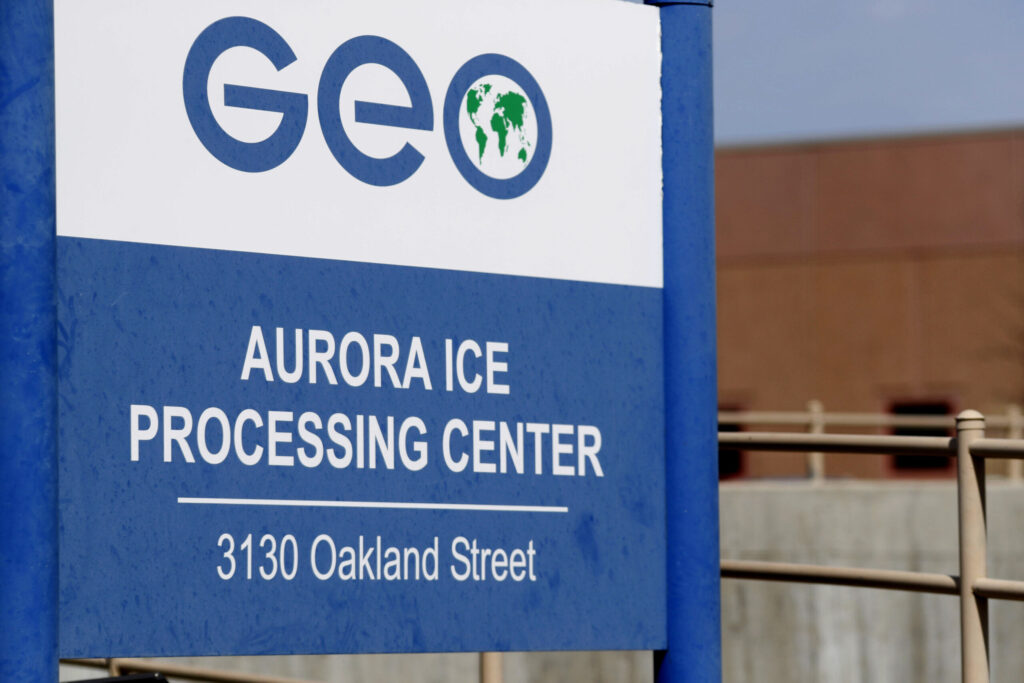
Federal judge green-lights jury visit to Aurora detention center in forced-labor lawsuit
Michael Karlik
michael.karlik@coloradopolitics.com
Updated 16 hours ago
A federal judge granted a request on Thursday to have jurors visit the privately run U.S. Immigration and Customs Enforcement detention center in Aurora as part of an upcoming civil trial over alleged forced labor practices. U.S. District Court Senior...
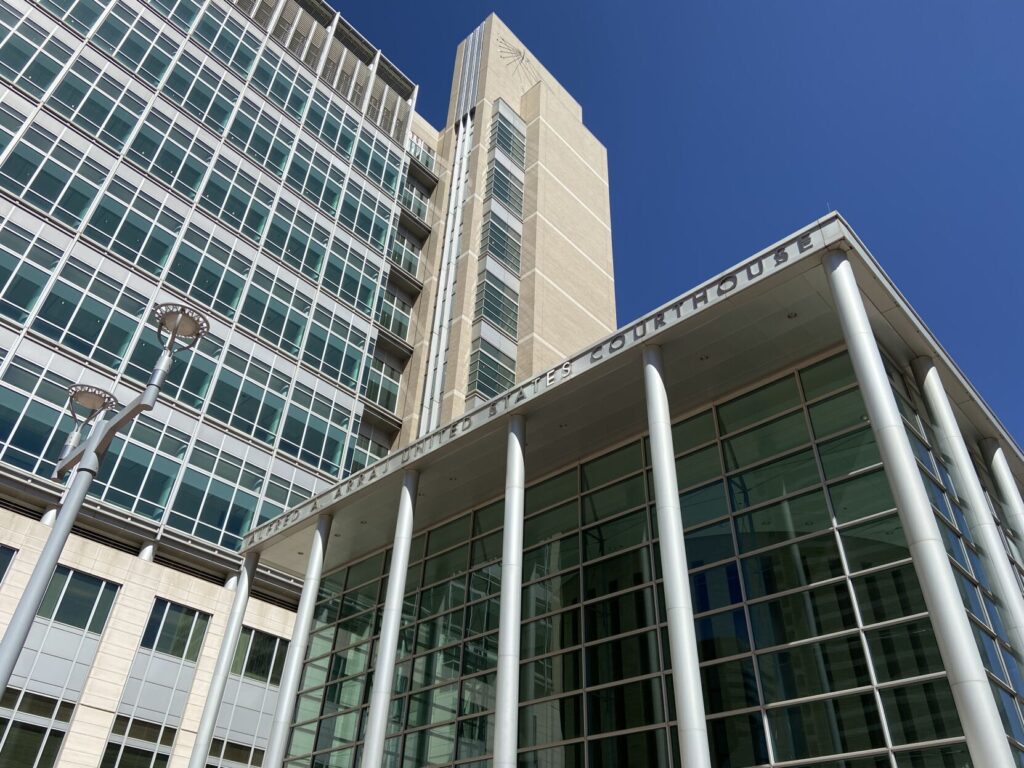
Federal judges’ responses vary to immigration authorities’ disregard of orders
Michael Karlik
michael.karlik@coloradopolitics.com
Updated 14 hours ago
Colorado’s U.S. District Court judges have responded in recent days to the government’s violations of, or unclear compliance with, their orders in immigration detention cases, resulting in directives to immediately free the petitioners. “I’m just struggling to understand how he...
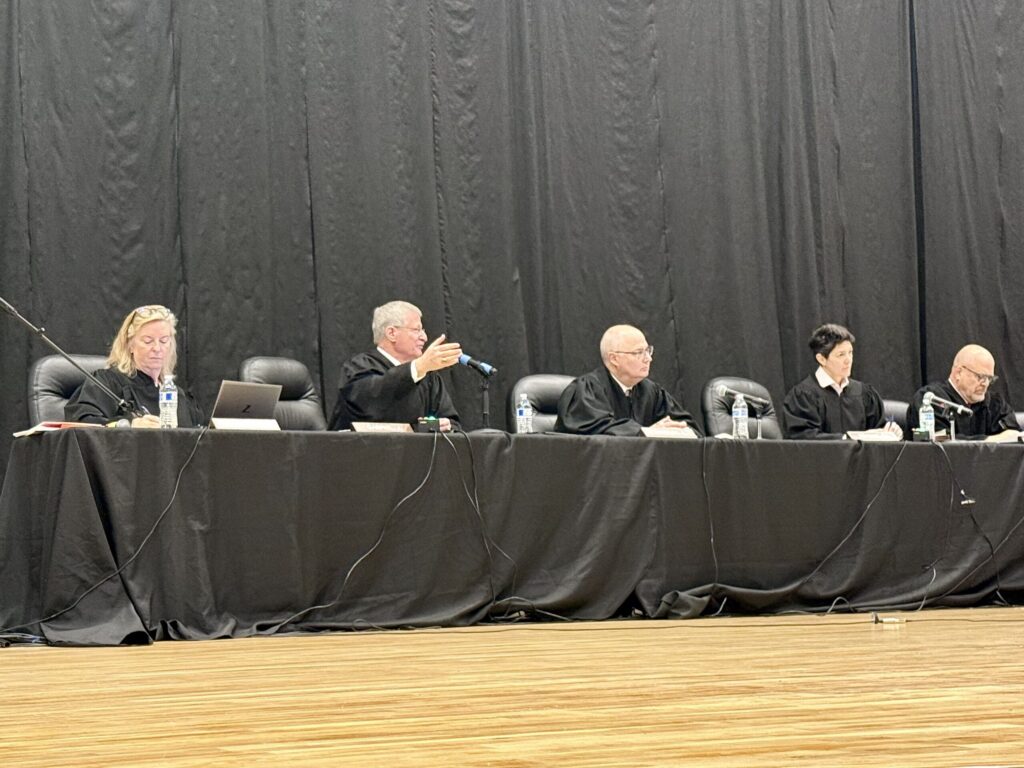
Colorado Supreme Court ditches debt collection case
Michael Karlik
michael.karlik@coloradopolitics.com
Updated 19 hours ago
The Colorado Supreme Court declined to rule on Friday in a case questioning the procedure a creditor may use to obtain records from entities related to a debtor, in which the court initially expressed its interest. Joel Farkas is liable...

Colorado: ‘Cracks’ or ‘competitive’?
Marianne Goodland
marianne.goodland@coloradopolitics.com
Updated 19 hours ago
DECK: Business leaders sound a warning while Polis remains confident in state’s outlook How does Colorado get back to the climate in the early 2000s, when there was collaboration between state government, companies and colleges and universities? That was the...
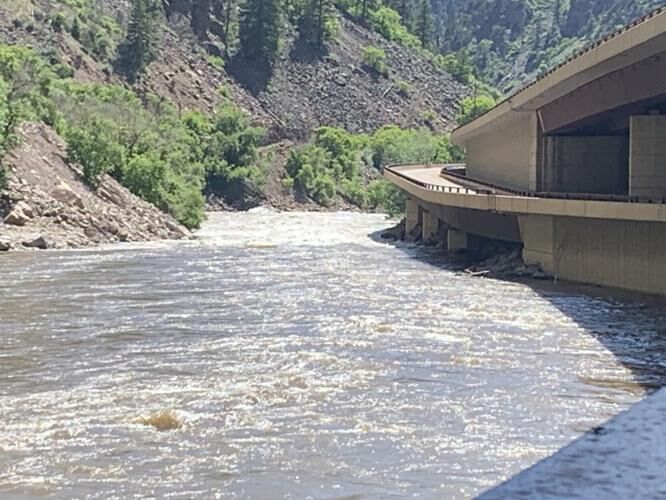
Trump administration releases $40 million for Colorado water project
Marianne Goodland
marianne.goodland@coloradopolitics.com
Updated 17 hours ago
The Trump administration on Friday released $40 million, clearing the way for a water district and its partners to finish funding the purchase of some of the state’s most senior Colorado River water rights, Gov. Jared Polis announced. Federal funding...