

Recent adopters of wild horses may still get paid, federal judge clarifies after overturning program
A federal judge clarified on Tuesday that his decision overturning a 6-year-old program to compensate those who adopt wild horses still allows people to receive their agreed-upon payments if they were already in the middle of adoption.
On March 3, U.S. District Court Senior Judge William J. Martínez overturned a set of policies governing the Adoption Incentive Program, administered by the Bureau of Land Management. Although a version of the program has existed since 2001, the most recent protocols expanded the practice of paying people to adopt wild horses throughout all western states.
Martínez found the bureau did not follow the legal requirements to seek input prior to adopting the rules, nor did it properly evaluate the environmental impacts of the program.
On March 31, the government wrote to Martínez seeking clarification. At the time of his order, there were approximately 1,600 adopters who had gained title to their animal, but who had not yet received the $1,000 payment guaranteed by the Adoption Incentive Program.
“These adopters who received title in good faith reliance on the then-existing AIP, and the contracts they executed with BLM, now own animals that cannot lawfully be returned to the agency,” wrote attorneys with the U.S. Department of Justice. “Depriving these adopters of the payments they are owed under their AIP contracts could compromise their ability to care for their titled animals and might increase the chance that they sell an animal they had originally intended to retain.”
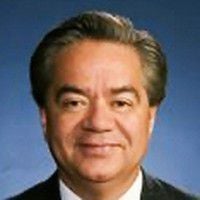
U.S. District Court Judge William J. Martínez
Courtesy photo
They asked Martínez to clarify whether the bureau could send payments to those 1,600 adopters. The plaintiffs who challenged the Adoption Incentive Program did not oppose the request.
Martínez quickly responded in the affirmative, writing that his original decision “does not in any manner restrict or preclude Respondents from fulfilling their preexisting contractual obligations.”
In 1971, Congress declared wild horses and burros “components of the public lands” to be managed by the government. However, a rebound in their population prompted lawmakers to clarify in 1978 that the government must also remove “excess” horses to maintain the ecology of a given area.
The bureau turned to sales or adoptions of the wild horses and burros, as maintaining the animals in holding facilities consumed roughly 60% of the wild horse program’s budget and overpopulation threatened the environment, other species and the horses themselves.
In 2001, the bureau launched a pilot program in Wyoming to pay those who were willing to adopt. In 2009, the pilot shifted to four other states.
The bureau then issued “instruction memoranda” in 2019 and 2022, laying out protocols for the Adoption Incentive Program throughout the West. Although some details changed between the two memoranda, the program paid $1,000 to those willing to adopt and who would not knowingly sell their horses or burros to those who would slaughter or make products out of them.
In 2021, The New York Times revealed that some participants in the Adoption Incentive Program were, in fact, reselling their horses for exactly that purpose. Within months, then-U.S. Sen. Dianne Feinstein, D-Calif., wrote to the U.S. Secretary of the Interior urging an investigation and a reconsideration of the cash adoption incentive.
Meanwhile, the advocacy group American Wild Horse Campaign and other interested plaintiffs filed suit to challenge the bureau’s issuance of the program memoranda. They initially sought review in the District of Columbia, but a judge transferred the case to Colorado’s federal trial court in 2021. The plaintiffs alleged the bureau violated the Administrative Procedure Act and the National Environmental Policy Act with its decision-making.
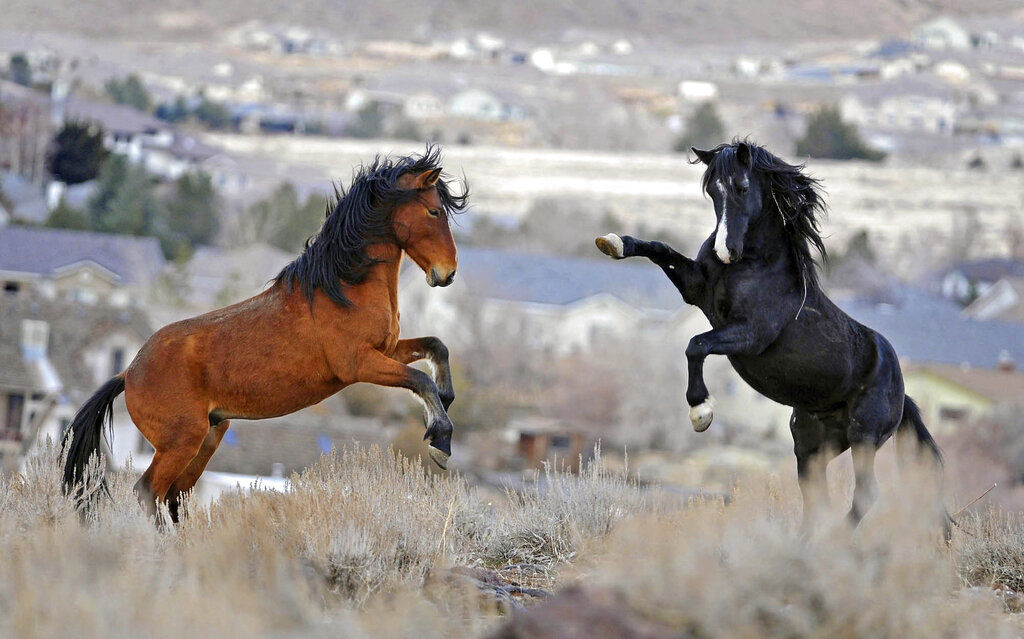
In this Jan. 13, 2010, file photo, two young wild horses play while grazing in Reno, Nev.
(File photo by Andy Barron/The Reno Gazette-Journal via AP)

In his March decision, Martínez, an appointee of Barack Obama, agreed with the plaintiffs. He recited the history of wild horses on public land, noting the number of “excess” horses is much greater than the number of people willing to adopt or buy them. He also wrote that by overturning the more comprehensive incentive program, it was possible the bureau could still pay adopters in New Mexico, Oklahoma, Texas and Kansas — the four states from the 2009 pilot.
Nonetheless, Martínez found the bureau did not subject the two sets of program memoranda to public notice and comment procedures, and “failed to show an adequate basis in the record for electing not to prepare an EIS (environmental impact statement).”
The bureau’s website now lists the Adoption Incentive Program as “currently paused and not available for new adopters.” A spokesperson for the bureau said Martínez’s decision does not affect adoption events that do not involve the cash incentives, one of which is scheduled to occur next week at the Douglas County Fairgrounds.
In asking Martínez to clarify that incentive payments may still be sent to those who initiated their adoptions before his order, Division Chief Holle Waddell noted the bureau had placed 20,441 animals through the Adoption Incentive Program since 2019. Those amounted to 55% of all adoptions, with horses and burros spread across 26.9 million acres of public land.
The case is American Wild Horse Campaign et al. v. Bergum et al.

Wrongfully deported man to be returned to U.S., Colorado federal judge orders
Michael Karlik
michael.karlik@coloradopolitics.com
Updated 1 hour ago
Colorado’s chief federal judge took the extraordinary step of directing the government on Tuesday to do everything it can to return a man it deported in violation of his order. At the same time, Colorado’s chief magistrate judge has set...
Denver murder, assault convictions reversed due to faulty jury instructions
Michael Karlik
michael.karlik@coloradopolitics.com
Updated 16 hours ago
Colorado’s second-highest court reversed a defendant’s convictions for murder and assault last week after concluding a Denver judge incorrectly omitted key jury instructions that could have affected the verdict and sentencing. Stephen C. Swainson fatally stabbed Israel Casillas in downtown...
‘Understand people for who they are’: 2 federal judges talk about compassion in courtroom
Michael Karlik
michael.karlik@coloradopolitics.com
Updated 24 hours ago
Before taking the bench in 2022, U.S. District Court Judge Charlotte N. Sweeney was an employment discrimination attorney. While the cases could be emotionally charged, they were different from the criminal proceedings she is now handling. “It wasn’t necessarily affecting...
Denver murder conviction reversed for incomplete self-defense instruction
Michael Karlik
michael.karlik@coloradopolitics.com
Updated 2 days ago
Colorado’s second-highest court reversed a defendant’s murder conviction last week because a Denver judge gave an incomplete instruction to the jury about the man’s right to self-defense. Donald R. Gonzales and Gary McLaughlin met up in a Capitol Hill parking...
Colorado lawmaker, House leaders named in workplace-retaliation lawsuit
Marianne Goodland
marianne.goodland@coloradopolitics.com
Updated 2 days ago
A former legislative aide has filed a lawsuit alleging she was mistreated, illegally directed to perform campaign work and harmed by a House leadership structure she charged was fragmented, politicized and ineffective at protecting employees. The lawsuit, filed by Jennifer...
Federal judge hears arguments about Colorado’s 3-day gun purchase waiting period
Michael Karlik
michael.karlik@coloradopolitics.com
Updated 2 days ago
A federal judge heard arguments on Monday about the constitutionality of a 2023 Colorado law that generally imposes a three-day waiting period on firearm purchases after the initiation of a background check. The test that the U.S. Supreme Court created...
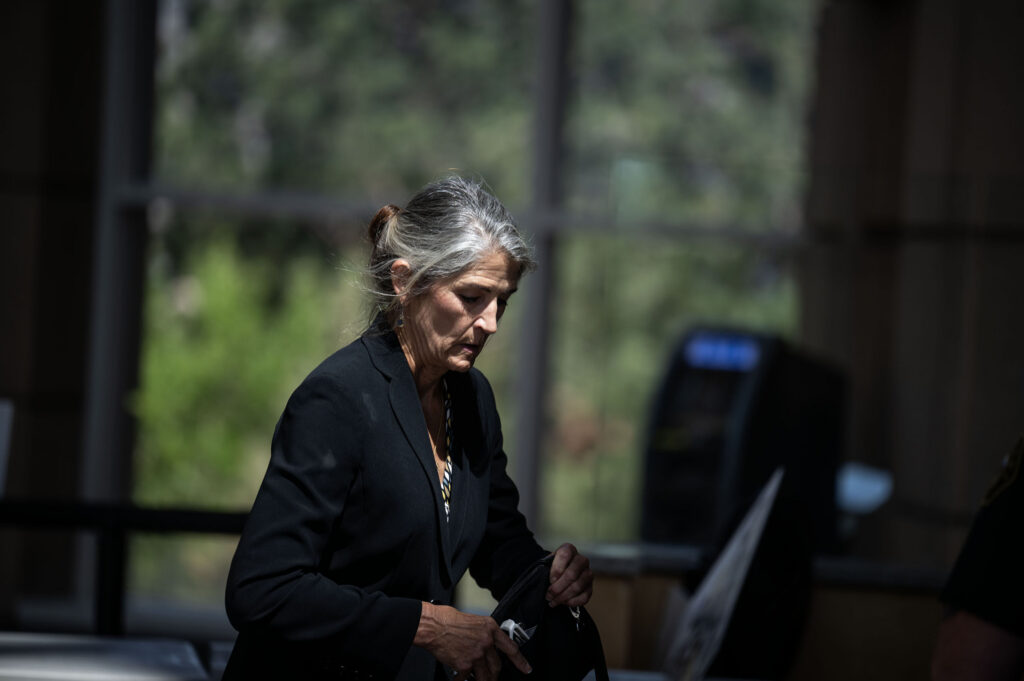
Colorado Supreme Court intervenes in Weld County prosecution dismissed due to Missy Woods misconduct
Michael Karlik
michael.karlik@coloradopolitics.com
Updated 2 days ago
The Colorado Supreme Court ordered a Weld County trial judge last week to respond to the district attorney’s claim that he improperly dismissed a criminal case because of “outrageous” conduct by the Colorado Bureau of Investigation. Daniel Lee Eatinger stood...
Schoolchildren’s presence at child sex-related trial did not harm Arapahoe County defendant, appeals court says
Michael Karlik
michael.karlik@coloradopolitics.com
Updated 5 days ago
Colorado’s second-highest court decided on Thursday that the presence of a group of schoolchildren on the first day of a child sexual exploitation trial did not violate an Arapahoe County defendant’s constitutional right to a fair trial. Prosecutors charged Jerry...
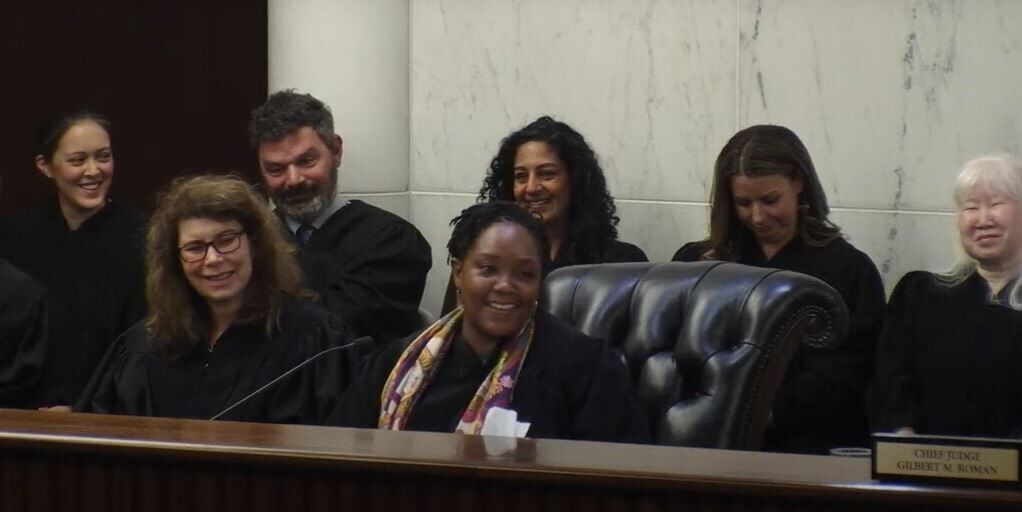
Appeals court cites week-old Colorado law to reinstate child neglect case at child, father’s request
Michael Karlik
michael.karlik@coloradopolitics.com
Updated 4 days ago
Colorado’s second-highest court invoked a new state law for the first time on Thursday and reinstated a child neglect case that both the child and her father wished to reopen. House Bill 1227 took effect on Aug. 12, reversing a...
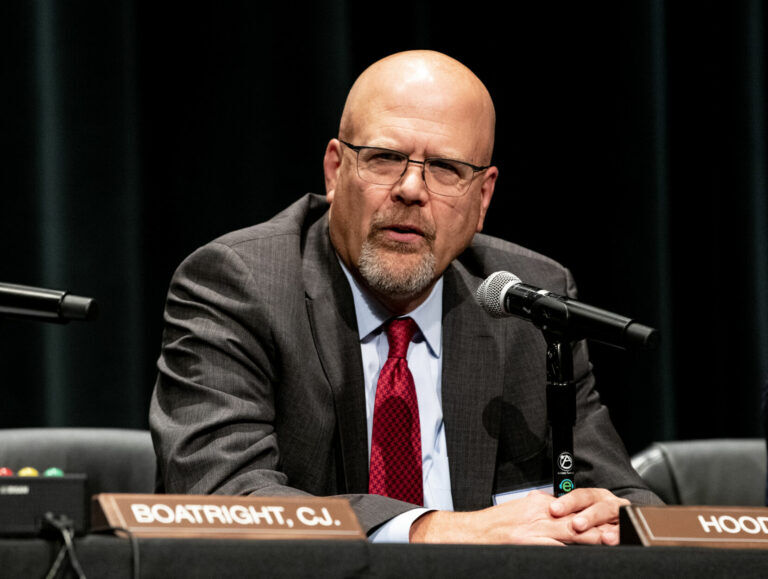
Colorado Supreme Court names William Hood as next chief justice
Michael Karlik
michael.karlik@coloradopolitics.com
Updated 6 days ago
The Colorado Supreme Court has selected Justice William W. Hood III to be the next chief justice, the judicial branch announced on Friday. Hood will succeed Chief Justice Monica M. Márquez, who took over the role in July 2024. “I...