

Colorado Senate OKs $44 billion budget, debate shifts to House
The Colorado state government’s $43.9 billion spending plan is on its way to the House after a long day of debate on Wednesday and final vote on Thursday in the Senate, where lawmakers ultimately adopted a budget that funds school lunches, offers a pay raise to employees and sets aside funding for federal litigation.
The state budget is the only constitutionally mandated job of the Colorado General Assembly, and by law, it must be balanced. This year, lawmakers are grappling with a $1.2 billion hole in the state’s 2025-2026 spending plan, leading them to make “extremely painful” cuts, sweeps or fund transfers totaling hundreds of millions of dollars.
That $43.9 billion budget includes $17 billion in general funds and $14 billion in federal dollars. General funds are the discretionary dollars, derived from individual and corporate income taxes, as well as sales and use taxes. Cash funds make up the rest, about $12.8 billion.
This year’s budget — Senate Bill 206 by itself contains 728 pages — came with 63 “orbitals” — bills that move with the budget measure and contain statutory changes that help balance the spending plan. Some of the orbitals would eliminate programs or clean out cash funds that were then transferred to the general funds.
This year’s orbitals are likely the most ever traveling with a budget bill due to the complexity of the budget and the Joint Budget Committee’s efforts to cut $1.2 billion in general funds.
It’s not a revenue problem, according to budget panel Chair Sen. Jeff Bridges, D-Greenwood Village. The issue facing the panel, as it crafted the budget, was a structural deficit, as general fund revenue reached the Taxpayer’s Bill of Rights cap. This is a problem lawmakers have been aware of for the past five years, but the budgets didn’t address that issue.
As a result, according to Bridges, the cuts in the 2025-26 budget would be permanent. The only caveat is the potential that voters could be asked in November to make changes that would raise the TABOR cap, like Referendum C in 2005.
Rumors that such legislation is in the works have been circulating at the state Capitol for weeks, but to date, no bill or resolution to accomplish that has been introduced. As of April 4, there are 33 days left in the 2025 session.
The final vote on SB 206 stood at 22-11, with all the Republicans voting against the measure, save for JBC member Sen. Barbara Kirkmeyer, R-Brighton.
Lawmakers adopted ‘extremely painful’ cuts
The cuts were “extremely painful,” Bridges said. “There are few bills that belong less to their sponsors than this one.”
The budget is not perfect, he added, but it is responsive to the fiscal constraints, while keeping commitments to the people of Colorado.
Kirkmeyer compared the budget to the Titanic.
“We know it’s going to happen. It hits an iceberg and it sinks. We have the opportunity to chart a different course.”
Unlike the Titanic’s captain, who didn’t know what was below the surface, “we know” what’s below the surface, she said.
Kirkmeyer chided the budget committee for using the March forecast from the Office of State Planning and Budgeting, instead of the more conservative one from the Legislative Council economists.
“We can change the course, and that’s what this budget represents,” she added. “Making those changes will take discipline. We cannot spend our way out of a structural deficit, nor can we put a heavier tax burden on Coloradans.”
Kirkmeyer then announced she would vote in favor of the budget: “This is the first step in a multiyear process. The state government is spending too much, and it’s our moral duty to justify every dollar spent.”
All the “orbitals” also passed and are now head to the House.
Budget funds school lunch program
The budget funds the Healthy School Meals for All program throughout the rest of 2025 but relies on voters in November to decide whether to continue paying for breakfast and lunches for all school kids, regardless of income, or whether to base the program on income level starting in 2026.
The 2025-26 budget caps public college and university tuition increases at 3.5% for both resident and nonresident students. That comes with an increase in funding of $32.3 million, less than half what was requested by the state institutions of higher education.
Funding for K-12, although not contained in the budget — that’s handled through the School Finance Act — will increase by $150 million.
One of the points of dissension between the JBC and the governor was over Medicaid provider rates. The previous year’s budget increased those provider rates more than what was recommended by the governor, whose Nov. 1 budget proposal included a decrease.
Provider rates are a sore subject with some members of the JBC, and they rejected the governor’s suggestion, instead adding a 1.6% increase to most.
State employees will see a 2.5% increase in pay, but the budget also cuts 1.5% from agency salary budgets, to be covered by vacancy savings in affected state agencies.
The Department of Law will see a $1.2 million increase in its funding to cover the costs of federal litigation, including potentially a challenge any move by President Donald Trump to move Space Command from Colorado Springs to Huntsville, Alabama.
The cuts
The Colorado Department of Transportation could see some of the biggest cuts, with $71.4 million taken from a multimodal options fund tied to Senate Bill 21-260, which is designed to fund alternative transportation, such as on-demand transit, pedestrian and bicycle routes, and greenhouse gas mitigation projects. The department also saw another cut of $64 million that prompted warnings those cuts could affect ongoing projects.
Wednesday’s debate on the budget began with the dispensing of the majority of the 63 bills added to the consent calendar, meaning there was an expectation that the bills would be passed unanimously, and they were.
That left lawmakers with the main event the $43.9 billion state budget and 61 proposed amendments.
Senate Minority Leader Paul Lundeen, R-Monument, renewed his annual plea to lawmakers to prioritize the School Finance Act and tailor the funding to follow students, distributing it for the benefit of students rather than school districts.
The amendments
The amendments started with one from Sen. Rod Pelton, R-Cheyenne Wells, to eliminate the $200,000 general fund appropriation to the Division of Animal Welfare in the Department of Agriculture. The money would go to the Arkansas Valley Regional Medical Center in LaJunta, which announced in January it would eliminate obstetrics services beginning this month. It leaves the residents of southeastern Colorado with only one option, the Prowers Medical Center in Lamar, where maternity services have been in jeopardy in the past.
At that facility, maternity services were closed for 18 months during the height of the COVID-19 pandemic and reopened in February 2023. Without the Lamar facility, the next nearest place for obstetrics services is in Pueblo, some 120 miles away.
This is for funding “human babies” over animals, Pelton said in advocating for the amendment, which failed.
Pelton told Colorado Politics that the Arkansas Valley Center would need $1.2 million annually to provide obstetric services.
However, Pelton succeeded on his second try, an amendment that removed $1.2 million from the general fund.
The Division of Animal Welfare is a new state program created through legislation in 2024 to support the welfare of companion animals and livestock.
Sen. Larry Liston, R-Colorado Springs, had prepared nine amendments to protect funding for the National Cybersecurity Center at the University of Colorado Colorado Springs.
“We are doing a great job of educating the cybersecurity professionals we need” for the businesses, Bridges said, advocating against the amendment. Using taxpayer dollars to incentivize programs that these institutions are already providing is not the most effective use of these dollars, he said.
Liston, however, won the day when a second try during the final procedural action was approved on a 19-14 vote, with $436,616 in funding paid for by reducing a recreational program in the Department of Corrections.
Another amendment sought to eliminate the $74,537 general fund “second salary” for Lt. Gov. Dianne Primavera, which she receives for administering the Office of Saving People Money on Health Care. There was also an amendment to eliminate the $250,000 general fund appropriation for that office.
Lawmakers debate ‘second salary’ for lieutenant governor
The former amendment provoked the most intense argument of the day, one that pitted JBC members against each other.
Sen. Judy Amabile, D-Boulder, claimed the office had saved Coloradans $1.8 billion through programs such as reinsurance.
Fellow JBC member Kirkmeyer, when discussing the issue later, called the office a “joke.” Kirkmeyer noted that she was on the health committee when bills such as reinsurance were being debated and never once saw Primavera.
“This is shameful,” she said. “She’s not running a department; she’s running a made-up office through an executive order.”
The office was later codified in statute.
“We have a moral requirement to justify every dollar we spend,” Kirkmeyer said, explaining that the Primavera should be doing that job without extra pay. “It’s $75,000 that no one in this room can justify.”
Very few amendments received bipartisan support, but one that got intense lobbying was offered by Sens. Lisa Cutter, D-Littleton, and Sen. Byron Pelton to restore provider rates for occupational, physical, and speech therapists. That came with a cost of $6.5 million, including $1.9 million in general funds. The amendment passed without identifying a source for the funds.
Another bipartisan amendment was proposed to fund long-term care and medical services for Medicaid clients, a treatment program within the Department of Human Services, and a safe streets initiative within the Department of Public Safety. It carried a cost of $9.3 million in general funds and total funds of $12.4 million. The general funds would come from a capital construction project for the Department of Corrections. That amendment passed.
Senators keep pay raises for lawmakers
Republicans pushed for an amendment to stall a type of pay increase for lawmakers in a year when lawmakers are cutting hundreds of millions in the budget.
Lawmakers are in for an increase in per diem in the 2025-26 budget, the result of a bill passed in 2024. Currently, lawmakers who reside within 50 miles of Denver can claim $45 per day and are not required to provide receipts for expenses such as meals or transportation. Under House Bill 24-1059, that increases to $71 per day and applies to 40 House members and 21 senators. That would result in an increase of about $3,120 per person for the 120-day session.
For those who live more than 50 miles away, the per diem would increase from $240 per day to $254 per day for the 120-day session, representing a rise of approximately $1,680 per person.
Sen. Byron Pelton offered the amendment that would save $421,650 in general funds.
“What’s at the heart of this amendment is leading by example,” said his cousin, Sen. Rod Pelton.
The amendment failed.
Sen. Byron Pelton attempted the last procedural action of the day a second time, but it garnered only 17 of the required 18 “yes” votes and was declared failed.
Lawmakers have in the past put their own salary increases on hold during times of economic struggle, most recently through a bipartisan bill in 2020.
Meanwhile, “a matter of life and death” was how the Senate’s newest member, Sen. Katie Wallace, D-Longmont, described her request for $268,562 in cash funds to add four more inspectors for oil and gas operations to the Energy and Carbon Management Commission, part of the Department of Natural Resources. The funds would come from the commission’s reserves.
Wallace said one of her constituents watched from her back porch the explosion of a drilling operation that killed a worker. Another constituent, with wells next door to her property, has benzene in her blood and is under treatment.
“I hope to live in a state where wells are regularly inspected,” Wallace said, noting that wells are only inspected once every 1.5 to three years — and only on a risk-based basis.
The department didn’t request this, noted Kirkmeyer, who stated that the department has already added 125 new inspectors in the last few years, despite both a declining number of wells and declining revenues from oil and gas operations. The amendment failed.
An amendment was offered and rejected to eliminate state patrol security for the attorney general, secretary of state, and state treasurer at a cost of $1 million in general funds.
During a Wednesday morning caucus, the amendment sponsor, Sen. Scott Bright, R-Greeley, quipped that the security details are no longer necessary because “we’re in a safer environment here — thanks to the efforts of Denver Mayor Mike Johnston.”
That’s a dig at the Denver mayor after complaints from Republican lawmakers over a recent rash of deaths and other safety concerns in the vicinity of the state Capitol.


Trump lowers flags to half-staff for Dolly Parton: ‘The World loves you’
Naomi Lim
naomi-lim@coloradopolitics.com
Updated 18 hours ago
President Donald Trump is honoring the life of country music legend and philanthropist Dolly Parton by ordering federal buildings across the country to lower flags to half-staff for a week. “Very sad to report that Dolly Parton, one of the...
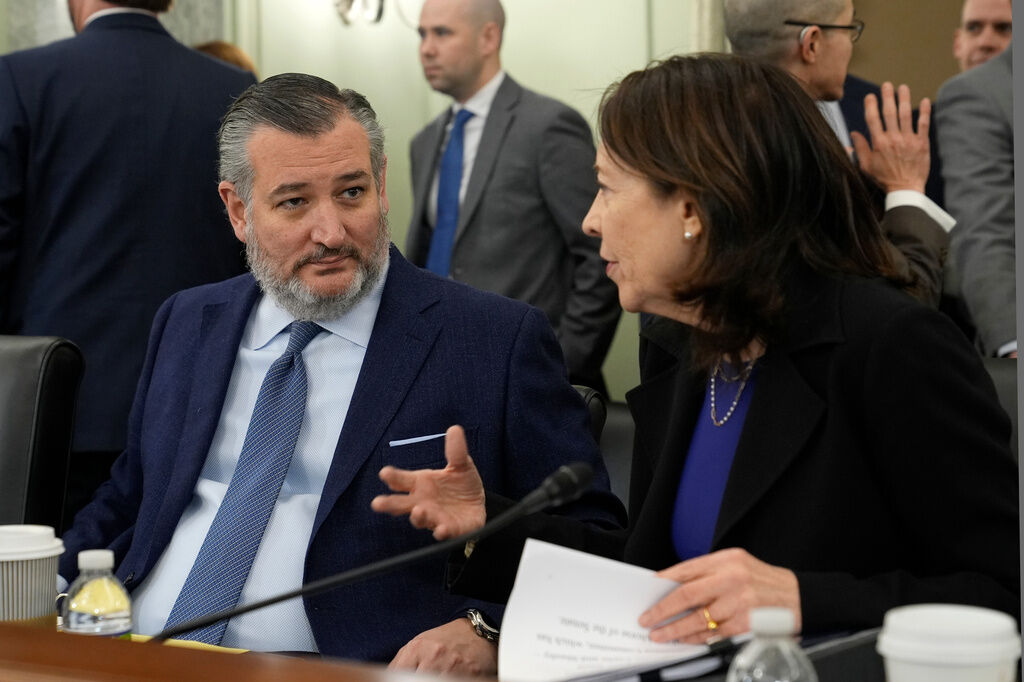
Ted Cruz suggests GOP realignment coming after Trump leaves office
Emily Hallas
emily-hallas@coloradopolitics.com
Updated 18 hours ago
Sen. Ted Cruz (R-TX) on Monday suggested the Republican Party could embrace a directional shift after President Donald Trump leaves office, a transition that promises to leave a gaping hole in the GOP. Cruz is known as a critical ally...
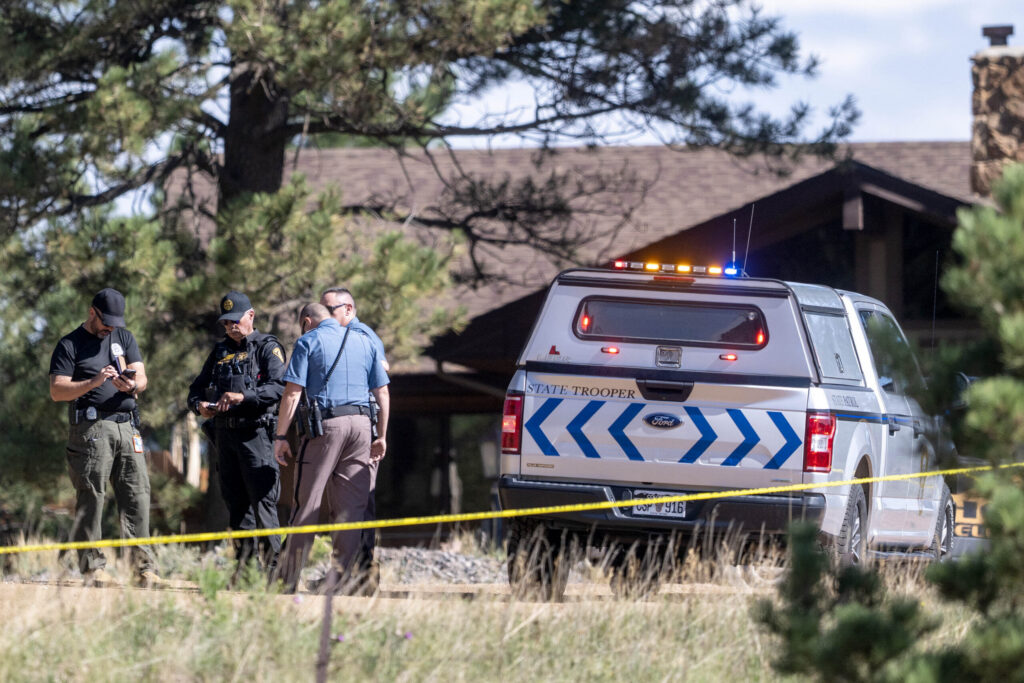
2 Colorado State troopers shot near Woodland Park; suspect killed
DEBBIE KELLEY
debbie-kelley@coloradopolitics.com
Updated 17 hours ago
Two Colorado State Patrol troopers were hospitalized, and a suspect is dead after a shooting during a traffic stop Tuesday. The initial incident happened at about 7:15 a.m., when a resident reported suspicious activity in the area near milepost 286...
Aurora moves forward with data center regulations
Kyla Pearce
kyla.pearce@gazette.com
Updated 17 hours ago
The Aurora City Council approved moving forward with two new regulations on data centers and directed staff to come back at the next study session with others. At a council meeting in early August, council members directed city management to...

Aurora City Council considers stricter food truck regulations
Kyla Pearce
kyla.pearce@gazette.com
Updated 17 hours ago
The Aurora City Council is considering passing laws to limit the number of food trucks on properties in the city and how and when they operate. Councilmember Angela Lawson, who sponsored the ordinance, said she understands the importance of food...
Denver murder conviction reversed for incomplete self-defense instruction
Michael Karlik
michael.karlik@coloradopolitics.com
Updated 15 hours ago
Colorado’s second-highest court reversed a defendant’s murder conviction last week because a Denver judge gave an incomplete instruction to the jury about the man’s right to self-defense. Donald R. Gonzales and Gary McLaughlin met up in a Capitol Hill parking...
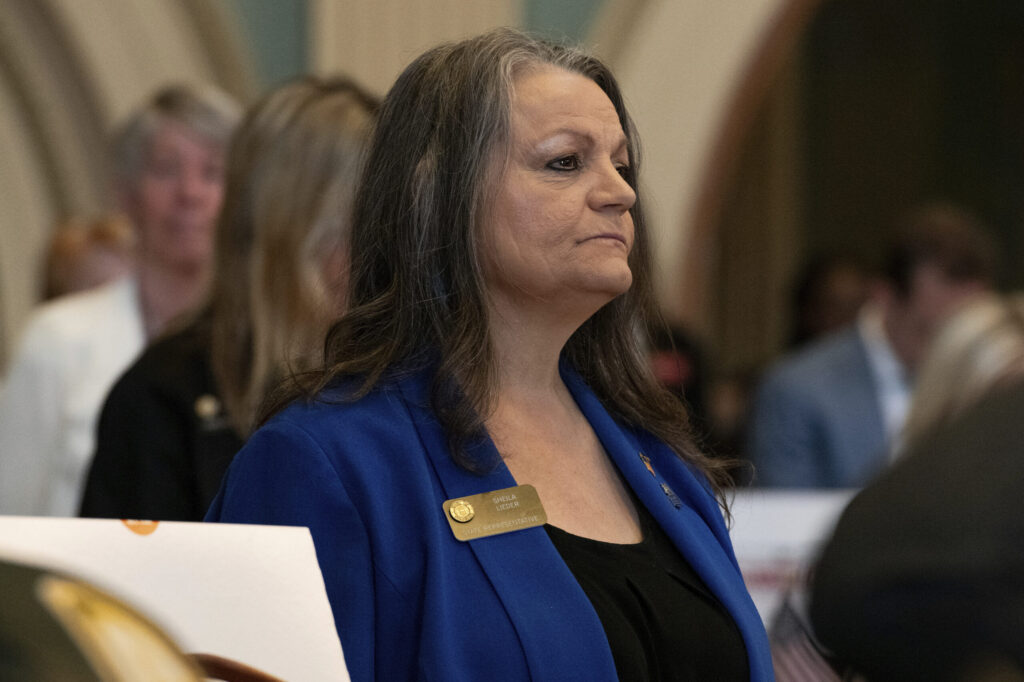
Colorado lawmaker, House leaders named in workplace-retaliation lawsuit
Marianne Goodland
marianne.goodland@coloradopolitics.com
Updated 18 hours ago
A former legislative aide has filed a lawsuit alleging she was mistreated, illegally directed to perform campaign work and harmed by a House leadership structure she charged was fragmented, politicized and ineffective at protecting employees. The lawsuit, filed by Jennifer...

Secret Service confirms awareness of Iranian state media video threatening Barron Trump’s life
The Associated Press
the-associated-press@coloradopolitics.com
Updated 23 hours ago
WASHINGTON (AP) — The U.S. Secret Service has confirmed it is aware that Iranian state media has aired a video that appears to threaten the life of Barron Trump, President Donald Trump’s youngest son. “The U.S. Secret Service is aware...
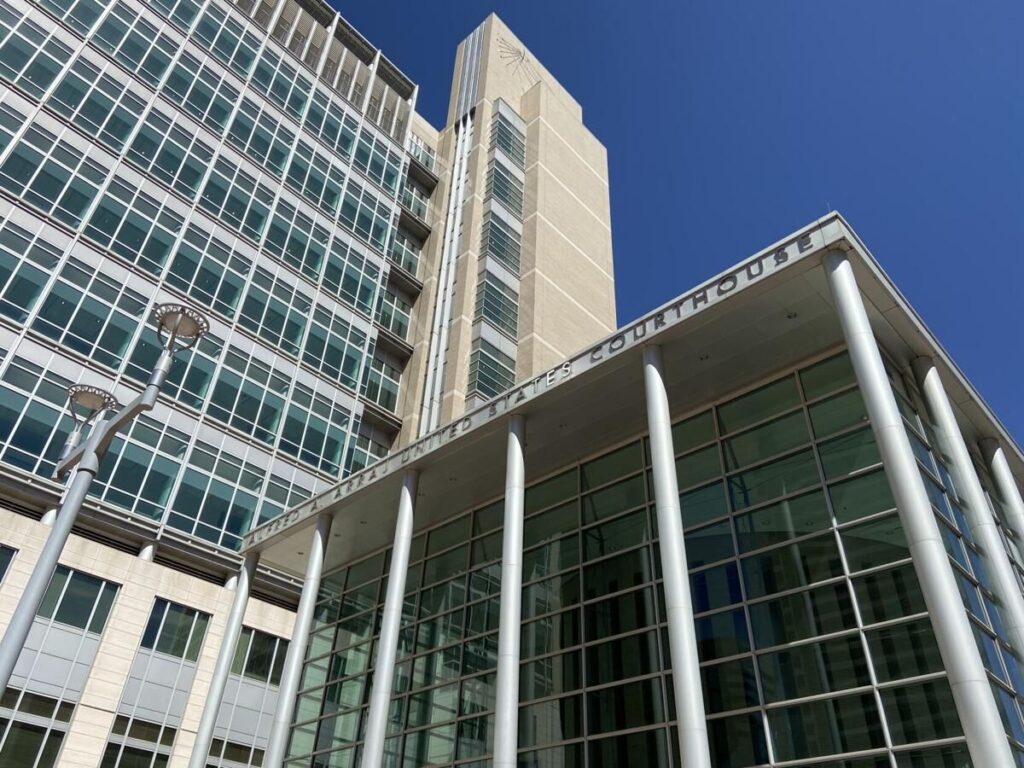
Federal judge hears arguments about Colorado’s 3-day gun purchase waiting period
Michael Karlik
michael.karlik@coloradopolitics.com
Updated 23 hours ago
A federal judge heard arguments on Monday about the constitutionality of a 2023 Colorado law that generally imposes a three-day waiting period on firearm purchases after the initiation of a background check. The test that the U.S. Supreme Court created...

Denver auditor finds oversight failures in $175.6M 16th Street project
Nico Brambila
nico.brambila@denvergazette.com
Updated 17 hours ago
Surprise historic sewer discovery delayed completion a year, cost $18M The Denver Auditor recently found significant oversight and contracting problems with the $175.6 million 16th Street Improvement Project, including an $18 million contract increase and a nearly one-year extension that...