

Federal judge lets prisoner’s claim proceed over strip search video shared with others
A federal judge agreed last week that an incarcerated man’s claims could proceed against two state corrections employees, alleging they retaliated against him for complaining about recorded strip searches and also showed the video of one search to inmates and staff.
Representing himself, Ryan James Griffin filed suit based on multiple strip searches he underwent in August 2023 while at the Colorado Territorial Correctional Facility. He wrote that he understood the prison had created “special rooms and barriers” to ensure strip searches were not video recorded.
However, on Aug. 1, 2023, employees allegedly took him to a utility closet next to the kitchen for a strip search. Griffin noticed a “black bulb” above him that appeared to contain a camera.
“I felt humiliated, physically ill, and in fear that the security footage was a live feed,” Griffin wrote, and “other CTCF staff and inmates throughout the CTCF of both genders were watching the recorded / live feed strip search for their prurient interests.”
After Griffin complained pursuant to the federal Prison Rape Elimination Act, officials responded that a search “can be recorded at any time … based on the offender’s actions.” The Aug. 1 search was “within policy.”

Afterward, Sgt. Leroy Mora, who was involved in the Aug. 1 search, allegedly stopped Griffin from attending multiple medical appointments, prevented Griffin from visiting the library to record a video for his daughter and blocked him from conducting legal research.
Then on Aug. 30, employees subjected Griffin to another strip search in the kitchen. This time, an employee allegedly recorded it using a body-worn camera. Months later, another inmate allegedly told Griffin that he watched a corrections officer access the video “and play it in its entirety.” Griffin further alleged the officer, Nicholas Hoover, shared the video of Griffin’s strip search with inmates, staff and medical contractors.
Griffin wrote that the events led him to experience physical and mental symptoms of post-traumatic stress disorder. He sued various prison employees for First Amendment retaliation based on the negative consequences he experienced after filing his grievance; for an unreasonable search under the Fourth Amendment; and for excessive force under the Eighth Amendment.
The Colorado Attorney General’s Office moved to dismiss Griffin’s claims. On Jan. 6, Chief U.S. Magistrate Judge Scott T. Varholak recommended Griffin’s lawsuit be allowed to proceed in part.

He noted the only person who allegedly retaliated against Griffin for complaining about the Aug. 1 strip search was Mora. Varholak found it reasonable to assume Mora knew about Griffin’s grievance at the time he allegedly interfered with Griffin’s various appointments.
“The Court concludes that these actions — denying Plaintiff necessary medical treatment, denying Plaintiff law library access, and denying Plaintiff an opportunity to discuss early release — would be sufficient to chill a person of ordinary firmness from continuing to engage in the grievance process,” Varholak wrote in allowing the First Amendment claim to proceed against Mora.
As for the claim of an unreasonable search, Varholak wrote that “intrusive searches” are permissible based on the need for prison security. Further, the “mere recording of a strip search” is constitutional.
However, Varholak believed Griffin had a plausible claim against Hoover for allegedly allowing others to view the video of his strip search for seemingly no legitimate reason.
Finally, Varholak recommended dismissal of the excessive force claim because there were no allegations the strip searches occurred in an “abusive fashion.”
Griffin agreed generally with Varholak’s narrative of his case, but maintained the recorded strip searches were “demonstrably outside” of corrections policies. He argued his lawsuit should proceed against the other defendants because of their “individual and collective creation of a culture of recorded strip searches” for “undue punitive reasons.”
On March 27, U.S. District Court Judge Charlotte N. Sweeney upheld Varholak’s recommendation. She noted no one took issue with allowing the claims against Mora and Hoover to proceed for their alleged actions, and it was proper for the two of them to remain as defendants.

“Although Plaintiff clearly alleges emotional pain and suffering, those allegations stem from the recording of Plaintiff’s strip searches,” Sweeney wrote, which encompass “claims that remain viable against certain Defendants.”
Weeks before Sweeney’s order, Varholak granted Griffin’s request for an appointed attorney. He noted Griffin’s claims have potential merit and it will be difficult for Griffin to litigate while incarcerated.
The case is Griffin v. Ortiz et al.
Colorado Politics Must-Reads:

Federal judge upholds constitutionality of Colorado campaign contribution limits
Michael Karlik
michael.karlik@coloradopolitics.com
Updated 2 days ago
A federal judge upheld Colorado’s individual campaign contribution limits as constitutional on Thursday, finding that three Republican plaintiffs failed to prove the campaign finance framework violates their First Amendment rights. U.S. District Court Senior Judge John L. Kane recognized that...

Appeals court rejects theory that existing tax revenue undermines need for new fees
Michael Karlik
michael.karlik@coloradopolitics.com
Updated 2 days ago
Colorado’s second-highest court rejected a plaintiff’s claim on Thursday that the tax revenue generated by an existing activity should prevent local governments from imposing new fees aimed at regulating the activity. The question stemmed from Colorado’s unique constraints on taxation...
Appeals court finds no illegal sentence when defendants forfeit time-served credit
Michael Karlik
michael.karlik@coloradopolitics.com
Updated 1 day ago
Colorado’s second-highest court ruled on Thursday that criminal defendants may agree to relinquish the credits they earned while incarcerated pending trial, despite a state law guaranteeing that such time “shall be deducted” from a person’s sentence. Kerry Ellis Endsley pleaded...
Appeals court reinstates Garfield County arson charge
Michael Karlik
michael.karlik@coloradopolitics.com
Updated 13 hours ago
Colorado’s second-highest court reinstated a Garfield County defendant’s arson charge on Thursday, concluding a trial judge improperly credited a witness’s claim that she alone was responsible for starting the fire. A sheriff’s deputy responded to a brush fire near Parachute...
Federal judges rebuke ex-Colorado judicial discipline director for conduct in lawsuit
Michael Karlik
michael.karlik@coloradopolitics.com
Updated 3 days ago
A pair of federal judges expressed a desire on Thursday to break the logjam on a lawsuit by Colorado’s former judicial discipline director against the state Supreme Court and related entities, while simultaneously showing little tolerance for the plaintiff’s scorched-earth...
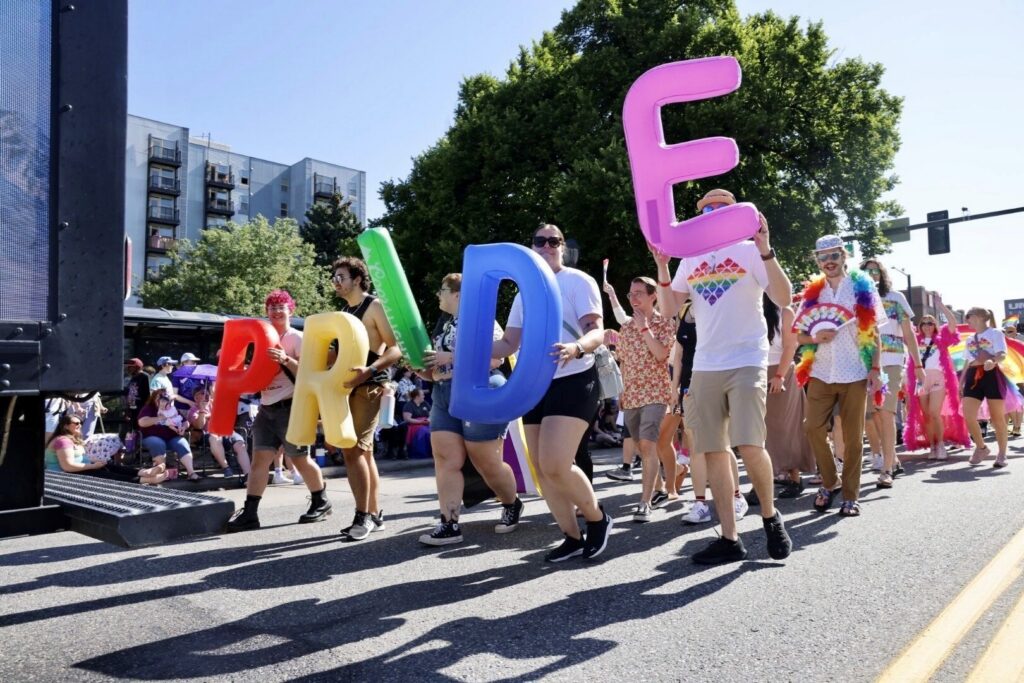
Democratic bill would let recipients of ‘conversion therapy’ sue Colorado providers with no statute of limitations
Marissa Ventrelli
marissa.ventrelli@coloradopolitics.com
Updated 3 days ago
Colorado lawmakers have advanced a proposal that would allow people who underwent conversion therapy to sue licensed providers for damages, moving the measure forward on a party-line vote in the House Judiciary Committee. House Bill 1322, proposed by Democratic Reps....
Federal judge refuses to authorize immediate appeal in World Cup trafficking lawsuit
Michael Karlik
michael.karlik@coloradopolitics.com
Updated 4 days ago
A federal judge declined to authorize an immediate appeal last week of a prior decision allowing companies operating out of Colorado to be sued for allegedly participating in a human trafficking venture involving Filipino laborers who constructed facilities for the...
Federal judge considers second round of sanctions against ex-Colorado judicial discipline director
Michael Karlik
michael.karlik@coloradopolitics.com
Updated 5 days ago
A federal judge ordered Colorado’s former judicial discipline director on Tuesday to explain why she should not sanction him a second time for filing documents for improper purposes, such as harassment or delay. U.S. District Court Senior Judge Kathryn H....

Colorado justices agree to review insurance question that has divided federal judges
Michael Karlik
michael.karlik@coloradopolitics.com
Updated 5 days ago
The Colorado Supreme Court granted a federal judge’s request on Friday to address an issue that has produced conflicting answers in policyholders’ lawsuits against insurance companies over unpaid benefits. “Parties (and judges) regularly spend undue time and money fighting in...

Federal judge dismisses background screeners’ challenge to Colorado law
Michael Karlik
michael.karlik@coloradopolitics.com
Updated 2 days ago
A federal judge dismissed a challenge on Friday to a portion of Colorado law that prohibits certain information from being included in consumer reports, in what seemed to be a conflict with federal law. Congress originally enacted the Fair Credit...