

Colorado lawmakers warn state to fix wolf reintroduction program or lose funding
Senate lawmakers had strong words for the Department of Natural Resources and Colorado Parks and Wildlife, as well as the governor’s office, as they wrapped up work on the state’s next spending plan.
Contained within that plan is a footnote to the department and the wildlife agency regarding wolves.
The footnote directs CPW to implement “all state-funded preventative measures” contained in a petition submitted by 22 agricultural organizations, along with Colorado Counties, Inc., in September. The footnote adds that the portion of funds intended for reintroduction should not be spent until those preventative measures are implemented.
The petition sought a delay in introducing more wolves until the wildlife agency had implemented measures, such as training range riders in areas where wolves are located, developing depredation response teams, implementing additional nonlethal conflict techniques, conducting site assessments, managing carcasses, and improving communication between the agency and affected ranchers.


The CPW Commission, on a 10-1 vote in January, had rejected the petition.
Last month, the Joint Budget Committee added the footnote to Senate Bill 206, the result of a collaboration between Sen. Dylan Roberts, D-Frisco and other lawmakers whose districts have dealt with the killing of dozens of livestock and working dogs in the past year, beginning with wolves brought to Colorado from Oregon in Dec. 2023 that came from packs with a history of killing livestock.
Once the Senate had concluded its work on several dozen amendments to the budget bill, Roberts and other lawmakers addressed the footnote with stern warnings for CPW.
Fix the problems — or the legislature will yank the program’s funding, the lawmakers said.
This footnote is essential, not only for the wolf program but for the budget, Roberts said.
“We’re spending quite a lot of money to bring wolves into Colorado,” he said.
This budget allocates $2.1 million to CPW for the wolf program, Roberts noted. It’s a small number compared to the entire budget, but a much lower dollar amount has been cut from the budget, he pointed out.
“We’re making a decision” at the request of the department to continue the wolf program funding, he said.
That’s given the state’s 29 wolves that are killing livestock, he said, including the most recent death of a calf in Eagle County, which he said was confirmed by CPW.
Roberts’ Senate district includes all counties where wolves have killed livestock.
“I believe this amount of money and this program is going to get out of hand,” Roberts told the Senate. “We are going to continue spending unless we put guardrails around this and that CPW does what they’re supposed to.”
He predicted the program would be more expensive in the next budget.
That’s tied to large reimbursement claims filed by ranchers that already exceed the amount contained in the state’s wolf compensation fund budget, which is approximately $350,000 per year. Just two claims were submitted in December, totaling $581,000.
More wolves are killing more livestock, and the state is legally obligated to reimburse ranchers for those losses, Roberts said.
The estimate for the program’s cost under Proposition 114 was $800,000 per year; it’s now at $2.1 million, and that’s just after two years of reintroductions, he told the Senate.
The wolves will have more offspring, which will lead to more livestock being killed and more reimbursements, Roberts said. That money could be allocated to other priorities, such as education, Medicaid, or road maintenance.
The department stated that it would require no more than $350,000 for reimbursements, Roberts added.
“They will come back to the JBC for more money,” he said. “I am disappointed the CPW Commission did not decide to take a pause on reintroductions.”
He added that the state could have slowed down and that it is “under no legal obligation” to add more wolves, despite what the department and wolf advocates have argued. He called the deadlines artificial and said the state hadn’t been ready, as wolves were introduced to Colorado without any measures in place to prevent depredations.
“We could have done this the right way,” Roberts said.
“We are watching,” he told to the commission. “We want all seven things to be done, implemented, and working, or the JBC is not going to give you more money to go to British Columbia (and get more wolves).”
Eliminating the line item isn’t viable because it contains funding for the staff who are working with ranchers in the aftermath, he explained.
Roberts wasn’t alone in his frustration with CPW. He was joined by Sen. Barbara Kirkmeyer, R-Brighton, one of the Joint Budget Committee members.
She added a warning to the agency — and to the administration.
To the department and CPW, she said, “If you think you can bypass the footnote and don’t pay attention to it, and don’t get those seven things done, I will fight to separate out the line item for the program.”
“We will not fund that line and it will be a deal-breaker,” she said.
People in the district of Sen. Marc Catlin, R-Montrose, are very concerned, the lawmakers said.
“We got a whole load of new neighbors who are already making themselves at home,” Catlin said.
When the conversations started about wolves, Catlin said he thought everyone would be a partner in the effort. CPW needs to be a partner, he added.
Catlin said wolves are finding their way from where they were placed, in Eagle and Pitkin counties, to other parts of the state and he’s closely watching the program.
Colorado Politics Must-Reads:


Trump lowers flags to half-staff for Dolly Parton: ‘The World loves you’
Naomi Lim
naomi-lim@coloradopolitics.com
Updated 1 hour ago
President Donald Trump is honoring the life of country music legend and philanthropist Dolly Parton by ordering federal buildings across the country to lower flags to half-staff for a week. “Very sad to report that Dolly Parton, one of the...
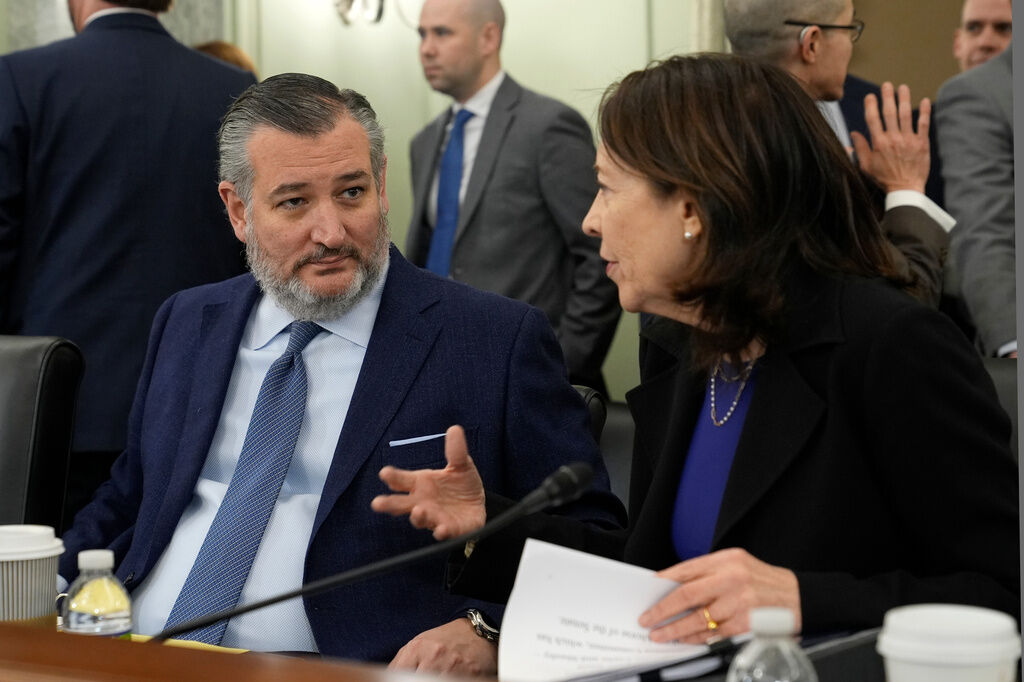
Ted Cruz suggests GOP realignment coming after Trump leaves office
Emily Hallas
emily-hallas@coloradopolitics.com
Updated 1 hour ago
Sen. Ted Cruz (R-TX) on Monday suggested the Republican Party could embrace a directional shift after President Donald Trump leaves office, a transition that promises to leave a gaping hole in the GOP. Cruz is known as a critical ally...
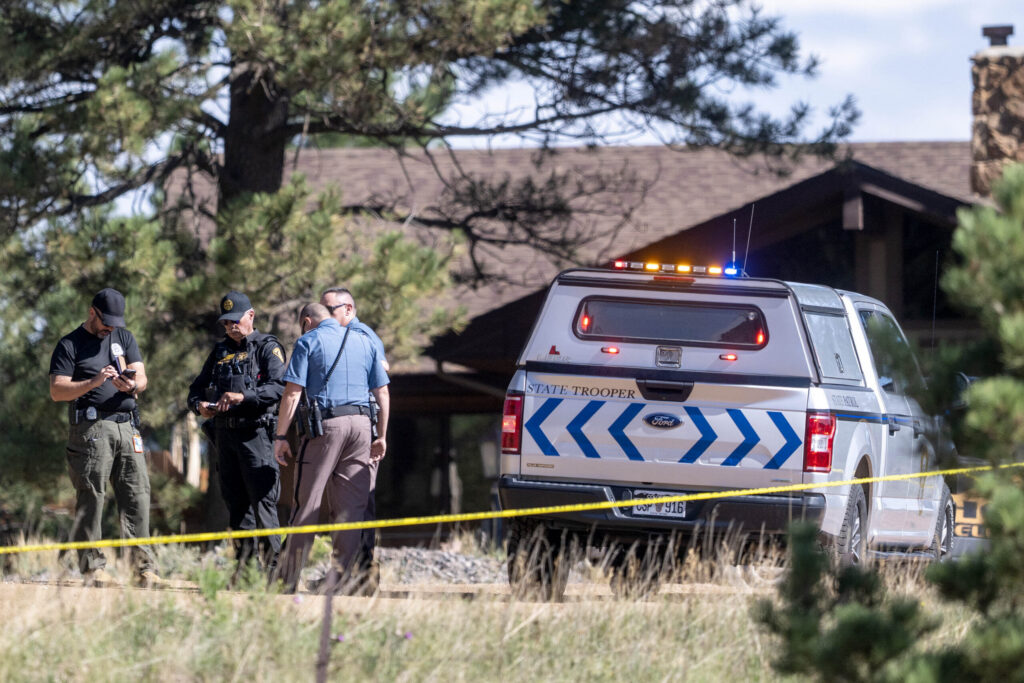
2 Colorado State troopers shot near Woodland Park; suspect killed
DEBBIE KELLEY
debbie-kelley@coloradopolitics.com
Updated 57 minutes ago
Two Colorado State Patrol troopers were hospitalized, and a suspect is dead after a shooting during a traffic stop Tuesday. The initial incident happened at about 7:15 a.m., when a resident reported suspicious activity in the area near milepost 286...

Aurora moves forward with data center regulations
Kyla Pearce
kyla.pearce@gazette.com
Updated 1 hour ago
The Aurora City Council approved moving forward with two new regulations on data centers and directed staff to come back at the next study session with others. At a council meeting in early August, council members directed city management to...

Aurora City Council considers stricter food truck regulations
Kyla Pearce
kyla.pearce@gazette.com
Updated 1 hour ago
The Aurora City Council is considering passing laws to limit the number of food trucks on properties in the city and how and when they operate. Councilmember Angela Lawson, who sponsored the ordinance, said she understands the importance of food...

Denver murder conviction reversed for incomplete self-defense instruction
Michael Karlik
michael.karlik@coloradopolitics.com
Updated 5 hours ago
Colorado’s second-highest court reversed a defendant’s murder conviction last week because a Denver judge gave an incomplete instruction to the jury about the man’s right to self-defense. Donald R. Gonzales and Gary McLaughlin met up in a Capitol Hill parking...
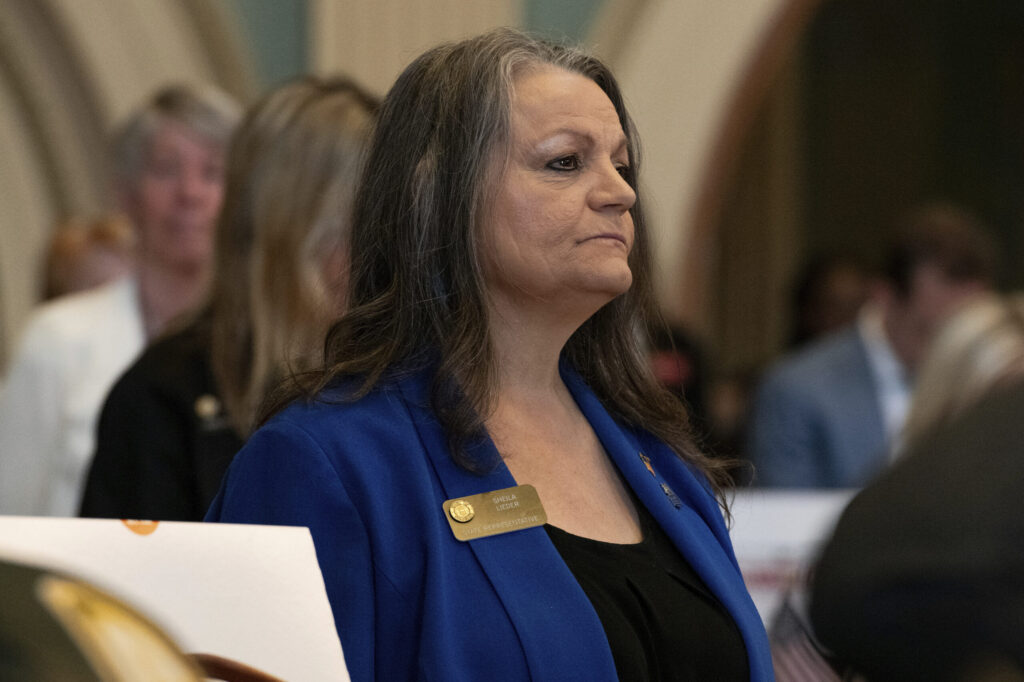
Colorado lawmaker, House leaders named in workplace-retaliation lawsuit
Marianne Goodland
marianne.goodland@coloradopolitics.com
Updated 2 hours ago
A former legislative aide has filed a lawsuit alleging she was mistreated, illegally directed to perform campaign work and harmed by a House leadership structure she charged was fragmented, politicized and ineffective at protecting employees. The lawsuit, filed by Jennifer...

Secret Service confirms awareness of Iranian state media video threatening Barron Trump’s life
The Associated Press
the-associated-press@coloradopolitics.com
Updated 7 hours ago
WASHINGTON (AP) — The U.S. Secret Service has confirmed it is aware that Iranian state media has aired a video that appears to threaten the life of Barron Trump, President Donald Trump’s youngest son. “The U.S. Secret Service is aware...

Federal judge hears arguments about Colorado’s 3-day gun purchase waiting period
Michael Karlik
michael.karlik@coloradopolitics.com
Updated 7 hours ago
A federal judge heard arguments on Monday about the constitutionality of a 2023 Colorado law that generally imposes a three-day waiting period on firearm purchases after the initiation of a background check. The test that the U.S. Supreme Court created...

Denver auditor finds oversight failures in $175.6M 16th Street project
Nico Brambila
nico.brambila@denvergazette.com
Updated 1 hour ago
Surprise historic sewer discovery delayed completion a year, cost $18M The Denver Auditor recently found significant oversight and contracting problems with the $175.6 million 16th Street Improvement Project, including an $18 million contract increase and a nearly one-year extension that...