

Unsustainable: Colorado budget structural deficit means widespread cuts
Colorado’s state budget is on an unsustainable path.
Unlike the federal government, the state is constitutionally mandated to produce a balanced spending plan each year.
That red flag warning from the chief economist of the Legislative Council and the director of the Joint Budget Committee staff in February signaled the problems ahead for the budget writers, as they tried to figure out not only how to cover a $1.2 billion general fund shortfall but also deal with a “structural deficit” that could affect future spending.

The structural deficit appears when state spending reaches the Taxpayer’s Bill of Rights cap. Despite a relatively healthy economy, according to recent forecasts, once the budget reaches the cap, without changes approved by voters, such as those made with Referendum C in 2005, lawmakers would be required to cut spending.
Joint Budget Committee members acknowledge that a structural deficit exists, but they differ on its causes and how to address it.
The panel had to come up with $1.2 billion in cuts from the general fund, which is the discretionary part of the state budget. The other two pots of money in the state budget are cash funds from fees and other sources, as well as federal dollars. The largest portion of federal funding, approximately $9 billion, is allocated to the Department of Health Care Policy and Financing, with the majority dedicated to Medicaid.
The budget panel “closed” the budget on Wednesday evening, March 26. It is now preparing to introduce what’s called the Long Appropriations Bill and possibly as many as 80 “orbital” bills that make the statutory changes needed to balance the budget. That’s a record, and by a long way; most years, the JBC offers no more than 30 orbitals.
“This is the most complicated budget that we have had,” said JBC Chair Sen. Jeff Bridges, D-Greenwood Village. “The complexity in this budget stems from our thoughtful, strategic, and bipartisan approach.”
Panel delays budget introduction as it scrambles to find solutions
On March 21, Bridges, recognizing that the budget would not be ready on time, sought and obtained permission from the Senate to delay it by a week, from March 24 to March 31. While it’s a week later than initially scheduled, it shouldn’t affect lawmakers’ ability to present the finished — and hopefully balanced — budget to the governor before late April.
The other decision the JBC made during the week of March 17 was to use the slightly more optimistic forecast presented on Monday by the Office of State Budgeting and Planning, which provided them with approximately $168 million more breathing room under the TABOR cap. That decision was adopted on a 4-2 vote, with the committee’s Republicans objecting. The latter preferred to use the more conservative numbers from the Legislative Council forecast.
The week’s delay bought the JBC time to tackle the most difficult decisions it faced in crafting the 2025-26 state budget — funding for higher education, Medicaid and specific programs within K-12 education, although the dollars for public schools will take place through the School Finance Act, a separate measure expected to be introduced shortly after the budget.
The most drastic cuts would be painful, budget drafters warned.
According to Bridges, these will be permanent, unlike the cuts made during the 2020-21 pandemic budget that were restored when the state received billions of dollars from the federal American Rescue Plan Act.
“Recessions you can recover from,” Bridges said recently. “But the cuts we make this year likely aren’t coming back unless there is a change to the structural rationing that we have in our budget.”
Bridges explained that because the state is hitting the TABOR limit, it’s forcing the legislature to ration everything, including higher education, health care and public education.
The shortfall forced the JBC and its staff to scrutinize the budget with a fine-toothed comb to identify what is impractical or unnecessary, Bridges said.
What got funded and what didn’t?
The JBC cut $71.4 million from a multimodal options fund tied to Senate Bill 21-260, which is designed to fund alternative transportation, such as on-demand transit, pedestrian and bicycle routes, and greenhouse gas mitigation projects.
During the JBC’s March 18 vote, Bridges noted the drastic decisions before the committee and the choices the lawmakers had to make.
“It’s this, or we cut provider rates or K-12 or become one of the bottom three states for funding higher ed,” he said. “If the impact is the loss of a future project, it’s not direct harm.”
The JBC also cut cut $64 million in general funds out of the transportation budget. That comes with risks, as the Colorado Department of Transportation said that cut could result in a more immediate impact to 10-year plan projects, potentially requiring pushing out currently planned projects.
Another $7 million in general funds was saved by cutting the Colorado Department of Transportation’s Revitalizing Main Streets program, despite the agency’s assertion that under current law, the funds are “dedicated to specific programs and purposes and can not be used to backfill other revenue sources.” That also applies to the multimodal options fund.
Some cuts are tiny, comparatively, but this points to how difficult it has been to find $1.2 billion and the efforts the JBC and its staff went to in finding where to cut. But eventually, those minor cuts added up.
They include legislation that isn’t part of the extended bill package, a bill eliminating interim committees due to costs, is one step away from heading to the governor’s desk, saving the state an estimated $272,000.
Also, on tap is eliminating an ombudsman program in the judicial department, which, although approved, was never implemented, saving an estimated $400,000 in general funds.
Additionally, lawmakers are considering an across-the-board 1.5% reduction in the workforce, although this is mainly due to vacancies that won’t be filled. Agencies with 24/7 employees, such as Human Services, which staffs mental health facilities, won’t be affected.
Meanwhile, one bill that will be part of the budget package eliminates the statutory authority for the Behavioral Health Administration’s temporary financial housing assistance program, which supports homeless individuals with substance abuse disorders. That saves $4 million.
In another area, the JBC is eyeing reductions in personal services (employees) and delaying the implementation of a new program on psychological assessments for one year at the Statewide Behavioral Health Court Liaison, also known as Bridges of Colorado. That translates to savings of $2.7 million in 2024-25 and 2025-26.
One of the biggest decisions the JBC made is to allocate cash funds and sweep them into the general fund to cover the shortfall.
Sweeping cash funds could allocate $59 million to the general fund for 2025-26 to cover other obligations.
These include:
• Eliminating the remaining cash fund balance in the Electrifying School Buses Grant Fund and transferring it to save $28.8 million
• Sweeping the state employee reserve fund for $13 million in savings
• Sweeping the Community Impact Cash Fund for an additional $6 million
• Sweeping the Community Access to Electric Bicycles Cash Fund to save $512,000
• Sweeping the Nuclear Materials Transportation Fund for an additional $100,000
A second set of transfers from the 2024-25 budget will result in an additional $165 million being added to the general fund. The transfer is scheduled to take place on June 30. They include:
• Cutting CDOT’s Multimodal Transportation and Mitigation Options Fund to save $71.4 million.
• Sweeping the Advanced Industries Transfers at $17.6 million
• The Department of Labor and Employment’s Worker’s Compensation Cash Fund will add $15 million
• Another sweep of the Electrifying School Buses Grant Fund for $14 million
• Sweeping the Local Government Severance Tax Fund in the Department of Local Affairs for $10 million
• Also in DOLA, the Innovative Housing Incentives Cash Fund will transfer $8.5 million
• Sweeping the Legislative Department Cash Fund will bring in $6.3 million
How to pay for ‘free’ meals for all K-12 students
It has been a budget headache from the start to implement what’s called the “Healthy School Meals For All program,” approved by voters in 2022 through Proposition FF. The ballot measure anticipated an annual cost of $100.7 million to provide breakfast and lunch to all public-school children, regardless of income. However, the costs, even in its first year, stood at $56 million more than the available funds.
What budget writers are gambling on are two ballot measures, contained in House Bill 1274, that would ask voters in November to increase funding for the program by $95 million per year.
In the meantime, the JBC approved cutting approximately $34 million from the program, leaving $8 million to cover its costs through the end of December. If voters don’t approve the ballot measures, the program will transition to a more income-based model, covering breakfast and lunch for only those students who qualify. If voters approved the proposals in November, the program would resume funding meals for all students.
Another obstacle for the JBC was determining how much to fund public education and decisions about the new school finance formula.
The bill creating the formula, House Bill 24-1448, included a “trigger” that applies to the JBC. During the formula’s six-year phase-in period, the JBC can pause its implementation based on one of two conditions: a decrease in what local property taxes cover for K-12 funding or income tax diversion to the state education fund decreases by 5% or more in the current or next budget year, as determined by the March revenue forecast.
Bridges advocated launching the new funding formula, stating it would give schools what it costs to educate kids. The state has underfunded low-income students, English language learners, and schools in general for decades, and that needs to be corrected, he said.
The committee was tied, which means the funding formula will go into effect.
Sen. Barbara Kirkmeyer, R-Brighton, one of the senators who voted to pause the formula, raised worries about its impact on the state education fund.
Kirkmeyer said it’s essential for everyone to understand the state’s unsustainable education fund and what happens when a significant amount of money is drawn from it.
The state education fund is the third prong of K-12 education funding; the first two are local property taxes and state general fund. The fund originated from Amendment 23 in 2003, which directed the annual deposit of one-third of 1% of all taxable income into it.
As decided by the JBC, the budget will allocate $150 million in general funds to the state share for public K-12 education funding, resulting in a total state contribution for K-12 of just over $10 billion, including $4.4 billion in general funds.
The committee next discussed how much to allocate for higher education and what it would recommend for tuition increases.
Polis had proposed a $12 million general fund increase and a recommended tuition increase of 2.3% for residents and 2.4% for nonresidents, below the rate of inflation. That request, however, also came with a general fund overall reduction of $38 million, with the most significant cut of $20 million to the CU School of Medicine, used to draw down matching federal funds. The proposal requested that the university utilize alternative sources of funding to generate the match.
The institutions had requested $80.2 million from the general fund, although they had more recently sought a higher tuition increase of 5% with a lower general fund increase of $61.9 million.
The committee approved tuition increases, expressed as a footnote in the budget bill, at 3.5%, along with a general fund boost of $7.5 million for need-based aid and $32.3 million for colleges and universities.
What about the statutory reserve?
What isn’t in the mix for solving the shortfall is utilizing the state reserve, which, by law, is required to be at 15% of general fund spending. It has already been tapped to cover the shortfall in the 2024-25 budget, caused by overspending in Medicaid, to the tune of approximately $600 million, but then must be restored at the beginning of the next fiscal year.
The reserve, however, could serve another purpose: covering at least a portion of the $350 million tab for public safety, approved by voters through Proposition 130 last November.
The committee recently reviewed potential legislation that would start funding for the program a year from now, but it won’t be part of the budget package to be introduced.
Also, not part of the solution is a deal to privatize Pinnacol, the state’s worker’s compensation insurance. Its privatization was part of Gov. Polis’ budget proposal in November, and he reiterated his support for it during his State of the State address in January.
A new valuation from Pinnacol showed that the state could receive up to $400 million in one-time funds for its Pinnacol investment. However, budget writers and other lawmakers are skeptical about the deal’s benefits to Colorado and, more importantly, whether it can be completed in time to help address the budget problem.
Bridges said Pinnacol has not been successful in convincing his colleagues that the deal is a good one.
“The political work that would need to happen in order for the Pinnacol privatization to go forward is substantial,” he said. “Whether the time remains for that case to be made before the budget (is completed), that window is rapidly closing if it hasn’t closed already.”

Colorado Supreme Court signals intervention in dispute over treatment for trans children
Michael Karlik
michael.karlik@coloradopolitics.com
Updated 8 hours ago
The Colorado Supreme Court ordered Children’s Hospital Colorado on Tuesday to explain why it should not direct the organization to resume providing certain types of services to transgender children in compliance with the state’s non-discrimination law. Last month, a Denver...
Trump faces first domestic test on Iran conflict with Senate war powers vote
Ramsey Touchberry, Washington Examiner
ramsey.touchberry.washington.examiner@gazetteedit.wpenginepowered.com
Updated 10 hours ago
Administration officials are scrambling to sell members of Congress on President Donald Trump’s military operations in Iran ahead of bipartisan attempts to limit his war powers in the Middle East without approval from lawmakers. The Senate and House are set...
Supreme Court hands California parents win over secret gender transition policy
Jack Birle, Washington Examiner
jack.birle.washington.examiner@gazetteedit.wpenginepowered.com
Updated 10 hours ago
The Supreme Court gave California parents a significant victory late Monday when it kept in place a lower court’s block of the Golden State’s public school policy hiding students’ gender identity and preferred pronouns from parents. A 6-3 majority on...

Judge nixes latest policy requiring 7 days’ notice for Congress members to visit ICE facilities
Michael Kunzelman
michael.kunzelman@associatedpress.com
Updated 10 hours ago
WASHINGTON (AP) — A federal judge agreed on Monday to temporarily suspend the latest version of a Trump administration policy that requires members of Congress to provide a week’s notice before they can visit immigration detention facilities. U.S. District Judge...
Judge nixes latest policy requiring 7 days’ notice for Congress members to visit ICE facilities
Michael Kunzelman
michael.kunzelman@associatedpress.com
Updated 7 hours ago
WASHINGTON • A federal judge agreed on Monday to temporarily suspend the latest version of a Trump administration policy that requires members of Congress to provide a week’s notice before they can visit immigration detention facilities. U.S. District Judge Jia...
Gov. Polis, Upper Basin states criticize federal draft plan for managing the Colorado River
Marianne Goodland
marianne.goodland@coloradopolitics.com
Updated 10 hours ago
With no agreement among the seven Colorado River states and federal deadlines now passed, the Upper Colorado River Commission on Monday sharply criticized the U.S. Department of the Interior’s draft plan for managing the river after current guidelines expire this...
Ballot access, dual-office ban bills move swiftly through Colorado legislature
Marianne Goodland
marianne.goodland@coloradopolitics.com
Updated 11 hours ago
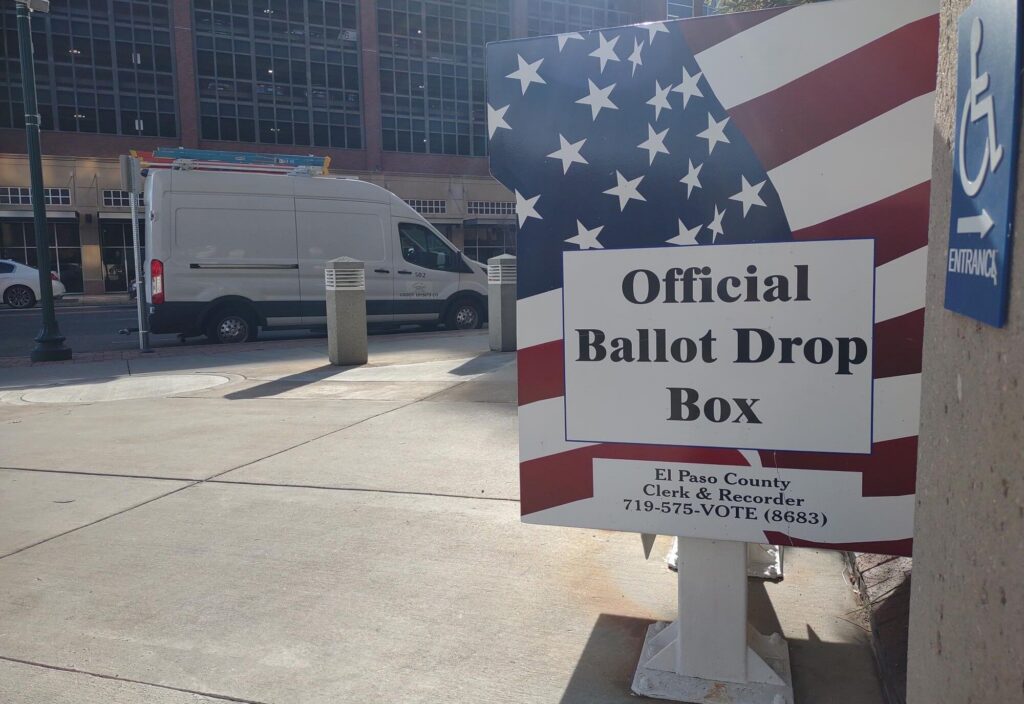
With an eye on the 2026 election cycle and mounting tensions with the Trump administration, Colorado lawmakers are fast-tracking a pair of election bills they say will protect the state’s mail ballot system and tighten rules for elected officials. The...
Colorado GOP chair Brita Horn loses ‘no-confidence’ vote, vows to refocus on ‘mending that divide’
Ernest Luning
ernest.luning@coloradopolitics.com
Updated 6 hours ago
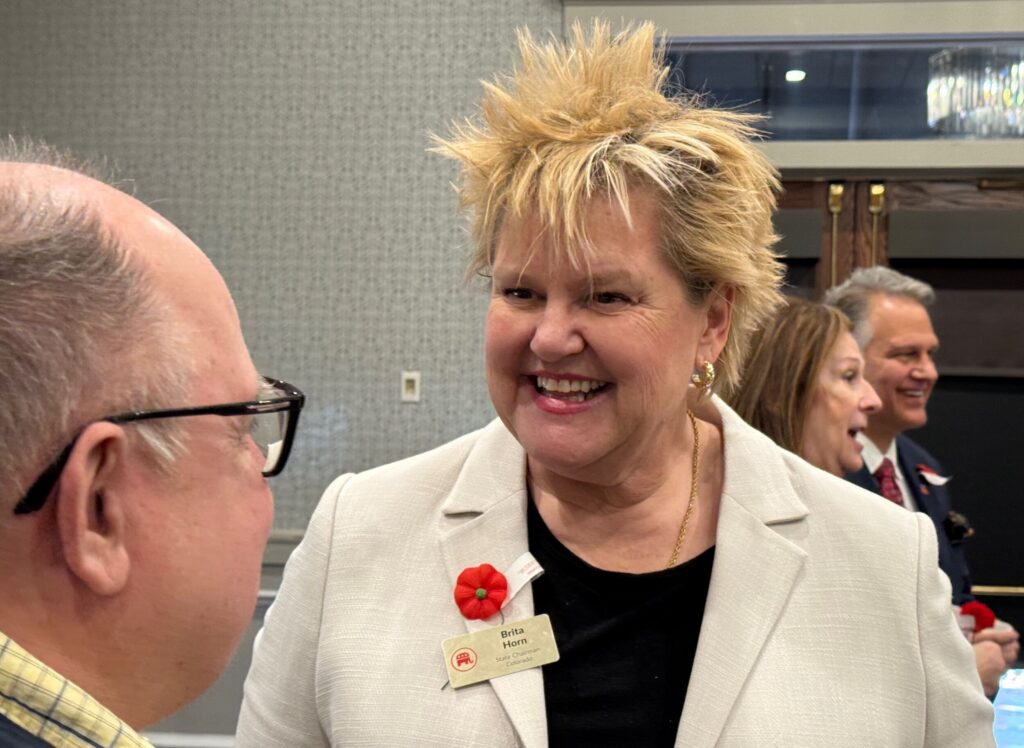
The Colorado Republican Party’s state central committee approved a resolution expressing “no confidence” in state chair Brita Horn in a landslide late Monday night near the end of an online meeting marked by rancor and confusion. Almost 80% of the...

Trump to attend White House Correspondents’ Dinner for first time as president
Washington Examiner Staff, Washington Examiner
washington.examiner.staff.washington.examiner@gazetteedit.wpenginepowered.com
Updated 14 hours ago
President Donald Trump announced on Monday that he accepted an invitation to this year’s White House Correspondents’ Dinner. It would mark the first time Trump has attended the dinner, in either term, since he’s been president. Trump announced the decision...
Primary rival sues to prevent Democrat Eileen Laubacher from going through assembly in Colorado’s 4th CD
Ernest Luning
ernest.luning@coloradopolitics.com
Updated 16 hours ago
Democratic congressional candidate Trish Calvarese on Monday asked a judge to prevent one of her primary rivals, Eileen Laubacher, from participating in the caucus and assembly process to seek the nomination to challenge Republican U.S. Rep. Lauren Boebert in Colorado’s...