

Hundreds rally in Denver to support immigrants amid rising deportations
Hundreds of protesters gathered Monday in downtown Denver to rally in support of immigrants as part of a Latino Advocacy Day.
The rally, dubbed “Stand With Immigrants,” gathered around 11 a.m. at 17th and Welton streets, for a series of speeches. The speakers included former State Rep. Tim Hernandez, and activists Victor Galvan and Dolores Huerta.
“Everyone here deserves a life without the fear of being torn away from their family,” Galvan told the crowd through a microphone. “I’ve lost my brother to deportation. I’ve lost a father to deportation. My wife’s brother. This is the painful reality we’re living in today.”
Several protesters held anti-ICE (U.S. Immigrations and Customs Enforcement) and pro-immigrant signs and chants of “Si se puede!” broke out intermittently throughout the speeches. It translates loosely to “yes, we can” or “it can be done.”
“What an invitation for us to struggle. What a reminder that we come from a long history of struggle,” Hernandez told the crowd. “Nobody never won one thing alone. It takes all of us.”
One protester walked through the crowd burning sage for “cleansing” and to put the protest in the right mind space, he told The Denver Gazette. An event organizer reiterated over the loudspeaker the rally would be non-violent as they planned to march after the speeches.
“What’s about to come is going to be dark, guys. There’s nothing romantic about social movements that have to struggle,” Hernandez said. “They’re born out of pain. We might put this on TikTok and it looks great, but we’re here for (expletive deleted) reasons.”
Event organizers estimated the crowd size was more than 2,000 people by the time the march reached the steps of the Colorado state Capitol.
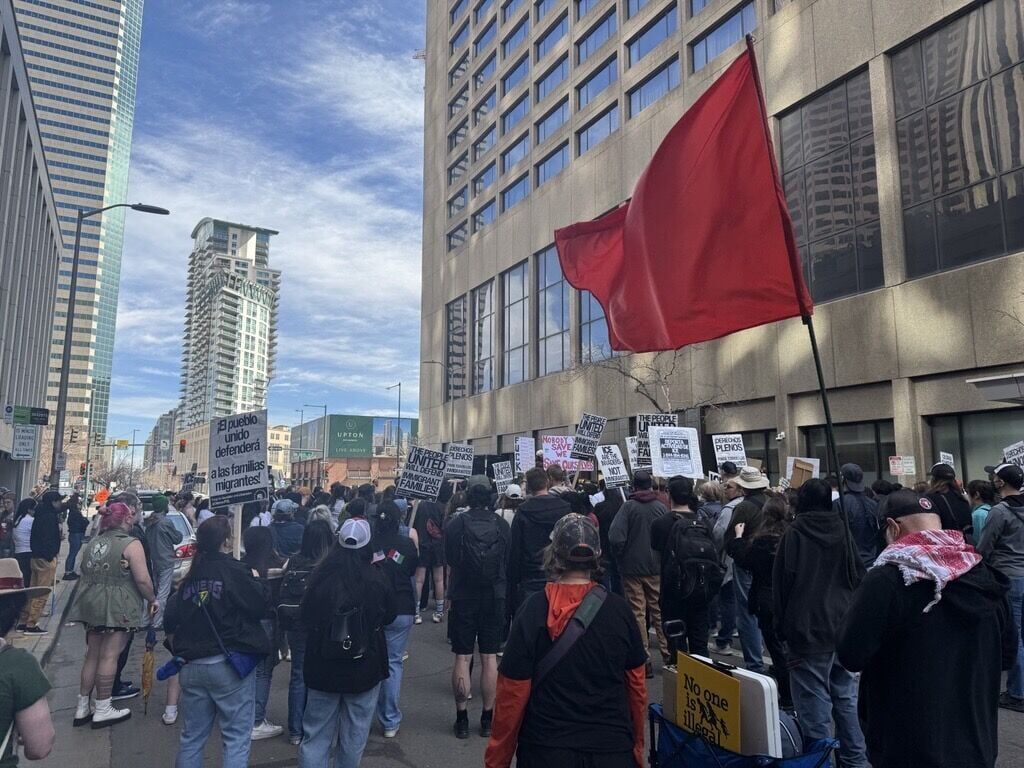
Protesters chanted "Si, se puede" during a rally at 17th and Welton streets in support of immigrants, March 17, 2025. Loosely translated it means "yes, we can" or "it can be done."
Daniel Boniface, The Denver Gazette

Since President Donald Trump took office in January, ICE agents have focused on mass deportation across the country, including raids in the Denver metro area.
The Trump administration in January issued a directive to strip schools and churches of protections against immigration enforcement. Protesters on Monday spoke of the fear some immigrant families now have of sending their children to school following that action.
Denver Public Schools in February filed a lawsuit requesting a temporary restraining order to keep ICE agents out of school, but a U.S. District Court judge denied the motion earlier this month.
District judge denies Denver schools’ temporary restraining order request to keep ICE out of schools
Aurora was thrust into the national spotlight last fall after a Venezuelan prison gang known as Tren de Aragua (TdA) took over a few apartment complexes.
Typically, illegal immigration directly affects border states. Interior states like Colorado began to experience an influx of immigration three years ago after 90 immigrants were dropped off at Union Station, left to wander in the cold. Since then, Denver has welcomed nearly 43,000 immigrants, mostly from South and Central America, particularly Venezuela. Many arrived in the city after illegally crossing the southern border with Mexico.
Bus, plane and train tickets city officials purchased to send immigrants on to their final destination suggest about half have stayed in Colorado.
Early in the crisis, Denver officials decided local taxpayers would assume the roughly $80 million cost, which had threatened to push the city’s finances to the brink, setting off cuts to services and the budget. The current budget stands at about $12 million.
Colorado Politics Must-Reads:

Sans seniors, what does Colorado’s uninterested early turnout say about our disengaged electorate? | Paula Noonan
Paula Noonan
paula-noonan@coloradopolitics.com
Updated 11 hours ago
This primary election is poorly attended. Evidence is in the numbers. About 10% of active registered voters are deciding this year’s primaries with seven days to go. If that number triples by June 30, only 30% of voters will decide...

Who gets to decide Colorado’s economic future? | GUEST COLUMN
Colorado Politics
colorado-politics@coloradopolitics.com
Updated 11 hours ago
By Sarah Blackhurst Colorado’s prosperity depends on industries that grow our food, build our future and power our homes. But today, these sectors face an invisible threat from 5,000 miles away: the European Union’s Corporate Sustainability Due Diligence Directive (CS3D)....
Homeless recruits of ‘The Program’ say they were told to sign NDAs amid investigations in Colorado
David Migoya
david.migoya@gazette.com
Updated 12 hours ago
Several formerly homeless people — each drawn into an Aurora-based enterprise known as “The Program” that promised free housing and cash in return for letting a home-health business administer prescriptions they were given — said they were pressed into signing...
Homeless recruits of ‘The Program’ say they were told to sign NDAs amid investigations in Colorado
David Migoya
david.migoya@gazette.com
Updated 12 hours ago
Several formerly homeless people — each drawn into an Aurora-based enterprise known as “The Program” that promised free housing and cash in return for letting a home-health business administer prescriptions they were given — said they were pressed into signing...
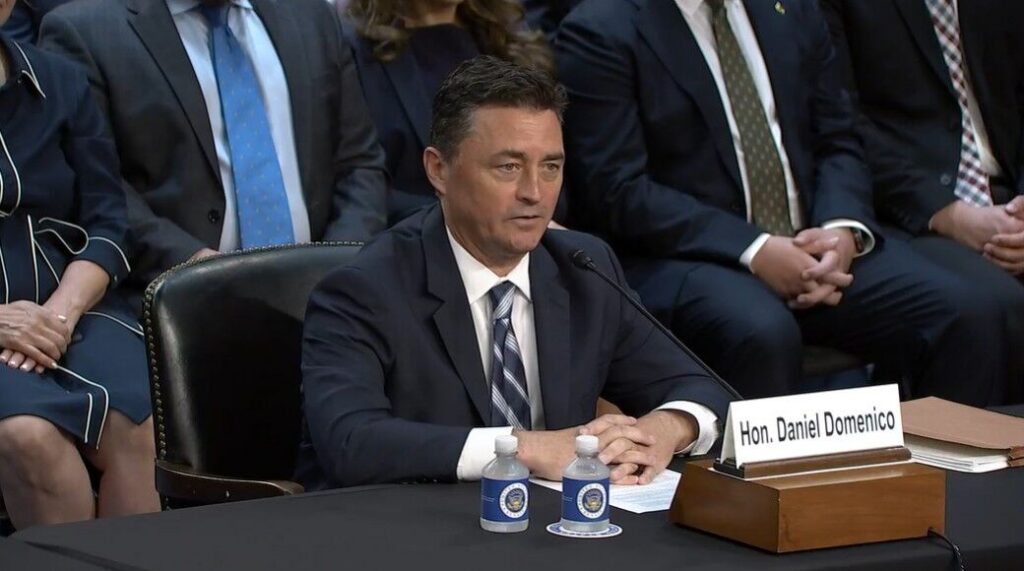
Trump’s 10th Circuit nominee declines to name 2020 election winner, defends immigration decisions
Michael Karlik
michael.karlik@coloradopolitics.com
Updated 11 hours ago
President Donald Trump’s nominee to the Denver-based federal appeals court declined to say who won the 2020 presidential election during his appearance before the U.S. Senate Judiciary Committee on Wednesday, and defended his recent rulings in immigration detention cases. U.S....
Colorado repeals attorney immigration attestation law after one year
Nico Brambila
nico.brambila@denvergazette.com
Updated 10 hours ago
One year and 12 days. That’s how long a Colorado law requiring attorneys to certify they would not use court data for federal immigration enforcement remained on the books before lawmakers repealed it. Gov. Jared Polis signed the initial legislation,...
Colorado’s ‘right to natural gas’ measure submits signatures to qualify for November ballot
Marissa Ventrelli
marissa.ventrelli@coloradopolitics.com
Updated 13 hours ago
A natural-gas rights initiative backed by Advance Colorado is likely headed to the November ballot, triggering a parallel campaign by environmental groups seeking to impose new liabilities on oil and gas operators. Petitions for Initiative No. 177 were turned in...

Economists: Colorado budget improves slightly, but deficits still loom
Marianne Goodland
marianne.goodland@coloradopolitics.com
Updated 14 hours ago
State economists reported a stronger-than-expected bump in general fund revenue driven largely by higher individual income tax collections, yet warned that Colorado remains on track to begin the next fiscal year with a sizable shortfall. State economists upgraded “significantly” the...

Colorado law allowing lawsuits against ‘conversion therapy’ providers takes effect July 1
Marissa Ventrelli
marissa.ventrelli@coloradopolitics.com
Updated 14 hours ago
With a new law taking effect July 1, Colorado is creating a legal pathway for people to sue licensed providers of “conversion therapy,” even as debate over the practice’s constitutionality continues in the wake of a recent U.S. Supreme Court...
Colorado justices expand ability for civil defendants to avoid participating, win after trial
Michael Karlik
michael.karlik@coloradopolitics.com
Updated 6 hours ago
The Colorado Supreme Court decided on Tuesday that a civil defendant, whose non-participation in the case meant that he legally admitted to the sexual assault allegations against him, could nonetheless prevail after he showed up to testify at trial. A...