

Supreme Court returns for oral arguments, new guidance on stalking cases | COURT CRAWL
Welcome to Court Crawl, Colorado Politics’ roundup of news from the third branch of government.
The state Supreme Court is back for its monthly oral argument calendar, plus the Court of Appeals issued guidance about how to apply a recent U.S. Supreme Court decision about stalking prosecutions.
Oral arguments
• On Tuesday and Wednesday, the Supreme Court will hear appeals in six cases. Those are:
County Commissioners of Boulder County et al. v. Suncor Energy USA, Inc. et al.: Can local governments sue fossil fuel producers for damages under state law for the harms caused by climate change?
Mid-Century Insurance Company v. HIVE Construction, Inc.: Does the “willful and wanton” conduct of a contractor override the normal prohibition on liability claims when breach of contract is involved?
Town of Firestone v. BCL Colorado LP et al.: This is a water rights case involving Firestone’s water treatment plant.
Bianco v. Rudnicki et al.: This is a medical malpractice lawsuit questioning whether several years of interest on a jury’s monetary award is subject to a cap.
Trenshaw v. Jennings et al.: Which portions of a defendant’s medical records should be considered confidential in a personal injury case?
Bonde v. People: If a criminal defendant in a non-residential community corrections program is re-sentenced to prison, does he get credit for the time served in community corrections?

About that one case
• Less than two weeks before arguments, the parties in the Trenshaw case jointly asked the Supreme Court to “seal” the proceedings, meaning only the lawyers would be present and there wouldn’t be a livestream. They argued the appeal would be moot if the defendant’s confidential medical information were aired publicly in argument.
• Colorado Politics could find no precedent at the court for holding oral arguments in secret. The Supreme Court’s members even seemed hesitant, as they asked the parties whether they would rather bypass oral arguments entirely. But no, said the lawyers, they would rather argue the case.
• On Friday, the Supreme Court denied the motion to seal the arguments. Instead, the justices directed the lawyers to just be careful what they say.

In other Supreme Court news
• The justices decided, 5-2, that a Lakewood police officer violated a defendant’s constitutional right against unreasonable searches by “facilitating” a drug detection dog’s entry into the defendant’s vehicle without probable cause of a crime.
• The court will review a woman’s convictions for child abuse resulting in death and decide whether a jury instruction was faulty to the point that her convictions must be overturned.
Heard on appeal
• Two years ago, the U.S. Supreme Court decided (in a case out of Colorado) that prosecutors have to prove a defendant’s mental state in stalking cases that are based on the alleged stalker’s words. Now, the state’s Court of Appeals has clarified that no such hurdle exists in cases where the stalker communicates with his victim, but the words aren’t the basis for the stalking charge.

• An Archuleta County judge deemed a man’s children neglected solely because he didn’t show up at a hearing, even though his lawyer was present. The Court of Appeals said there was no basis for that decision.
• An El Paso County man convicted of child abuse will receive a new trial because his lawyer told jurors his client was guilty of a lesser offense, even though the defendant maintained he was completely innocent.
• Governmental immunity doesn’t block a man’s claim that the town of Paonia turned off his water in violation of his constitutional right to due process, the Court of Appeals decided.
• An El Paso County prosecutor failed to timely disclose evidence to the defense in three separate criminal cases. The Court of Appeals found her pattern of violations was sufficient grounds to dismiss some of the charges in the latest case she handled.
• A Jefferson County judge exceeded the 91-day deadline for ordering a defendant to pay crime victim restitution and didn’t say why. Consequently, the Court of Appeals overturned the restitution order.

• The Court of Appeals found a man’s conviction for a child sex offense violated his right to equal protection of the laws, and also clarified that victim-impact evidence may be relevant for jurors to gauge an alleged victim’s credibility.
• Even if a defendant is convicted of a theft offense with a dollar amount cap, judges can still order the defendant to pay restitution in excess of that upper limit, the Court of Appeals decided.
In federal news
• A former Denver employee alleged he was terminated for seeking a religious exemption to the city’s COVID-19 vaccine mandate. A federal judge found the man had lodged an objection, but it wasn’t clearly a religious one.
Vacancies and appointments
• There are three finalists to succeed former Denver District Court Judge Darryl F. Shockley: Ian J. Kellogg, Jason Bryce Robinson and Jerad A. West.
• Applications are due by Feb. 19 to succeed Arapahoe County Court Judge J. Jay Williford, who the governor recently appointed to the district court.
• Applications are also due by Feb. 24 to succeed retiring Denver County Court Judge Clarisse Gonzales. The mayor of Denver will appoint the next judge.
Miscellaneous proceedings
• On Thursday, the Fourth Judicial District (El Paso and Teller counties) will graduate 12 people from its drug/recovery court program.
Going on break
• Due to the Presidents Day holiday, Court Crawl will be on break next week.


10th Circuit dismisses paralyzed man’s claims against Colorado Springs, officer
Michael Karlik
michael.karlik@coloradopolitics.com
Updated 16 hours ago
The Denver-based federal appeals court upheld the dismissal last week of a man’s excessive force claims against the city of Colorado Springs and the officer who tased him, causing him to fall down a sloped surface and break his neck....
Colorado justices weigh overlap between child prostitution offenses
Michael Karlik
michael.karlik@coloradopolitics.com
Updated 19 hours ago
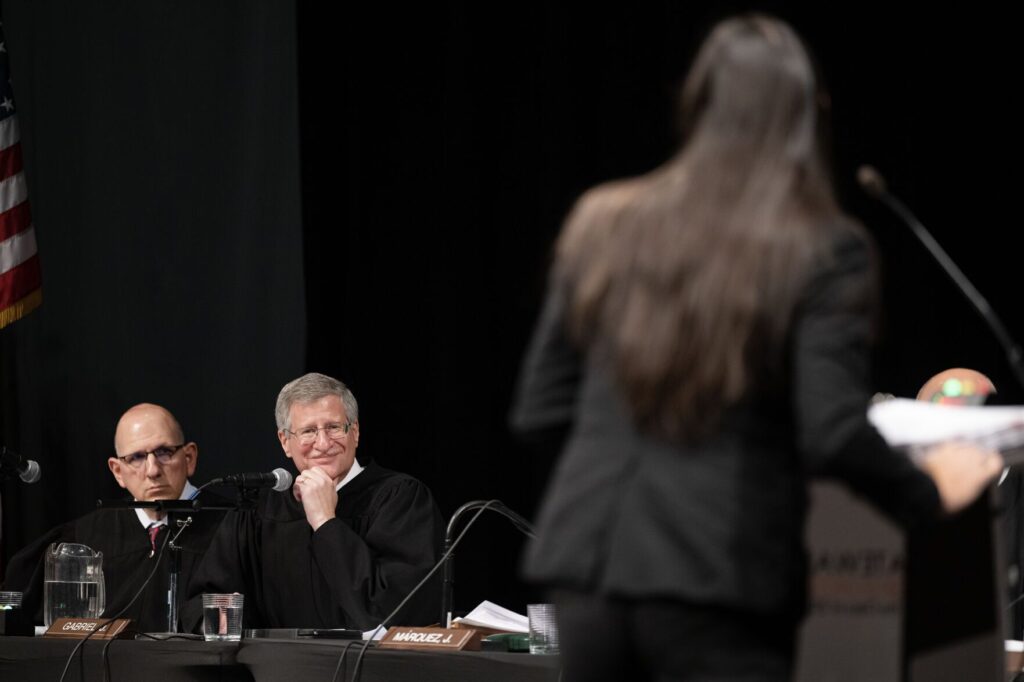
Members of the Colorado Supreme Court last week appeared willing to uphold a man’s conviction for an attempted child prostitution offense, which the state’s second-highest court previously found to be a violation of his right to equal protection under the...

State Supreme Court holds oral arguments, 10th Circuit revives dormant initiative | COURT CRAWL
Michael Karlik
michael.karlik@coloradopolitics.com
Updated 20 hours ago
Welcome to Court Crawl, Colorado Politics’ roundup of news from the third branch of government. The state Supreme Court heard oral arguments last week in multiple civil and criminal cases, plus the Denver-based federal appeals court is doing something unusual...
Is a pardon for Tina Peters coming? Colorado governor confirms he is weighing options
The Denver Gazette
the-denver-gazette@coloradopolitics.com
Updated 14 hours ago
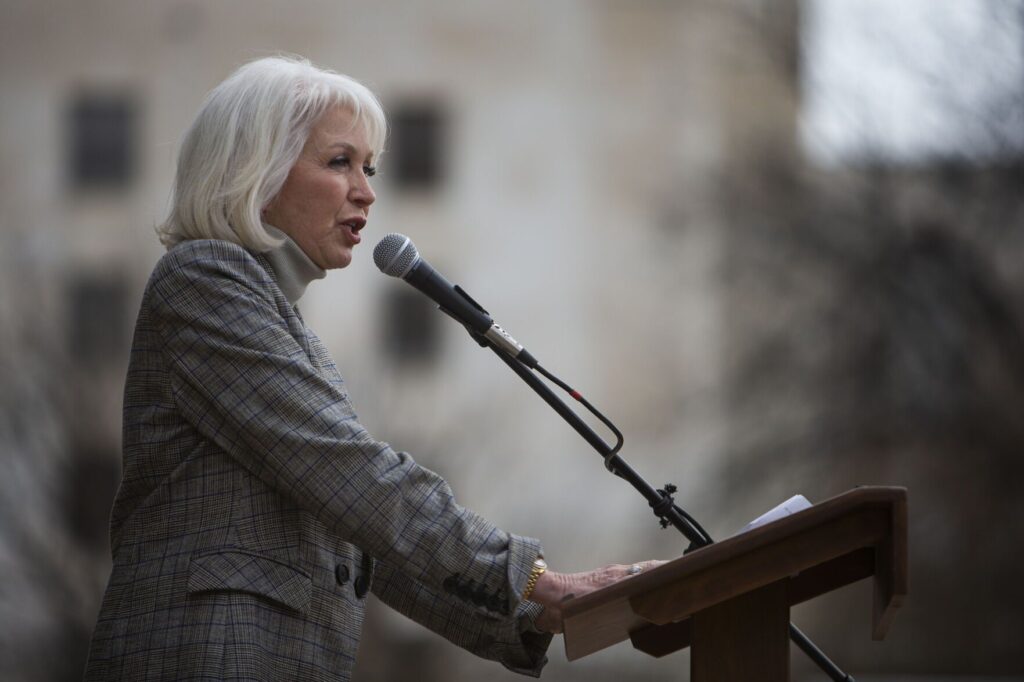
Gov. Jared Polis on Friday strongly indicated he is considering clemency for Tina Peters, the former county clerk convicted of a security breach at her election office. When pressed about the matter, Polis didn’t offer an explicit answer, but he...
10th Circuit oral arguments to feature trial judges for first time in 12 years
Michael Karlik
michael.karlik@coloradopolitics.com
Updated 4 days ago
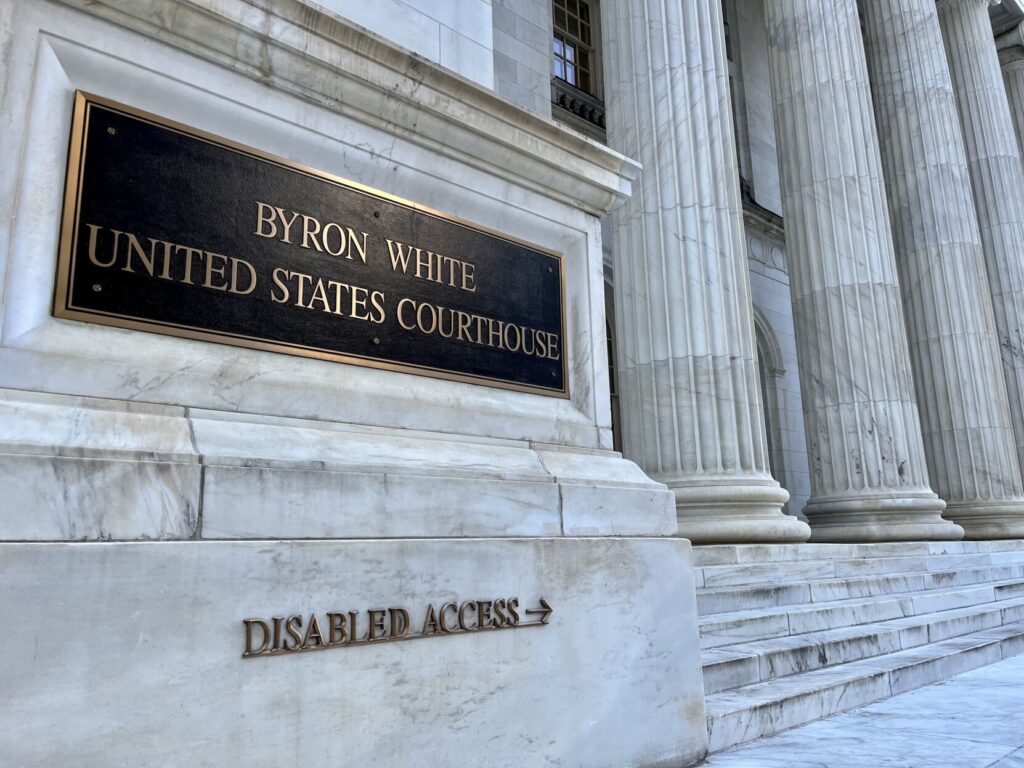
When the Denver-based federal appeals court convenes next week to hear oral arguments, six new faces will be staring down from the bench. No, the U.S. Court of Appeals for the 10th Circuit has not added six new members. It...
Federal judge says ICE cannot impose monitoring conditions beyond immigration judge’s order
Michael Karlik
michael.karlik@coloradopolitics.com
Updated 4 days ago
A federal judge told U.S. Immigration and Customs Enforcement on Thursday that it cannot impose additional restrictions or monitoring conditions beyond those ordered by an immigration judge when releasing a person on bond. In November, U.S. District Court Judge Gordon...
Colorado justices weigh constitutionality of student backpack search based on confidential tip
Michael Karlik
michael.karlik@coloradopolitics.com
Updated 3 days ago
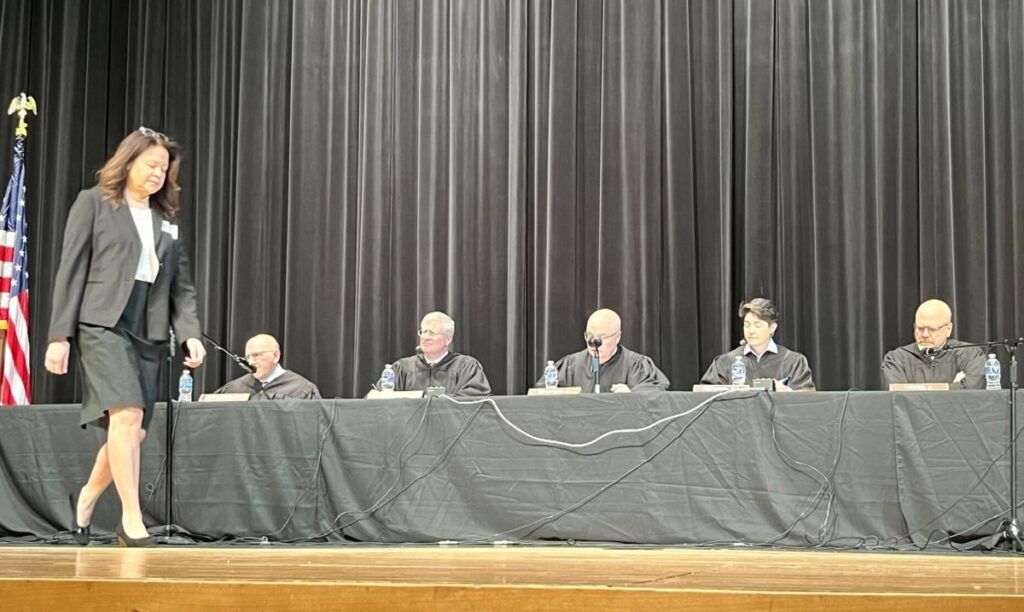
The Colorado Supreme Court considered on Wednesday whether a tip submitted through the state’s confidential school safety system provided a Douglas County administrator with reasonable suspicion to search a student’s backpack for drugs. A trial judge blocked evidence from the...
10th Circuit rebuffs Jeffco’s attempt to expand immunity footprint
Michael Karlik
michael.karlik@coloradopolitics.com
Updated 4 days ago
The Denver-based federal appeals court confirmed on Wednesday that it would not treat a judge’s decision to move a civil case forward as the automatic equivalent of denying immunity to governmental officials. The order from the U.S. Court of Appeals...

Colorado Supreme Court to hear cases on witness retaliation, slip-and-fall
Michael Karlik
michael.karlik@coloradopolitics.com
Updated 2 days ago
The Colorado Supreme Court announced on Monday that it will decide whether defendants can be convicted of retaliating against a victim or witness when that person has not yet testified and is not scheduled to testify. At least three of...
Colorado Supreme Court struggles with rubric for significant reductions in parenting time
Michael Karlik
michael.karlik@coloradopolitics.com
Updated 14 hours ago
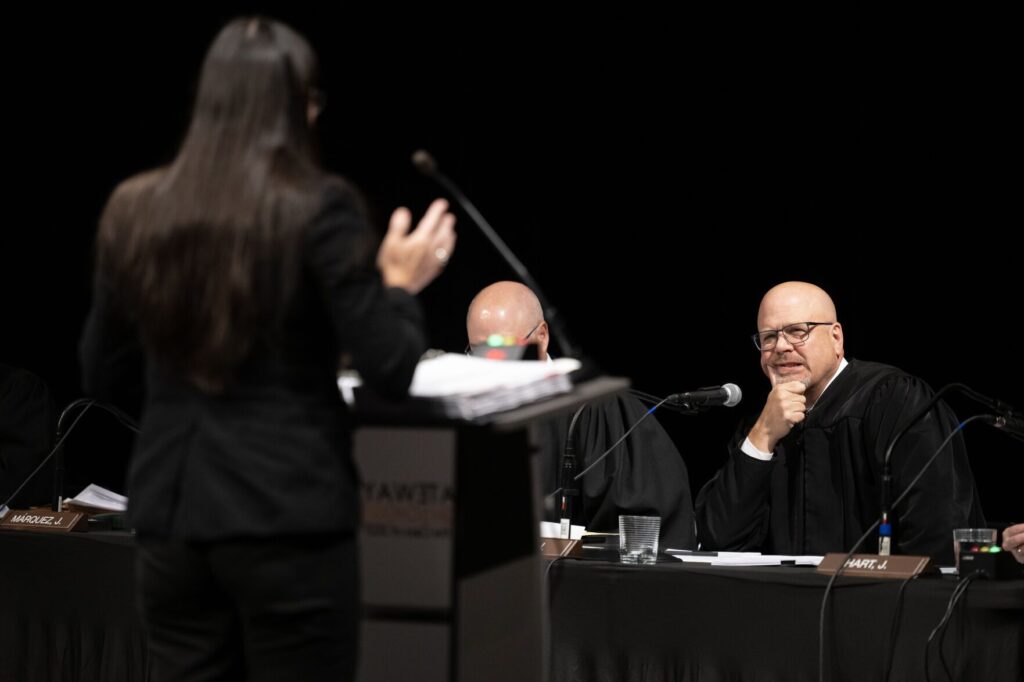
The Colorado Supreme Court attempted to identify on Wednesday the circumstances under which judges may reduce the number of days a parent spends with their child post-divorce without it rising to the level of a “restriction” that requires more rigorous...