

New Mexico governor sets public safety as a top priority for lawmakers | OUT WEST ROUNDUP
NEW MEXICO
Governor puts session focus on public safety
Democratic Gov. Michelle Lujan Grisham tasked lawmakers to come up with public safety solutions amid a persistently high violent crime rate that is twice the national average and has left many communities on edge.
She delivered her State of the State address on Jan. 21, kicking off a 60-day legislative session in which curbing crime and boosting child wellbeing will be top priorities. It’s likely the last chance for her to tackle big legislative initiatives before she terms out of office in 2026.
In a speech that touched on everything from making child care affordable to addressing climate change, the governor kept going back to public safety. She noted that one third of New Mexicans say either they or a loved one has been the victim of a serious crime.
“Everyone in this room knows that crime is out of control in New Mexico,” Lujan Grisham said. “Even our public safety professionals agree — we’re in a state of crisis.”
10th Circuit mulls whether to block Colorado's 'ghost gun' law
In outlining her proposals, the governor asked lawmakers to clear the way for bankrolling the efforts. As the nation’s No. 2 oil-producing state, New Mexico is flush with cash from petroleum production that will help to foot some of the bill.
Leading Democratic legislators also are proposing the creation of a $1 billion trust to underwrite future spending on addiction and mental health treatment to rein in crime and homelessness. Companion legislation might compel some people to receive treatment.
Lujan Grisham also voiced her support for holding people who are deemed dangerous in custody pending trial and toughening laws to ensure repeat offenders are held accountable. She said it’s a small group of repeat offenders who wreak a large percentage of havoc.
WYOMING
K-12 cellphone restriction dies
CHEYENNE — The Wyoming Senate on Jan. 22 rejected a measure that would have required local school boards to craft a cellphone policy to restrict use during instructional time.
The bill, titled “Ban on cell phone use in schools,” died in a 17-11 vote on the Senate floor. Bill co-sponsor Wendy Schuler, R-Evanston, said the bill would not have dictated to local districts what their policy would say, but only that the districts have one.
Citing issues like cyberbullying and increased anxiety and depression, the former teacher said the bill would include exemptions for emergencies.
Senate President Bo Biteman, R-Ranchester, asked fellow senators what is happening in schools such that a teacher can’t simply take a phone away or send a student to the principal for violations. Sen. Bob Ide, R-Casper, said he believes it is the parents’ purview to restrict access to technology, saying the bill would “further displace the primacy of the parents.”
Colorado lawmakers introduce bipartisan bill to require cellphone policies in schools
However, Sen. Larry Hicks, R-Baggs, voiced support for SF 21, saying that in a school district he represents, several parents insisted on their child having constant access to their phone.
Sen. Charles Scott, R-Casper, said that when it is the parents who are “causing chaos,” or in cases of “competing sets of parents,” the bill would offer an “extra backup” for schools who wish to restrict cellphone use during instructional time.
Senate says no to preferred pronouns
CHEYENNE — The state Senate unanimously passed a bill out of committee to prohibit Wyoming from requiring anyone to refer to someone else by their preferred pronoun.
Sen. Lynn Hutchings, R-Cheyenne, told the Senate Judiciary Committee on Jan. 29 that the bill, “Compelled speech is not free speech,” was brought to her by a constituent, and “simply states … that the state and its political subdivisions shall not compel or require an employee to refer to another employee using that employee’s preferred pronouns.”
Hutchings said there are people who use pronouns that are “pretty much made up, and would be hard for any employee to try to keep up with in the workplace.”
Ben Moritz, executive director of the Wyoming Community College Commission, said that while his organization did not have an official position on the bill, he had heard concerns that the bill could have a chilling effect on academic discourse and hiring procedures.
Federal judge rejects challenge to Colorado's 'chosen name' law, District 27J's LGBTQ policy
Sara Burlingame, executive director of Wyoming Equality, said that the bill is another in a line of bills introduced this session that fundamentally promote “bullying.”
Nathan Winters with Wyoming Family Alliance spoke in support of the proposal.
“It is fine for one to believe something about themselves, even if it doesn’t line up with the reality,” Winters said. “Yet, when they compel someone else to acquiesce to their own belief, that is problematic because it forces that individual into what they would believe to be a lie.”
MONTANA
House OKs transgender bathroom ban
Montana’s Republican-controlled House on Jan. 15 endorsed a ban on transgender people using bathrooms in public buildings that do not align with their sex assigned at birth — a change that would complicate daily life for two fellow lawmakers.
The move came a month after Montana legislators rejected a more narrow rule that would have kept transgender Rep. Zooey Zephyr out of women’s restrooms in the state Capitol on the heels of her return from a legislative exile.
Zephyr and nonbinary Rep. SJ Howell pleaded with their GOP colleagues to reject the proposal and to stop labeling trans people as a threat to women without evidence supporting the claim.
“Trans people walk through the state of Montana afraid enough already,” Zephyr said. “Leave trans people alone. Let me be the woman I’m happy to be. Let me live my life.”
Rep. Kerri Seekins-Crowe, a Republican sponsoring the bill, insisted that it’s not meant to be exclusionary but to preserve safe spaces for women.
Denver Public Schools' 'all-gender' restroom investigated by Trump's education department
Republicans pushed through the bill in a 58-42 party-line vote over strong Democratic opposition.
Under the bill, trans people could not use restrooms, changing rooms and sleeping areas that align with their gender identity in public buildings, schools, prisons, jails and programs for domestic violence victims.
People could sue a facility for not preventing transgender people from using a certain restroom or changing room. But they could recover only nominal damages, generally $1. The entity could be required to pay the plaintiff’s legal fees, though.
Zephyr warned the legal component of the bill might lead someone to accost a person who they don’t think is “woman enough,” which she said could be dangerous for everyone using public facilities.
Renovated Wyoming Capitol approved as updated National Historical Landmark | OUT WEST ROUNDUP
Hopi Tribe closer to acquiring land in Arizona after long delay | OUT WEST ROUNDUP
Montana’s top court upholds landmark greenhouse gas ruling | OUT WEST ROUNDUP

Colorado’s federal judges maintain approach to immigration detentions while escalating warnings
Michael Karlik
michael.karlik@coloradopolitics.com
Updated 8 hours ago
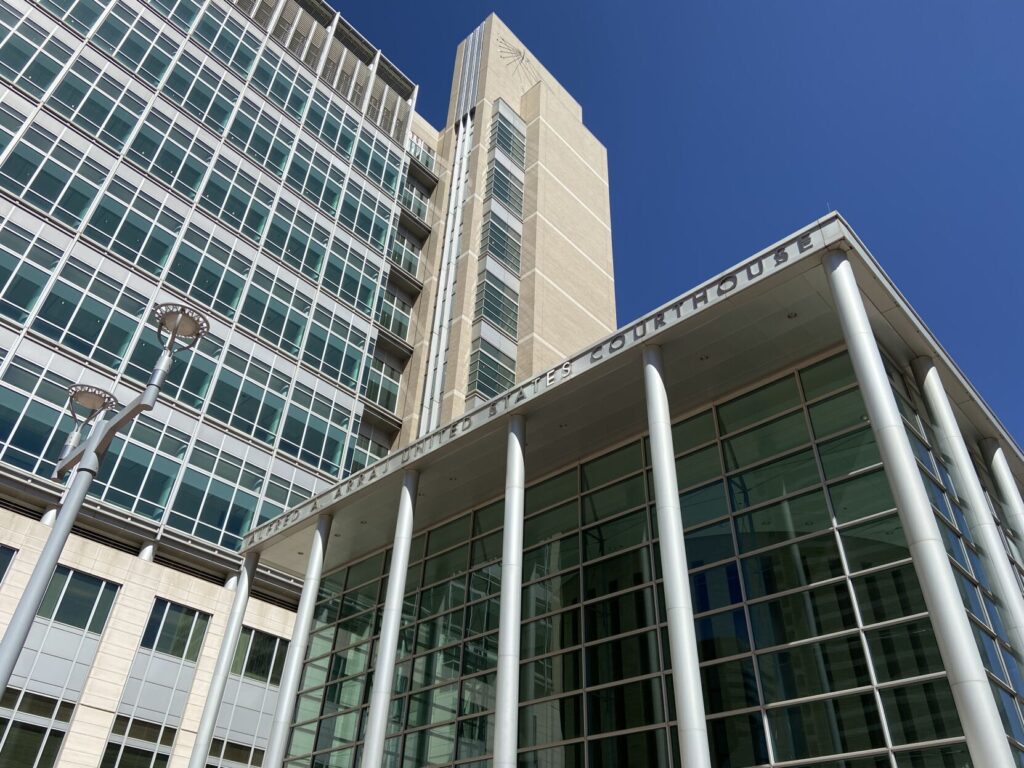
Colorado’s federal judges are maintaining their view that the government’s assertion of broad immigration detention authority is unlawful, casting aside a recent appellate decision to the contrary as “unpersuasive” and out of step with the predominant interpretation by the judiciary....
In a meeting Colorado GOP chair Brita Horn calls ‘illegal,’ Republicans vote to demand her resignation
Ernest Luning
ernest.luning@coloradopolitics.com
Updated 10 hours ago
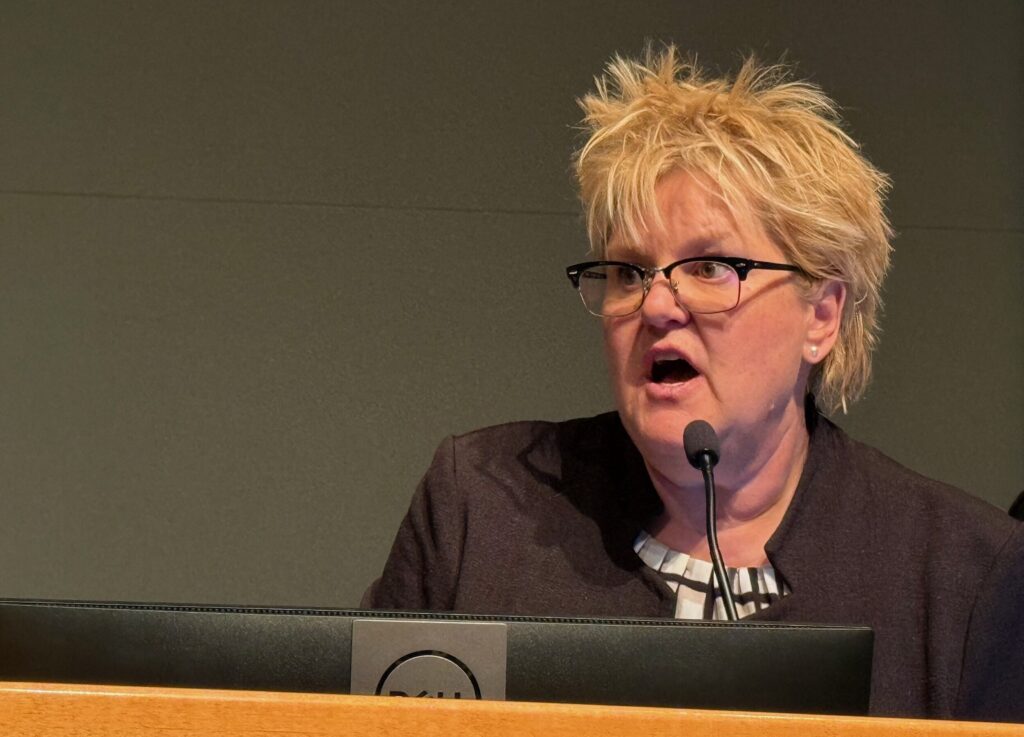
Roughly half the membership of the Colorado Republican Party’s state central committee on Saturday voted overwhelmingly to approve a resolution expressing “no confidence” in state GOP Chairman Brita Horn’s leadership and calling for her immediate resignation in an online meeting...

Colorado Medicaid probe uncovers millions of dollars in alleged transport fraud ring
Nico Brambila
nico.brambila@denvergazette.com
Updated 13 hours ago
Colorado Medicaid officials detected $25 million in abnormal billing over just four months two years ago — a surge that prompted a new state law and the suspension of dozens of providers in what authorities now describe as an organized...
One small step for dialing back the partisanship | SONDERMANN
Eric Sondermann
eric-sondermann@coloradopolitics.com
Updated 3 days ago
Much ink, including a good deal of my own, has been spilled on the excesses of super-charged, toxic partisanship in this current era. Except for true believers along with those who profit from this all-consuming poison, there is broad agreement...
Greeley voters to decide fate of project that includes minor league hockey arena
Hap Fry, Special to The Gazette
hap-fry@gazette.com
Updated 14 hours ago
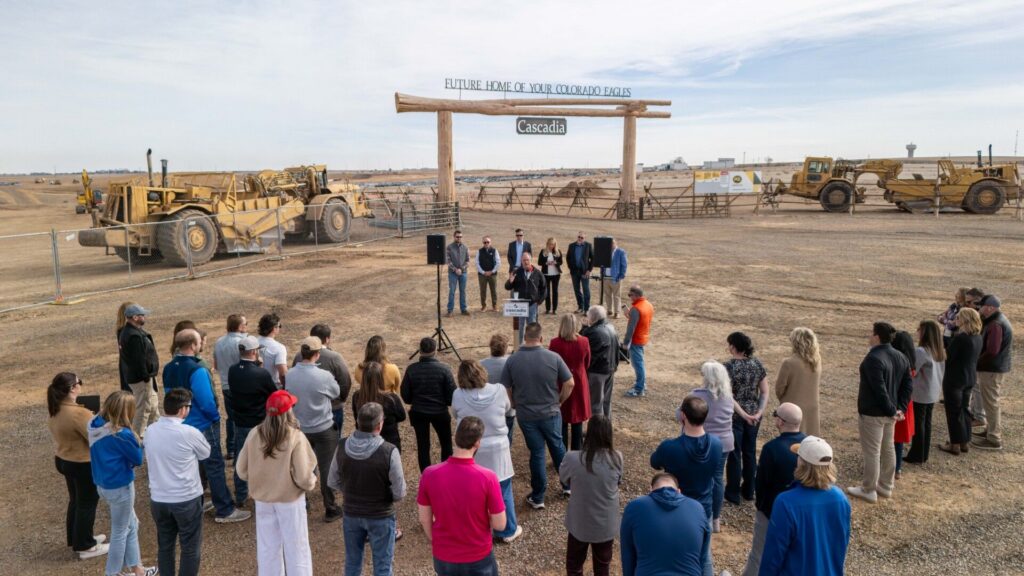
GREELEY • The fate of the Cascadia development — and quite possibly the future direction of the city — is in the hands of Greeley voters this Tuesday during a special city election on whether the landscape-altering project should be...

Colorado Politics Calendar Feb. 23-Mar. 1
Rachael Wright, Special to Colorado Politics
rachael.wright@coloradopolitics.com
Updated 4 days ago
CoPo’s weekly political calendar helps you find political and public policy events throughout Colorado. It includes candidate and issue campaign events, public policy meetings, court hearings, state and local party conventions, assemblies, debates, rallies, parades, speaking engagements, traveling dignitary appearances,...
Meeker rancher leads one of Colorado’s earliest attempts to transfer federal lands | A LOOK BACK
Rachael Wright, Special to Colorado Politics
rachael.wright@coloradopolitics.com
Updated 3 days ago
Forty-Five Years Ago This Week: Former state Rep. Nick Theos, R-Meeker, was one of several people testifying before the Senate Agriculture Committee on Senate Bill 81-170, which would transfer ownership of public lands from the federal government to state control....

Democrats Michael Bennet, Phil Weiser make their cases to be Colorado’s next governor ahead of primary
Ernest Luning
ernest.luning@coloradopolitics.com
Updated 2 days ago
Nearly eight months before ballots will be counted in Colorado’s race for the its open gubernatorial seat, voters are lining up behind two of the state’s leading Democrats, who are facing off in a primary that will likely determine which...
Colorado GOP officers set competing meetings to hold ‘no-confidence’ votes on state chair Brita Horn
Ernest Luning
ernest.luning@coloradopolitics.com
Updated 1 day ago
Once again, members of the Colorado Republican Party’s central committee have scheduled separate, competing meetings to consider whether the state GOP’s governing body supports its chair, but this time neither meeting will be held under a bridge. State GOP Chair...
Colorado Democratic candidate submitted 1,600 signatures — only 29 were valid
Marianne Goodland
marianne.goodland@coloradopolitics.com
Updated 10 hours ago
When he turned in some 1,600 signatures last month, Eric Nelson said it demonstrated “strong grassroots support from voters” across the district and a “growing momentum” for his “inclusive, community-centered leadership.” On Thursday, the Secretary of State rejected Nelson’s petition...