

Appeals court finds El Paso County magistrate erred in 2 cases
Colorado’s second-highest court last month concluded a former El Paso County magistrate did not follow the law or the rules governing magistrates when adjudicating two complex family disputes.
The first case revolved around the guardianship of Martin Acosta, a developmentally disabled man in his mid-50s. His mother had been his legal guardian since 1997, but a significant rift formed in the Acosta family between those who supported the arrangement and those who opposed it.
Although Martin Acosta lived in Colorado Springs for many years with his mother, Sandra Acosta, one of Martin’s siblings sought to remove Sandra as the guardian. Alisa Acosta, who lives in Wyoming, attempted to become the new guardian. Martin, in turn, maintained he wanted to stay with Sandra.
Both sides remained suspicious of each other until Sandra died in the middle of the case in September 2023. Then there were only two candidates to be Martin’s guardian: Alisa, who had recently hosted Martin’s visit to Wyoming, and her brother, Raul Acosta, who lived in Colorado Springs and was knowledgeable about Martin’s needs.
Then-Magistrate Vincent N. Rahaman concluded Raul would be Martin’s guardian, and Martin would be able to visit and talk with his other siblings. Alisa then appealed.
A three-judge panel for the Court of Appeals analyzed Rahaman’s findings about whether it would in Martin’s best interest to stay in Colorado or to move to Wyoming. Rahaman used a series of factors intended to apply to child guardianship cases and adapted them to Martin’s adult guardianship.
Despite Alisa’s claim that such a move was improper, the appellate panel decided Rahaman acted reasonably by using the child factors in the absence of other legal guidance.
However, the panel agreed Rahaman did not render a decision based on who was “best qualified” to be Martin’s guardian, as the law required. Instead, he had focused on where, geographically, Martin would be better served.
“Certainly, the advantages and disadvantages of a possible relocation may be relevant to the analysis of who was best qualified to be Martin’s guardian. But a guardian has many responsibilities, including the duty to ‘make decisions regarding the ward’s support, care, education, health, and welfare,'” wrote Judge David H. Yun in a Dec. 26 opinion. “Absent a finding that Raul was best qualified to carry out these responsibilities, we are unable to determine whether the probate court’s decision to appoint Raul as guardian was supported by competent evidence.”
The panel returned the case to the trial court for the magistrate who succeeded Rahaman to redo the analysis, taking account of any developments that happened since the original decision.
The case is In the Interest of Acosta.

Judge Pax L. Moultrie speaks during her formal swearing-in ceremony to Colorado’s Court of Appeals on April 19, 2024. Behind her, from left to right, are Judges Katharine E. Lum, Stephanie Dunn, Matthew D. Grove, Neeti V. Pawar, Jaclyn Casey Brown and Sueanna P. Johnson.
In the second case, Johnny B. Rice died in 2022 and his biological children began a court proceeding over Rice’s will. The participants consented to a magistrate, Rahaman, making all decisions.
Months later, Rice’s stepson, Michael Oboley, entered the case. He asserted Rice had transferred a home on Amberly Drive to him in 2014, and it should not be considered an asset of Rice’s. At a hearing before Rahaman, Oboley’s lawyer produced a copy of the deed, but it lacked a signature page. Rahaman ultimately ruled the transfer was invalid without a signature.
Then another complication arose. Oboley had gone through bankruptcy proceedings in 2021. He did not list the Amberly Drive house in his filings. However, once the bankruptcy trustee learned of Rahaman’s ruling, he moved to intervene so he could represent the interests of Oboley’s bankruptcy estate. Rahaman denied the trustee’s motion to revisit the Amberly Drive ruling.
The trustee turned to the Court of Appeals, arguing Rahaman’s decision was void because Colorado’s rules for magistrates required all parties to consent to his decision-making. The trustee, in turn, had not consented.
Based on the intersection of bankruptcy law, Colorado law and the magistrate rules, a Court of Appeals panel agreed.
Because a bankruptcy trustee is the “real party in interest” for Oboley’s stake in the Amberly Drive home, the trustee was the one whose consent was required, wrote Judge Pax L. Moultrie in the Dec. 26 opinion.
“Moreover, despite Oboley’s failure to disclose his alleged interest in the Amberly Residence during the bankruptcy proceedings, the interest remained part of the bankruptcy estate, even after the bankruptcy case closed,” she continued. “Accordingly, the court reversibly erred by adjudicating the deed’s validity in the absence of the Trustee.”
The panel also faulted Rice’s daughter, who was the personal representative of his estate, for not notifying the trustee in the first place. Moultrie observed the daughter was aware of Oboley’s bankruptcy, but “didn’t exercise reasonable diligence” to involve the trustee before Rahaman made a decision.
The panel overturned Rahaman’s order deeming Oboley’s ownership of the house invalid.
The case is In the Estate of Rice.


Denver judge denies Gov. Polis request to dismiss ICE-related records case
Marianne Goodland
marianne.goodland@coloradopolitics.com
Updated 2 hours ago
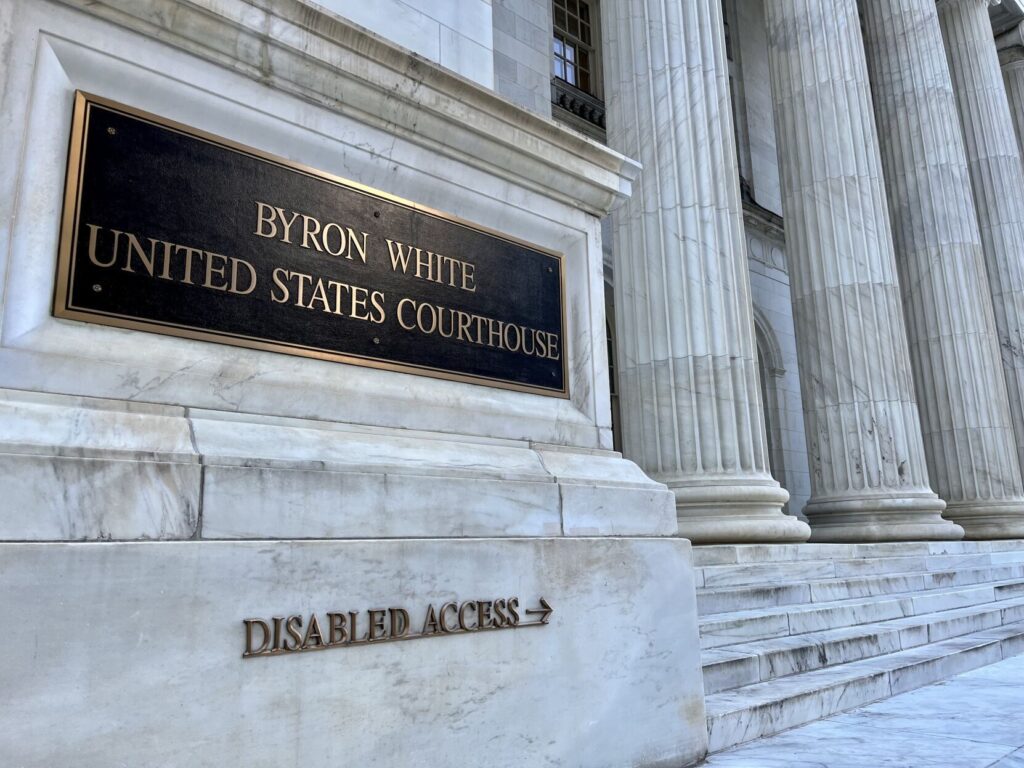
A year after blocking the release of state records to federal immigration agents, a Denver judge has now denied Gov. Jared Polis’ effort to end the lawsuit at the center of the dispute. The lawsuit filed against the governor in...
10th Circuit grants rare all-judges’ review of Colorado banking regulation
Michael Karlik
michael.karlik@coloradopolitics.com
Updated 4 hours ago
The Denver-based federal appeals court announced on Thursday that it will hold a rare all-judges review of a recent decision that permits Colorado to require out-of-state banks to abide by the state’s maximum interest rates when they lend to in-state...
Colorado appeals court orders new sentencing for Tina Peters, upholds convictions
Michael Karlik
michael.karlik@coloradopolitics.com
Updated 5 hours ago
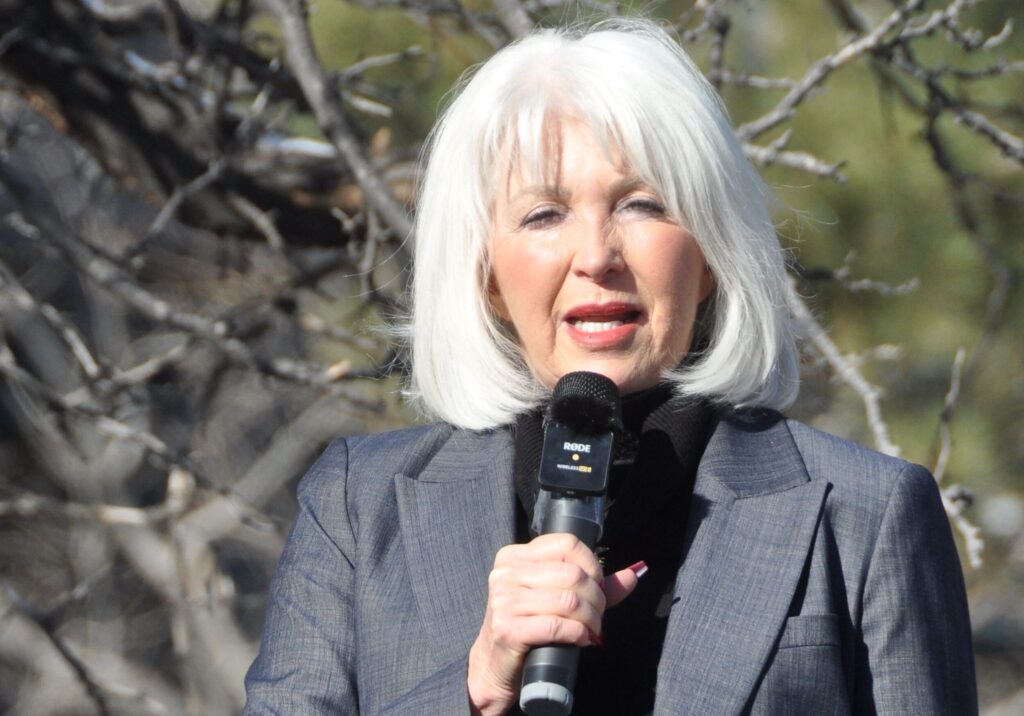
Colorado’s second-highest court determined on Thursday that a trial judge improperly sentenced former Mesa County clerk Tina Peters based upon her exercise of protected speech, while at the same time upholding her convictions. The three-judge Court of Appeals panel also...

Judge rules that Colorado law makes it too hard for parties to bar unaffiliated voters from primaries
Ernest Luning
ernest.luning@coloradopolitics.com
Updated 6 hours ago
A federal judge ruled in favor of the Colorado Republican Party late Tuesday, saying that a portion of the state law that allows unaffiliated voters to cast ballots in party primaries is unconstitutional because it imposes an unrealistic burden on...
10th Circuit upholds regulator’s methodology for Tri-State exit fees
Michael Karlik
michael.karlik@coloradopolitics.com
Updated 6 hours ago
The Denver-based federal appeals court upheld a regulatory agency’s methodology for calculating the fee owed by entities seeking to withdraw from Tri-State Generation and Transmission Association last week. Tri-State is a Westminster-based cooperative that provides and transmits electricity to member...
Federal judge proposes sanctions against Mike Lindell’s lawyers for continued fake citations
Michael Karlik
michael.karlik@coloradopolitics.com
Updated 1 day ago
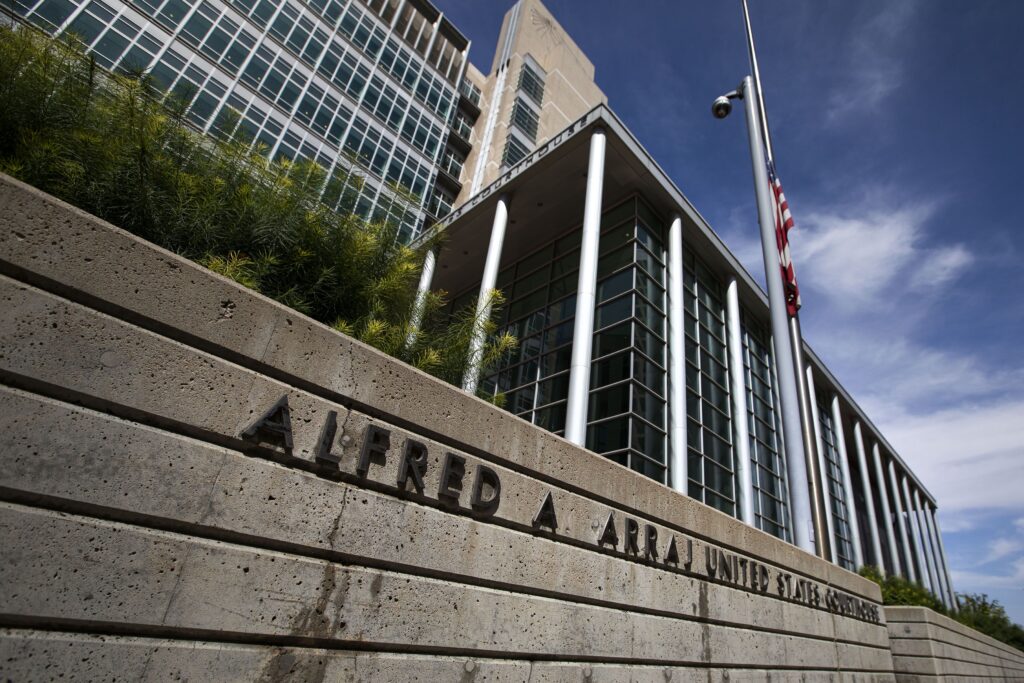
A federal judge is once again pursuing sanctions against lawyers for MyPillow CEO Mike Lindell for continuing to cite to court cases that do not exist, likely based on the faulty output of artificial intelligence tools. Last year, a jury...

Susan Blanco signals views on role of appellate courts in first opinion as Colorado justice
Michael Karlik
michael.karlik@coloradopolitics.com
Updated 1 day ago
Justice Susan Blanco’s first solo opinion as a new member of the Colorado Supreme Court made clear her view of the guardrails that keep the state’s highest court tethered to the issues it is asked to decide. On Monday, the...

Colorado leaders weigh next steps after Supreme Court rejects state ban on ‘conversion therapy’
Marissa Ventrelli
marissa.ventrelli@coloradopolitics.com
Updated 2 days ago
Colorado leaders said they are weighing next steps after the U.S. Supreme Court on Tuesday rejected the state’s ban on “conversion therapy” for children, as critics and supporters cheered or lambasted the ruling. The court’s near-unanimous decision called the Colorado...

Federal judge dismisses U.S. government lawsuit against Colorado, Denver’s ‘sanctuary’ laws
Michael Karlik
michael.karlik@coloradopolitics.com
Updated 2 days ago
A federal judge dismissed the U.S. government’s lawsuit against Colorado and Denver on Tuesday, which alleged that various local policies impermissibly infringed on federal immigration enforcement. U.S. District Court Judge Gordon P. Gallagher followed the lead of judges in Illinois...

Federal judge finds DOJ adequately searched for, disclosed records related to Bidens
Michael Karlik
michael.karlik@coloradopolitics.com
Updated 2 days ago
A federal judge determined on Friday that the U.S. Department of Justice adequately searched for and disclosed records to a Colorado attorney in response to his request for documents related to former President Joe Biden’s son and brother. In November...