

Federal judge temporarily halts Trump birthright citizenship order
A federal judge in Seattle on Thursday issued a nationwide temporary restraining order halting President Donald Trump’s policy ending a decades-old immigration policy known as “birthright citizenship,” which guarantees that U.S.-born children are citizens regardless of their parents’ status.
The case is separate from the lawsuit filed by 18 states, including Colorado, in the federal district court in Massachusetts. That lawsuit argues that birthright citizenship is “automatic” and that the Constitution does not grant either Congress or the president the powers to alter it as a means of tackling immigration policy issues.
The ruling is the first major salvo in what likely will be a long legal battle over the question of whether the children of individuals unlawfully living in the U.S. are American citizens.
In the Seattle case, Senior U.S. District Judge John Coughenour, a Reagan appointee, called the order “blatantly unconstitutional,” echoing the sentiments of Colorado’s Phil Weiser and other states’ attorneys general who filed the separate lawsuit to block the executive order.
“Frankly, I have difficulty understanding how a member of the bar could state unequivocally that this is a constitutional order,” Coughenour said.
The judge, who criticized the government’s argument that the 14th Amendment excludes children of immigrants unlawfully living in the U.S., asserted, “President Trump and the federal government now seek to impose a modern version of Dred Scott.”
Washington Attorney General Nick Brown, joined by Oregon, Illinois, and Arizona, led this particular lawsuit, arguing that the order would strip citizenship from around 150,000 newborns annually, including 4,000 in Washington.
In a statement, Weiser told The Denver Gazette that he welcomes the federal judge’s order:
“A federal judge today confirmed that the president’s executive order attempting to override the Constitution and end birthright citizenship is flatly unconstitutional,” he said. “I’m pleased the judge has temporarily stopped the administration from implementing it. We’ll continue pressing our lawsuit to ensure that this unconstitutional executive order is stopped permanently.”
On one side of that argument, Weiser and others maintain that birthright citizenship is a bedrock principle of the U.S. and enshrined in the Constitution, which guarantees citizenship to children born in the U.S., regardless of their parents’ immigration status.
“This is an unconstitutional attempt to redefine what it means to be an American,” Brown of Washington state said, according to the Seattle Times.
On the other side of that argument, some say that the understanding is flawed and a misinterpretation of the Constitution’s “Citizenship Clause,” insisting birthright citizenship has no basis in either the text, the history of the clause or in the political theory underlying it.
Issued Monday, Trump’s executive order zeroed in on the phrase “subject to the jurisdiction thereof.” The administration argued that the Fourteenth Amendment has never been interpreted to “extend citizenship universally to everyone born within the United States.”
“The Fourteenth Amendment has always excluded from birthright citizenship persons who were born in the United States but not ‘subject to the jurisdiction thereof,’” the executive order said.
It excludes the following people from automatic citizenship: individuals whose mothers were not legally in the United States and whose fathers were not U.S. citizens or lawful permanent residents; people whose mothers were in the country legally but on a temporary basis — such as on a tourist visa — and whose fathers were not citizens or legal permanent residents.
It goes on to bar federal agencies from recognizing the citizenship of people in those categories.
In his order, Coughenour rejected the federal government’s argument, emphasizing the 14th Amendment’s guarantee that “all persons born or naturalized” in the U.S. are “citizens.”
The judge’s decision is the first in a series of lawsuits nationwide challenging the executive order, setting the stage for a prolonged legal battle that is likely to reach the U.S. Supreme Court.
Within hours of being sworn in on Monday, Trump had unleashed a flurry of executive orders ranging from U.S. foreign aid and trade to demographic diversity and immigration.
Some of Trump’s executive orders are expected to have an immediate impact, while others will likely be challenged with federal lawsuits.
In addition to redefining birthright citizenship, Trump’s executive orders targeted several immigration issues from suspending refugee arrivals and sending more American troops to the border. On the campaign trail, the president promised to crack down on illegal immigration with a mass deportation program he dubbed “Project Aurora.”
In 2022, the Pew Hispanic Center estimated that 170,000 immigrants were living without authorization in Colorado. That count does not include the roughly 43,000 immigrants who arrived in metro Denver after illegally crossing the U.S. border with Mexico; transportation receipts suggested that half of them have decided to stay in Colorado.
Reporter Nico Brambila, Editor Luige del Puerto and the Associated Press contributed to this article.

Federal judge directs plaintiff to revise complaint alleging Denver officers’ constitutional violations
Michael Karlik
michael.karlik@coloradopolitics.com
Updated 7 hours ago
A federal judge directed a plaintiff to revise his allegations on Wednesday to more precisely state what two Denver officers and the city itself allegedly did to violate his constitutional rights by facilitating his prosecution for murder until prosecutors dropped...
Federal judge explores new sanctions against ex-Colorado judicial discipline director
Michael Karlik
michael.karlik@coloradopolitics.com
Updated 11 hours ago
A federal judge on Wednesday directed Colorado’s former judicial discipline director, for the third time this year, to explain why she should not sanction him for his latest conduct in his litigation against the state’s judiciary. Christopher S.P. Gregory, who served...
Colorado joins lawsuit challenging changes to Endangered Species Act
Marissa Ventrelli
marissa.ventrelli@coloradopolitics.com
Updated 11 hours ago
Colorado once more joined a coalition of states challenging the Trump administration — this time on proposed rules regarding the Endangered Species Act. The pair of lawsuits challenge new rules made under Interior Secretary Doug Burgum, who earlier said the...

Boebert challenger Eileen Laubacher says she’ll ‘break through the noise’ in Democrat’s 1st TV ad
Ernest Luning
ernest.luning@coloradopolitics.com
Updated 8 hours ago
Democratic congressional candidate Eileen Laubacher says she’ll take a different approach than her opponent in a campaign ad released Wednesday that opens with a cacophonous series of videos featuring Republican U.S. Rep. Lauren Boebert. “Eileen’s had enough of the noise...
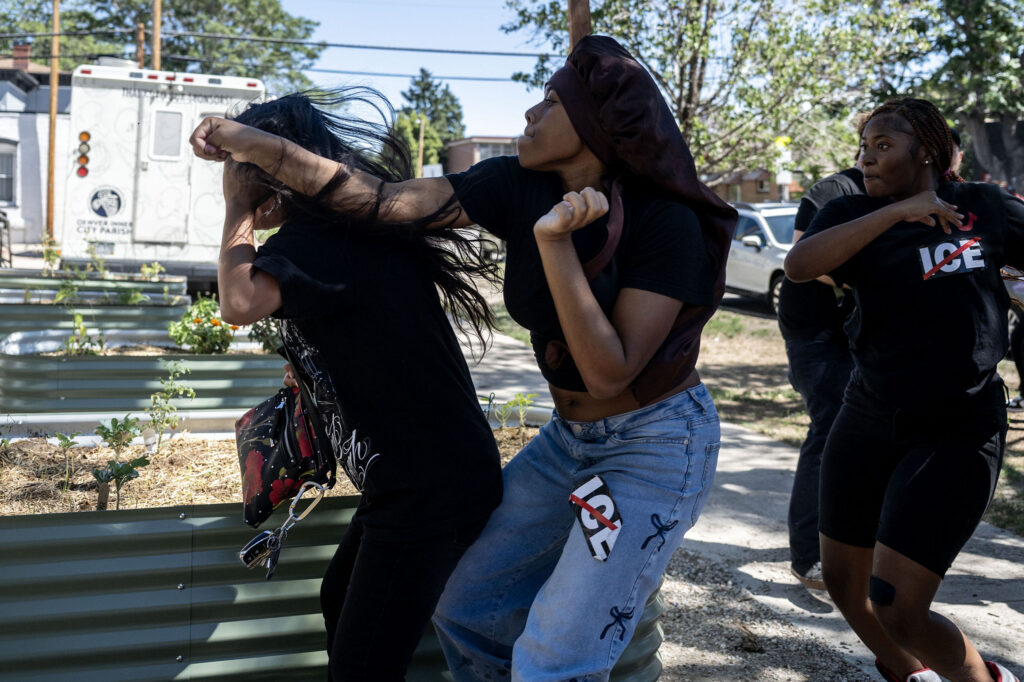
Colorado congressman asks DOJ to investigate violent student ICE walkout
Nico Brambila
nico.brambila@denvergazette.com
Updated 10 hours ago
U.S. Rep. Jeff Crank is asking the Justice Department to investigate violence at last week’s anti-ICE student walkout in Denver, including whether outside organizations helped organize, fund, or influence the demonstration. Crank sent a letter Tuesday requesting the investigation to...
General election season is here. Where does mail-in voting stand?
David Zimmermann
david-zimmermann@coloradopolitics.com
Updated 14 hours ago
As the general election season approaches, the legal question surrounding the new U.S. Postal Service mail-in ballot requirements remains up in the air. With the case playing out in the courts, mail-in voting has not been changed substantially despite President...
10th Circuit orders second look at immunity for Kiowa County deputy over fatal vehicle crash
Michael Karlik
michael.karlik@coloradopolitics.com
Updated 9 hours ago
The Denver-based federal appeals court directed a trial judge on Tuesday to further analyze whether a Kiowa County deputy and the sheriff’s office may be sued for a fatal vehicle collision. The Colorado Governmental Immunity Act generally shields government entities and public...
Colorado justices to hear appeal in Kendrick Castillo death lawsuit, ‘fugitive’ rule
Michael Karlik
michael.karlik@coloradopolitics.com
Updated 9 hours ago
The Colorado Supreme Court announced on Tuesday that it will decide whether it was proper to dismiss a lawsuit over the 2019 shooting death of Kendrick Castillo after the defendants paid the maximum amount of damages available to Castillo’s parents,...

Two more wolves killed by Colorado wildlife staff
Marianne Goodland
marianne.goodland@coloradopolitics.com
Updated 1 day ago
Two yearling wolves from the Copper Creek and Three Creeks packs in Pitkin and Rio Blanco counties, respectively, were killed by Colorado Parks and Wildlife staff on Monday. That brings to 19 the number of wolves that have died under...
Federal judge dismisses Douglas County’s challenge to collective bargaining law
Nicholas Fogleman
nicholas.fogleman@denvergazette.com
Updated 18 hours ago
A federal judge dismissed claims brought by the Douglas County Board of Commissioners alleging that a state law granting county employees the right to organize and join labor unions violates free speech protections and conflicts with federal labor law. Douglas...