

Colorado House passes ‘Reproductive Rights and Justice Day’ resolution amid abortion debate
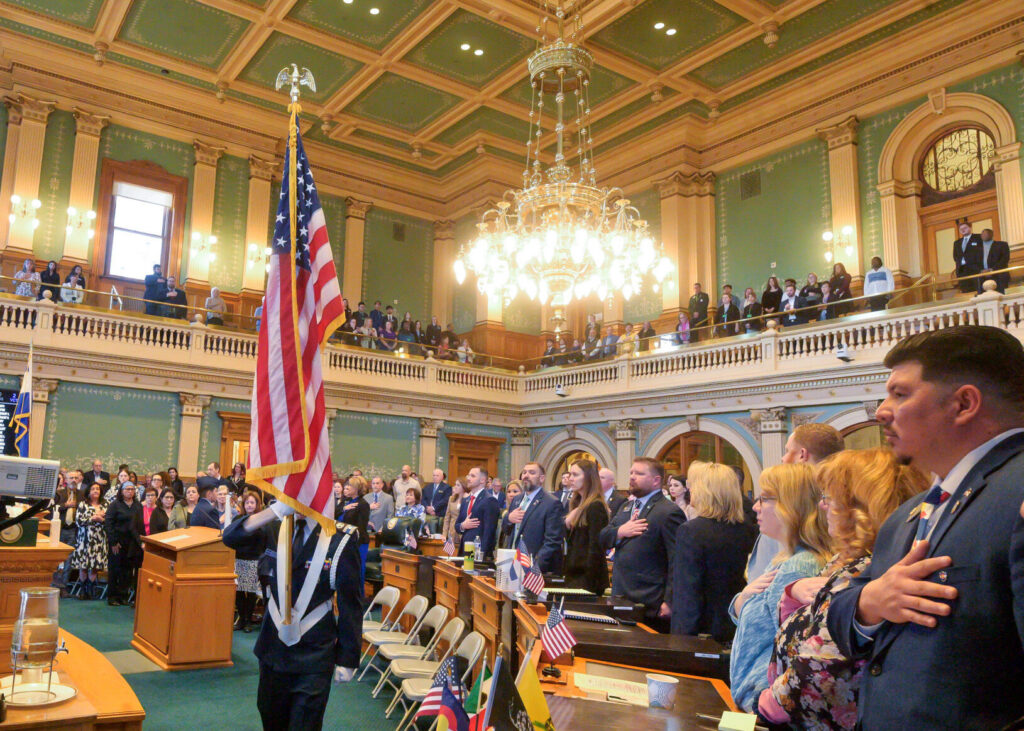
The Colorado House on Friday passed a Senate resolution on “Reproductive Rights and Justice Day,” designated by the resolution for Jan. 22, but not without expected pushback from House Republicans.
Both party caucuses stood together as each side spoke on the resolution.
Democrats spoke briefly, led by co-sponsor Rep. Lorena Garcia, D-Adams County, who said “reproductive justice exists when all individuals have the power and self-determination to make healthy decisions about our bodies.” And when or if deciding to grow families, “reproductive oppression” exists when bodily autonomy “is robbed from women through policy rooted in sexism, lack of respect for women and disempowerment.”
Last year, Republicans stood together behind House Minority Leader Rose Pugliese of Colorado Springs as she spoke on behalf of the caucus and against the resolution.
That wasn’t going to happen in 2025, and Friday’s hour-long comments from Republicans is an indication that the debate likely won’t be the last.
Last November, Colorado voters approved Amendment 79, which enshrines the right to an abortion in the state constitution, on a 62% to 38% vote.
While Republicans have yet to introduce legislation on the abortion issue, a bill enacting the constitutional amendment, a standard practice after voters approve any changes to either statute or the constitution, is expected sometime in the 2025 session. The legislation is likely to generate the same kind of reaction seen Friday and in 2022, when Democratic lawmakers approved a statute on the right to abortion and contraception, but which came with a 23-hour filibuster from Republicans in the state House.
The 2022 measure was in anticipation of the U.S. Supreme Court’s decision to overturn Roe v. Wade. The 2024 amendment was in anticipation of possible federal law to outlaw abortion nationwide. The Kaiser Family Foundation reported after the November 2024 election that 16 states had abortion-related measures on the November ballot. Voters in 10 states had measures to protect abortions. Seven states, including Colorado and red states like Montana and Missouri, approved citizen initiatives to protect the right to abortion.
Only one state, Nebraska, approved a ban on abortions.
During debate on the resolution Friday, House Republicans, with often graphic descriptions of abortions, blasted those who support that right, even criticizing women for having sex.
“You cannot make the immoral moral,” said Rep. Ken DeGraff, R-Colorado Springs, citing Martin Luther King, Jr. “We can delve into the details where 99% of [abortions] are the result of using procreation as recreation.”
Two lawmakers talked about the experience of losing a pregnancy, including Rep. Brandi Bradley, R-Roxborough Park, who said “Colorado is not a pro-choice state, it’s a pro-death state.”
Rep. Stephanie Luck, R-Penrose, offered statistics provided by a constituent on the risks of abortion, including stating that having an abortion increases the risk of breast cancer by 40%. The American Cancer Society rejects that claim, stating “The most up-to-date scientific research suggests that abortion does not influence a woman’s risk for breast cancer.”
Luck offered a strike-below amendment, which rewrites the entire resolution and would change Jan. 22 to “Sanctity of Human Rights Day.” It failed on a party-line vote. Rep. Lisa Feret, D-Arvada, initially voted in favor but told Colorado Politics that vote was in error. She later informed the House, with Luck at her side, of the error.
In the Senate Wednesday, the resolution passed along party lines with comments from Democrats. Republicans did not speak on the resolution.
The resolution passed in the House along party lines, although two Republicans, Reps. Dan Woog of Erie and Ryan Gonzalez of Greeley, were both unavailable for the vote. Woog returned to the chamber immediately following the vote.


Gov. Lamm challenges Congress to stop ‘decontrol’ of natural gas | A LOOK BACK
Rachael Wright, Special to Colorado Politics
rachael.wright@coloradopolitics.com
Updated 2 days ago
Forty-Five Years Ago This Week: In a memo to Colorado’s congressional delegation, Gov. Dick Lamm urged them to vote against the phased pricing deregulation provisions in the Natural Gas Policy Act, a measure introduced in Congress in 1978 and still...
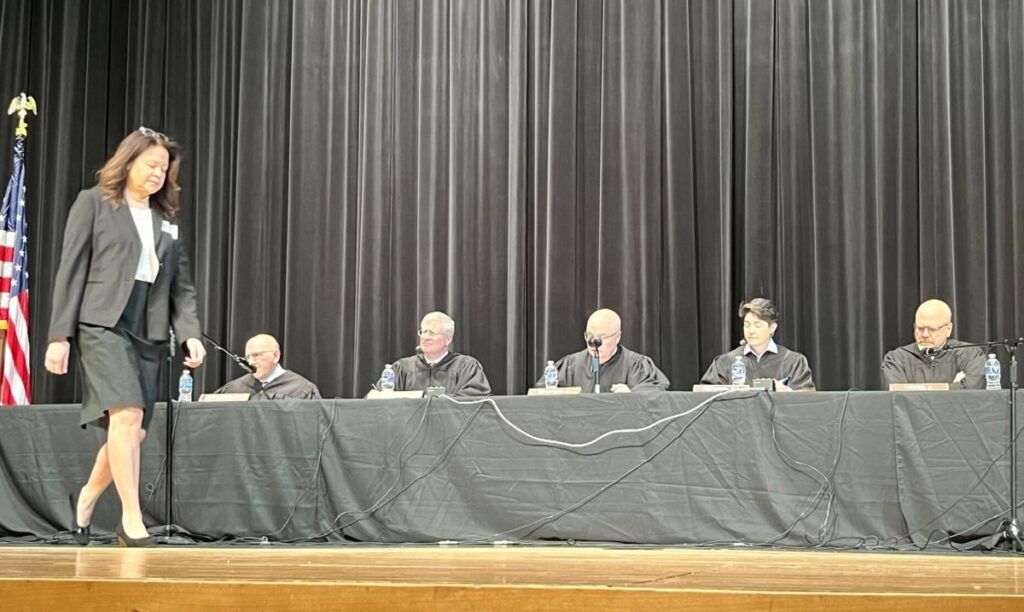
Colorado justices accept appeals on Netflix taxation, children pursuing neglect cases
Michael Karlik
michael.karlik@coloradopolitics.com
Updated 15 hours ago
The Colorado Supreme Court announced on Monday that it will decide whether Netflix subscriptions are subject to the state’s sales tax as “tangible personal property.” At least three of the court’s seven members must agree to hear an appeal. The...
Proposal outlines $300M deal separating Pinnacol from Colorado state government
Marianne Goodland
marianne.goodland@coloradopolitics.com
Updated 15 hours ago
Colorado lawmakers are weighing a proposal that would allow Pinnacol Assurance to sever its remaining ties to the state in exchange for a $300 million payment, a long‑debated shift that supporters say could stabilize the insurer’s future and help plug...
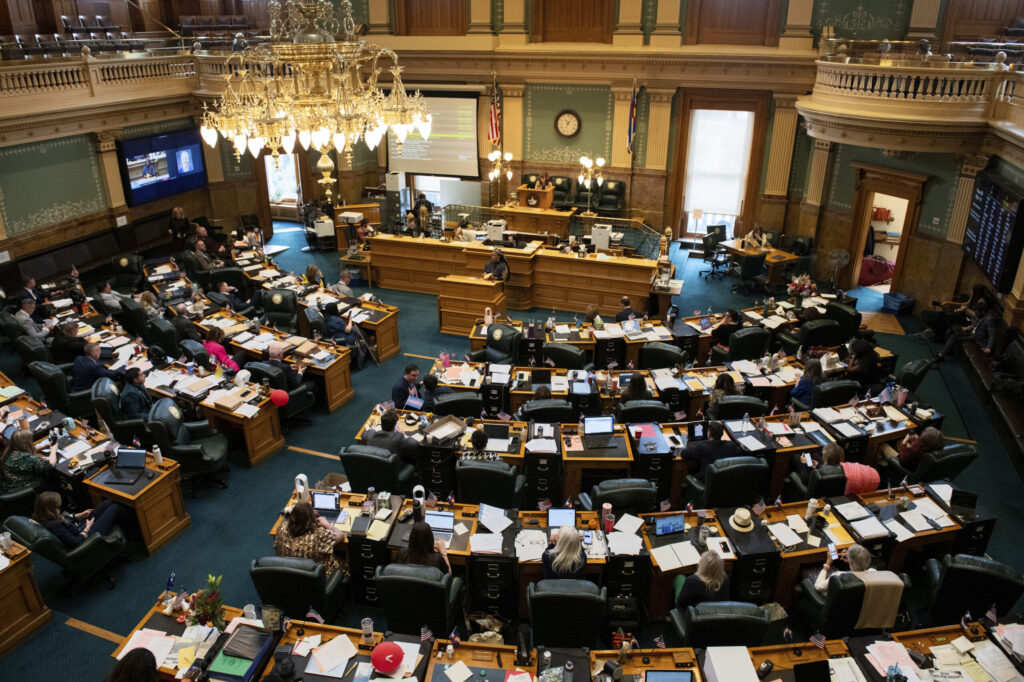
Bill requiring employers to grant unpaid leave to Colorado lawmakers heads to governor’s desk
Marissa Ventrelli
marissa.ventrelli@coloradopolitics.com
Updated 14 hours ago
Colorado lawmakers are one step away from securing guaranteed unpaid leave from their day jobs during the legislative session after the House narrowly approved the proposal Thursday. Senate Bill 087 would require businesses to allow employees who are members of...
Redistricting fight escalates as Colorado Title Board clears competing ballot proposals
Marianne Goodland
marianne.goodland@coloradopolitics.com
Updated 15 hours ago
Colorado’s title board on Wednesday gave final approval to multiple ballot measures related to congressional redistricting, setting up a series of proposals that could alter how the state draws its U.S. House districts for the 2028 and 2030 elections. The...

Trump downplays major reform bill and says housing is ‘all about interest rates’
Zach Halaschak, Washington Examiner
zach.halaschak.washington.examiner@gazetteedit.wpenginepowered.com
Updated 17 hours ago
President Donald Trump downplayed the bipartisan housing legislation that many congressional allies hope will ease the affordability worries plaguing voters, saying instead in an exclusive Washington Examiner interview that housing is “all about interest rates.” Trump said on a phone call Thursday morning...
Colorado lawmakers propose deep cuts to close $1.2B budget gap
Marianne Goodland
marianne.goodland@coloradopolitics.com
Updated 14 hours ago
The panel of Colorado legislators in charge of crafting next year’s budget has finalized the 2026–27 spending plan built on deep cuts and one‑time cash transfers in an attempt to close a shortfall of more than $1.2 billion. The plan...
Denver judge denies Gov. Polis request to dismiss ICE-related records case
Marianne Goodland
marianne.goodland@coloradopolitics.com
Updated 18 hours ago
A year after blocking the release of state records to federal immigration agents, a Denver judge has now denied Gov. Jared Polis’ effort to end the lawsuit at the center of the dispute. The lawsuit filed against the governor in...
10th Circuit grants rare all-judges’ review of Colorado banking regulation
Michael Karlik
michael.karlik@coloradopolitics.com
Updated 19 hours ago
The Denver-based federal appeals court announced on Thursday that it will hold a rare all-judges review of a recent decision that permits Colorado to require out-of-state banks to abide by the state’s maximum interest rates when they lend to in-state...
Colorado appeals court orders new sentencing for Tina Peters, upholds convictions
Michael Karlik
michael.karlik@coloradopolitics.com
Updated 14 hours ago
Colorado’s second-highest court determined on Thursday that a trial judge improperly sentenced former Mesa County clerk Tina Peters based upon her exercise of protected speech, while at the same time upholding her convictions. The three-judge Court of Appeals panel also...