

Q&A with Timothy Schutz | Appeals judge speaks about access to justice work
In 2024, Colorado’s Access to Justice Commission expanded from one staff member to four, supported 11 virtual clinics and helped place 10 law students in multiple rural counties to provide legal assistance, among other initiatives.
The commission, whose mission is to address the gap between people’s legal needs and the resources available to them in the civil justice system, has a number of committees to assist with its work. One of them, the Courts Committee, is focused on standardizing legal forms, addressing language access barriers and other improvements to aid court users.
The committee’s chair, Judge Timothy J. Schutz, spoke to Colorado Politics about how his prior work as an El Paso County trial judge and his current role on the Court of Appeals have given him insight into the committee’s work.
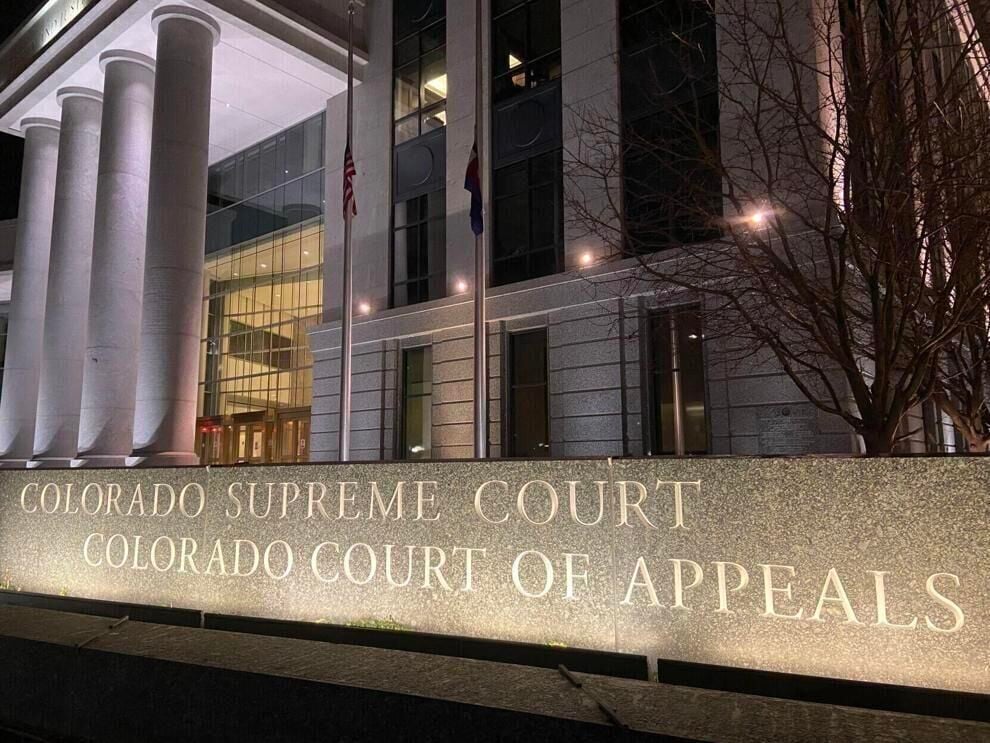
The Ralph L. Carr Colorado Judicial Center in downtown Denver houses the Colorado Supreme Court and Court of Appeals.
(Michael Karlik / Colorado Politics)

The Ralph L. Carr Colorado Judicial Center in downtown Denver houses the Colorado Supreme Court and Court of Appeals.
Colorado Politics: Talk to me about your personal interest in access to justice issues and what led you to join the Courts Committee.
Timothy Schutz: It’s a hard thing to talk about without sounding sort of self-serving. But in a nutshell, I didn’t come from what I would call a privileged background, in terms of economic situation. I compounded that lack of wealth in the family by getting married at 18 and having two children by the time I was 19. So, we were going through college, going through law school and at that point, poor. With some prospect of things improving, obviously.
That always gave me a perspective. Just that in a nutshell, there but for the grace of god go I.
I think I felt a personal sense of empathy with people who may be economically marginalized and a responsibility by virtue of having a law degree to try to help people. And just something to feel good about generally, in terms of being able to utilize your way of making a living in a way that hopefully helps others.
CP: Is that good feeling not something you get from the regular work of judging, typically?
Schutz: It’s a little bit different, I think. There are many aspects of judging. I was a trial court judge before being an appellate court judge. There are many aspects of trial court work and appellate work where you have an ability to have a positive impact on people. That’s true of private practice as well. But there are also aspects of being a judicial officer, decision-making, that are taxing mentally, sometimes emotionally.
Especially at the appellate level, it can feel distant from the day-to-day lives of people, and people who are affected by our decisions. It’s even more beneficial here to stay in touch with what’s going on at the ground level.
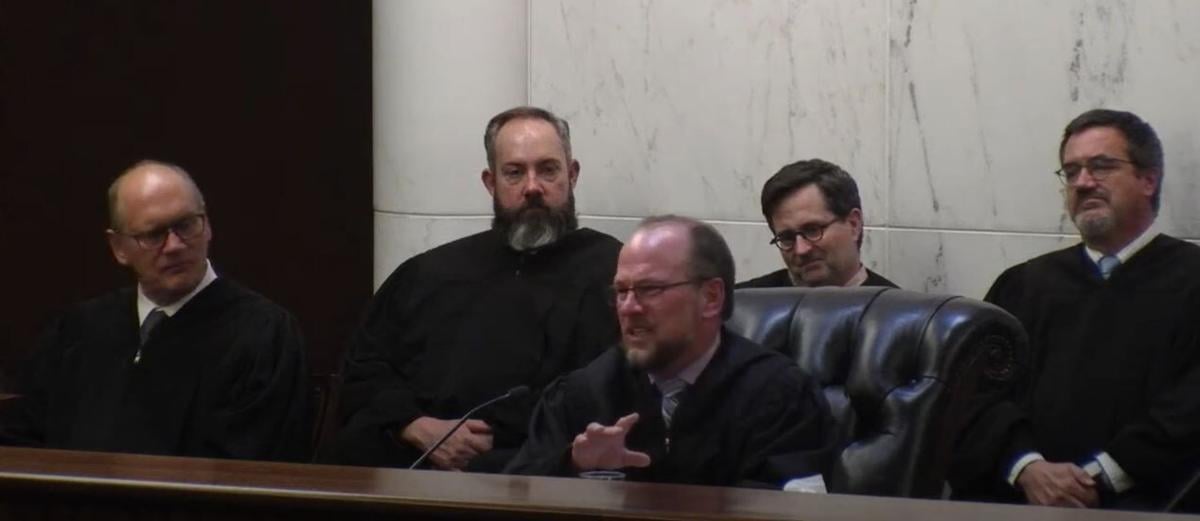
Judge Timothy J. Schutz speaks during his formal swearing-in ceremony to the Court of Appeals on Aug. 19, 2022. Behind him, from left to right, are Judges David Furman, W. Eric Kuhn, Craig R. Welling and Ted C. Tow III.

Judge Timothy J. Schutz speaks during his formal swearing-in ceremony to the Court of Appeals on Aug. 19, 2022. Behind him, from left to right, are Judges David Furman, W. Eric Kuhn, Craig R. Welling and Ted C. Tow III.
CP: What kind of work is the Courts Committee undertaking now on access to justice issues?
Schutz: We have a number of different issues. By way of backdrop, I see the Courts Committee as an interface between the formal court system and those people who are impacted by the legal system and who may face challenges in being able to access the legal system. Historically, it was kind of looking at it from the inside of the court to say, “What can we do differently to help people bridge the economic burdens that sometimes interfere with being able to access courts?”
And that continues to be the role of the committee. Some of the things we are working on right now, and we have worked on recently, are things like what can — not just court personnel — but what can people say about a legal issue that might assist someone who’s representing themselves? So that they can give meaningful information that might help them to defend their rights or pursue their rights, even though they’re not represented by an attorney.
There’s a chief justice directive that talks about what kinds of things can court personnel say and not say to someone who comes to the courthouse and asks for assistance and who is self-represented. Basically, trying to enable court employees to say enough to pro se (self-represented) parties that they can assist the pro se party in their specific problem. But not cross the line into the unauthorized practice of law.
The Lindsey-Flanigan Courthouse in Denver.
Michael Karlik michael.karlik@coloradopolitics.com

The Lindsey-Flanigan Courthouse in Denver.
Now, people get information in different ways. Librarians, for example, play a huge role because of the presence of people who are economically marginalized using libraries as resources. So, now it’s not just the clerk at the front desk of the courthouse who’s wondering about how far can I go without engaging in unauthorized practice of law? But it’s people like law clerks and advocacy groups or mental health providers or domestic abuse providers, interpreters — things of that nature.
One of the things the Courts Committee suggested initially was perhaps we could broaden out the chief justice directive to enable others outside the legal system to provide that advice. The Supreme Court, I think, is very supportive of the concept but said, understandably, it’s not really in our purview to direct people who aren’t employees of the court in terms of what’s permitted and not permitted.
We recognized we may not be able to amend the chief justice directive to specifically enable conduct. But we can still say this is the kind of conduct that is permitted without crossing into the boundary of unauthorized practice of law. We are presently developing a brochure to be distributed to stakeholders.
Another example of a chief justice directive: We have, in some circumstances, forms that are required or encouraged to be used in litigation. And the chief justice directive has a section that speaks to the ability to charge costs. And to charge a fee for obtaining these forms. One of the things that we’ve heard again through stakeholders is that charge is not in and of itself huge when you think about the cost of legal problems. But it may be $5, $10, $20 to get those forms. And for some people, that is a problem.
So, we are trying to encourage the Supreme Court to consider the possibility of eliminating that particular barrier of charging for forms that are required or otherwise encouraged to be used to access the courts, either to file a claim or defend against a claim by a pro se litigant.
The Supreme Court has that under consideration now.
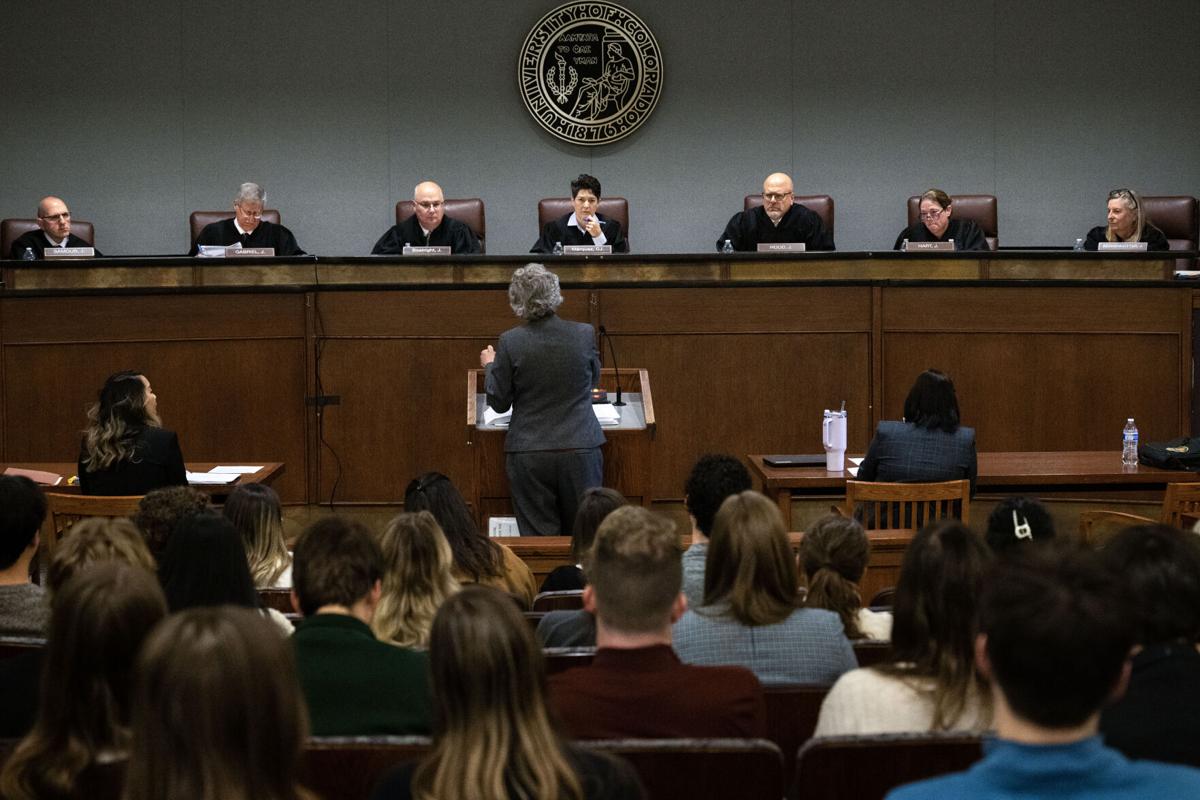
The Colorado Supreme Court hears a rebuttal from First Assistant Attorney General Wendy J. Ritz during arguments for People v. Rodriguez-Morelos as part of Courts in the Community at the Wolf Law building at University of Colorado Boulder on Thursday, Oct. 24, 2024. The semi-annual event entails the Colorado Supreme Court hearing arguments before an audience of students throughout the state. (Stephen Swofford, Denver Gazette)
Stephen Swofford Denver Gazette

The Colorado Supreme Court hears a rebuttal from First Assistant Attorney General Wendy J. Ritz during arguments for People v. Rodriguez-Morelos as part of Courts in the Community at the Wolf Law building at University of Colorado Boulder on Thursday, Oct. 24, 2024. The semi-annual event entails the Colorado Supreme Court hearing arguments before an audience of students throughout the state. (Stephen Swofford, Denver Gazette)
We also, historically, were involved with what ultimately was published as a new chief justice directive 1.5 years, two years ago, that addressed the issue of what kinds of appearances can be made remotely by parties. One of the things we hear a lot about is the fact that people, particularly in greater Colorado, have really limited access to lawyers.
So, we tried to think about what kinds of proceedings should be allowed remotely for lawyers to appear in and what kinds of proceedings should be required for in-person appearances.
CP: I was reading the committee’s charter and one of the responsibilities is standardizing forms statewide. As a former trial judge, why is it so difficult to say to the various judicial districts that there are some things they can do themselves — but for most of the stuff that is public-facing, we really need one unified system?
Schutz: It’s hard to know where that line is between individualized practices that are healthy because they encourage different creative practices by judicial officers, and those which are potentially problematic because they create sort of a patchwork that makes it more difficult for lawyers and practitioners to plan. It’s hard for me to give specific examples about where to draw that line, but I’ll give you an illustration.
I sat in the Springs, so oftentimes you would have counsel from Denver wanting to appear remotely for something like a pretrial readiness conference, which is usually a fairly quick conference, or the initial case management conference.
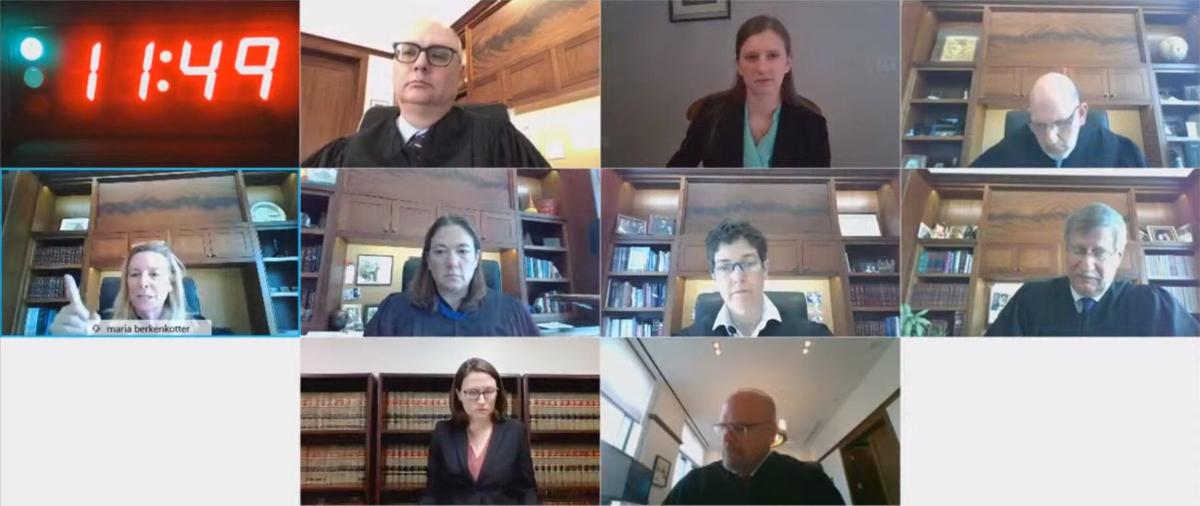
Justice Maria E. Berkenkotter asks a question during the Colorado Supreme Court's oral arguments on Feb. 9, 2021. The Supreme Court has live streamed and archived its proceedings for more than a half decade, but oral arguments during the COVID-19 pandemic took place over Webex.
Screengrab of Webex

Justice Maria E. Berkenkotter asks a question during the Colorado Supreme Court’s oral arguments on Feb. 9, 2021. The Supreme Court has live streamed and archived its proceedings for more than a half decade, but oral arguments during the COVID-19 pandemic took place over Webex.
I generally required counsel to come down. And part of that was a reflection of the fact that I did a lot of work in the federal court, so I had to come up here a lot. And I knew it was not quite as far as people think. But also, just out of my observed perspective, cases go more smoothly and we make greater progress, more efficient use of the court time and the parties’ resources, if counsel are getting along and have a human relationship. So, that’s an example where I would often hear, “Well, all the other judges allow us to appear remotely.” But I felt it was an important benefit of having people in person.
Sometimes it is difficult for certain districts that are extraordinarily busy or have very limited numbers of professionals, it’s hard to develop uniform policies. But I can see the pushback on that one because it seems like you should also be able to develop forms that might save people work.
CP: It occurs to me that a lot of times, access to justice issues are framed as what’s objectively good. It’s objectively good to have forms in plain English or it’s objectively good to have lower costs for self-represented litigants. But I think sometimes people feel they didn’t get access to justice because of the process they encounter and the outcomes they see in a courtroom. Like, they didn’t realize what types of evidence the judge could or could not consider in their divorce case and they got a bad ruling from that. Or they feel their lawyer didn’t aggressively go after the other party and the judge issued a biased ruling, so they didn’t get access to justice.
Is there anything the Courts Committee can do to address those subjective perceptions of access to justice that leave people feeling just as adrift?
Schutz: I don’t have a definitive answer of what the Courts Committee specifically could do. But what you are saying is something that should be central to the mind of all judicial officers in my estimation. As a trial court judge, you deal with it in a more immediate and consistent way. Just hearing people and engaging with people in a way that allows them to know that they were heard and their arguments were considered. And that the court took the time to explain the basis of its ruling. That goes an awful long ways to a feeling that the system is accessible.
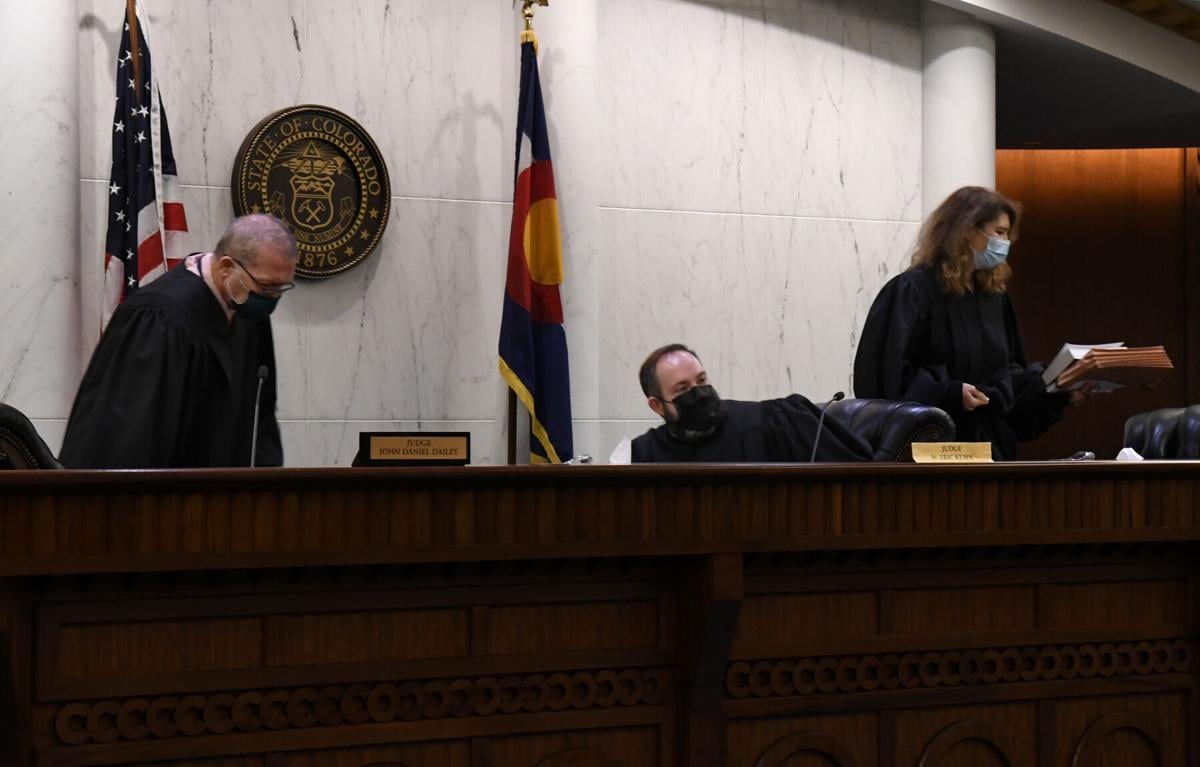
DENVER, CO - OCTOBER 26: Judges John Daniel Dailey, left, W. Eric Kuhn, and Stephanie E. Dunn, right, enter the courtroom to hear arguments on October 26, 2021 in Denver, Colorado. (Photo By Kathryn Scott)
Kathryn Scott

DENVER, CO – OCTOBER 26: Judges John Daniel Dailey, left, W. Eric Kuhn, and Stephanie E. Dunn, right, enter the courtroom to hear arguments on October 26, 2021 in Denver, Colorado. (Photo By Kathryn Scott)
My experience as a trial court judge was that if I talked to people and looked them in the eye and told them what was going on, why I was doing what I was doing, generally people were pretty accepting of the result. The challenge, multiple challenges, is trial court judges throughout the state are very busy. They work really hard — it sounds “woe is me” — but just the process of handling those cases is a significant burden. So, I think there’s an inclination or a tendency to rush.
Sometimes judicial officers can get tired of the repetition. Or over-enamored — we used to call it “robe-itis.” Getting too full of themselves because of the position of authority they occupy. And we just try to stay committed to the ability to communicate to people what you’re deciding and why you’re deciding it.
The same thing is true at the appellate court. I don’t have a chance to impact that as much day to day. I don’t have scores of people appearing in front of me on a daily basis as you do in the trial court. But I still have that ability during oral argument and, equally important, in the writing that I do in the Court of Appeals trying to acknowledge people’s arguments and explaining why you agree and disagree without summarily coming to conclusions.
There’s a significant aspect that the General Assembly can do as well. And I think the General Assembly’s been sensitive to this over the last number of years — of figuring out how we can make the system more accessible and make people feel heard.
CP: I assume that most of the access to justice issues require solutions at the trial court level because that’s where most litigants interact. There are not a lot of appeals relative to the number of cases. What role does the Court of Appeals have in improving its approach to access to justice?
Schutz: We have some helpful programs. There are various resources for people who do not have an attorney. So at a procedural kind of level, we have an employee whose role basically is to interact with self-represented parties and to help them. We have developed really extensive forms, sample briefs that parties can use to try to frame up what’s required in an appellate brief because it’s such a stilted and formal legal document.
On the front end, a lot of those resources exist trying to get people connected with somebody who might assist them.
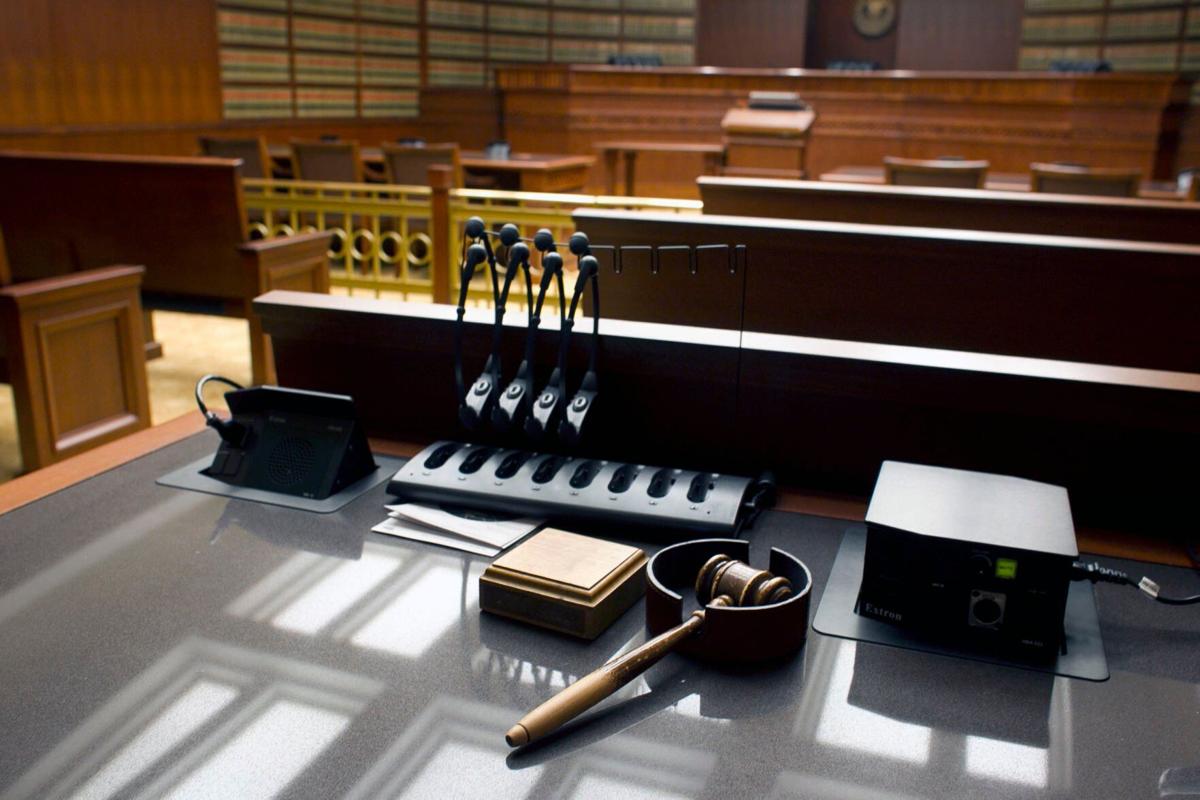
FILE PHOTO: A gavel sits on a desk inside the Court of Appeals at the Ralph L. Carr Colorado Judicial Center in Denver.
The Associated Press

FILE PHOTO: A gavel sits on a desk inside the Court of Appeals at the Ralph L. Carr Colorado Judicial Center in Denver.
We have some rules, but they are in tension with one another. For example, we have case law that talks about, we are to interpret pro se parties’ pleadings liberally in recognition of the fact that they’re not trained lawyers. But at some point, that runs head-on into the corresponding, reciprocal value that we can’t represent the self-represented parties as judges. So, we can’t make the argument for them. There’s tension between those things.
CP: Where do municipal courts fit into all of this? Is it under the Courts Committee’s purview, even?
Schutz: It really isn’t. It’s expressly not under. But generally speaking, municipal courts are not under the same administrative kinds of governance as are state court system.
CP: Presumably, you would have to go to each municipality’s city council to address access to justice issues. But is there a role for the Courts Committee or the Access to Justice Commission asserting a more muscular role over municipal courts to persuade them?
Schutz: We have not discussed it. I would want to hear from a representative sample of municipal courts in terms of what would be useful for them. I presume that at some level they are addressing and at least mindful of these issues. But it’s probably a more limited-resource community. That’s one of the benefits of having a large system like the state court system, where, as you point out, the municipalities are under the control of the particular city. Yeah, it would be hard to develop things.
But I think it’s a good area to be talking about. The Supreme Court, independent of the Courts Committee, can have some impact on that. I think the Supreme Court has taken a case or decided a case recently. So, it’s more substantive.
CP: During COVID, things changed. Is there any development that you witnessed that made you think, “This is good for the administration of justice. I’m glad we did it. But there was a next step we could have taken and things might have turned out better if we pushed further.”
Schutz: Anecdotally, we heard that attendance, for example, at dependency and neglect (child wlefare) proceedings really increased for respondent parents. That was an area that we understand there was an uptick in participation remotely by parents because oftentimes the people in the dependency and neglect system are also economically challenged. So, getting to the courthouse with five bus connections and other things can be problematic.
That’s an example of a positive development. The other thing that came out of COVID — and other conditions as well — but COVID really brought to the forefront concerns over our eviction process and eviction statutes and the burdens that that creates for economically marginalized people and how that can be a very compounding situation. I think we came to the realization that we could substantially make the system better — when I say we, I’m speaking broadly, societally “we,” because it came through legislative change as much as anything else. But the Courts Committee has been active in thinking what can we do to facilitate that.
If you stop and think about even the name of a forcible entry and detainer action (eviction), it sounds threatening. Sounds intimidating. And you can imagine how that can be amplified if you don’t have context. So, we are considering the possibility of, for example, including forms in Spanish and/or accessible videos, that we’d have a Spanish-speaker talking about what is a forcible entry and detainer action and what are your rights.
Those are things, I think, where COVID created opportunities, and there’s a lot more that can be done.

Denver murder conviction reversed for incomplete self-defense instruction
Michael Karlik
michael.karlik@coloradopolitics.com
Updated 11 hours ago
Colorado’s second-highest court reversed a defendant’s murder conviction last week because a Denver judge gave an incomplete instruction to the jury about the man’s right to self-defense. Donald R. Gonzales and Gary McLaughlin met up in a Capitol Hill parking...
Colorado lawmaker, House leaders named in workplace-retaliation lawsuit
Marianne Goodland
marianne.goodland@coloradopolitics.com
Updated 13 hours ago
A former legislative aide has filed a lawsuit alleging she was mistreated, illegally directed to perform campaign work and harmed by a House leadership structure she charged was fragmented, politicized and ineffective at protecting employees. The lawsuit, filed by Jennifer...
Federal judge hears arguments about Colorado’s 3-day gun purchase waiting period
Michael Karlik
michael.karlik@coloradopolitics.com
Updated 18 hours ago
A federal judge heard arguments on Monday about the constitutionality of a 2023 Colorado law that generally imposes a three-day waiting period on firearm purchases after the initiation of a background check. The test that the U.S. Supreme Court created...
Colorado Supreme Court intervenes in Weld County prosecution dismissed due to Missy Woods misconduct
Michael Karlik
michael.karlik@coloradopolitics.com
Updated 10 hours ago
The Colorado Supreme Court ordered a Weld County trial judge last week to respond to the district attorney’s claim that he improperly dismissed a criminal case because of “outrageous” conduct by the Colorado Bureau of Investigation. Daniel Lee Eatinger stood...
Schoolchildren’s presence at child sex-related trial did not harm Arapahoe County defendant, appeals court says
Michael Karlik
michael.karlik@coloradopolitics.com
Updated 3 days ago
Colorado’s second-highest court decided on Thursday that the presence of a group of schoolchildren on the first day of a child sexual exploitation trial did not violate an Arapahoe County defendant’s constitutional right to a fair trial. Prosecutors charged Jerry...
Appeals court cites week-old Colorado law to reinstate child neglect case at child, father’s request
Michael Karlik
michael.karlik@coloradopolitics.com
Updated 3 days ago
Colorado’s second-highest court invoked a new state law for the first time on Thursday and reinstated a child neglect case that both the child and her father wished to reopen. House Bill 1227 took effect on Aug. 12, reversing a...
Colorado Supreme Court names William Hood as next chief justice
Michael Karlik
michael.karlik@coloradopolitics.com
Updated 4 days ago
The Colorado Supreme Court has selected Justice William W. Hood III to be the next chief justice, the judicial branch announced on Friday. Hood will succeed Chief Justice Monica M. Márquez, who took over the role in July 2024. “I...
Family of slain Lakewood teacher releases statement as murder suspect makes first court appearance
Matt Kyle
matt.kyle@denvergazette.com
Updated 2 days ago
Patrick Theodore Barnett, the Lakewood man accused of killing his wife, a Jeffco Public Schools art teacher, made his first court appearance Friday morning as his wife’s family looked on. The status conference hearing was held before District Court Judge...
Appeals court upholds Park County trophy hunting conviction
Michael Karlik
michael.karlik@coloradopolitics.com
Updated 4 days ago
Colorado’s second-highest court clarified on Thursday that a defendant may stand convicted under the state’s trophy hunting laws if he abandons a bear carcass but returns later to remove the meat. Under Colorado law, it is a felony to detach...
Judge grants partial injunction to GEO in fight against state health inspection law
Kyla Pearce
kyla.pearce@gazette.com
Updated 5 days ago
A judge ruled Thursday that The GEO Group does not have to follow parts of a new state law requiring more frequent health and safety inspections at the U.S. Immigration and Customs Enforcement processing center in Aurora. Under the order...