

Colorado Senate committee passes Democratic bill to curb the practice of jailing people for missing city court
Legislators on the Senate Judiciary Committee voted in favor of a bill prohibiting city courts from criminalizing missed hearings, an issue the bill’s sponsors say has caused a crisis in their communities.
Senate Bill 62, sponsored by Democratic Sens. Nick Hinrichsen of Pueblo and Mike Weissman of Aurora and Reps. Michael Carter of Aurora and Shannon Bird of Westminster bars municipal courts from filing criminal charges or imposing jail sentences against defendants who fail to appear at a hearing. While most courts issue a bench warrant for missed court dates, the City of Pueblo has previously filed contempt of court charges for failure to appear, which can carry penalties of up to 364 days in jail per count. The City of Aurora has a separate charge for failure to appear in its municipal code, which carries a minimum sentence of 10 days.
Opposition, often coming from the law enforcement community, argues that such proposals defang criminal laws, rendering them effectively useless and leading to more crime.
“I think cruelty is the point here”
According to news reports, Pueblo issued over 1,700 contempt of court charges in eight months — nearly 40 times more than anywhere else in Colorado. The City of Pueblo says it paused the practice in June.
According to Aurora Municipal Court Chief Judge Shawn Day, his city has issued over 21,000 failure-to-appear citations in three years, which has created significant backlogs in its legal system. Day said the Aurora Municipal Court does everything it can to ensure defendants attend their hearings, including sending text reminders and allowing them to attend virtually. Still, it hasn’t stopped over 700 defendants from missing their court dates a year.
Hinrichsen argued that treating failure to appear as a criminal offense can have lasting impacts on defendants. It could lead to jail time for minor crimes like shoplifting or trespassing, which usually carry little to no jail sentence.
“So, you commit a crime with a maximum penalty of 10 days, and by missing a court date, that becomes maybe a nine-month sentence,” he explained. “The implications of that in terms of job loss, family instability, and just negative repercussions and hindering the ability to get back on your feet are just devastating.”
When asked why Pueblo courts don’t issue bench warrants like most other courts in the state, Hinrichsen responded simply.
“It’s political,” he said. “I’ve had several conversations and there is not a policy nexus. It’s political, and I am really frustrated.”
Hinrichsen said there’s a prevailing narrative in Pueblo that the legislature has decriminalized crime and needs to adopt a “tough on crime” approach.
“What does be tough even mean?” he asked. “There’s never anything specific, and when I talk to people who have heard this pitch, I’ll give examples of where I’ve brought legislation to increase penalties for certain very specific acts and criminal statutes, but people just want everything all the time, everywhere, and what ends up happening is you go for the low-hanging fruit, the easy arrest, the easy prosecution, and that often ends up being very poor individuals, often homeless with low-level criminal activity.”
The mayors of Colorado’s three largest cities earlier urged Gov. Jared Polis and lawmakers to focus on housing, the economy, and public safety – and ensure that municipalities retain the flexibility to combat crime.
Mayors Mike Johnston of Denver, Mike Coffman of Aurora and Yemi Mobolade of Colorado Springs urged cooperation between the state and cities, implicitly saying legislators should avoid passing policies that would curtail their ability to adopt additional criminal penalties.
“Cities must retain the ability to implement solutions that are responsive to community concerns and assign appropriate sentences when crimes are committed,” the mayors said in a joint opinion piece. “It is only through continued cooperation between state and local governments that we will sustain and build upon the progress already achieved.”
Hinrichsen said he’s not against punishing criminal behavior, but he would prefer to address its root causes first and foremost. Many initiatives aimed at stopping criminal behavior before it begins, such as after-school programs for at-risk youth and mental health services for substance use disorders, have been cut locally due to budget constraints.
“We’re seeing cuts for services for the homeless all while we’re continuously throwing more money at prosecuting and jailing failure to appear essentially for the lowest of low-level crimes,” he said. “I really believe that this was more about getting a person off the streets and out of sight than actually doling out justice. Other municipalities are very effectively holding people accountable under the system; I think cruelty is the point here.”
ACLU: Criminalizing failure to appear criminalizes poverty
During its investigation into the Pueblo Municipal Court last summer, the ACLU interviewed 50 inmates at the Pueblo County Detention Center, said Mia Bailey, a paralegal with the organization.
Every inmate interviewed struggled with homelessness, substance abuse, mental illness, or a combination of the three.
Bailey told the story of “Charlotte,” an intellectually disabled homeless woman who received multiple trespassing citations. After missing several court dates because she couldn’t afford the bus fare, she accumulated enough contempt of court charges to face up to 30 years in jail.
“Charlotte’s story demonstrates how these charges criminalize poverty, target the unhoused, and disproportionately impact disabled people,” said Bailey.
“John,” a homeless man struggling with substance abuse, was told by his lawyer that he could face up to 19 years in jail for a petty theft offense, which usually carries a maximum sentence of 10 days because he failed to appear at his hearings. John waived his right to a trial for a lower sentence but was still sentenced to nearly two years.
“John’s case exemplifies how these charges can coerce guilty pleas by inflating jail exposure on minor charges to the point that no reasonable person would recognize their right to a trial,” Bailey said.
An amendment was added to the bill to clarify that it did not prohibit municipalities from issuing bench warrants or limit the court’s inherent judicial contempt power. It passed on a party-line vote of 5-2.

Ski patrollers end strike against Telluride
RACHAEL WRIGHT Special to The Gazette
rachael-wright-special-to-the-gazette@coloradopolitics.com
Updated 4 hours ago
After 13 days, the longest ski patrol strike in U.S. history has come to an end. On Dec. 27, the 72-member Telluride Professional Ski Patrol Association voted to go on strike after approaching Telluride Ski Resort (Telski) owner Chuck Horning...
Appeals judge urges restraint in labeling new offenses serious across board
Michael Karlik
michael.karlik@coloradopolitics.com
Updated 5 hours ago
A member of the state’s second-highest court urged his colleagues on Thursday to pump the brakes before declaring new offenses “grave or serious” in every possible scenario. The Eighth Amendment’s prohibition on cruel and unusual punishment means sentences cannot be...
Federal judge opens new front in effort to increase magistrate judge handling of civil cases
Michael Karlik
michael.karlik@coloradopolitics.com
Updated 5 hours ago
One of Colorado’s federal judges rang in the new year with a new effort to spread out the U.S. District Court’s civil caseload among its roster of magistrate judges. “NOTICE ENCOURAGING CONSIDERATION OF CONSENT,” Judge S. Kato Crews has written...

Vance announces new assistant attorney general position to focus on fraud
Christian Datoc, Washington Examiner
christian.datoc.washington.examiner@gazetteedit.wpenginepowered.com
Updated 8 hours ago
Vice President JD Vance announced Thursday that President Donald Trump is creating a new attorney general position to lead government efforts to investigate and prosecute fraud cases. Vance joined White House press secretary Karoline Leavitt at an unscheduled briefing Thursday...

House rejects effort to override presidential veto for Colorado Water Project
Marianne Goodland
marianne.goodland@coloradopolitics.com
Updated 4 hours ago
The U.S. House of Representatives on Thursday rejected a Colorado-led effort to override a Dec. 30 presidential veto of a measure that would have helped finance the Arkansas Valley conduit. The measure, known as H.R. 131 and sponsored by U.S....
As lawmakers return, federal pressure and fiscal stress could shape Colorado’s 2026 session
Marissa Ventrelli
marissa.ventrelli@coloradopolitics.com
Updated 6 hours ago
The eight months since lawmakers wrapped up the 2025 legislative session have been anything but quiet. Federal funding cuts, a flurry of presidential executive orders, an election year fast approaching, and a projected $1.2 billion budget shortfall are all converging,...
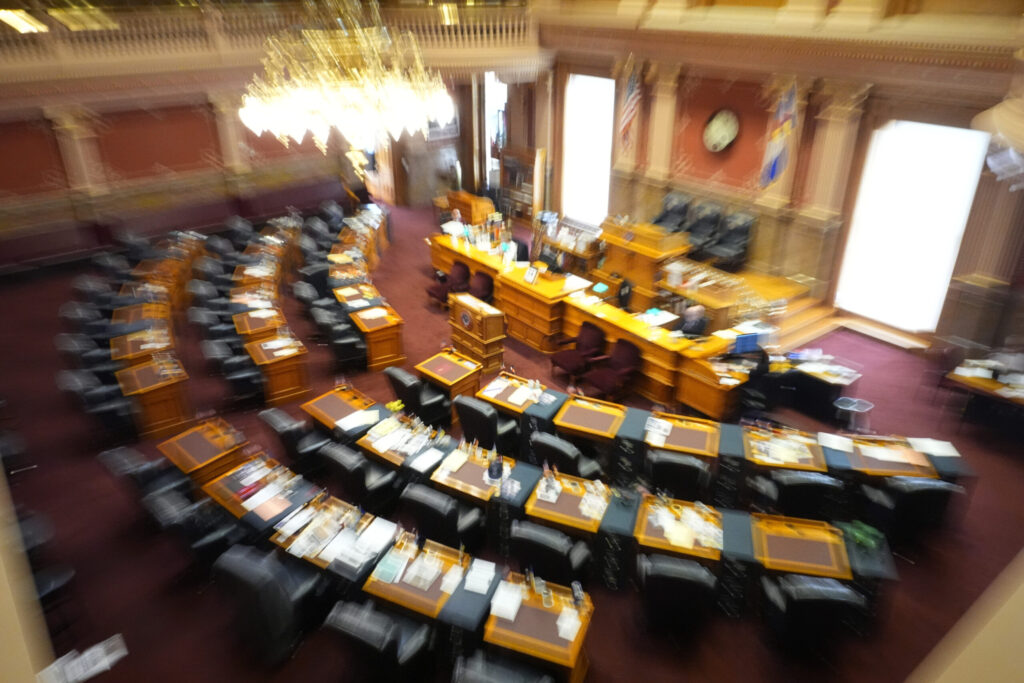
Senate Democrats announce committee assignments for 2026 session
Marissa Ventrelli
marissa.ventrelli@coloradopolitics.com
Updated 12 hours ago
Democratic Senate Majority Leader Robert Rodriguez, D-Denver, announced committee assignments for the 2026 legislative session on Wednesday. “Committees are crucial to the legislative process – they’re where we deliberate, hear from the public, and fine-tune policies so that they can...
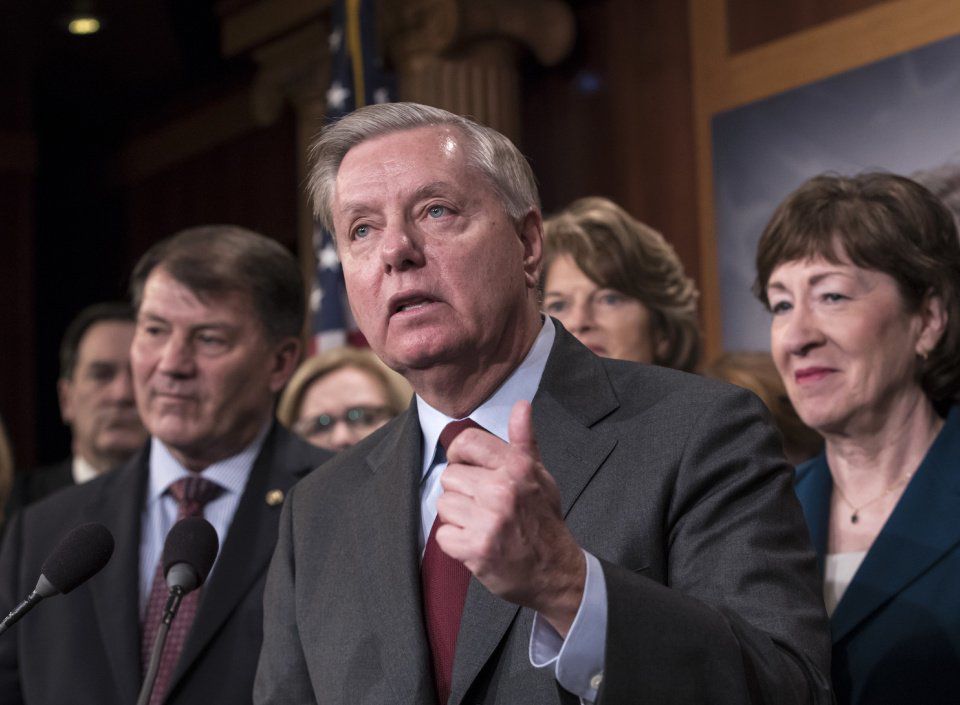
Senate advances resolution to limit Trump’s war powers after Venezuela raid
Joey Cappelletti
joey.cappelletti@associatedpress.com
Updated 12 hours ago
WASHINGTON (AP) — The Senate advanced a resolution Thursday that would limit President Donald Trump’s ability to conduct further attacks against Venezuela, sounding a note of disapproval for his expanding ambitions in the Western Hemisphere. Democrats and five Republicans voted...
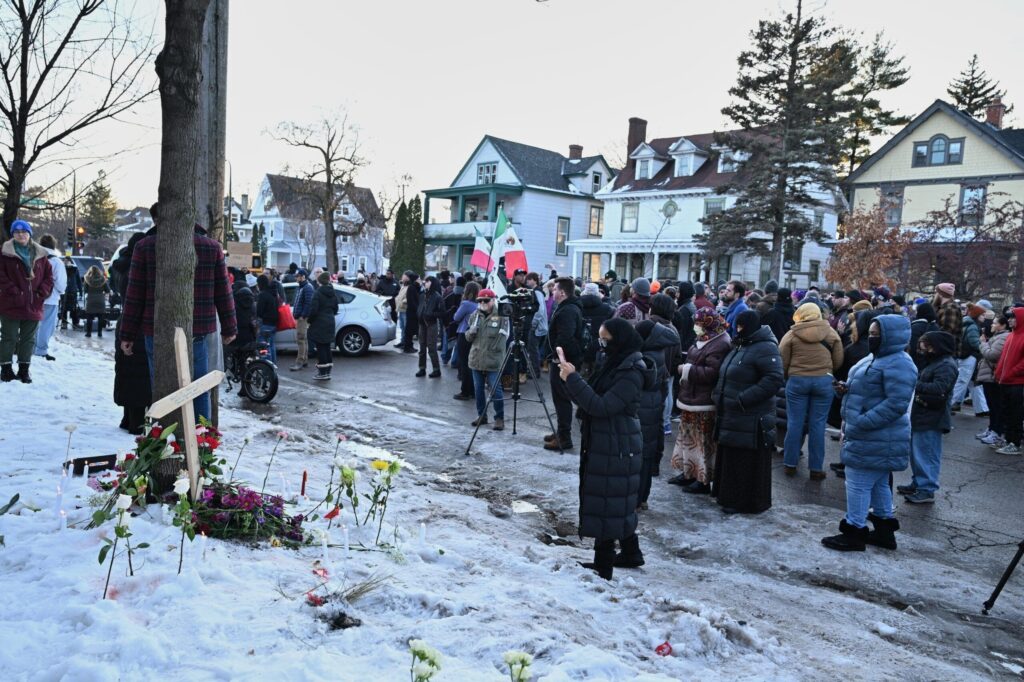
Jared Polis calls Minnesota ICE shooting ‘deeply disturbing,’ wants full investigation
Dan Boniface
dan.boniface@denvergazette.com
Updated 11 hours ago
Colorado Gov. Jared Polis on Wednesday characterized a fatal shooting involving federal immigration agents in Minnesota that took the life of a mother from Colorado as “deeply disturbing” and called for a full investigation. The shooting, captured on video in...
Lack of accountability in state standardized testing system | NOONAN
Paula Noonan
paula-noonan@coloradopolitics.com
Updated 23 hours ago
The General Assembly kicks up its heels this month along with the National Western Stock Show. Both should offer some exciting bull rides. Last General Assembly produced one interesting bill on K-12 public education. It’s HB25-1278 on the education accountability...