

Colorado officials outline ‘conflict minimization’ efforts ahead of next gray wolves release
Colorado Parks and Wildlife said it has made improvements to its “conflict minimization” program following feedback from livestock producers, who have pleaded with the agency to delay the introduction of the next set of gray wolves.
Notably, the state is adding “conflict reduction” staffers and “non-lethal mitigation specialists” to its staff.
Up to 15 more wolves are expected to be released in Colorado early next year.
“Through partnerships with the Colorado Department of Agriculture (CDA), the Colorado Wolf Restoration Ad Hoc Working Group, USDA-APHIS Wildlife Services, Colorado State University Extension, USDA Natural Resources Conservation Service (USDA NRCS) and NGOs, we are in a position to offer Colorado livestock producers an even more robust program that includes the tools, support and resources needed to minimize wolf-livestock conflict,” said Colorado Parks and Wildlife Director Jeff Davis.
The new program includes:
-
Free site assessments conducted by staff from CPW, CDA, and the U.S. Department of Agriculture to assess “the most appropriate and effective non-lethal tools and techniques” specific to each property. According to the state wildlife agency, 22 producers have signed up to receive site assessments since October.
-
Additional “conflict reduction” staffers, including five wildlife damage specialists and a non-lethal conflict reduction program manager were hired over the summer. In addition, two “non-lethal mitigation specialists” have started their positions with CDA in the last month. These staff will be available to assist producers in sourcing available resources, such as equipment and site assessments, as well as filing compensation claims for killed or injured livestock.
-
Specific criteria for different levels of depredation response, which CPW says will assist in calculating how much time and resources will be necessary to address depredation or wolf activity that poses risk for future conflict. The level will be site-specific and dependent on staff’s professional assessment, cooperation from livestock producers, and evaluation of a site assessment. This criteria will be especially critical in areas that have had multiple depredations or are close to a wolf den or rendezvous site, the agency said.
-
The state is launching the Colorado Range Rider Program early next year to provide range riders with specialized training and deploy them to local communities. “The Colorado Range Rider program will train skilled riders who will work alongside Colorado’s livestock producers to mitigate conflict, expand capacity on the range, and help support resilient ranches,” said Colorado Commissioner of Agriculture Kate Greenberg. “Through CDA and CPW’s partnership, this program will connect producers to state resources available to them as we work toward coexistence with wolves in Colorado.”
-
Carcass management best practice recommendations gathered through work with other states.
-
Grants of up to $20,000 are available to organizations such as livestock organizations, government entities, and tribes that provide support to multiple livestock producers. Funding from the grant program can be used to prepare, educate, and coordinate with producers to implement “non-lethal conflict resolution measures,” such as range riding and carcass disposal.
-
Continued educational workshops hosted by CDA, CPW, USDA-APHIS Wildlife Services, and CSU Extension across the Western Slope. The next meeting will be held on December 11 from 3-7 p.m. in Gunnison.
The wildlife agency said it will publish its full “Wolf-Livestock Conflict Minimization Program Guide” later this month. The agency said the guide will include a full list of “conflict minimization” tools and methods for producers, along with contact information for state support and funding resources.
Livestock growers earlier petitioned the Colorado Parks and Wildlife Commission to delay the next round of wolf introductions.
The petition was initiated by the Middle Park Stockgrowers and supported by 25 other largely livestock groups. Colorado Counties Inc., which counts 63 out of 64 counties as its members, also submitted a letter seeking a delay.
Tim Ritschard, president of the Middle Park Stockgrowers, last month said the commission has the authority to delay further introductions and that it’s not required to do more at a certain pace. The only requirement from Proposition 114 — the voter-approved measure to reintroduce the wolves — is to have the animals on the ground by Dec. 31, 2023.
That has been fulfilled, he said.
“Your mandate is to adaptively manage wolves,” Ritschard said. “You should be willing to change your approach (as issues arise).”


Colorado justices block injured plaintiff from suing, despite alleged concealment by Manitou Springs
Michael Karlik
michael.karlik@coloradopolitics.com
Updated 7 hours ago
The Colorado Supreme Court ruled on Monday that a woman injured on a Manitou Springs sidewalk could not sue the allegedly responsible entity, the city of Colorado Springs, even though she did not learn until too late of an agreement...
Colorado marijuana regulators pledge crackdown on intoxicating hemp
Christopher Osher
chris.osher@gazette.com
Updated 9 hours ago
Citing potential tax avoidance, ‘serious risk to public safety,’ Marijuana Enforcement Division warns companies about swapping illegal chemically converted hemp for marijuana This article was produced for ProPublica’s Local Reporting Network in partnership with The Denver Gazette. Colorado regulators announced...
Rep. Eric Swalwell of California says he will resign after sexual misconduct allegations
Kevin Freking
kevin.freking@associatedpress.com
Updated 12 hours ago
WASHINGTON (AP) — Democratic Rep. Eric Swalwell of California announced Monday he will resign from Congress following sexual assault and misconduct allegations that prompted loud bipartisan calls for him to step down. The decision caps a swift political fall for...

Whistleblower contacted Democrats before filing Trump complaint that led to first impeachment, records show
Kaelan Deese, Washington Examiner
kaelan.deese.washington.examiner@gazetteedit.wpenginepowered.com
Updated 14 hours ago
Newly declassified transcripts from the Intelligence Community’s then-inspector general show that the whistleblower whose complaint triggered President Donald Trump’s first impeachment had prior contact with congressional Democrats before filing the allegation, a newly-surfaced and damning detail that was not disclosed...

Spain pushes China to assume global leadership role
Emily Hallas, Washington Examiner
emily.hallas.washington.examiner@gazetteedit.wpenginepowered.com
Updated 15 hours ago
Spanish Prime Minister Pedro Sanchez on Monday pushed China to embrace a larger role on the world stage as Europe increasingly turns to Beijing amid growing tensions with the United States. Sanchez’s speech at Beijing’s Tsinghua University follows recent moves...
Divided Colorado Supreme Court opens door to experts’ views on children’s truthfulness
Michael Karlik
michael.karlik@coloradopolitics.com
Updated 16 hours ago
The Colorado Supreme Court ruled on Monday that experts may, in certain situations, tell jurors whether child witnesses exhibited signs of being coached by adults, without running afoul of the general prohibition on witnesses testifying about the truthfulness of other...
Colorado becomes first state to ban arrests solely based on field drug test results
Marissa Ventrelli
marissa.ventrelli@coloradopolitics.com
Updated 10 hours ago
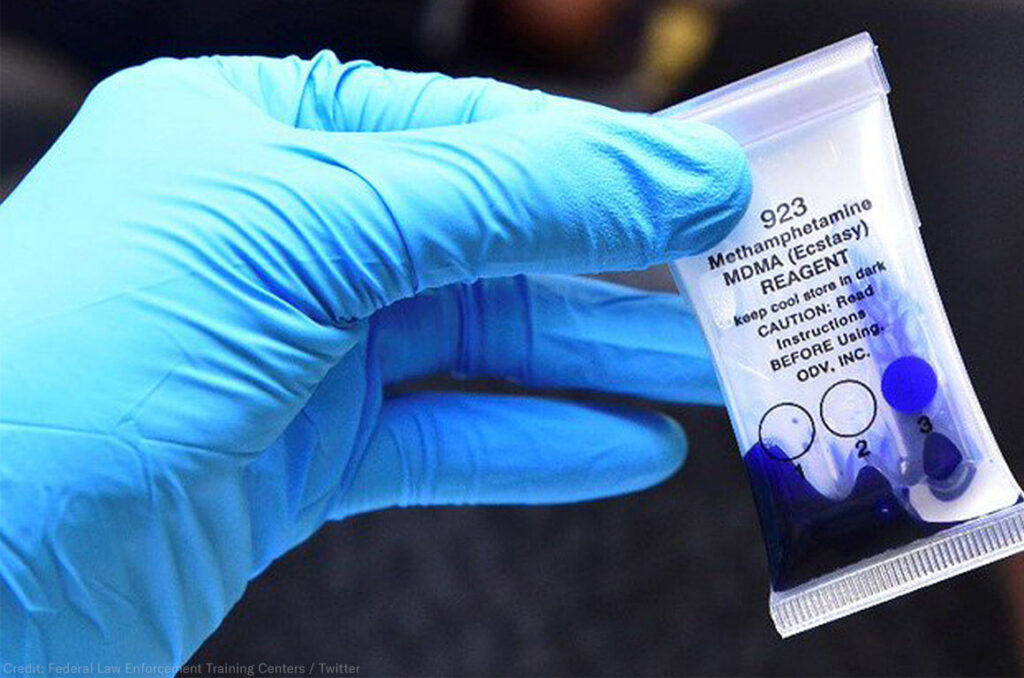
Colorado has become the first state in the nation to prohibit arrests based solely on colorimetric drug tests, also known as field drug tests. Last legislative session, lawmakers passed a bill establishing a working group to make recommendations regarding the use of colorimetric drug...

State Supreme Court to hold oral arguments, federal judges find fault with bond hearings | COURT CRAWL
Michael Karlik
michael.karlik@coloradopolitics.com
Updated 10 hours ago
Welcome to Court Crawl, Colorado Politics’ roundup of news from the third branch of government. The state Supreme Court will resume hearing oral arguments tomorrow, plus some federal judges are raising the alarm about immigration judges’ handling of bond hearings....

Colorado Senate takes up $46.8 billion budget
Marissa Ventrelli
marissa.ventrelli@coloradopolitics.com
Updated 12 hours ago
The battle over Colorado’s proposed $46.8 billion spending plan for next year shifted to the state Senate, which must decide whether to acquiesce to changes made by the House. The senators could also decide to adopt their own changes, which...
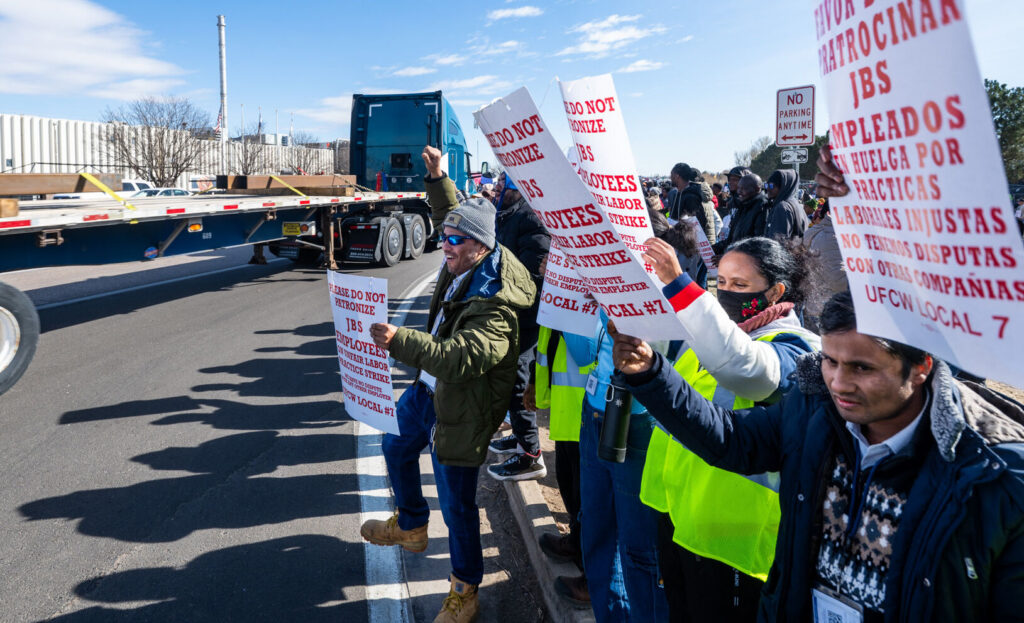
JBS plant employees ratify tentative agreement
Nicholas Fogleman
nicholas.fogleman@denvergazette.com
Updated 18 hours ago
Workers at a JBS beef processing plant in Greeley ratified a tentative agreement Sunday, ending months of negotiations over a new contract. The two-year collective bargaining agreement covers nearly 3,800 workers, according to the United Food Commercial Workers Local 7...