

El Paso County freezes child care subsidy program, limiting low-income parents
First in a two-part series
Jamahra Williams has a lot on her plate. As a young Fountain mother juggling education, jobs and the care of her 4-year-old daughter, she operates on thin margins. That is why she was proactive in enrolling Naza, her then 10-month-old, into the Colorado Child Care Assistance Program to subsidize her day care costs.
The long-established state program has allowed the young mother in intervening years to pursue her doula certification and continue working on her degree at Pikes Peak State College while ensuring licensed, community-based care for her daughter.
After this year, though, Naza may be in the last generation of kids who will have the opportunity to benefit from the program. That disheartens Williams, who said her current life would not be possible without subsidized child care.
“I don’t even think if I worked full time at a job, I would have been able to pay for it,” Williams said.
Starting earlier in November, the El Paso County Department of Human Services announced the Child Care Assistance Program would no longer be taking new applicants. While families like Naza’s will be able to continue receiving assistance, those hoping to enter the program will be out of luck. Human Services has not said when or if the program will reopen.
Flying Pig Farms receives grant funding to expand educational programming
The freeze further limits options for El Paso County parents, already facing rising child care costs and a lack of open positions in licensed care facilities. Human Services is still receiving inquiries — over 40 in just the weekend after the enrollment freeze.
Heidi Mather, a longtime child care assistance program provider, said the program was a needed service for families. Her day care, run out of her home near downtown Colorado Springs, enrolls 5 children under the program out of 12 who attend.
A veteran provider with three staff, she said that the assistance program has always been difficult to navigate for both families and child care providers. Spots are hard to find for parents, while child care providers like Mather struggle with lower tuition rates per child if paid by the state.
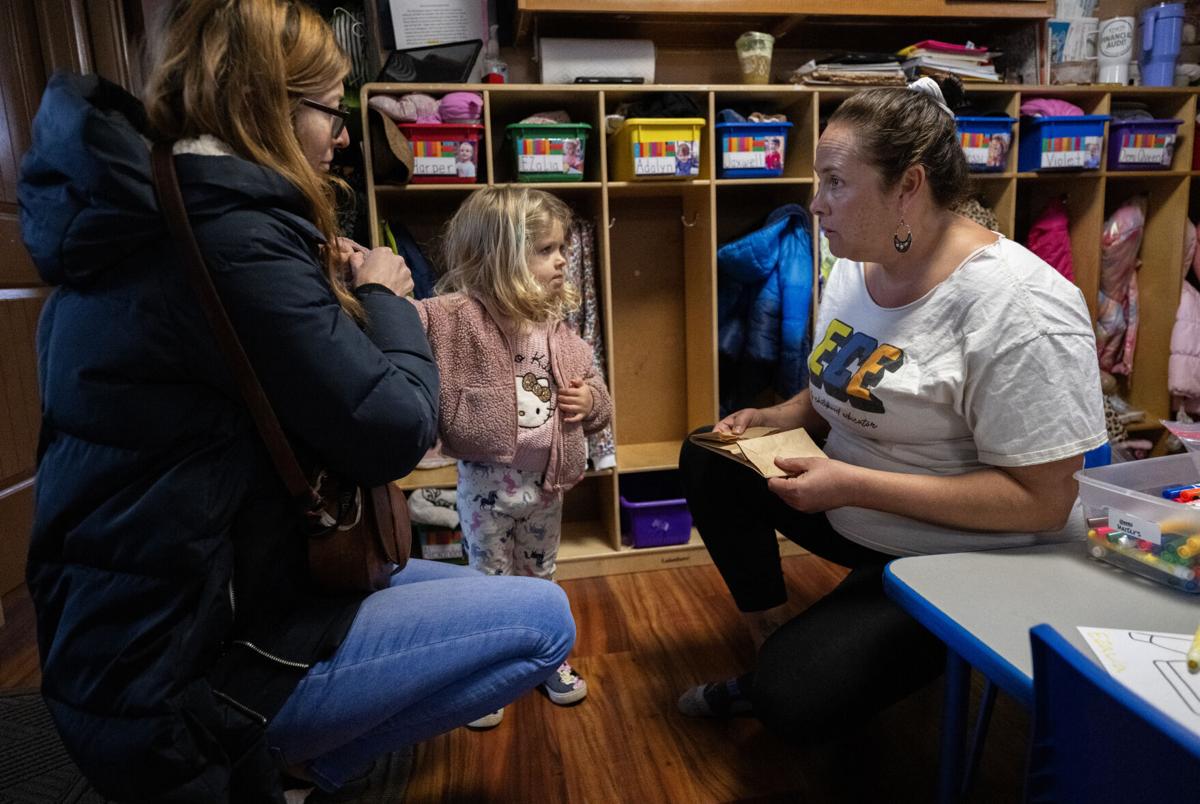
Heidi's Childcare Center owner Heidi Mather, right, talks to Julia Cohen as she drops her daughter, Ezalia, off at the center Monday, Nov. 25 in Colorado Springs.
Christian Murdock, The Gazette

Heidi’s Childcare Center owner Heidi Mather, right, talks to Julia Cohen as she drops her daughter, Ezalia, off at the center Monday, Nov. 25 in Colorado Springs.
“I do it because the families need care and every child deserves licensed, in home care that is, like, quality,” she said, surrounded by books, toys and colorful Thanksgiving art made by her infant to nearly school age enrolled children.
The program pays child care tuition for families on a sliding scale according to income. In El Paso County, 2,755 families are currently receiving tuition help — a population of nearly 3,300 children.
The program freeze comes down to dried-up funding and state-mandated provider rate increases, says El Paso County Department of Human Services spokesperson Kristina Iodice.
“We know it impacts families, and this was not a decision we wanted to make,” she said.
In the 2024-25 fiscal year, the program statewide has been allocated a $177.2 million budget, according to Iodice. In the previous fiscal year, CCCAP had $188.1 million. With the reduction in state funds, the specific allocation to El Paso County dropped $385,581 for the 2024-25 fiscal year.
Reduced state funding coincides with the end of federal stimulus dollars that were boosting the program, especially from the American Rescue Plan Act.
County Human Services also is putting the blame on rate increases for program providers based on market-rate studies conducted by the Colorado Department of Early Childhood.
Iodice said that the mandated rate changes could increase reimbursement to care providers from 2% to 27.87% depending on the type of child care facility and its rating. Each licensed facility has a rating given based on certifications and approval from 1 through 5. Each has a different reimbursement rate, with higher rated facilities receiving more money per child.
The state has also mandated differences in charging for monthly child absences — while some are covered fully by the family, some are covered by child care assistance.
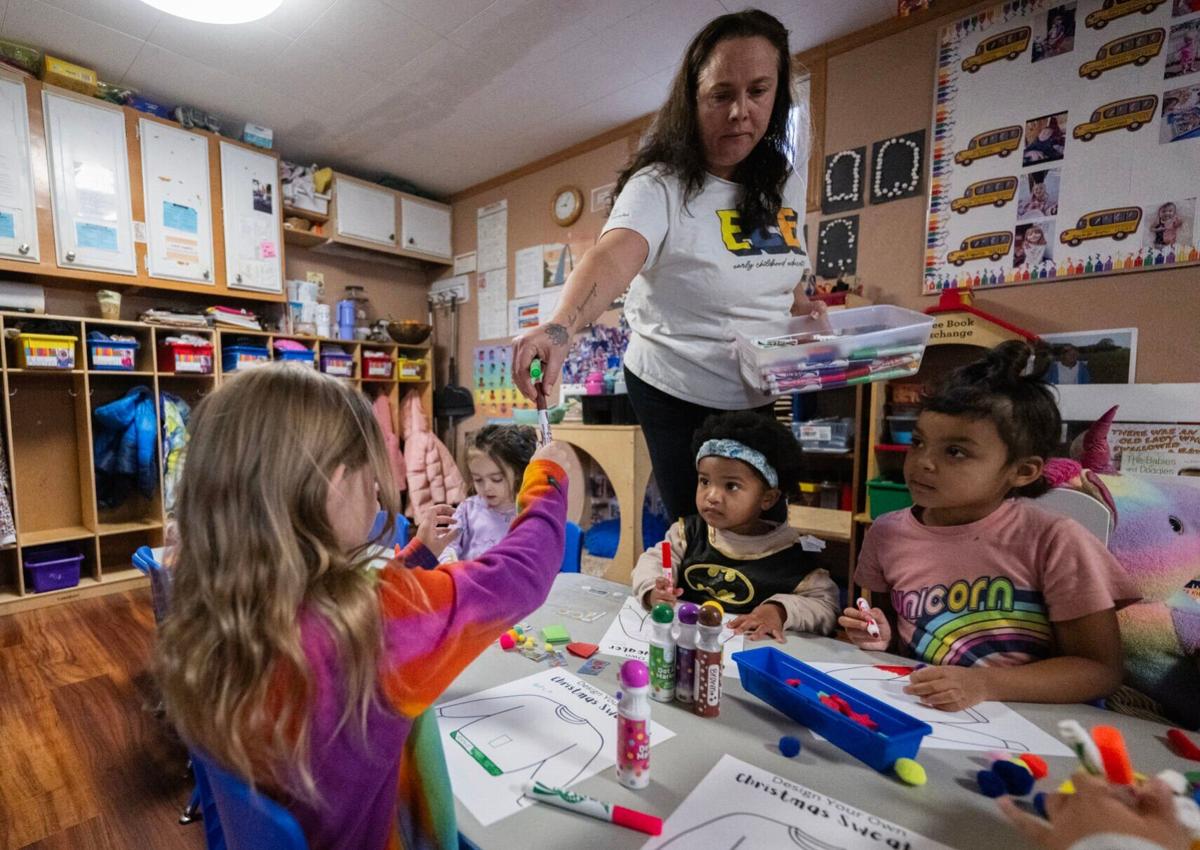
Childcare provider Heidi Mather hands out markers to children Monday, Nov. 25 as they work on art project at Heidi's Childcare Center in Colorado Springs.
Christian Murdock, The Gazette

Childcare provider Heidi Mather hands out markers to children Monday, Nov. 25 as they work on art project at Heidi’s Childcare Center in Colorado Springs.
The changes may help incentivize licensed child care providers to accept the state program, since provider reimbursement rates are often well below private-pay rates. El Paso County currently pays Child Care Assistance Program providers among the lowest rates in the state, according to Colorado Department of Child Education records.
As of Nov. 1, a licensed provider at the lowest and most common tier of accreditation in El Paso County currently receives $44.04 per day for full-time, home-based care of an 18- to 24-month-old child without special needs. In Jefferson County, the same category of care is set at a provider rate of $55.86. In Denver County, the rate is $51.82, and Pueblo sets the rate at $44.68.
Mather said that she was disappointed by the raise amount she said went into effect in October, which still lags far behind her private pay rates.
“I thought it was going to be $5 a day, and it was $5 a week,” she said.
The county is still tightening its belt, however. The Child Care Assistance Program shares a reserve fund out of the Temporary Assistance for Needy Families program with child welfare. Normally, yearly funding deficits could be drawn from the reserve as needed. All three programs have seen increased costs with no rise in state funding in past years, said Iodice, making use of the fund impossible to keep child care assistance afloat.
‘It is a miracle’: Colorado Springs family gives thanks for thriving daughter born at 23 weeks
El Paso is not the only county with a struggling Child Care Assistance Program. Before El Paso County Human Services made its announcement, six other counties had already announced disruptions to their programs. Three — Larimer, Boulder and Adams — have implemented a freeze. The other three — Douglas, Jefferson and Gunnison — now have a wait list.
The loss probably is already hitting people like Williams, who said that without the program she would have needed to travel more than 20 miles from where she lives to afford care. She is worried parents will go without or resort to unlicensed care, which is not regulated by the state and does not require providers to do basic things like take a safe-sleep course for infants.
“They’re either not going to have child care at all or … going to illegal, unlicensed care,” she said.
Child care costs are a well-established burden on Colorado families. The nonpartisan, nonprofit think tank Economic Policy Institute estimated infant care costs an average of $15,325 a year for Colorado households, higher than average in-state college tuition and yearly rent costs. The state is ranked eighth overall for highest-cost child care.
A federal estimate limits 7% as the amount of income a household can spend affordably on child care. According to the EPI, only about 6% of Colorado families meet the threshold.
Even for parents who continue on child care assistance, there are obstacles to actually finding care. Williams said that she struggled to find a provider that accepted the program in her area. The site that lists providers and their availability for different age groups — Colorado Shines — is frequently outdated and inaccurate, she said.
And staying in the program has its own difficulties. Families must reapply every year to retain their benefits, proving that income remains below strict cut offs. A processing error or late paperwork could suddenly kick a family out of the system — and to the back of the line if the program ever accepts applications again.
Both are concerns for Williams, who said she carefully avoids too many work hours and has in the past been close to losing benefits over paperwork delays with her caseworker.
“I basically got kicked out of the program and was down to my last days when she finally contacted me back,” Williams said.
Think twice before allowing two accessory dwelling units behind every single-family home | Bob Loevy
Mather said she was also concerned for families who are already on child care assistance. Many of her enrolled children stay at her daycare and on child care assistance from infancy to preschool or kindergarten. She said missed paperwork deadlines have kicked at least one of her enrolled families out of the program for a month in the past, making them unable to pay for care.
“Right now it’s really important to keep the families that we have enrolled on top of their paperwork,” she said.
Iodice said that families in need of child care assistance are still welcomed to apply, if only to help the county gauge need. Families involved with child welfare and enrolled in Colorado Works are still eligible for the program and are not affected by the freeze.
Iodice said county Human Services caseworkers were directing families inquiring about child care assistance to other programs that can offset overall household costs, like the SNAP program for food assistance.


U.S. Supreme Court clears way for Trump mail voting order in advance of midterms
Wire Services
wire-services@coloradopolitics.com
Updated 1 hour ago
WASHINGTON • The U.S. Supreme Court on Monday cleared the way for President Donald Trump to move ahead with an executive order that seeks to restrict the mailing of ballots to American citizens in an eligible voters list. The executive...
Colorado Supreme Court intervenes in Weld County prosecution dismissed due to Missy Woods misconduct
Michael Karlik
michael.karlik@coloradopolitics.com
Updated 45 minutes ago
The Colorado Supreme Court ordered a Weld County trial judge last week to respond to the district attorney’s claim that he improperly dismissed a criminal case because of “outrageous” conduct by the Colorado Bureau of Investigation. Daniel Lee Eatinger stood...

Trump opens ‘economic D-Day’ offensive against Iran as war nears six-month mark
Christian Datoc
christian-datoc@coloradopolitics.com
Updated 6 hours ago
President Donald Trump is seeking to increase the financial pressure on Iran with new secondary sanctions on nations and foreign actors propping up the regime’s economy as the war between the United States and Tehran nears the six-month mark. Treasury...

Trump announces 50% tariffs on Canadian cars, auto parts, and steel
Naomi Lim
naomi-lim@coloradopolitics.com
Updated 6 hours ago
President Donald Trump escalated the trade war with Canada after talks collapsed last week, announcing Monday that the United States would impose 50% tariffs on cars, trucks, automotive components, and steel starting Jan. 1, 2027. “Canada has been ripping off...

Iran puts out propaganda video tracking Barron Trump’s location, offering $10 million for his assassination
Timothy Nerozzi
timothy-nerozzi@coloradopolitics.com
Updated 7 hours ago
The Islamic Revolutionary Guard Corps is putting a hit out on President Donald Trump’s son, Barron Trump, with an inflammatory video claiming to track his location. State-run television in Iran is broadcasting a propaganda video claiming to show the locations...
Nevada sues Trump administration over Colorado River cuts
Marianne Goodland
marianne.goodland@coloradopolitics.com
Updated 6 hours ago
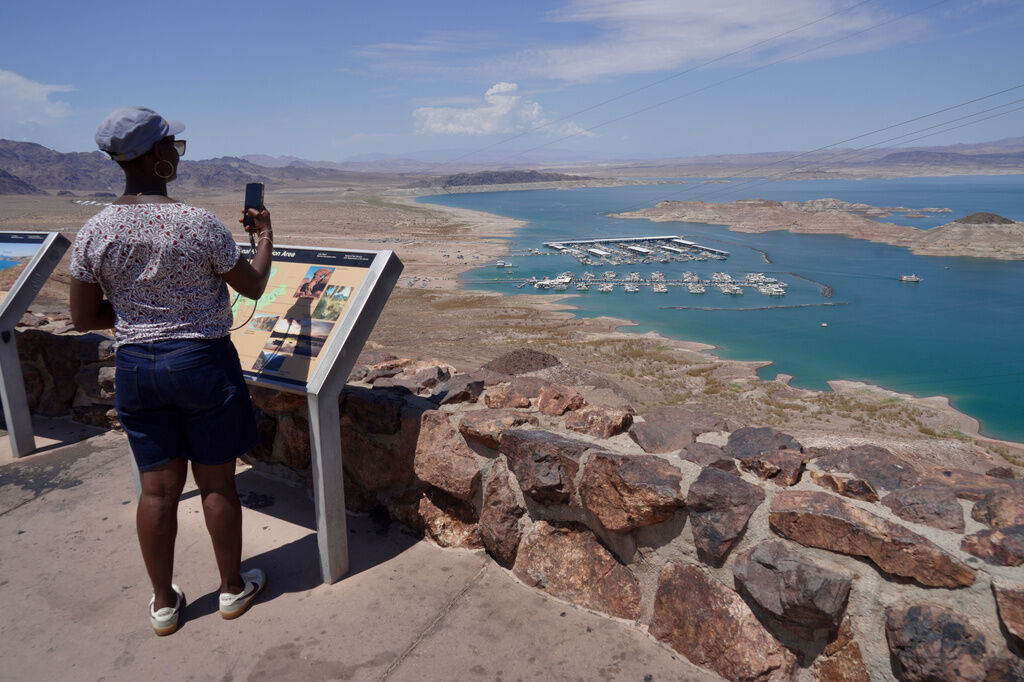
On Monday, the state of Nevada filed a lawsuit against the Trump administration and Interior Secretary Doug Burgum, seeking to block the Colorado River management plan. On Friday, Burgum released a “record of decision” that would reduce water allocations to...

Healthcare Freefall: Longer drives, fewer options for maternity care in Colorado
Thelma Grimes
thelma.grimes@coloradopolitics.com
Updated 9 hours ago
Editor’s Note: Colorado’s healthcare system is entering a period of accelerating instability — a “tsunami,” as multiple leaders describe it — driven by collapsing hospital finances, shrinking Medicaid reimbursements, disappearing services and a political fight over who is responsible for...

Polis requests federal disaster declaration for Colorado wildfires and floods
9News
9news@coloradopolitics.com
Updated 3 hours ago
On Sunday, Gov. Jared Polis officially requested a Major Disaster Declaration from President Donald Trump and the Federal Emergency Management Agency to support recovery from two wildfires and the subsequent flooding and debris flows on both burn scars. Polis requested a declaration...

US strikes another boat in eastern Pacific, killing two, Pentagon says
The Associated Press
the-associated-press@coloradopolitics.com
Updated 10 hours ago
U.S. forces have struck another vessel in the eastern Pacific, killing two people the Pentagon says were trafficking drugs. The U.S. Southern Command announced the strike in a social media post early Monday. The death toll from the Trump administration’s...

Fishing closures are becoming routine as record heat warms rivers in the US West | OUT WEST ROUNDUP
Ernest Luning
ernest.luning@coloradopolitics.com
Updated 3 days ago
MONTANA Fishing restricted as rivers warm LIVINGSTON — Trout need cool water to survive, but record heat this summer has driven water temperatures to lethal levels for fish. Wildlife officials are banning fishing during certain hours on rivers and streams...