

Biden administration to restrict drilling, renewables to help struggling bird | OUT WEST ROUNDUP
MONTANA
Energy restrictions proposed to help bird
BILLINGS — President Joe Biden’s administration on Nov. 8 proposed tighter restrictions on oil, solar and wind energy development across more than 6,500 square miles of federal land in the U.S. West to protect a declining bird species.
However, it is doubtful the changes would survive under President-elect Donald Trump.
Greater sage grouse — chicken-sized birds known for an elaborate mating ritual— were once found across much of the U.S. West. Their numbers plummeted in recent decades because of energy exploration, wildfires, disease and other pressures.
A 2015 agreement shepherded by the Obama administration kept the birds off the endangered species list, by imposing limits on where and when development could occur across 226,000 square miles of remaining grouse habitat spanning 11 states.
Now, in the closing weeks of the Biden administration, officials with the Interior Department want to make the protections even stronger. Their plan would eliminate loopholes that allowed development in areas considered crucial to the bird’s long-term survival. New solar and wind projects would be excluded, and oil and gas exploration could only occur from drilling sites located outside the protected areas.
Briefly | Boebert condemns BLM 'land grab', Bennett opposes ranked-choice voting
Interior Secretary Deb Haaland said the new, science-based proposal would boost sage grouse while allowing development on government lands to continue.
Yet the agency’s attempt to find a middle ground fell flat with the oil and renewable energy industries, Republicans and even some environmentalists.
A spokesperson for American Clean Power, a renewables industry lobbying group companies, said it had supported an earlier version of the proposal but not the final details released on Nov. 8. Spokesperson Phil Sgro said the proposal “unnecessarily restricts the development of wind, solar, battery storage and transmission, undermining the ability to deploy much needed clean energy infrastructure.”
Most of the land at issue is in Nevada and California, according to government documents. Affected parcels also are in Wyoming, Oregon, Idaho, Colorado, Montana and the Dakotas.
WYOMING
Lawmakers want to boost K-12 funding
CHEYENNE — The Wyoming Legislature could be back on track to fully funding its K-12 public schools after a committee of state lawmakers voted on Nov. 1 to adopt a $66.3 million cost adjustment.
The state funds its public schools through the K-12 education resource block grant. Every year, the legislature’s Joint Appropriations Committee must make an external cost adjustment recommendation from this block grant to the governor and legislative body by Nov. 1.
There are two different funding models that calculate the cost of education funding — the evidence- or cost-based model, which is recommended by state consultants, and the statutory model, which is used by the legislature.
Since 2020, the legislature has funded below the cost-based model by at least $20 million or more each school year. A Legislative Service Office memo shows it would cost the state $66.4 million to catch up for the 2025-26 school year.
Gov. Jared Polis seeks $630M less in 2025-26 budget, privatization of Pinnacol Assurance
The Legislature’s Joint Education Committee voted in September to recommend an increase in state funding by $66.3 million. This amount includes an 8.5% increase in state funding for both professional and non-professional staff, as well as a 1.068% increase for educational material costs, in the 2025-26 school year.
Wyoming School Boards Association Executive Director Brian Farmer told lawmakers on the JAC that the evidence-based model used to be called the “constitutional floor” when the statutory model exceeded it. From 2006 to 2018, the Legislature continued to fund above what was recommended by state consultants.
A pending lawsuit filed by the Wyoming Education Association in 2022 against the state claims that the Wyoming Legislature has underfunded its public K-12 schools by failing to fully adopt recommended adjustments for inflation in salaries for professional and non-professional staff.
ARIZONA
Regulators fine natural gas utility $2 million
PHOENIX — A natural gas utility with more than 2 million customers in Arizona, Nevada and parts of California is being fined $2 million by regulators in Arizona over concerns about piping that is known to degrade in the heat.
The Arizona Corporation Commission announced on Nov. 8 that it reached a consent agreement with Southwest Gas that includes the civil penalty and requires more inspections.
At issue is piping that can degrade in locations with hot ambient temperatures. Federal regulators issued an advisory in 2012 alerting operators that the piping could be susceptible to degradation.
It was reported that degradation and resulting leaks involved piping installed in the Southwest, particularly in the Mohave Desert region in Arizona, California and Nevada.
In Arizona, state investigators concluded that Southwest Gas failed to properly map where this type of piping had been installed.
Southwest Gas estimates there are more than 10,000 miles of the piping throughout Arizona.
Colorado adopts new rules for oil and gas development, focusing on cumulative impacts
The agreement between state regulators and Southwest Gas stems from two separate incidents in 2021, including one in Chandler in which an explosion injured four people.
In addition to replacing or abandoning all newly discovered and previously unmapped spots that contain the defective piping, Southwest Gas must also notify regulators of any leaks.
An amendment to the agreement made clear that the company would have to propose new rates — and win regulatory approval through an administrative process — if it wants to recoup from customers any of the costs associated with fulfilling the agreement.
Southwest Gas also agreed to increase leak patrols throughout the year.
UTAH
Escaped llamas found on train tracks
PROVO — A small herd of domestic llamas was spotted taking an evening stroll on the train tracks in Provo, Utah, on Nov. 7 after the woolen creatures escaped from their owner, according to the Utah Transit Authority.
Several emergency responders were dispatched to round up the five llamas after transit officials received reports of the animals wandering the Union Pacific line. The llama search did not delay train service, transit authority spokesperson Gavin Gustafson said.
Petition to Colorado Parks and Wildlife to delay next wolf introduction could take months
Whether the llamas had been caught was unknown as of 10 p.m. local time, about three and a half hours after crews were called to the area 43 miles south of Salt Lake City, Gustafson said.
Details about how the llamas escaped and where they came from were not immediately available.
Vigil held for beloved Grand Teton Grizzly No. 399, who was killed by a vehicle | OUT WEST ROUNDUP
Settlement enshrines tribe's rights to national preserve for cultural practices | OUT WEST ROUNDUP
New Mexico authorities rescue hundreds after flooding in Roswell leaves 2 dead | OUT WEST ROUNDUP

Colorado measure redirects sales tax revenue from sporting goods, equipment to conservation programs
The Denver Gazette
the-denver-gazette@coloradopolitics.com
Updated 4 hours ago
A proposal to redirect sales tax revenues from sporting goods and equipment toward wildfire and conservation programs will appear on the ballot this November, election officials in Colorado confirmed. The measure, if approved by voters, would reduce the amount available...
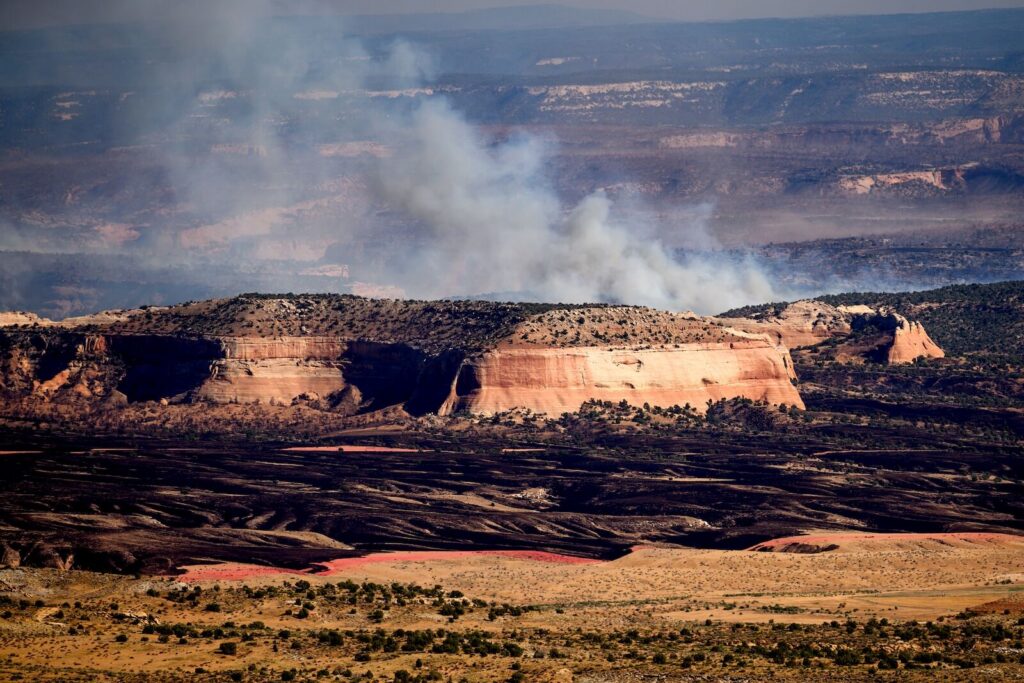
Firefighters’ deaths prompt debate over 100% suppression wildfire strategy
Rachael Wright, Special to Colorado Politics
rachael.wright@coloradopolitics.com
Updated 56 minutes ago
On July 22, 2026, the chief of the U.S. Forest Service testified before a House Agriculture subcommittee that his agency pursues a “full suppression” strategy to contain all fires while they are still small, rather than allowing them to burn...

A summertime all-you-can-eat political buffet | SONDERMANN
Eric Sondermann
eric-sondermann@coloradopolitics.com
Updated 4 days ago
We find ourselves in the doldrums of August with a complete dearth of political news. Yeah, right. These days, that train never stops moving. It is a 24/7/365 express amplified by 24/7/365 media. Let me respond with one of my...
GOP worker pleads guilty to campaign funds embezzlement scheme | A LOOK BACK
Rachael Wright, Special to Colorado Politics
rachael.wright@coloradopolitics.com
Updated 4 days ago
Forty-five Years ago this week: After pleading not guilty to a Denver federal grand jury indictment of five counts of bank embezzlement, Eve Lynn Lincoln, a Colorado Republican Party employee, decided to plead guilty to one count: using bank credit...
Schoolchildren’s presence at child sex-related trial did not harm Arapahoe County defendant, appeals court says
Michael Karlik
michael.karlik@coloradopolitics.com
Updated 1 day ago
Colorado’s second-highest court decided on Thursday that the presence of a group of schoolchildren on the first day of a child sexual exploitation trial did not violate an Arapahoe County defendant’s constitutional right to a fair trial. Prosecutors charged Jerry...
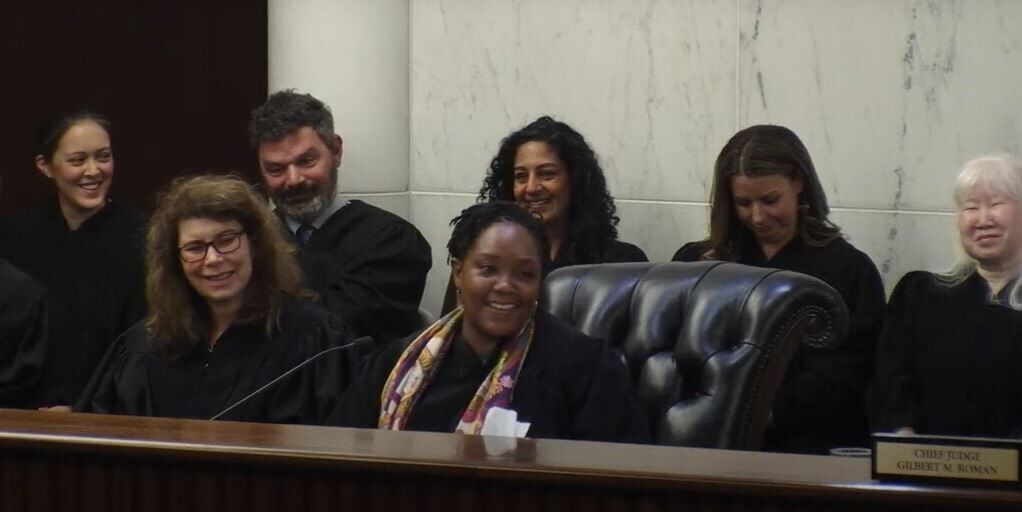
Appeals court cites week-old Colorado law to reinstate child neglect case at child, father’s request
Michael Karlik
michael.karlik@coloradopolitics.com
Updated 21 hours ago
Colorado’s second-highest court invoked a new state law for the first time on Thursday and reinstated a child neglect case that both the child and her father wished to reopen. House Bill 1227 took effect on Aug. 12, reversing a...
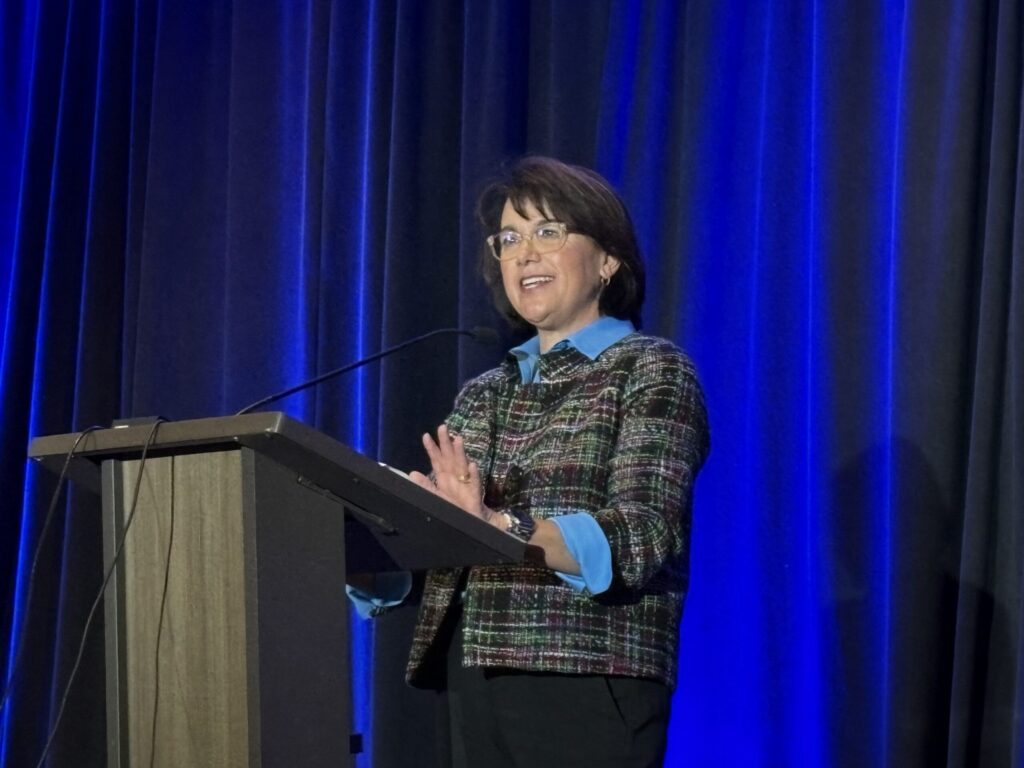
Democratic candidate in Colorado’s 4th CD urges long-term water planning
Marianne Goodland
marianne.goodland@coloradopolitics.com
Updated 20 hours ago
The Democrat hoping to become the next representative of Colorado’s 4th Congressional District on Thursday made her case on the final day of Colorado Water Congress in Steamboat Springs. Eileen Laubacher, who spent 34 years in the U.S. Navy and...

Castle Rock council declines to censure member accused of misconduct
Nicholas Fogleman
nicholas.fogleman@denvergazette.com
Updated 2 days ago
A Castle Rock Town Council meeting Tuesday became consumed by allegations that a councilmember attempted to trade a town policy decision for the withdrawal of a recall effort against him. The allegations against Councilmember Mark Davis surfaced during public comment...

Proposal to cap Colorado income tax rate qualifies for November ballot
Thelma Grimes
thelma.grimes@coloradopolitics.com
Updated 8 hours ago
Election officials on Thursday confirmed that the proposal to cap the state’s income tax at the current rate submitted signatures and voters will consequently decide its fate this November. The fight over tax rates is part of the tug and...

Trump reaches deal to halt tariffs on beef for 90 days in bid to lower prices
Rena Rowe
rena.rowe@washingtonexaminer.com
Updated 2 days ago
President Donald Trump announced Friday that he had reached a deal to temporarily ease tariffs on beef imports, saying the move would help lower prices for families as the United States faces a severe cattle shortage and record-high beef prices....