

Denver mayor walks back comments about deploying local police to block federal deportation forces
Denver Mayor Mike Johnston walked back comments about deploying the city’s police forces at the county line to keep out federal forces carrying out President-elect Donald Trump’s plans to deport thousands of immigrants unlawfully staying in the city.
“Would I have taken it back if I could? Yes, I probably wouldn’t have used that image,” Johnston told 9News in an interview. “That’s the image I hope we can avoid. What I was trying to say is this is an outcome I hope we can avoid in this country. I think none of us want that.”
Johnston had drawn parallels to Tiananmen Square in an interview with Denverite, saying he believes city residents themselves, alongside the city’s police force, would resist a mass deportation campaign. He suggested using the Denver police against federal agents.
“More than us having DPD stationed at the county line to keep them out, you would have 50,000 Denverites there,” Johnston told Denverite. “It’s like the Tiananmen Square moment with the rose and the gun, right? You’d have every one of those Highland moms who came out for the migrants. And you do not want to mess with them.”
In the 9News interview, Johnston said he would protest himself.
“I would if I believed that our residents are having their rights violated,” Johnston said. “I think things are happening that are illegal or immoral or un-American in our city, I would certainly protest it, and I would expect other residents would do the same.”
As for the possibility of getting arrested, Johnston said, “Yeah, I’m not afraid of that, and I’m also not seeking that. I think the goal is we want to be able to negotiate with reasonable people how to solve hard problems.”
Johnston told 9News he does not oppose all deportations, particularly immigrants who have committed violent crimes. But, he said, immigrants unlawfully staying in the U.S. who have not committed crimes should not be swept up.
Johnston has been defending Denver’s response to the illegal immigration crisis, which has cost taxpayers more than $75 million to date. Colorado and Denver are both “sanctuary” jurisdictions.
No legal definition of a “sanctuary” city or state exists, but, broadly speaking, it refers to a community that expressly refuses to cooperate with federal authorities on enforcing immigration laws. Back in 2019, Colorado adopted a law whose provisions fall under the broad outlines of what constitutes a “sanctuary” state. Several Colorado counties have sued the state over the law.
In 2017, the Denver City Council passed an ordinance that prohibits “city employees from collecting information on immigration or citizenship status; prohibits the sharing of any other information about individuals for purposes of immigration enforcement; and, memorializes predominant practices by prohibiting use of city resources or city cooperation with civil immigration enforcement.”
In his interview with Denverite posted on Friday, Johnston said if the Trump administration blocks the ability of people illegally staying in the country to work then he would explore the possibility of city and state work authorizations.
Immigration policy, including work authorization, falls under the exclusive purview of the federal government.
At the peak of the border crisis spilling into Denver, Johnston embraced the role of de facto spokesperson for interior cities grappling with the tens of thousands of immigrants the local governments have fed, housed and transported. Johnston did not specifically talk about stopping the flow of immigrants into Denver. Instead, the mayor sought strategies to ease the burden on his city.
The mayor notably stayed clear of talking about “border security,” an omission that underscored the ideological lenses with which Democrats and Republicans often view the border crisis.
Critics have argued that Trump’s mass deportation plan would be costly, while supporters maintained that it’s not only feasible but necessary, particularly because Trump vowed to fight illegal immigration, a top issue for American voters, during his campaign.
Supporters also argued that illegal immigration enforcement in America’s interior cities, along with strict border controls, would serve as a deterrent, much as Denver’s offer of free housing and transportation drew tens of thousands of immigrants to the city over a two-year period.
In Colorado, some 43,000 immigrants, who illegally crossed the southern border, have arrived in Denver since December 2022. About half have stayed — the equivalent of adding roughly 21,500 people, or a city the size of Golden, in less than two years.
The vast majority are from South and Central America, particularly Venezuela.
Denver officials decided early in the crisis to provide — largely at the expense of taxpayers — temporary shelter and onward travel for newly arriving immigrants.
Originally, officials believed the draw was Denver’s proximity to Mexico and its status as a “sanctuary city.” But Texas officials in El Paso believe that the city’s offer of shelter and onward travel — while well intended — actually made Denver a magnet for immigrants.
Nico Brambila, Kyla Pearce, Luige del Puerto, 9News and Reuters contributed to this article. For more on this story, and others, visit The Denver Gazette’s news partner, 9News


Colorado measure redirects sales tax revenue from sporting goods, equipment to conservation programs
The Denver Gazette
the-denver-gazette@coloradopolitics.com
Updated 5 hours ago
A proposal to redirect sales tax revenues from sporting goods and equipment toward wildfire and conservation programs will appear on the ballot this November, election officials in Colorado confirmed. The measure, if approved by voters, would reduce the amount available...
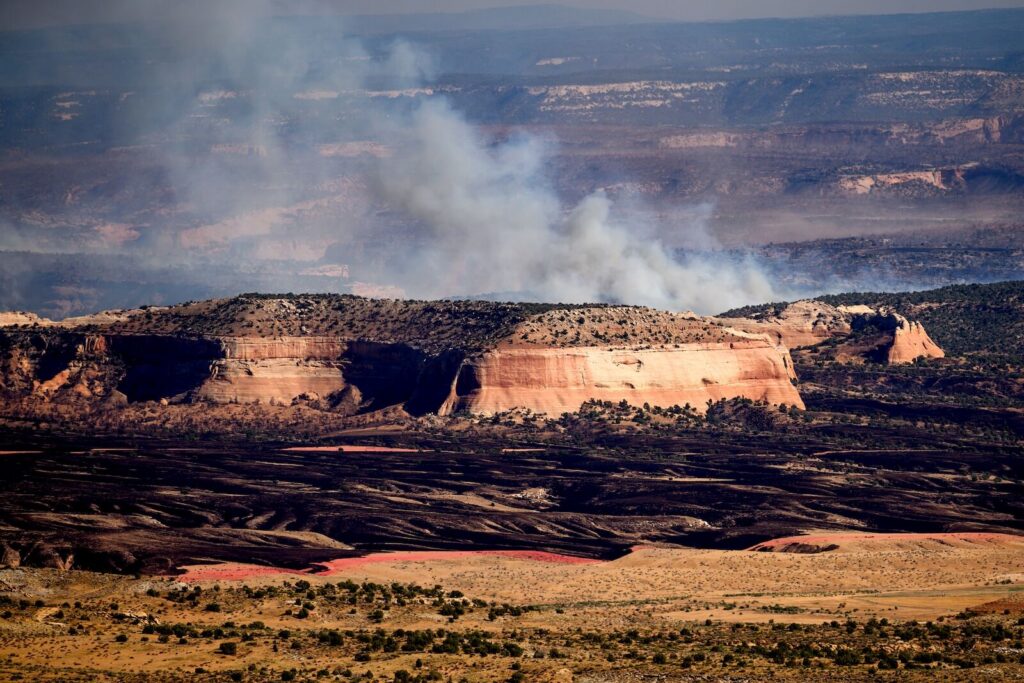
Firefighters’ deaths prompt debate over 100% suppression wildfire strategy
Rachael Wright, Special to Colorado Politics
rachael.wright@coloradopolitics.com
Updated 2 hours ago
On July 22, 2026, the chief of the U.S. Forest Service testified before a House Agriculture subcommittee that his agency pursues a “full suppression” strategy to contain all fires while they are still small, rather than allowing them to burn...
A summertime all-you-can-eat political buffet | SONDERMANN
Eric Sondermann
eric-sondermann@coloradopolitics.com
Updated 4 days ago
We find ourselves in the doldrums of August with a complete dearth of political news. Yeah, right. These days, that train never stops moving. It is a 24/7/365 express amplified by 24/7/365 media. Let me respond with one of my...
GOP worker pleads guilty to campaign funds embezzlement scheme | A LOOK BACK
Rachael Wright, Special to Colorado Politics
rachael.wright@coloradopolitics.com
Updated 4 days ago
Forty-five Years ago this week: After pleading not guilty to a Denver federal grand jury indictment of five counts of bank embezzlement, Eve Lynn Lincoln, a Colorado Republican Party employee, decided to plead guilty to one count: using bank credit...
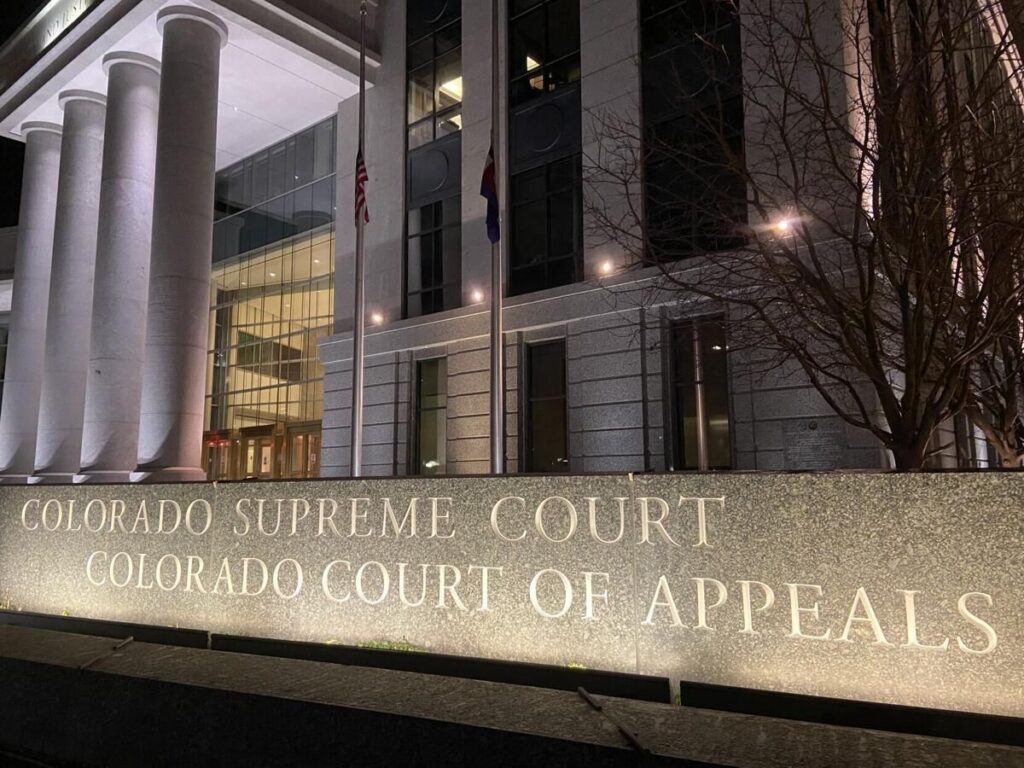
Schoolchildren’s presence at child sex-related trial did not harm Arapahoe County defendant, appeals court says
Michael Karlik
michael.karlik@coloradopolitics.com
Updated 1 day ago
Colorado’s second-highest court decided on Thursday that the presence of a group of schoolchildren on the first day of a child sexual exploitation trial did not violate an Arapahoe County defendant’s constitutional right to a fair trial. Prosecutors charged Jerry...
Appeals court cites week-old Colorado law to reinstate child neglect case at child, father’s request
Michael Karlik
michael.karlik@coloradopolitics.com
Updated 22 hours ago
Colorado’s second-highest court invoked a new state law for the first time on Thursday and reinstated a child neglect case that both the child and her father wished to reopen. House Bill 1227 took effect on Aug. 12, reversing a...
Democratic candidate in Colorado’s 4th CD urges long-term water planning
Marianne Goodland
marianne.goodland@coloradopolitics.com
Updated 22 hours ago
The Democrat hoping to become the next representative of Colorado’s 4th Congressional District on Thursday made her case on the final day of Colorado Water Congress in Steamboat Springs. Eileen Laubacher, who spent 34 years in the U.S. Navy and...

Castle Rock council declines to censure member accused of misconduct
Nicholas Fogleman
nicholas.fogleman@denvergazette.com
Updated 2 days ago
A Castle Rock Town Council meeting Tuesday became consumed by allegations that a councilmember attempted to trade a town policy decision for the withdrawal of a recall effort against him. The allegations against Councilmember Mark Davis surfaced during public comment...

Proposal to cap Colorado income tax rate qualifies for November ballot
Thelma Grimes
thelma.grimes@coloradopolitics.com
Updated 10 hours ago
Election officials on Thursday confirmed that the proposal to cap the state’s income tax at the current rate submitted signatures and voters will consequently decide its fate this November. The fight over tax rates is part of the tug and...

Trump reaches deal to halt tariffs on beef for 90 days in bid to lower prices
Rena Rowe
rena.rowe@washingtonexaminer.com
Updated 2 days ago
President Donald Trump announced Friday that he had reached a deal to temporarily ease tariffs on beef imports, saying the move would help lower prices for families as the United States faces a severe cattle shortage and record-high beef prices....