

Federal judge says jury not influenced by incarcerated plaintiff’s appearance in shackles
A federal judge last month rejected an incarcerated plaintiff’s request for a new civil trial in his constitutional rights lawsuit, concluding the jury was not influenced by the man’s appearance in shackles at trial.
This summer, Dean Carbajal received a jury trial on his claim that Colorado Department of Corrections employees failed to protect him against attacks by gang members at Limon Correctional Facility, despite knowing he was in danger. Jurors sided with the defendants, finding they did not violate Carbajal’s Eighth Amendment right against cruel and unusual punishment.
Carbajal quickly filed a motion asking for a new trial or for him to prevail as a matter of law. Among other things, Carbajal took issue with the fact that he was required to wear handcuffs and shackles during trial.
“This abusive and prejudicial decision to force Mr. Carbajal to appear in restrains (sic) was devoid of logic or reason,” wrote attorney Kenneth Mark Burton. “The Jury ignored the overwhelming evidence of Defendants failure to protect Mr. Carbajal and his serious injuries because they perceived him as an extremely dangerous person that naturally would have been with dangerous prisoners (and) by extension was unworthy of protection.”
In an Oct. 16 order, U.S. District Court Chief Judge Philip A. Brimmer acknowledged the federal appeals court with jurisdiction over Colorado has never addressed whether an incarcerated plaintiff in a civil trial is prejudiced if the jury were to see him in shackles.
Brimmer elaborated that on the first day of trial, when Carbajal asked to be released from his restraints, Brimmer declined to do so because it was protocol to restrain prisoners, jurors were already aware of Carbajal’s incarcerated status and he was sitting “very near to the jury.”
“In explaining its reasoning, the Court noted that violent incidents involving prisoners have occurred in courthouses in recent years, which involved sudden actions without warning,” Brimmer wrote.
He noted other federal appeals courts have reasoned that an incarcerated plaintiff is not harmed if they are required to wear restraints during their civil trial, as the “nature of the plaintiffs’ claims” already makes it clear they are imprisoned. Although some courts have recognized that restraining a plaintiff is problematic if the case implicates the plaintiff’s own dangerousness, that was not an issue for Carbajal.
Finally, Brimmer observed that he told jurors the dispute was “between persons of equal standing in the community, of equal worth.”
“Thus, the jury was instructed that all prisoners — even dangerous and violent prisoners — have the right to be protected from serious harm under the Eighth Amendment,” he concluded.
Brimmer also rejected Carbajal’s other claims, including that the defendants’ reference at trial to Carbajal’s large number of prior lawsuits compromised the fairness of the trial.
Carbajal is appealing the outcome of the case.
The case is Carbajal v. Falk et al.

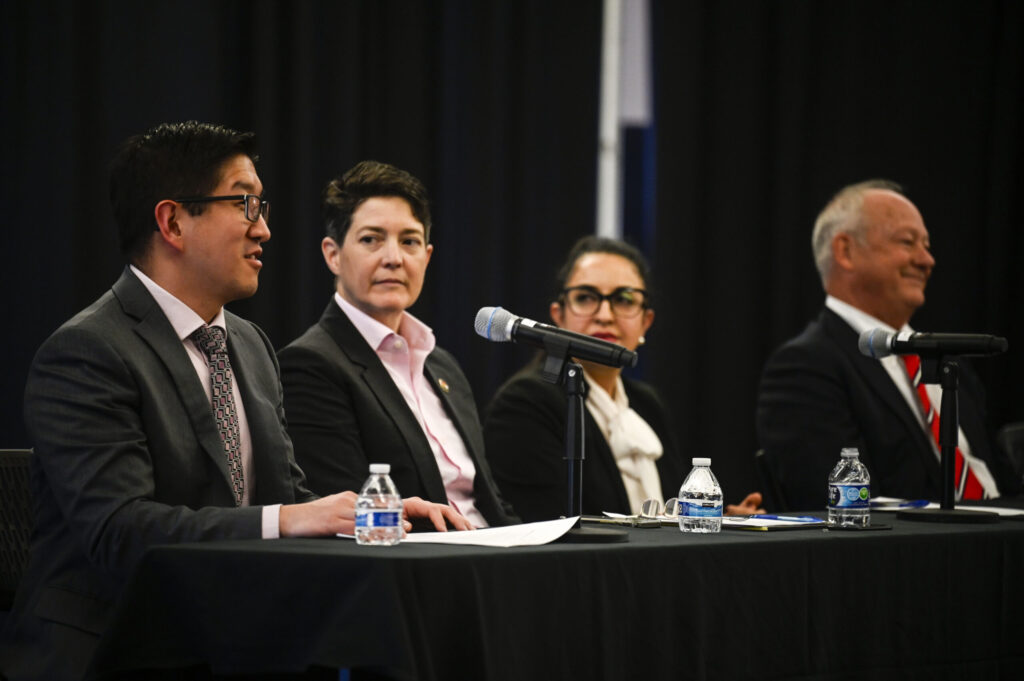
Colorado’s newest federal judge speaks about techniques for advancing cases
Michael Karlik
michael.karlik@coloradopolitics.com
Updated 17 hours ago
U.S. Magistrate Judge Cyrus Y. Chung described on Wednesday the various tactics he employs to resolve court cases, summing up his role with a laxative-based metaphor. “Someone told a group of us federal magistrate judges that magistrate judges are the...

Federal judge hears ICE agents’ confusion about law, injunction on warrantless arrests
Michael Karlik
michael.karlik@coloradopolitics.com
Updated 1 day ago
A federal judge heard testimony on Tuesday from U.S. Customs and Immigration Enforcement agents in Colorado, who had trouble describing the requirements of his recent injunction and the training they received on making warrantless arrests pursuant to the law. On...

10th Circuit dismisses challenge to Colorado legislature’s decorum rules
Michael Karlik
michael.karlik@coloradopolitics.com
Updated 23 hours ago
The Denver-based federal appeals court concluded on Tuesday that Colorado lawmakers cannot be sued for creating and enforcing rules of decorum that circumscribe the public commentary allowed at legislative committee hearings. A three-judge panel of the U.S. Court of Appeals...
Colorado Supreme Court blocks ballot initiative defining ‘fees’
Michael Karlik
michael.karlik@coloradopolitics.com
Updated 3 days ago
The Colorado Supreme Court blocked a proposed ballot initiative on Monday that would have required voter approval for new fees above a certain threshold, while also enshrining a definition of “fee” into the state constitution for the first time. Chief...

Colorado justices, by 5-2, say Longmont detective did not violate suspect’s Miranda rights
Michael Karlik
michael.karlik@coloradopolitics.com
Updated 3 days ago
The Colorado Supreme Court’s majority ruled on Monday that a Longmont detective did not coerce a suspect into talking by making references to how a judge would look at his character, and by suggesting he may get out of prison...
Colorado justices find Fort Collins police lacked probable cause to arrest suspect in park
Michael Karlik
michael.karlik@coloradopolitics.com
Updated 3 days ago
The Colorado Supreme Court agreed on Monday that Fort Collins police lacked probable cause to arrest a man for a child sex offense based on his presence in a public park around the time they intended to meet with their...

Supreme Court to hold oral arguments, discipline commission releases report | COURT CRAWL
Michael Karlik
michael.karlik@coloradopolitics.com
Updated 3 days ago
Welcome to Court Crawl, Colorado Politics’ roundup of news from the third branch of government. The state Supreme Court is holding oral arguments this week, plus Colorado’s judicial discipline commission released its annual report. Colorado Supreme Court news • The Supreme...
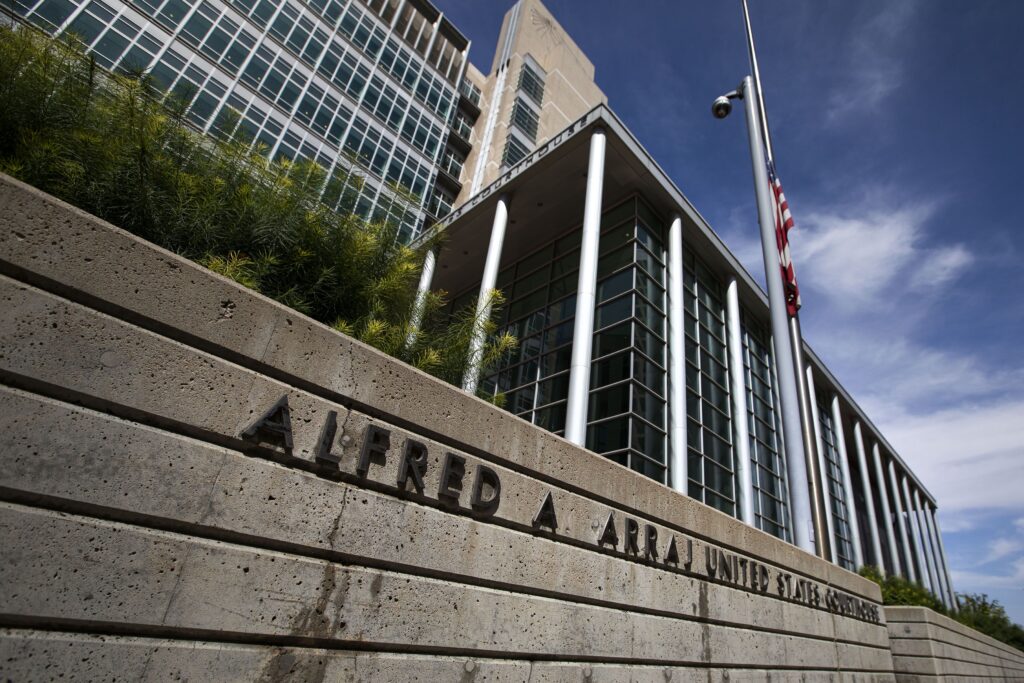
Federal judge dismisses developer’s challenge to Denver affordable housing ordinances
Michael Karlik
michael.karlik@coloradopolitics.com
Updated 6 days ago
A federal judge dismissed a homebuilder’s constitutional challenge on Tuesday to a pair of Denver ordinances that impose obligations on developers related to the affordable housing demands created by new construction. Two related companies, redT Homes and redT Capital Partners,...

10th Circuit distances itself from prior decision making it easier to toss prisoner lawsuits
Michael Karlik
michael.karlik@coloradopolitics.com
Updated 6 days ago
The Denver-based federal appeals court distanced itself on Wednesday from its own recent decision that made it easier for prison officials to end civil lawsuits by transferring incarcerated plaintiffs between facilities. A three-judge panel of the U.S. Court of Appeals...

Appeals court overturns Douglas County vehicular homicide conviction due to faulty jury instructions
Michael Karlik
michael.karlik@coloradopolitics.com
Updated 4 days ago
Colorado’s second-highest court overturned a defendant’s vehicular homicide conviction and 12-year prison sentence on Thursday after determining a Douglas County judge omitted key language from the jury instructions that could have resulted in a different outcome. James Paul McDonald was...