

Colorado is a blue island in a red wave | Vince Bzdek
More than 90% of all the counties in the United States shifted in favor of former President Donald Trump in the 2024 presidential election, according to several new analyses of election results.
An extraordinary map created by The New York Times shows a sea of red arrows indicating movement toward Trump, with Trump improving on his 2020 margin in 2,367 counties. He improved his margins across the board: in urban areas, suburban areas and rural areas.
But there is one block of blue arrows on the map that jumps out at you.
Colorado.
In fact, Colorado posted the smallest red shift in the nation toward Donald Trump, with just 34% of its counties shifting toward Republicans, according to an Axios analysis of AP data. Trump lost ground in only 240 counties across the U.S., 31 of which were in Colorado.
That’s about half of the state’s counties that moved against the national shift and got bluer in the 2024 election, which made it an outlier across the country.
El Paso, Denver, Elbert, Douglas, Jefferson, Boulder and Broomfield counties along the Front Range all showed a shift toward Democrats.
But many rural counties showed shifts toward Democrats, too, including Delta, Mesa, Montrose, Rio Blanco, Ouray, San Juan, Hinsdale, Mineral, Montezuma, La Plata, Archuleta, Custer, Fremont, Chaffee, Crowly, Kiowa, Yuma, Sedgwik, Clear Creek, Gilpin, Summit, Grand, Jackson, Routt and Larimer counties.
That’s not to say those counties are all blue now, they just got a little bluer than they were.
The biggest Democratic shifts came in Rio Blanco, Clear Creek and Gilpin counties.
Pitkin County, home of Democratic bastion Aspen, saw the biggest shift to the red side, 7.6 points. Huerfano was next at 5.9 points, followed by Eagle County, home of Vail, at 5.4 points. Adams County, a key battleground, moved from 7.8 points in favor of Democrats in 2020 to just 2.4 points for the party in 2024.
So why was Colorado mostly impervious to the red wave washing over the country? A person might think, given the 40,000 immigrants that flooded the state last year, and the huge increase in housing prices throughout the state, that more Coloradans would have been receptive to Trump’s promises of fixing inflation and immigration.
And let’s remember that Colorado’s voting base has never been less Democratic than it is now that unaffiliated voters make up a majority of the state’s registered voters.
Yet at the same time its elected representation has grown to its most Democratic ever in the years since Trump took office.
Democrats are in control of every statewide elected office, both chambers of the legislature and seven of the state’s 10 members of Congress, including both senators and five of eight House members.
Colorado seems to play by its own rules, in other words. Our news partners over at 9News called it a “blue island.”
“The red wave that swept America … Donald Trump’s resounding victory that moved margins his way even in places he didn’t win, it just didn’t really materialize in Colorado,” Kyle Clark said on “Next,” citing The New York Time analysis.
Seth Masket, director of the Center on American Politics at University of Denver, has been tracking the Republican Party over the past four years for a book he has been working on. He thinks Colorado is different from the rest of the country because of education and higher incomes here.
“One of the patterns we’ve seen since 2016 has to do with this education divide,” said Masket in a “Colorado Matters” interview on Colorado Public Radio.
“In states where you have a more educated White electorate, we tend to see those states shift blue as more people with college educations have swung Democratic. And Whites without a college education have swung more conservative, more Republican. And that’s a big part of the story in places like Florida, in places like Ohio, where you have a less educated electorate, and they swung hard right.”
Ryan Winger, data analyst for the right-leaning polling firm Magellan Strategies, told 9News the same thing: ”You just have more of these college-educated voters who are voting on maybe things other than their own economic well-being because they have the luxury of doing so.”
Colorado’s median income is above $90,000, which means high prices are an inconvenience, not a matter of survival as in so many of the states that voted for Trump.
Another thing that happened differently in Colorado: Latinos didn’t break for Trump here as strongly as they did elsewhere. According to results of the Colorado Latino Exit Poll released Wednesday, 67% of Latinos across the state supported Harris, which is 4% higher than Latinos nationally based on national exit poll numbers.
Magellan CEO David Flaherty also thinks the Republican Party is its own worst enemy in Colorado, and many Republican candidates are just carrying too much baggage for Colorado voters, including Trump.
“The drama from the Republican Party at the state level,” as well as extremist candidates like Lauren Boebert, continue to give unaffiliated voters pause, Flaherty told 9News. He believes Colorado voters said to themselves this election: “I don’t know that I’m going to vote for this Republican, because I may not be sure what I’m going to get.”
The state Republican Party’s internal turmoil left most of the GOP’s nominees to fend for themselves, our chief political correspondent Ernest Luning points out, as two warring factions spent months battling it out in court and in competing meetings over control of the party apparatus.
“By the time ballots went out in early October, state GOP Chairman Dave Williams had won in court and kept his grip on the party. Still, after spending heavily to defend his position — and diverting attention from things like assembling a statewide get-out-the-vote campaign — there wasn’t much gas in the tank to help push the party’s candidates across the finish line,” Luning observed.
What can the Republican Party do to get more of its candidates elected, and serve as a better counterforce to the state’s Democratic majorities?
“Well, one thing they haven’t tried recently is doing all that much moderation,” Masket told “Colorado Matters.” “They’re going to have a hard time winning statewide for a while. But there are some districts for the U.S. House, for the state legislature, where they can be more competitive. The 3rd Congressional District is proving to be very competitive, the 8th Congressional District is proving to be very competitive. In those districts they’ve nominated somewhat more mainstream Republican candidates who’ve actually proven pretty good at this.”
A national government that is all Republican and a state government that is all Democratic could soon lead to confrontation, especially if Trump moves National Guardsmen or even military troops into Colorado to try to deport some of those 40,000 immigrants who have flooded into the state, many illegally. Colorado has laws on the book that forbid local law enforcement from cooperating with federal law enforcement on deportation.
“This is a state that is moving in a very different direction from the national government, and that means there are probably going to be a lot of policy conflicts going forward on things like abortion, on things like firearms, on things like legal marijuana” said Masket. “There might be some real conflict between what the state wants and what the federal government wants, and we’ll see those play out in courts, we’ll see those play out in a lot of regulatory agencies.”
Let’s just hope we don’t see them play out in the streets.


Suddenly, Colorado has a private school choice program │ Vince Bzdek
Vince Bzdek
vince.bzdek@gazette.com
Updated 10 hours ago
By Vince Bzdek When I was a kid going to St. John’s Catholic grade school in Denver, I remember asking my mom if she and dad minded paying taxes for public schools since all her kids attended Catholic ones. We...
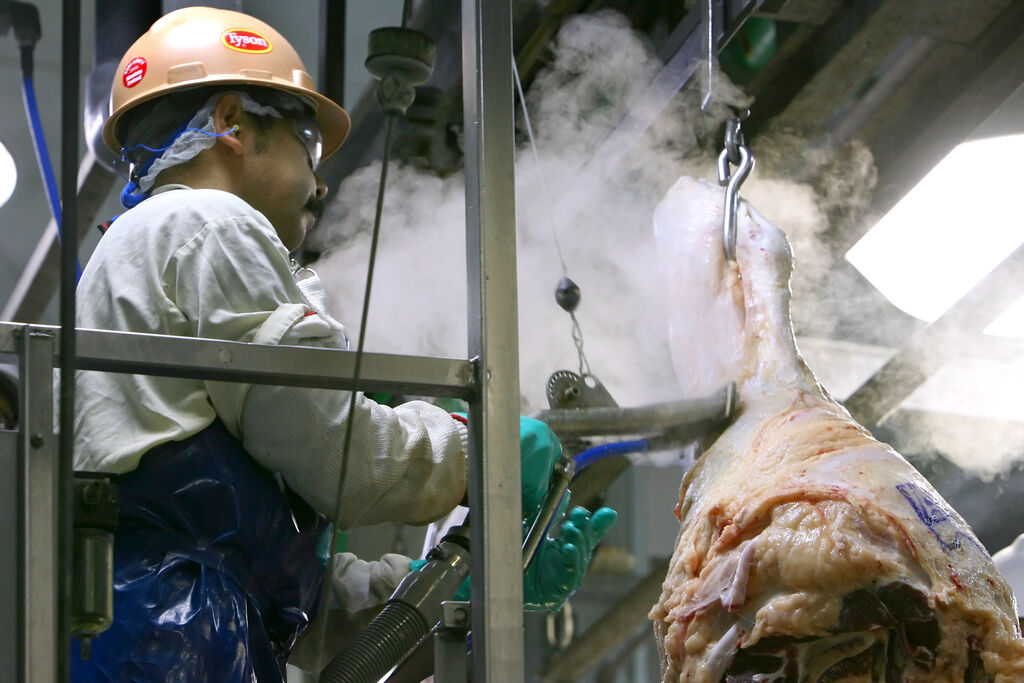
Tyson’s beef plant closure in Nebraska to impact town, ranchers nationwide | OUT WEST ROUNDUP
Ernest Luning
ernest.luning@coloradopolitics.com
Updated 4 days ago
NEBRASKA Beef plant’s closure could ripple OMAHA — Tyson Foods’ decision to close a beef plant that employs nearly one third of residents of Lexington, Nebraska, could devastate the small city and undermine the profits of ranchers nationwide. Closing a...

Calendar Dec. 15-21
Rachael Wright
rachael.wright@coloradopolitics.com
Updated 4 days ago
CoPo’s weekly political calendar will help you find political and public-policy events throughout Colorado. It includes candidate and issue campaign events, public policy meetings, court hearings, state and local party conventions, assemblies, debates, rallies, parades, speaking engagements, traveling dignitary appearances,...

Performers announced for 14th Klezfest | NONPROFIT REGISTER
Thelma Grimes
thelma.grimes@coloradopolitics.com
Updated 2 days ago
MIZEL MUSEUM JCC DENVER Denver News: Klezfest 2025, which takes place Dec. 20, will feature performances by a host of popular Jewish entertainers: Rabbi Joe Black and Steve Brodsky; Hal Aqua & The Lost Tribe; Mishmish and Gora Gora Orkestar. Rabbi Black is a pioneer of contemporary Jewish music and has...

Julie Gonzales’s long but not impossible odds | SONDERMANN
Eric Sondermann
eric-sondermann@coloradopolitics.com
Updated 4 days ago
Allow me to start with a flashback. It was Thanksgiving 2024, just over 12 months back. For the first time, our son Clarke hosted the family Thanksgiving near New York City. It is a sign of our aging when the...
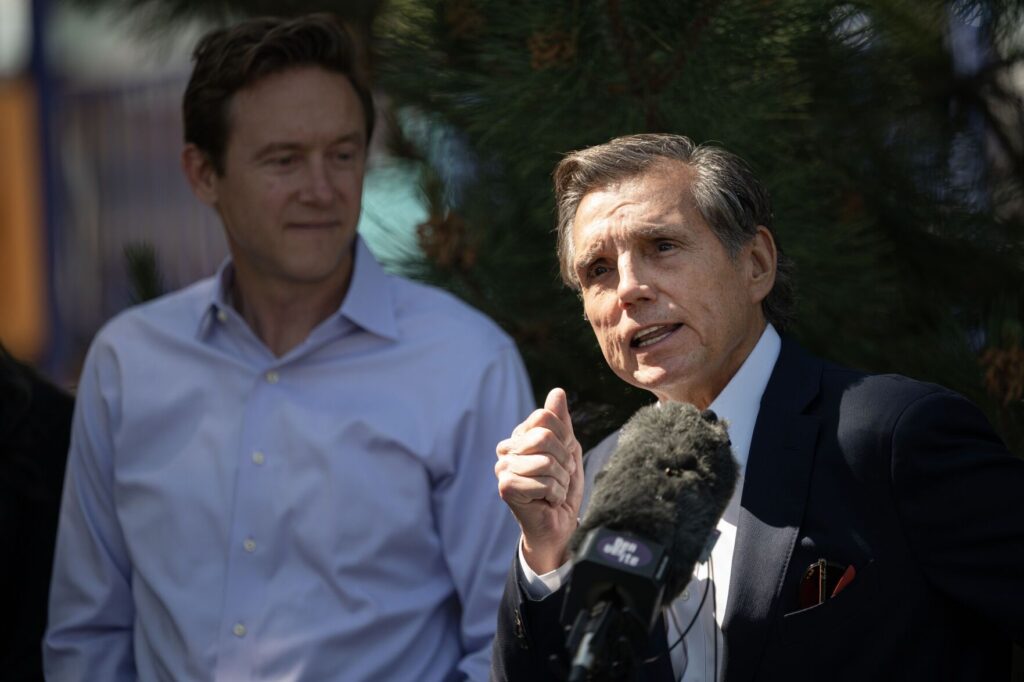
Denver Mayor Peña makes unexpected announcement | A LOOK BACK
Rachael Wright
rachael.wright@coloradopolitics.com
Updated 4 days ago
Thirty-Five Years Ago This Week: Denver Mayor Federico Peña announced personal news that caught many of his supporters and Denver residents who paid close attention to politics off guard. Just two weeks prior on Nov. 16, 1990, The Colorado Statesman...

Dougco shoplifting ordinance victimizes victims | CALDARA
Jon Caldara
jon-caldara@coloradopolitics.com
Updated 3 days ago
Law enforcement must be respected. It also needs to be liked. And, above all, it must be trusted. Citizens should feel welcome to engage with police — not coerced. That balance is what makes American law enforcement different. Douglas County...
Colorado commission makes new access-to-justice recommendations after renewed listening tour
Michael Karlik
michael.karlik@coloradopolitics.com
Updated 1 day ago
Adding judges to handle caseloads. Expanding authority for paraprofessionals in civil cases. Allowing self-represented litigants to file electronically. Making the judiciary’s website user-friendly. Those were among the recommendations advanced by the Colorado Access to Justice Commission in a report released Friday,...
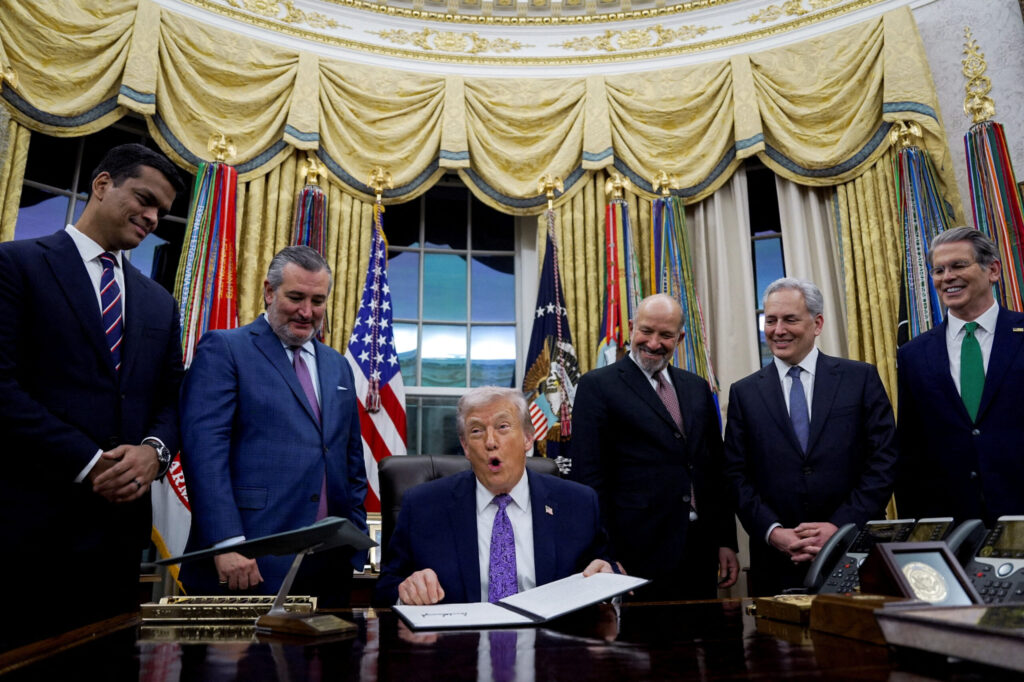
Trump targets Colorado AI law with executive order, setting stage for legal fight
Marianne Goodland
marianne.goodland@coloradopolitics.com
Updated 2 days ago
Colorado’s 2024 effort to regulate artificial intelligence is facing a direct challenge from the Trump administration. President Donald Trump signed an executive order on Thursday to block states from enforcing their own AI laws. Trump also announced the creation of...
Colorado residents face high energy bills after regulators turn away from natural gas, experts say
Mark Samuelson Special to The Denver Gazette
mark.samuelson@denvergazette.com
Updated 2 days ago
Colorado residents could be paying a lot more for home energy, following the state’s decision last week to turn away from natural gas as a home cooking and heating fuel, experts said. Some 1.9 million Colorado households warm their homes...