

Voters favor sales tax hike for Denver Health — but not for affordable housing
Denver voters are split on two sales tax measures that would raise $100 million for housing and earmark $70 million to help fund the city’s safety net health care system.
The sales tax for Denver Health, the city’s safety net hospital system, was more palatable for voters, with the unofficial results showing a 12-point lead in favor of the measure. It was ahead, 57% to 43%, as of a 10 p.m., according to the latest tally.
The bigger sales tax hike, meant to pay for affordable housing, is getting less support, and residents opposed to the measure were outvoting those in favor by about 3.5 points. So far, the vote was split: 48.3% in favor against 51.7% opposed.
Proponents of the proposed tax for Denver Health said the hospital system is suffering from uncompensated care — the cost of treating patients who are not insured.
Denver Health said its uncompensated care costs have jumped $10 million year-over-year, primarily the result of Denver’s illegal immigration crisis.
While no one knows with certainly how many of the roughly 43,000 immigrants who came to Denver stayed, the number of plane, train and bus tickets suggest about half have. Early in the humanitarian crisis, Denver officials decided that local taxpayers would assume responsibility for the response. Primarily borne locally, the cost to date is roughly $76 million, according to the city.
While the 0.34-point sales tax increase won’t solve all of Denver Health’s financial woes, it will help the hospital keep some services going, officials previously told The Denver Gazette.
The measure did not clear the City Council without opposition. Long-time Councilmember Kevin Flynn voted against the proposal, calling sales tax increases a “regressive” method of raising revenue.
“I have a serious concern about burdening Denver taxpayers, and I know that some visitors pay Denver sales tax, as well,” Flynn said in June. “Every time I pay my mortgage, and my property taxes are in that, it goes to pay off bonds that have built capital construction at Denver Health.”
Meanwhile, voters were somewhat opposed to the bigger sales tax question — a 0.5-point increase designed to raise money for affordable housing. It is currently losing as of the first ballot drop at 7:05 p.m.
Introduced by Johnston, the sales tax will sunset after 40 years. In that time, the tax, if approved, is estimated to raise roughly $100 million annually and help fund 20,000 more units of affordable housing, the Johnston administration said.
Several councilmembers — Kevin Flynn, Flor Alvidrez, Stacie Gilmore and Amanda Sawyer — balked at the sales tax hike proposal.
“The majority of sales tax increases, if not all, were prior to 2020. It’s a very different landscape for residents in Montpellier and Green Valley Ranch,” Gilmore said in August. “People are stretched to the max. This council have given this administration carte blanche since July 17 of last year, and I cannot in good faith give carte blanche to 40 years of sales taxes.”

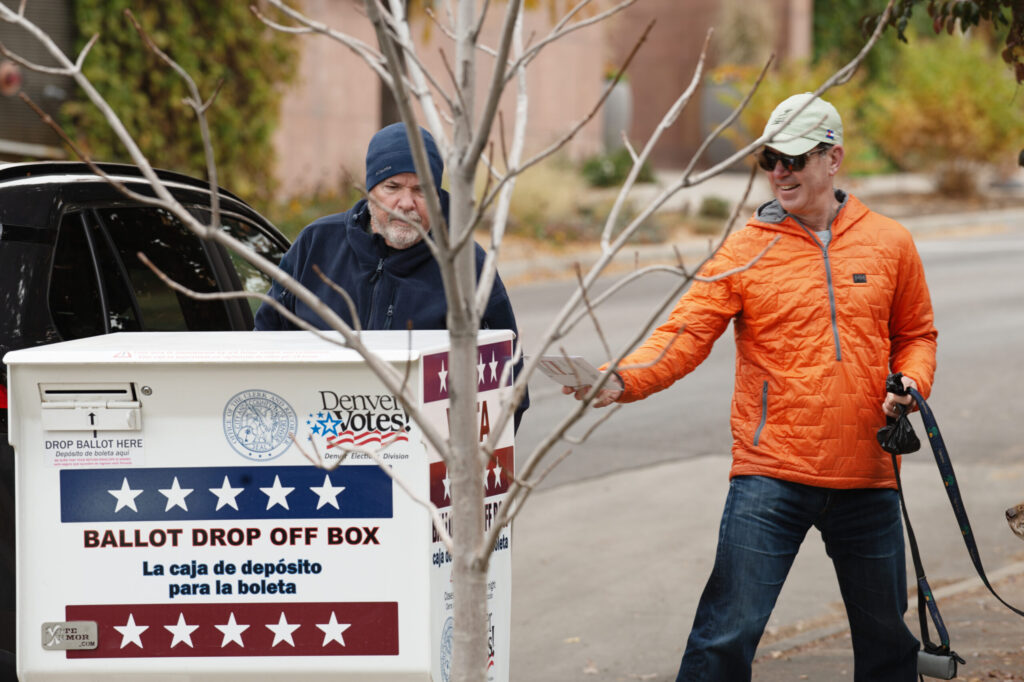
Colorado joins multi-state call to keep ICE away from polling locations
Jacob Mauk
jacob.mauk@denvergazette.com
Updated 15 minutes ago
Colorado Secretary of State Jena Griswold announced Monday that the state has formally requested written confirmation from the Department of Homeland Security that ICE agents will not be stationed at polling locations during the 2026 election cycle, according to a...
Can deliberation save democracy? | Vince Bzdek
Vince Bzdek
vince.bzdek@gazette.com
Updated 5 hours ago
In September 2019, 523 Americans traveled to Dallas for an experiment called “America in One Room.” The gathering was designed to test a theory: Could representative citizens deliberate productively even in an era of intense polarization? The event focused on...
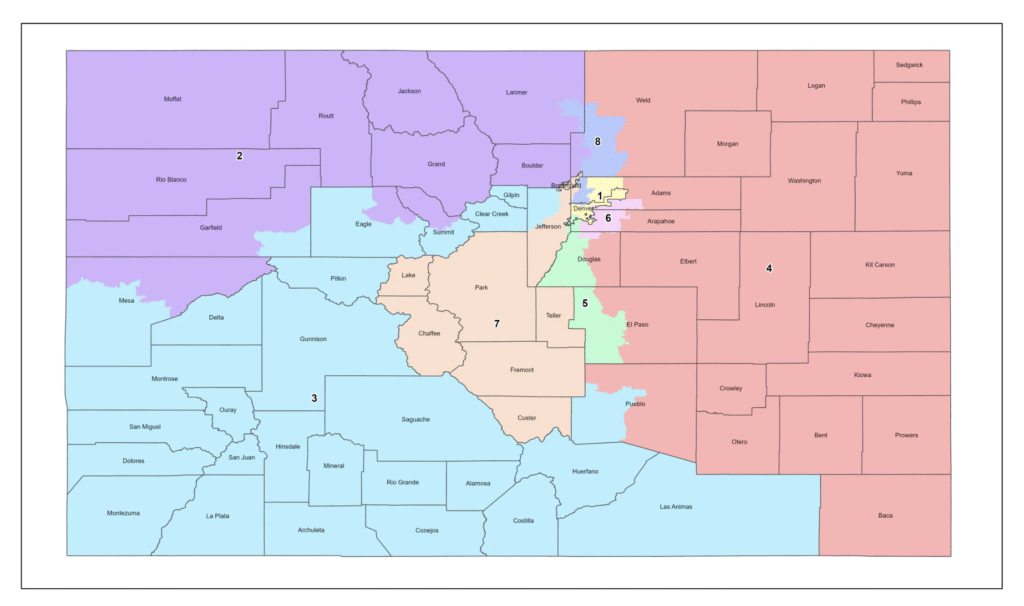
Redistricting scheme would give Colorado Democrats seven House members, split El Paso County | Bob Loevy
Bob Loevy
bob-loevy@coloradopolitics.com
Updated 1 day ago
A proposed redistricting plan, which could give Colorado seven Democratic members of the U.S. House of Representatives and only one Republican, would split El Paso County into two parts and thereby weaken the county’s influence in Congress. El Paso County,...
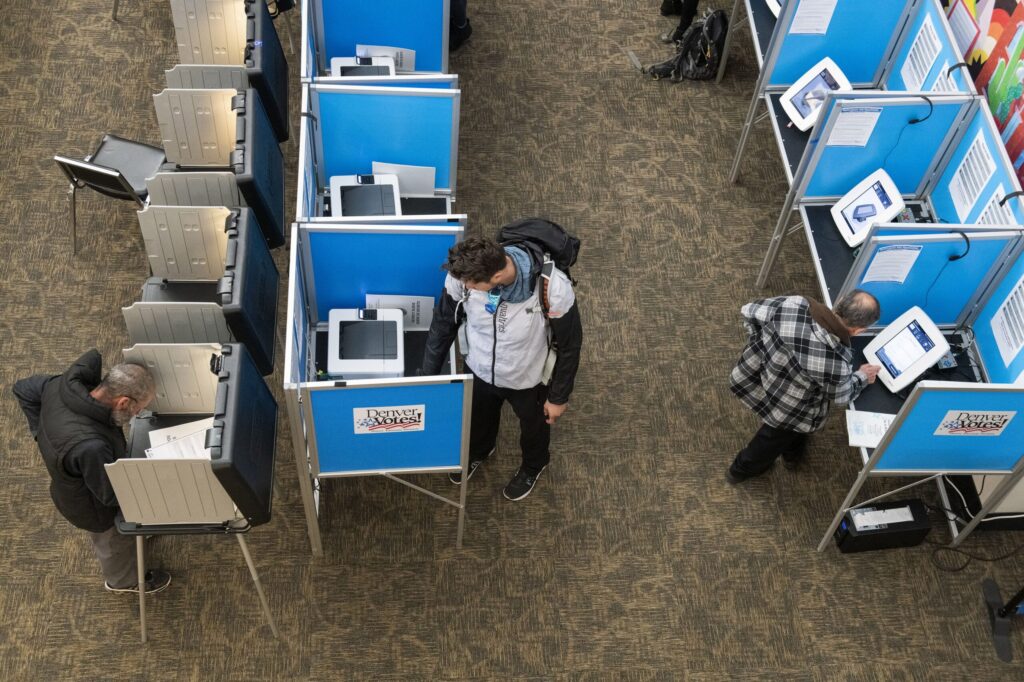
Colorado Democrats, Republicans fight over ballot fiscal information
Marissa Ventrelli
marissa.ventrelli@coloradopolitics.com
Updated 3 days ago
Republicans and Democrats clashed anew over legislation that would require identifying which programs would see a funding reduction if a ballot measure passed, with the former saying it’s yet another way for the government to control the campaign narrative and...

Democrat Dwayne Romero jumps in primary to challenge Republican Jeff Hurd in Colorado’s 3rd CD
Ernest Luning
ernest.luning@coloradopolitics.com
Updated 3 days ago
The Democrat who has been running for nearly a year to unseat Republican U.S. Rep. Jeff Hurd in Colorado’s 3rd Congressional District got some company in the primary this week. Dwayne Romero, a Snowmass Village business owner and decorated Army...
Colorado’s congressional redistricting proposal could flip three Republican House seats | ANALYSIS
Michael Braithwaite
michael.braithwaite@gazette.com
Updated 1 day ago
A Democrat-backed proposal to redraw Colorado’s congressional map for the 2028 election could flip three Republican districts. The proposal, introduced by a group called Coloradans for a Level Playing Field, is yet another development in a national redistricting debate after...
Judge declines to block potential Boebert challenger from going through assembly process in Colorado’s 4th CD
Ernest Luning
ernest.luning@coloradopolitics.com
Updated 5 days ago
Congressional candidate Eileen Laubacher, one of the Democrats seeking to challenge Republican U.S. Rep. Lauren Boebert, can participate in the party’s caucuses and assemblies pending a court hearing later this month, a Denver judge ruled Tuesday in response to a...
Colorado Gov. Jared Polis ignites fierce debate after raising clemency questions in Tina Peters case
Marianne Goodland
marianne.goodland@coloradopolitics.com
Updated 5 days ago
Gov. Jared Polis ignited a political firestorm Tuesday night after weighing in on the prison sentences of two former Colorado officials — a Democrat and a Republican — convicted of attempting to influence a public servant. The comments quickly fueled...
Bills on ballot access, dual office ban move swiftly through Colorado legislature
Marianne Goodland
marianne.goodland@coloradopolitics.com
Updated 5 days ago
With an eye on the 2026 election cycle and mounting tensions with the Trump administration, Colorado lawmakers are fast-tracking a pair of election bills they say will protect the state’s mail ballot system and tighten rules for elected officials. The...
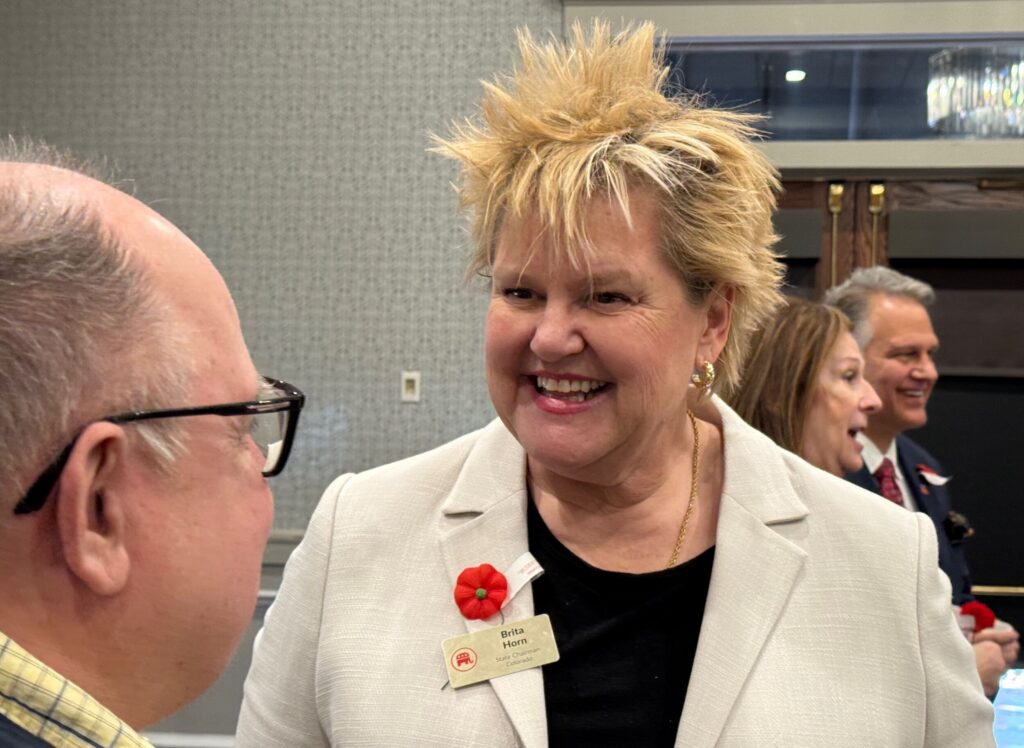
Colorado GOP chair Brita Horn loses ‘no-confidence’ vote, vows to refocus on ‘mending that divide’
Ernest Luning
ernest.luning@coloradopolitics.com
Updated 5 days ago
The Colorado Republican Party’s state central committee approved a resolution expressing “no confidence” in state chair Brita Horn in a landslide late Monday night near the end of an online meeting marked by rancor and confusion. Almost 80% of the...