

Educational freedom on the Colorado ballot | SLOAN

Kelly Sloan

Kelly Sloan
We are a few weeks away from that date when Americans exercise their democratic enzymes, and in Colorado they get to do that a little more than some other places, owing to our fetish for direct democracy. This year, as most years, there is a long list of items populating the ballot that ask voters en masse to inveigh on this or that issue. The gestating number of ballot initiatives seems to make all the work that went into devising a system of representative government seem increasingly pointless — and prompts one to ask, in their darker moods, what check or balance applies to plebiscitary whim — but in any case it’s what we have, and to paraphrase what someone eminently qualified to speak on such matters once said, it may be the worst system of government, save for all the others.
And to be fair, there are certain questions which ought to be put to the voting population as a whole. Amendments to the state constitution, for instance, and though the electoral standards for making such fundamental changes to the state’s ultimate legal blueprint ought to be a little more stringent than they are, the reforms of a few years ago have made the system a little better. And this year there is even a proposed amendment on the ballot that belongs there.
Stay up to speed: Sign up for daily opinion in your inbox Monday-Friday
Amendment 80, colloquially referred to as the ”school choice amendment”, reads as follows: “Shall there be an amendment to the Colorado constitution establishing the right to school choice for children in kindergarten through 12th grade, and, in connection therewith, declaring that school choice includes neighborhood, charter, and private schools; home schooling; open enrollment options; and future innovations in education?”
This is refreshingly straightforward, and makes no radical changes to anything — it simply secures an existing fundamental right into state law. Colorado is already a generally school choice-friendly state, home to a number of successful and well-run charter schools that elevate the educational bar accordingly. In a free society, this measure would be entirely uncontroversial.
So why is millions of dollars are being spent to defeat it?
Well, those millions of dollars are coming mostly from the teachers unions, whose concern is far more oriented toward the promotion of egalitarian politics than in producing literate and educated students. Their disdain for competition in education, like that offered by charters, private schools and other options, is manifest, and it’s not difficult to see why.
What keeps as many students in failing public schools as there are is economic pressure. What would happen if, per impossible, the teachers union’s nightmare scenario, the Cthulhu of education policy, the dreaded voucher program, were to be instituted; i.e., if the state were to permit the dollars it allocates per pupil to stay with the child, to be used at any accredited school? That’s right, there would be a redeployment, predominantly in the major urban centers, toward private schools better equipped to meet the needs of the students. Why? Because parents, for the most part, want their children to receive the best education they can, emancipated from the extracurricular pressures geared more toward social leveling and acceptable politics than the acquisition of knowledge.
State law does not, lamentably, allow for a voucher system, nor, for that matter, does Amendment 80 provide for such an eruption of good sense. But the availability of the charter school option is an amenable and successful alternative the state has embraced, allowing parents who are dissatisfied with central school authorities continuously lowering the bar on curriculum, textbooks, standards, discipline and so forth an option, without tinkering with the mobility of funding.
OK, so why the need to entrench that in the constitution? Well, beyond the official recognition of a parent’s liberty to choose their own children’s school, which ought to be enough, there is the fact that the very same organizations dumping millions into an exceptionally misleading campaign — exceptional even in this age of exceptionally misleading campaigns — against Amendment 80, never tire in their legislative efforts to roll back educational options in the state. They ran a bill last year, they will run another this year, and they will every year until competition is erased and their monopoly on what remains of education is sealed.
Amendment 80 does not vouchsafe Colorado’s younger generation the gift of an educational voucher system — that enlightened reform may be for another day – but it does allow the preservation of options, and the opportunity to attain the advantages that higher disciplinary and academic standards offer over the lowest common denominator approach.
Kelly Sloan is a political and public affairs consultant and a recovering journalist based in Denver.


Courageous Colorado bucks Trump’s federal stupidity | Miller Hudson
Miller Hudson
miller-hudson@coloradopolitics.com
Updated 2 days ago
There are several theories regarding the rhythm of American politics. The most frequently cited is the pendulum hypothesis — positing that episodes of liberal dominance are then interrupted by spans of conservative control. Since Ronald Reagan’s presidential election in 1980,...

A historic moment during another major drought | Rachel Gabel
Rachel Gabel
rachel-gabel@coloradopolitics.com
Updated 2 days ago
Gustav Sumnick emigrated from Germany, traveled to Oklahoma and decided rather than be a Sooner, he wanted to be a farmer. He moved north to Nebraska and married an Irish immigrant farmer’s daughter. They farmed near Fremont, Nebraska, where the...

Colorado can’t forget the lessons of COVID | Jon Caldara
Jon Caldara
jon-caldara@coloradopolitics.com
Updated 4 days ago
We are finally getting a clearer picture of what happened during COVID. Not because the people who locked us up, masked our faces and forced unproven chemicals into our bodies have suddenly become transparent, but because Anthony Fauci’s COVID-era diary...

Historic preservation supporters organize to oppose Trump changes | Bob Loevy
Tom Cronin
tom-cronin@coloradopolitics.com
Updated 2 days ago
Historic preservation organizations in Colorado Springs, the remainder of Colorado and across the nation are organizing to resist a recent effort to relax and weaken historic preservation laws in the United States. In Washington, D.C., the Advisory Council on Historic...
The primary political reform and precondition for all others | SONDERMANN
Eric Sondermann
eric-sondermann@coloradopolitics.com
Updated 5 days ago
In its current state, the American political system has no end of ailments. Far too many factors accelerate polarization and work against moderation and narrowing the differences. Media, and the way so many citizens limit themselves to agreeable, reinforcing sources,...

Pueblo mayor, council concoct Trumpian Texas Two-Step | Dennis Maes
Dennis Maes
dennis-maes@coloradopolitics.com
Updated 4 days ago
Several weeks ago, an article was published positing Pueblo Mayor Heather Graham is a disciple of the calamitous Donald Trump school of governance — specifically as it related to questionable ethical practices and the misuse of public funds. Recently, Graham...

Colorado can’t afford to turn its back on proven public safety technology | GUEST COLUMN
Colorado Politics
colorado-politics@coloradopolitics.com
Updated 4 days ago
By Samuel G. Michael I recently saw a report that said Colorado is leading the way in artificial intelligence adoption for businesses. Across our state, more business owners and employees than ever before use AI for their everyday functions —...

As education conflicts abound across Colorado, who puts the kids first? | Paula Noonan
Paula Noonan
paula-noonan@coloradopolitics.com
Updated 5 days ago
Elected school boards and the Colorado Department of Education (CDE) have hit the headlines with fired superintendents, superintendent resignations, failures of oversight, and misdirected dollars. Cherry Creek School District’s superintendent was fired. Jefferson County Schools’ superintendent found a less stressful...

Clock is ticking on Colorado’s new AI rules | PODIUM
Colorado Politics
colorado-politics@coloradopolitics.com
Updated 5 days ago
By Aashis Luitel On Jan. 1, organizations using covered automated systems must begin complying with Senate Bill 26-189, Colorado’s new Automated Decision-Making Technology Act. They can identify those systems and start building the processes the statute clearly requires. What they...
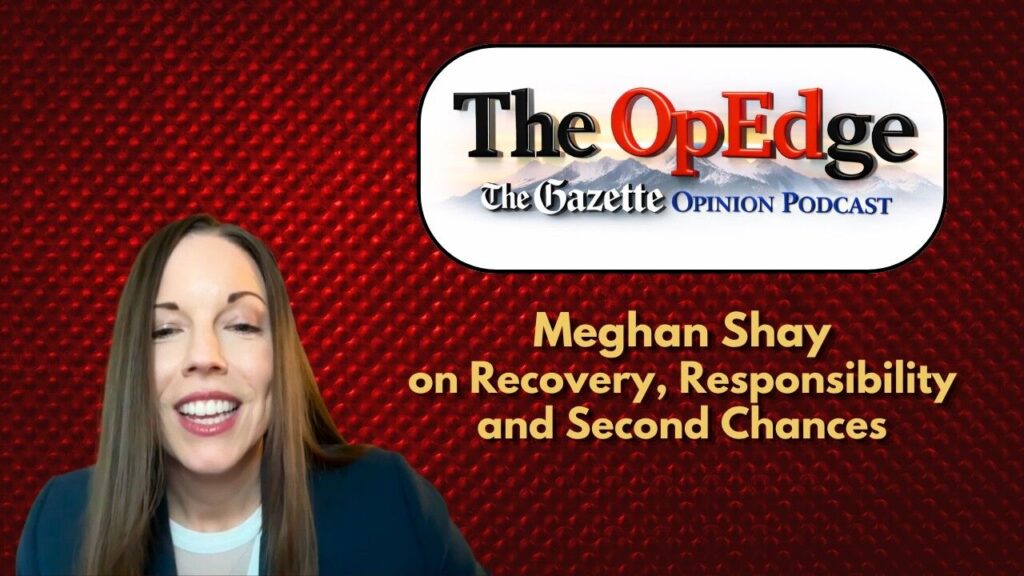
Meghan Shay on recovery, responsibility and second chances | The OpEdge Podcast
Tony Olivero
tony.olivero@gazette.com
Updated 6 days ago
Step Denver and Step Springs CEO Meghan Shay joins The OpEdge to explore addiction recovery, homelessness, and the role of accountability in lasting change. Shay tells host and investigative columnist Jimmy Sengenberger why she believes recovery is built on personal...