

Colorado Springs councilman targets Pikes Peak Pride in funding debate
The only consensus Tuesday was dissatisfaction at the events chosen — and passed over — by the City Council for funding in 2025 from Colorado Springs’ Lodgers and Automobile Rental Tax revenue.
The roughly $10 million is tax revenue separate from the city’s general fund, generated by a 2% tax on lodging and a 1% tax on rental cars. LART funds are disbursed to events that fit the criteria of attracting visitors and enhancing the economy of Colorado Springs.
New organizers reviving Veterans Day parade after cancellation last week
The LART Committee acts in an advisory capacity to City Council concerning expenditures of revenue derived from the tax. Each September, city officials prepare a preliminary budget for the fund.
This year, far fewer events received funding than last, prompting enhanced scrutiny — and overt hostility, in the case of the Pikes Peak Pride festival — on those that did receive money.
The city cut funding for events from about $2.4 million in 2024 to $1.6 million for 2025. Out of 87 applicants, only 18 were successful.

Jessica Laney crosses the newly installed colored crosswalk by Creative Consortium atSouth Tejon Street and East Vermijo Avenue in June, ahead of the Pikes Peak Pride Festival.
The majority of funded events from 2024 will receive nothing in 2025, including those recognized by resolution like the Colorado Springs Western Street Breakfast, the Festival of Lights Parade and the Pikes Peak or Bust Rodeo.
“I did not like pitting one group against another,” said Council President Randy Helms at the meeting to approve the chosen list Tuesday. “I think that’s wrong.”
Colorado Springs proposes $939 million budget for 2025, including raises and more police
Councilman Dave Donelson opposed inclusion of the Pikes Peak Pride festival in the list of funded events.
“A big problem for me … is the ‘T’ in LGBTQ,” Donelson said. “Is that something that we want to spend tax dollars on?”
Councilwoman Lynette Crow-Iverson joined Donelson in opposition to the funding allocations. Councilman David Leinweber recused himself, because the foundation his wife runs was a funding recipient.

Hundreds of LGBTQ+ and supporting friends and family marched participate in the Pikes Peak Pride parade in June.
The annual two-day downtown Pride festival received $60,000 this year, up from $40,000 in 2024. The parade aspect of the event did not receive funding. Donelson said the event does not reflect the community’s values and that other events better deserved funding.
Donelson said he was opposed to promoting an event that celebrated transgender people, equating transgenderism to mental illness at several points. He also said he did not believe the event met economic criteria because other events that went unfunded generated more economic impact.
Multiple audience members disparaged the inclusion of the event and made generalized anti-transgender and homophobic remarks in a public comments section.
Justin Burns, an organizer for the Pikes Peak Pride festival, said that the event was the second-busiest day last year for downtown Colorado Springs. He estimated a $1.7 million economic impact of the event based on a survey of participants.
“I believe that this does speak to our community, who did show up,” he said.
Councilwoman Yolanda Avila said the increase in funding for Pikes Peak Pride and other events reflected unavoidable increased costs associated with security.
“The money they get is just pretty much going to go back to the city for police, fire and barricades,” she said.
Charae McDaniel, chief financial officer for the city, said that the cost of security for public events is set by the city, not organizers, and may affect the amount of funding required.
While Pikes Peak Pride faced a debate on its merits, organizers of other events said their events were being snubbed.
The majority of the more than $10 million in LART revenue was allocated, as in years past, to fund the regional tourism office VisitCOS along with the Colorado Springs Chamber and EDC, and other organizations and entities. Those allocations are set by a multi-year contract with the city, and increased by more than $700,000 total from 2024 to 2025.
Fiestas Patrias, a festival celebrating Hispanic heritage, had a funding reduction from more than $155,000 to $75,000. The city’s annual Juneteenth celebration was also cut in half from $150,000 to $75,000.
Cory Arcarese, an organizer for Fiestas Patrias, said that the events deserved equal footing with the Chamber and other contractually funded organizations.
“Why is it the minority events are cut the most, when we represent 25% of the city?” she said.
The vote came the same day Mayor Yemi Mobolade announced on City Hall steps that the pledged $28,700 from LART for the annual Veterans Day parade would still be going toward the new organizers of the now-revived event.
It did not apply for or receive funding for 2025.

Federal judge upholds constitutionality of Colorado campaign contribution limits
Michael Karlik
michael.karlik@coloradopolitics.com
Updated 6 hours ago
A federal judge upheld Colorado’s individual campaign contribution limits as constitutional on Thursday, finding that three Republican plaintiffs failed to prove the campaign finance framework violates their First Amendment rights. U.S. District Court Senior Judge John L. Kane recognized that...

Appeals court rejects theory that existing tax revenue undermines need for new fees
Michael Karlik
michael.karlik@coloradopolitics.com
Updated 12 hours ago
Colorado’s second-highest court rejected a plaintiff’s claim on Thursday that the tax revenue generated by an existing activity should prevent local governments from imposing new fees aimed at regulating the activity. The question stemmed from Colorado’s unique constraints on taxation...
Colorado ski resorts announce early closures amid historic snowpack lows, high temperatures
Kyla Pearce
kyla.pearce@gazette.com
Updated 12 hours ago
As Colorado’s historically low snowpack year comes to a close and spring conditions take over the mountains, the state’s major ski resorts are announcing closing dates — some of which are weeks before historic closing dates. Most of Colorado’s ski...

Marco Rubio’s star power rises at CPAC 2026
Mabinty Quarshie and Samantha-Jo Roth, Washington Examiner
mabinty.quarshie.and.samantha-jo.roth.washington.examiner@gazetteedit.wpenginepowered.com
Updated 14 hours ago
GRAPEVINE, Texas — Secretary of State Marco Rubio’s popularity is growing and could possibly boost him to one of the top two spots in the 2028 GOP presidential race, if attendees at the Conservative Political Action Conference are to be believed. ...
Seligman, Bridges, Gonzales lead downballot races heading into Colorado Democrats’ state assembly
Ernest Luning
ernest.luning@coloradopolitics.com
Updated 11 hours ago
As Colorado Democrats prepare to designate candidates to the June primary ballot at the party’s state assembly in Pueblo on Saturday, three candidates appear poised to win top-line designation in downballot statewide races, according to data compiled by the state...
Planned Parenthood, groups launch campaign against transgender ballot measures in Colorado
Marissa Ventrelli
marissa.ventrelli@coloradopolitics.com
Updated 11 hours ago
Planned Parenthood and other groups have launched a coalition to oppose two ballot measures that would ban transgender surgeries among children and require student athletes to only join sports teams that correspond to their biological sex. The two measures will...

Longtime community leader Arlene Hirschfeld to be honored | NONPROFIT REGISTER
Joanne Davidson Special to Colorado Politics
joanne-davidson-special-to-colorado-politics@coloradopolitics.com
Updated 10 hours ago
WOMEN UNITED, MILE HIGH UNITED WAY Denver News: Arlene Hirschfeld, a Denver native who has devoted her adult life to serving others, will receive the 2026 Frances Wisebart Jacobs Award when Mile High United Way hosts its Women United Luncheon on April 17. The award is named...

Boulder police investigate sexual assault, ‘drugging’ at bar near CU
Matt Kyle
matt.kyle@denvergazette.com
Updated 15 hours ago
The Boulder Police Department is investigating reports of sexual assault and “suspected drugging” involving underage girls at a bar. There may be additional victims who have not yet come forward, the department said in a news release. The bar, Scrooge...
Appeals court finds no illegal sentence when defendants forfeit time-served credit
Michael Karlik
michael.karlik@coloradopolitics.com
Updated 17 hours ago
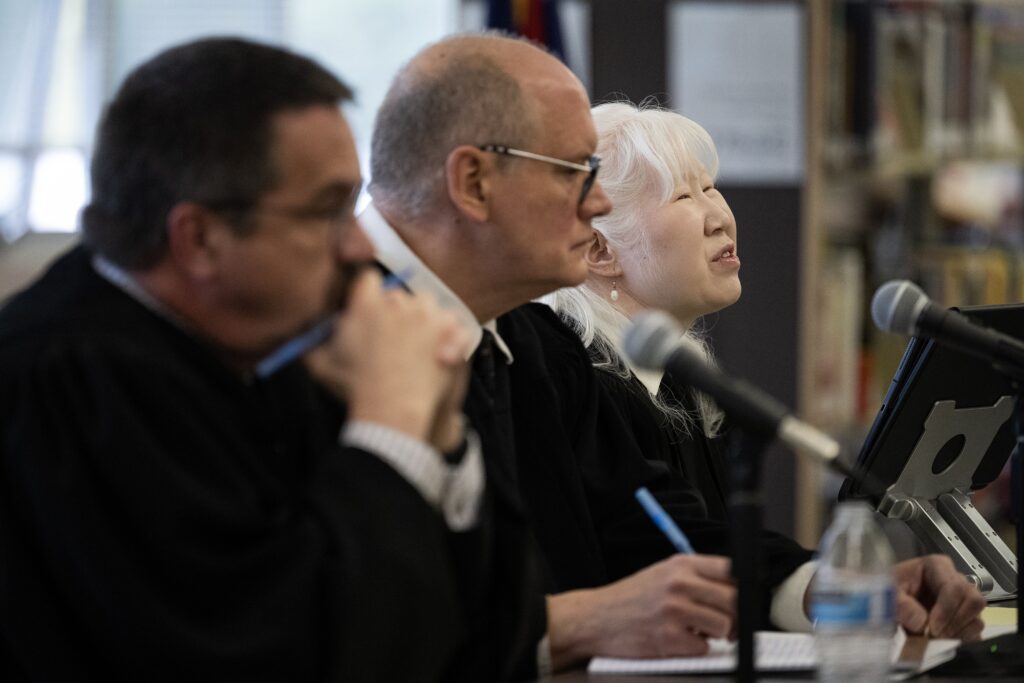
Colorado’s second-highest court ruled on Thursday that criminal defendants may agree to relinquish the credits they earned while incarcerated pending trial, despite a state law guaranteeing that such time “shall be deducted” from a person’s sentence. Kerry Ellis Endsley pleaded...
From pause to progress — a better path on AI policy | OPINION
Colorado Politics
colorado-politics@coloradopolitics.com
Updated 1 day ago
By Brittany Morris Saunders and Loren Furman Last year, following the Special Legislative Session, we wrote in Colorado Politics that delaying Colorado’s AI Act was not a setback. It was an opportunity. We asked state leaders to pause, bring more...