

Imperial Irrigation District, Bureau of Reclamation reach agreement to restore Lake Mead, conserve Colorado River water
An agreement between the Imperial Irrigation District of southern California and the Bureau of Reclamation could mean an additional 10 feet of water in Lake Mead, the nation’s largest reservoir.
According to a statement from the district, the short-term agreement requires the district to conserve around 717,000 acre-feet of water for the Colorado River and build 10-12 feet of elevation at Lake Mead, which is the sole water supplier for California’s Imperial Valley.
In exchange for the water, the agreement also provides federal investment of $250 million in Salton Sea restoration that will benefit an 8,000-acre species conservation habitat.
According to the California Department of Water Resources, the project aims to prevent “further degradation of air quality and habitat” as part of the state’s Salton Sea Management Program. That program focuses on constructing wetlands and other projects “to reduce exposed lakebed and health hazards posed by airborne dust over 50,000 acres of playa.”
The Salton Sea is California’s largest lake, formed from flooding from the Colorado River and located in northern Imperial county, east of San Diego. It is a terminal lake, meaning it has no natural outlets, and over time that’s caused increasingly concentrated salts, with a salinity currently 50% greater than the ocean. The salinity, along with temperature extremes, and related anoxia (oxygen deprivation) and algal productivity, adversely impacts the Sea’s fish and wildlife resources.
For decades, the Sea supported a marine sport fishery among the most productive in the nation, but with salinity doubling over a 20-year period through the early 2000s and an explosive growth of algae, that spelled the end of most of the fishing. The loss of the fish habitat for certain species also puts habitats for birds such as pelicans and double-crested cormorants at risk.
Thursday’s signing was one of five Colorado River water conservation agreements inked by the district, Bureau of Reclamation Commissioner Camille Calimlim Touton and representatives from the Bard Water District, The Metropolitan Water District of Southern California, and Arizona’s Gila River Indian Community.
The 2024-25 agreement represents the largest federal conservation agreement to date, the IID statement said. That brings the total water conserved for the Colorado River to 800,000 acre-feet. One acre-foot is about 326,000 gallons of water, or enough water to supply two families of four for a year. The agreement lasts through 2026, when new operating guidelines for the Colorado River are expected to be put into place.
The agreement with the Gila River Indian Community is long-term and could create system conservation of over 73,000 acre-feet within the next 10 years. It’s part of an initial $700 million investment from the Inflation Reduction Act, announced in June, to support long-term conservation in the system. The Gila agreement will bring in $107 million for three projects, according to the Bureau.
Biden administration invests $700M in Colorado River conservation for Lower Basin states
“The sacrifices made by IID and the Imperial Valley in implementing this agreement set an example for the entire Basin to follow. There is no excuse for inaction anywhere on the river,” said Jamie Asbury, IID General Manager. “This agreement is not only a milestone for the Colorado River system but a testament to the hard work and dedication of the Imperial Valley farming community. Our farmers have made significant sacrifices, adopting sustainable farming practices that should serve as a model for water conservation efforts moving forward.”
Commissioner Touton said “These agreements are key to the stability of the Colorado River system, which provides water to millions of people and sustains agriculture throughout the West.”
As of Friday, Lake Mead is at 1,063.7 feet, or about 165.3 feet below full pool.
Upper basin states, including Colorado, have long maintained that the lower basin states of the Colorado River are using more water than allotted under the 1922 Colorado River compact, due in part to a long-standing refusal to consider evaporation and transpiration. A Bureau study earlier this year said based on data from 2017 to 2021, “approximately 860,000 acre-feet of Colorado River water was lost to evaporation occurring annually from Lake Mead to the border with Mexico. A further 445,000 acre-feet is lost to evaporation and transpiration from natural vegetation and habitats,” the study said.
The lower basin states are allotted 7.5 million acre feet annually, or collectively, 75 million acre-feet over ten years. However, experts such as John Fleck of the University of New Mexico say the lower basin states actually use about 8.4 million acre-feet each year, with the extra accounting for evaporation and transpiration (the process by which plants absorb water and release water vapor).
The lower basin states have since submitted plans to the Bureau for the post-2026 guidelines that would take evaporative losses into account.


U.S. Senate OKs funding bill to avoid government shutdown
Wire Services
wire-services@coloradopolitics.com
Updated 4 minutes ago
Hemp provision became point of contention WASHINGTON • The U.S. Senate in an overnight vote Saturday approved a short-term measure to fund federal agencies into early December and avoid a government shutdown during the middle of campaign season. The late-summer...

The relevance of Watergate more than a half-century later | SONDERMANN
By Eric Sondermann
by-eric-sondermann@coloradopolitics.com
Updated 3 days ago
It was the scandal for which all other scandals are now named. In June 1972, a small group of Cuban burglars with high-level connections broke into the headquarters of the Democratic National Committee. Those headquarters were located in the Watergate...

Wirth downplays Social Security disaster talk | A LOOK BACK
Rachael Wright, Special to Colorado Politics
rachael.wright@coloradopolitics.com
Updated 2 days ago
Forty-five years ago this week: “As time goes on,” said Democratic U.S. Rep. Tim Wirth, of the 2nd Congressional District, “we are finding that the safety net, which was proposed earlier this year, has some very large holes in it,”...

Colorado Politics Calendar Aug. 10-16
Rachael Wright, Special to Colorado Politics
rachael.wright@coloradopolitics.com
Updated 2 days ago
CoPo’s weekly political calendar will help you find political and public-policy events throughout Colorado. It includes candidate and issue campaign events, public policy meetings, court hearings, state and local party conventions, assemblies, debates, rallies, parades, speaking engagements, traveling dignitary appearances,...

Democratic group aims Spanish-language TV ad at Gabe Evans in Colorado’s battleground 8th CD
Ernest Luning
ernest.luning@coloradopolitics.com
Updated 14 hours ago
A national group tied to House Democratic leadership launched a six-figure Spanish-language TV ad in Colorado this week targeting Republican U.S. Rep. Gabe Evans and the GOP’s signature budget legislation. The 30-second spot is part of $15 million in new...

Colorado School of Mines lands major share in Trump’s $100M mining-education plan
Thelma Grimes
thelma.grimes@coloradopolitics.com
Updated 16 hours ago
President Donald Trump on Friday named the Colorado School of Mines among roughly a dozen institutions that will share in a $100 million commitment “to train the next generation of American miners.” Paul Johnson, the university’s president, said he is...
Local party leaders, incoming judge among members of judicial performance commission that violated law
Michael Karlik
michael.karlik@coloradopolitics.com
Updated 16 hours ago
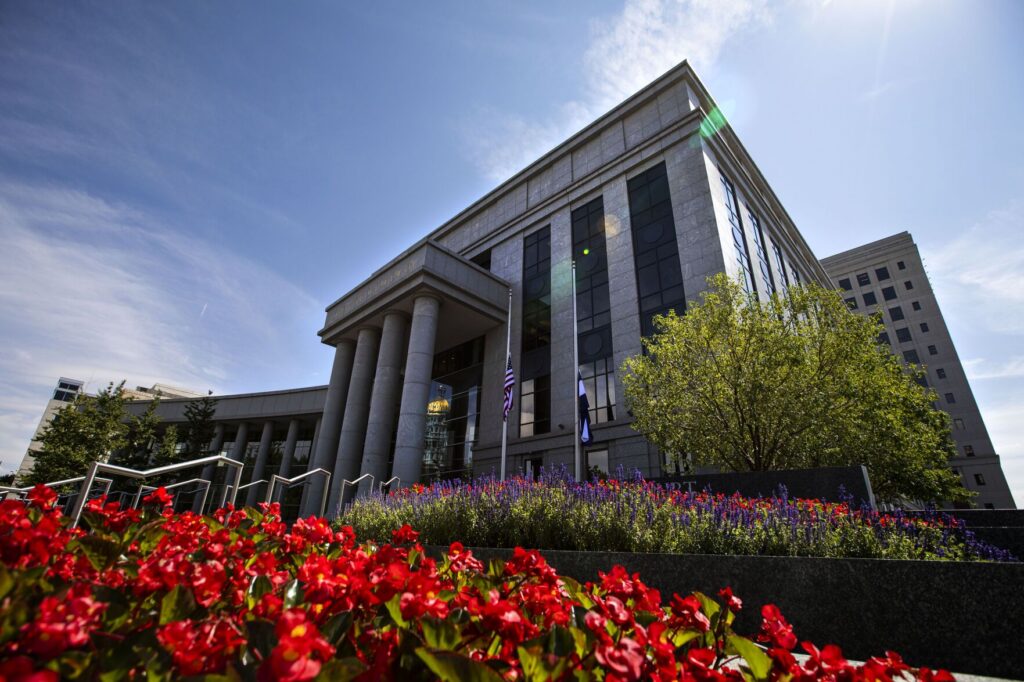
A local Democratic leader and 2024 presidential elector. A legislative aide and leader in the Young Republicans. An incoming county court judge freshly appointed by the governor. They are among the eight members of the northeastern Colorado judicial performance commission...

Judge dismisses lawsuit seeking records from Colorado Democratic group
Marianne Goodland
marianne.goodland@coloradopolitics.com
Updated 16 hours ago
A lawsuit seeking to obtain records from Democratic lawmakers affiliated with a caucus has been thrown out by a Denver District Court judge. On July 17, Judge Ericka Englert dismissed the April lawsuit filed by progressive activist Derrick Blanton, who...
DOJ official decries ‘nonsense’ in Jeffco schools at fundraising gala
Matt Kyle
matt.kyle@denvergazette.com
Updated 25 minutes ago
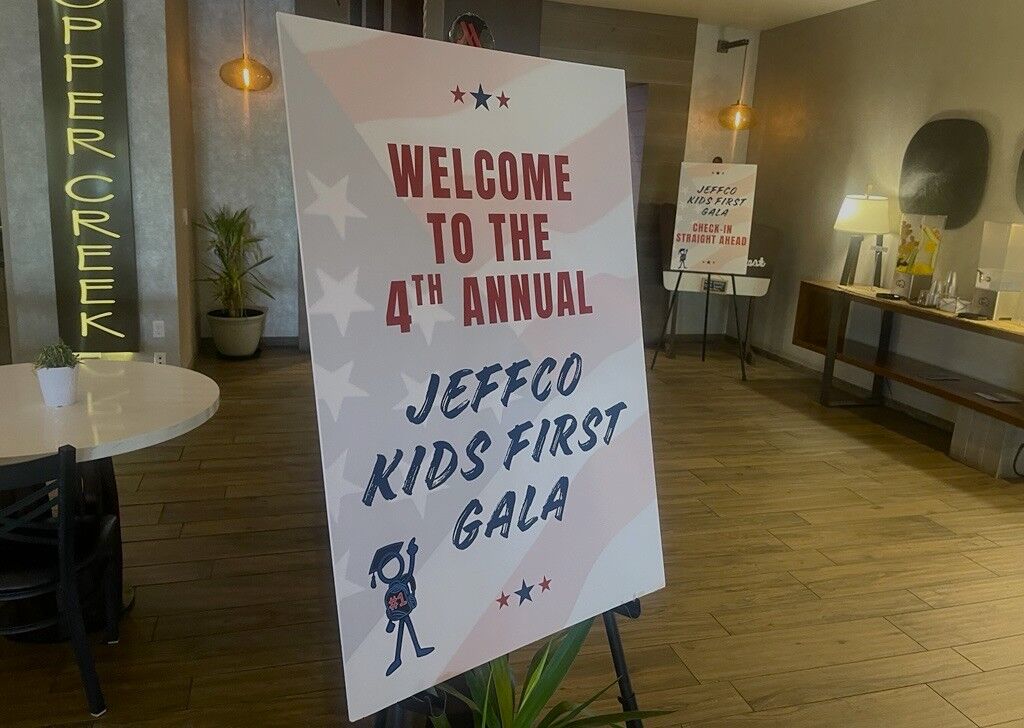
Amid a legal battle between Jeffco Public Schools and the federal government, a Department of Justice official spoke at a fundraising gala and decried “crazy stuff” and “nonsense” in the school district. The gala was for Jeffco Kids First, an...

Colorado Springs mother Deborah Nicholls’ murder conviction overturned
Nick Smith
nick-smith@coloradopolitics.com
Updated 2 days ago
A Colorado Springs mother convicted in 2008 of murdering her three children in a house fire might get a new trial after a judge ruled that prosecutors withheld key evidence that could have impacted the jury’s verdict. Deborah Nicholls, whose...