

Colorado must be careful to not ignore environmental impact data | NOONAN
Paula Noonan

Paula Noonan
Citizens concerned about the cumulative impacts of energy development in Colorado will have to throw their hands up in despair and frustration. The legislature has written four bills, SB19-181, HB23-1294, HB24-1346 and SB24-229, to force the Energy and Carbon Management Commission (ECMC) to come up with a comprehensive program to assess how fossil fuel production affects public health, environmental health and global warming. With each instance, the ECMC has managed to reduce impact analysis to the tiniest scope possible.
The latest draft on “cumulative impacts of oil and gas development” is an appendix to the ECMC’s rules. It offers atomized rule changes that ignore the big picture contained in the words “cumulative impacts of oil and gas development.”
Cumulative impacts should add up and integrate the combination of forces and activities causing existential public health and environmental maladies. These forces include carbon accumulation in an overheating atmosphere, ozone pollution and other air and water pollutants affecting communities near fossil fuel development sites. The ECMC is supposed to pay particular attention to “disproportionately impacted communities,” meaning locations primarily in the northern Front Range and northwest Colorado.
Stay up to speed: Sign up for daily opinion in your inbox Monday-Friday
At the rate the ECMC is progressing, the whole state will soon be a “disproportionately impacted community” based on such plagues as air pollution, wildfires, drought and water waste and contamination all leading to a large, unpredictable economic mess.
There’s a metric citizens can use to measure the ECMC’s insouciance. Over the five-and-a-half years of Gov. Jared Polis’ administration, the ECMC has authorized roughly 7,000 oil and gas drilling permits, turning down maybe five for non-environmental reasons. In that time frame, the state has experienced its largest fire catastrophes, extended drought in many areas and some of its hottest weather ever. Colorado has actually gotten off a little easy in that temperatures in Arizona and Nevada have reached above 110 degrees for weeks during recent summers. It’s impossible to be a productive worker in that kind of heat.
The ECMC is apparently working on the premise the deleterious effects of fossil fuel development are offset by local and national benefits, of which, let’s face it, there are many. At one point in history, those premises could hold. Not now.
A recent study conducted by scientists at Harvard and Northwestern universities found the social cost of throwing carbon emissions into the atmosphere from all sources at somewhere between $690 to $1,779 per ton, probably about $1,065 per ton, many times greater than the $185 per ton offered by the Environmental Protection Agency (EPA) a couple of year ago.
Global cumulative impacts account for the difference in estimates. The study, a working paper published as a National Bureau of Economic Research (NBER), takes as its basis global forces, not local or national fossil fuel consumption and emissions.
To understand fossil fuel impact on a local and global scale, one has to look at particular points to discover local “disproportionate community impacts,” and worldwide variables to understand the large catastrophes resulting from global warming. Apparently, the ECMC doesn’t take in either perspective.
Recently at the local level, ECMC agreed to permit Civitas’ energy drilling on the eastern side of the Denver metro area. Homes and schools along with Aurora Reservoir are proximate to this expansion. Oh well for these property owners and water drinkers. This permitting adds to the 7,000 recently authorized wells spewing carbon and methane into the atmosphere as drilling and production occur.
All in all, Colorado’s fossil fuel industry has produced 2.7 billion barrels of oil and oil equivalents since 2019 when Gov. Polis took office, according to the U.S. Energy Information Administration (EIA). When these barrels are converted into carbon dioxide emitted into the atmosphere, the result is nearly 1.1 billion tons of carbon dioxide into our skies.
When these numbers are turned into social costs, the state is looking at about $1 trillion in costs and damage. Looking at just 2023, Colorado’s oil and gas development was worth about $17 billion, a lot of money. But the global warming cost based on the NBER researchers’ analysis comes in at $230 billion. Add the impact of methane leaks and their much larger atmosphere-heating impact over the short term and cumulative impact costs explode.
Granted, it’s hard to get our heads around these numbers, but ignoring the data is beyond risky. According to the macroeconomists who produced the NBER published analysis, the impacts accumulate and worsen rapidly year by year. By 2100, economic productivity based on a 2 Celsius degree increase in temperature, which we are fast heading toward, may go down by 50%, worse than the Great Depression.
To engage with this notion, consider how a person is affected by an increase in temperature from 90 degrees to 100 degrees or 100 degrees to 110 degrees. Then factor in the impact of the temperatures over weeks at a time rather than days. Then factor in the uneven distribution of catastrophes — massive fires here, massive floods there, droughts here and there, and it’s not hard to picture the chaos and disruption.
Unfortunately, these impacts are not addressed by our carbon managers. They need to be, immediately.
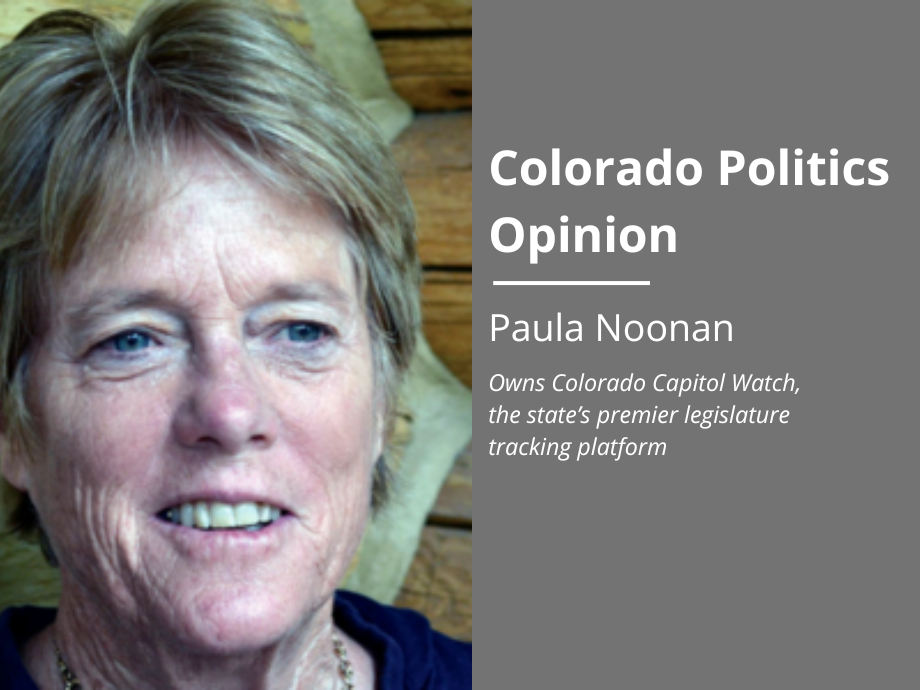
Paula Noonan owns Colorado Capitol Watch, the state’s premier legislature tracking platform.


We have the chance to change Colorado’s cancer outcomes | PODIUM
Colorado Politics
colorado-politics@coloradopolitics.com
Updated 21 hours ago
By Erika Hanson Brown Colorado ranks among the healthiest states in the nation by nearly every measure. Yet even here — amid the Rocky Mountains and our deeply rooted culture of health and activity — cancer casts a long and...

Colorado has a playbook for youth mental health — our next governor must use it | GUEST COLUMN
Colorado Politics
colorado-politics@coloradopolitics.com
Updated 2 days ago
By Karen Ron-Li Liaw From the rural communities on the western slope to the eastern plains, to the major urban regions on the Front Range, Colorado families are navigating an all-too-familiar crisis: kids are struggling, and Colorado’s mental health system...

Pigs engineered to fight alpha-gal syndrome | Rachel Gabel
Rachel Gabel
rachel-gabel@coloradopolitics.com
Updated 2 days ago
If I were an evil genius trying to hamstring animal agriculture, I would create a fly that eats livestock alive and a tick whose bite and spit causes some people to have an allergic reaction to meat. (Insert evil laugh...

Registered voters on the eve of the 2026 primaries | Cronin & Loevy
Tom Cronin Bob Loevy
tom-cronin-bob-loevy@coloradopolitics.com
Updated 4 days ago
The Colorado Secretary of State’s Office has published the latest voter registration figures for the state and its counties as of June. Colorado ranks among the highest states for independent, or unaffiliated, voters. Only Alaska and Massachusetts have more. New Hampshire, New Jersey, Maine and Oregon also rank highly. So here...

A room for Sundance, a reality check for big-government Boulder | Jon Caldara
Jon Caldara
jon-caldara@coloradopolitics.com
Updated 6 days ago
There are few things more satisfying to watch than socialists getting mugged by reality. The Sundance Film Festival is invading my hometown of Boulder early next year. Sundance drew 85,000 attendees last year in Park City, Utah. Boulder’s hotel room...
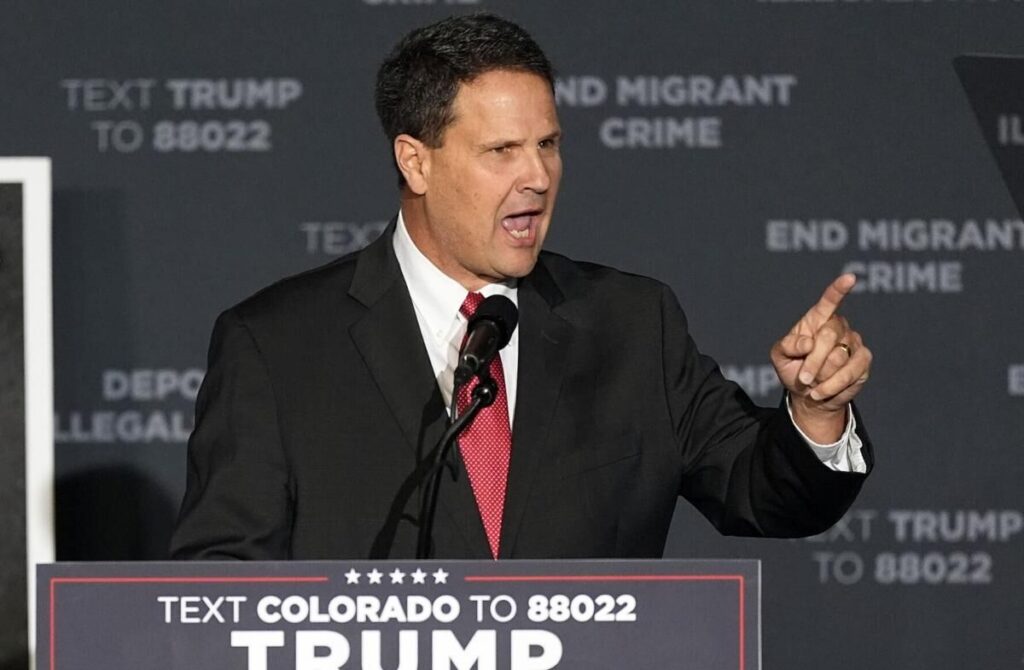
Rep. Jeff Crank thinks Democrats are too focused on Trump, not enough on Colorado Springs | Vince Bzdek
Vince Bzdek
vince.bzdek@gazette.com
Updated 3 days ago
For U.S. Rep. Jeff Crank, who’s unopposed in the Republican primary for the 5th Congressional District but the main target of both candidates in the lively Democratic primary, the big question in the midterms is not who will stand up...
Does character matter anymore? | SONDERMANN
By Eric Sondermann
by-eric-sondermann@coloradopolitics.com
Updated 1 week ago
The last few weeks have been illuminating in the manner of a headlamp pointing the way to some deep, dark, murky netherworld. Graham Platner, a hero to the populist set on the Democratic side, became his party’s Senate nominee in...

Private equity has no place in health care | GUEST COLUMN
Colorado Politics
colorado-politics@coloradopolitics.com
Updated 6 days ago
By Miah Ntepp Of all the financial pressures placed on working people in this country, the skyrocketing costs of health care rank near the top. As families struggle under the cuts to Medicaid made by the Trump administration, they are...
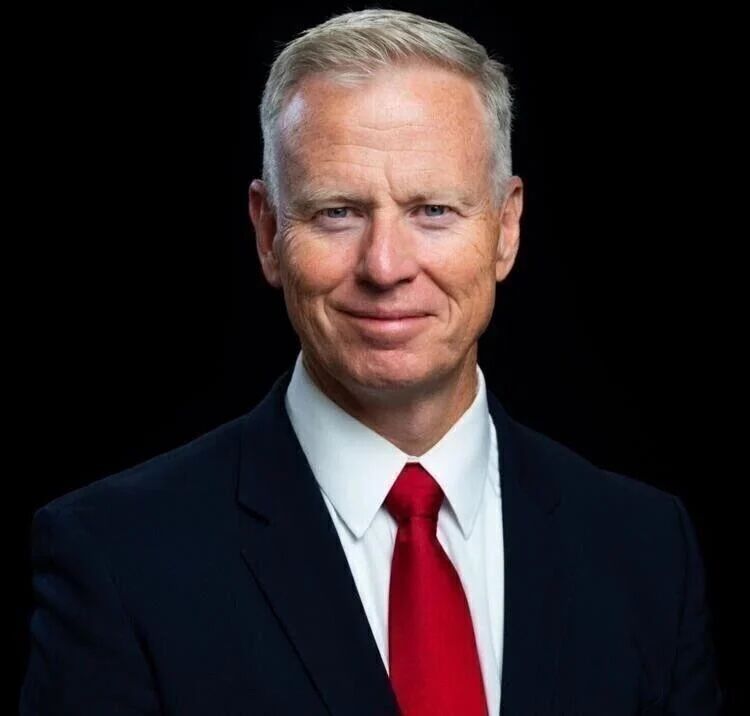
Some pointed questions for the gubernatorial hopefuls | George Brauchler
George Brauchler
george-brauchler@gazette.com
Updated 7 days ago
Earlier this month, the Republican and Democratic candidates for governor participated in a televised interview moderated by well-known, left-leaning legacy media folks. Predictably, the questions asked of the GOP candidates were more aggressive, pointed, biographical and almost entirely disconnected from...
Chaotic funding throws monkey wrench into governor’s-race money madness | Paula Noonan
Paula Noonan
paula-noonan@coloradopolitics.com
Updated 7 days ago
Chaos Monkey, Inc., gave a trifle $20,000 donation to Rocky Mountain Way (RMW), the independent expenditure committee (IEC) supporting U.S. Sen. Michael Bennet for Colorado governor. But why, Coloradans should ask, would a guy who has assigned his contributor name...