

Arizona governor negotiates pause in hauling of uranium ore across Navajo Nation | OUT WEST ROUNDUP
ARIZONA
Uranium ore hauling across Navajo Nation paused
PHOENIX — A uranium producer has agreed to temporarily pause the transport of the mineral through the Navajo Nation after the tribe raised concerns about the possible effects that it could have on the reservation.
Gov. Katie Hobbs said on Aug. 2 that she intervened after talking with Navajo President Buu Nygren, who had come up with a plan to test a tribal law that bans uranium from being transported on its land.
Energy Fuels began hauling the ore three days earlier from its mine south of Grand Canyon National Park to a processing site in Blanding, Utah. When Nygren found out, he ordered tribal police to pull over the trucks and prevent them from traveling further. But by the time police arrived, the semi-trucks had left the reservation.
Energy Fuels said in a statement that it agreed to a temporary pause “to address any reasonable concerns” held by Nygren. It recently started mining at the Pinyon Plain Mine in northern Arizona for the first time since the 1980s, driven by higher uranium prices and global instability.
Uranium mining: A Colorado company pumps out ore, with implications for economy and national security
The Navajo Nation said it wanted to ensure it had time to coordinate emergency preparedness plans and other notifications before hauling began.
The tribe passed a law in 2012 to ban the transportation of uranium on the reservation that extends into Arizona, New Mexico and Utah. But the law exempts state and federal highways that Energy Fuels has designated as hauling routes.
NORTH DAKOTA
Voters to decide whether to abolish property taxes
BISMARCK — North Dakota voters will decide this fall whether to eliminate property taxes in what would be a first for a state and a major change that officials initially estimate would require more than $1 billion every year in replacement revenue.
Secretary of State Michael Howe’s office said on Aug. 2 that backers submitted more than enough signatures to qualify the constitutional initiative for the November general election. Voters rejected a similar measure in 2012.
Property taxes are the base funding for numerous local government services, including sewers, water, roads, jails, deputies, school building construction and teacher salaries — “pretty much the most basic of government,” said North Dakota Association of Counties Executive Director Aaron Birst.
If the measure passes, the state would have to replace over $1.3 billion a year beginning in 2025, according to a preliminary legislative research estimate. The state operates on a two-year budget, and the total two-year estimate of replacement revenue would be over $2.46 billion after deducting the state’s current property tax credit program amounts, according to the estimate. The state expects to collect $5 billion in general tax revenues over those two years.
Property tax relief coming in El Paso County? 2025 forecast offers a mixed bag.
Former Republican state Rep. Rick Becker, the measure’s backer, said local governments would still be in charge of their budgets and for generating revenue they would need above the flat, annual amount the state would replace.
Where the replacement revenue comes from is up to the Legislature, Becker said. He suggested a portion could come from earnings of the state’s $10.7 billion oil tax savings.
Keep It Local, a coalition of groups with ties to agriculture, education, health care, public safety and other areas, opposes the measure, saying residents could face “profound consequences” if property taxes are eliminated.
SOUTH DAKOTA
Court decision threatens abortion rights measure
The South Dakota Supreme Court has reversed a judge’s ruling that dismissed a lawsuit aiming to remove an abortion rights initiative from the November ballot.
The court on Aug. 2 reversed the order of dismissal and sent the case back for further proceedings. The anti-abortion group Life Defense Fund had appealed Judge John Pekas’s ruling that dismissed its lawsuit seeking to invalidate the measure. The group alleged myriad wrongdoing related to petition circulators.
Meanwhile, South Dakota’s top election official has an Aug. 13 deadline to inform county auditors of what measures will be on the November ballot.
In a statement, Life Defense Fund co-chair Leslee Unruh said the group is thrilled the court expedited the case and sent it back to the lower court.
Rick Weiland, the measure’s lead organizers, said the move was an attempt to “impede voters’ right to weigh in on this measure.”
Measure backers submitted about 54,000 petition signatures in May. Secretary of State Monae Johnson’s office later validated the measure for the ballot.
The measure would bar the state from regulating “a pregnant woman’s abortion decision and its effectuation” in the first trimester, but it would allow second-trimester regulations “only in ways that are reasonably related to the physical health of the pregnant woman.”
The constitutional amendment would allow the state to regulate or prohibit abortion in the third trimester, “except when abortion is necessary, in the medical judgment of the woman’s physician, to preserve the life or health of the pregnant woman.”
South Dakota outlaws abortion as a felony crime except in instances to save the life of the mother, under a trigger law that took effect in 2022 after the U.S. Supreme Court overturned the constitutional right to abortion.
NEW MEXICO
Law provides $100M in aid to wildfire, flood victims
SANTA FE — New Mexico Gov. Michelle Lujan Grisham has signed legislation that will provide $100 million in emergency aid to victims of recent wildfires and flooding in Lincoln County.
The spending bill includes $70 million for local governments to use as zero-interest reimbursable loans, $10 million for the Mescalero Apache Tribe losses, $10 million for the New Mexico Energy, Minerals and Natural Resources Department to use for fire, flooding and debris-flow damage, and $10 million for Federal Emergency Management Agency application assistance.
House Bill 1 was the only piece of legislation passed during the recently completed special session.
Gov. Jared Polis announces deployment of National Guard to assist with Alexander Mountain Fire
“The Legislature’s failure to prioritize public safety for New Mexicans during the special session is deeply disappointing,” Lujan Grisham said in a statement. “However, I am relieved that we managed to secure aid for critical recovery efforts in communities damaged by fire and flooding.”
The southern New Mexico village of Ruidoso was ravaged by wildfires in June and then battered off and on by flooding across burn scars.
Authorities said two people died and over 1,400 structures in Ruidoso were burned in one of the wildfires that was caused by lightning.
Salt Lake City celebrates announcement that it will host 2034 Winter Olympics | OUT WEST ROUNDUP
Referendum set in South Dakota on controversial carbon dioxide pipeline law | OUT WEST ROUNDUP
Groups sue to restore endangered species protection for northern Rockies wolves | OUT WEST ROUNDUP

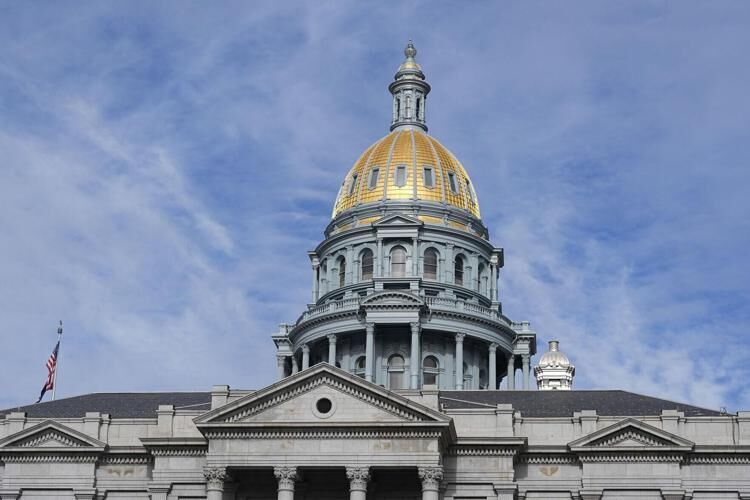
Colorado legislators propose $46.8 billion budget, driven by Medicaid costs
Marianne Goodland
marianne.goodland@coloradopolitics.com
Updated 24 minutes ago
The six-member panel of legislators in charge of crafting the state budget has now turned over its plan to the Colorado legislature, proposing to spend $1.5 billion more for the Medicaid program. The increase is driven by Medicaid costs, which...

Governor signs bill expanding who can petition for weapons restrictions
Marissa Ventrelli
marissa.ventrelli@coloradopolitics.com
Updated 1 hour ago
Gov. Jared Polis on Monday signed a bill into law expanding who can ask a judge to temporarily restrict a person’s access to firearms. Established in 2019, 0Colorado’s extreme risk protection law (ERPO) initially allowed a family member or law...

Colorado justices restore RTD subcontractor’s award, reject ‘drastic’ view of public works law
Michael Karlik
michael.karlik@coloradopolitics.com
Updated 3 hours ago
The Colorado Supreme Court on Monday restored a $5.7 million award to a company that helped build a commuter rail line and, in doing so, rejected a view of state law that would nullify a subcontractor’s entitlement to any compensation...
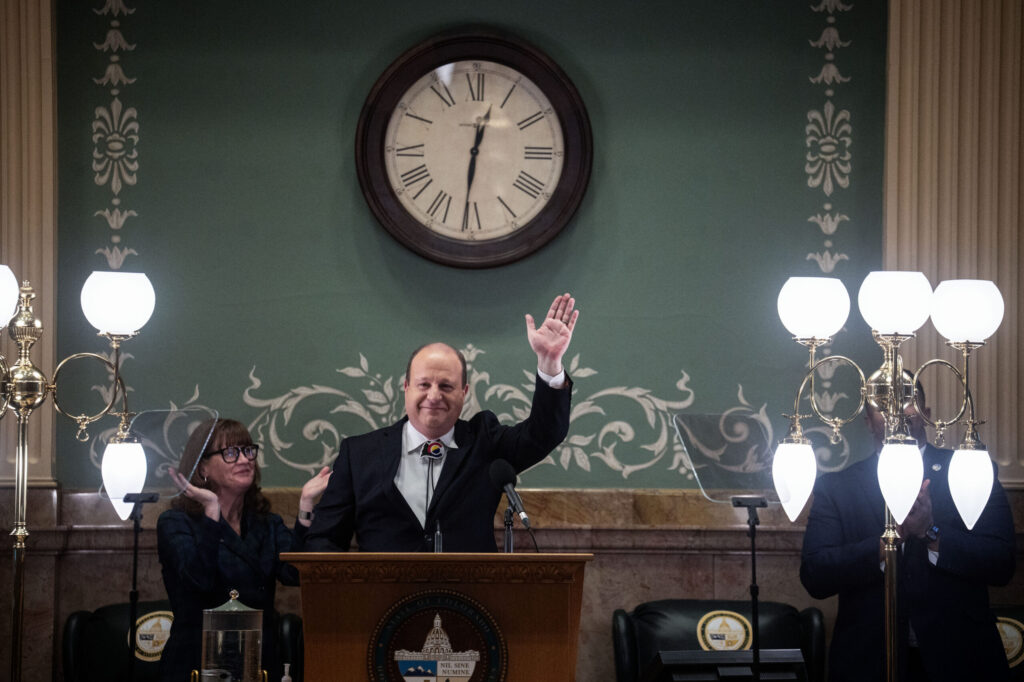
As Colorado passes 6 million residents, housing initiatives take center stage
Marianne Goodland
marianne.goodland@coloradopolitics.com
Updated 2 hours ago
New Census data confirming Colorado’s population has topped six million is fueling renewed debate over Gov. Jared Polis’ housing agenda, as he tied the population increases to home construction. The governor said the counties experiencing the largest increases in new...

Congress urged to open antitrust investigation into Apple and OpenAI over ‘left-leaning bias’
Kaelan Deese, Washington Examiner
kaelan.deese.washington.examiner@gazetteedit.wpenginepowered.com
Updated 4 hours ago
A conservative legal group founded by senior White House adviser Stephen Miller is urging Congress to investigate a partnership between Apple and OpenAI, arguing the companies have effectively locked millions of people into a single, politically biased artificial intelligence system....

Trump threatens jail time over downed US fighter jet ‘leak’
Christian Datoc and Mabinty Quarshie, Washington Examiner
christian.datoc.and.mabinty.quarshie.washington.examiner@gazetteedit.wpenginepowered.com
Updated 4 hours ago
President Donald Trump threatened jail time Monday for the journalist who first reported that an airman was still missing after a fighter jet went down in Iran last week. The high-risk and eventually successful attempt to rescue the weapons officer...

Bill to accelerate police access to online data clears Colorado committee
Marissa Ventrelli
marissa.ventrelli@coloradopolitics.com
Updated 6 minutes ago
A proposal to speed up law enforcement’s access to social media data is advancing in the Colorado Legislature, drawing testimony from the residents of Evergreen, where a school shooting took place, and questions from opponents worried about privacy and constitutional...

Colorado justices confirm lawyers may ‘borrow’ allegations from elsewhere
Michael Karlik
michael.karlik@coloradopolitics.com
Updated 5 hours ago
The Colorado Supreme Court ruled on Monday that plaintiffs’ lawyers can use allegations made elsewhere to bolster their own clients’ claims, so long as the attorney first performs some degree of investigation into the “borrowed” assertions. Under Colorado’s rules for...
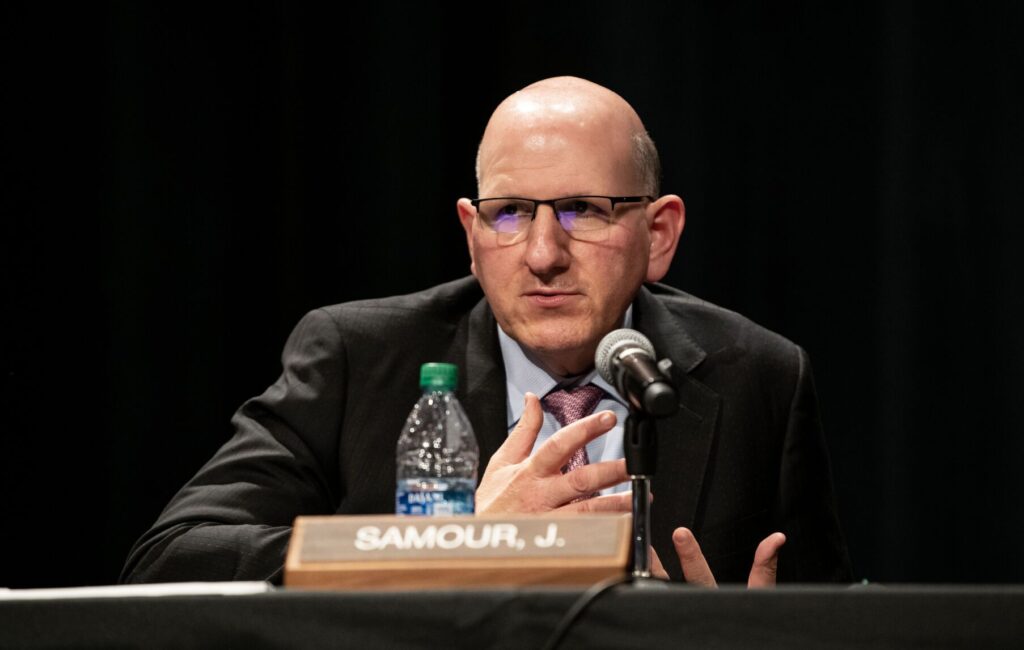
El Paso County defendant’s speedy trial rights violated, Colorado justices find in overturning convictions
Michael Karlik
michael.karlik@coloradopolitics.com
Updated 6 hours ago
The Colorado Supreme Court concluded on Monday that an El Paso County prosecutor made an unjustified decision to file a mid-case appeal, pushing the trial beyond the legal deadline and requiring that the defendant’s convictions be overturned. In Colorado, the...

SCOTUS decides Colorado case, state’s newest justice authors first opinion | COURT CRAWL
Michael Karlik
michael.karlik@coloradopolitics.com
Updated 8 hours ago
Welcome to Court Crawl, Colorado Politics’ roundup of news from the third branch of government. The nation’s highest court decided a First Amendment case out of Colorado, plus the state’s newest justice issued her first opinion since joining the Colorado...