

Federal judge allows competing staffing claims by Kaiser, union to proceed to trial
A federal judge has determined the competing claims that Kaiser Foundation Health Plan of Colorado and its union have lodged against each other will proceed to trial, with the parties both alleging a breach of staffing responsibilities in their collective bargaining agreement.
In a pair of orders, U.S. District Court Senior Judge William J. Martínez determined there was a factual dispute over whether the union failed to hold up its obligation to assist Kaiser in ensuring adequate staffing levels. He similarly believed the question of Kaiser’s own deviation from the agreement needed to be fleshed out at trial, although Martínez made clear the union had the tougher job of proving Kaiser breached its contract within the period covered by the statute of limitations.
“To that point, the Court anticipates that the Union has a steep hill to climb at trial,” he cautioned.
The lawsuit centers on a section of the parties’ collective bargaining agreements for mental health and “multi-professional” health care workers. The union and Kaiser committed to “recognize their mutual and ethical responsibility to provide sufficient staffing to meet quality standards of patient care.” At the same time, “Kaiser shall provide sufficient staffing” for safe coverage.
United Food and Commercial Workers International Union, Local 7 filed suit against Kaiser in 2021, alleging it breached the agreement by making decisions that failed to address persistent staffing shortages or worsened the situation. The union claimed the problems were affecting patient care.
Kaiser turned around and filed its own breach of contract claim against the union, arguing the collective bargaining agreement obligated the union to take responsibility for staffing, as well. In Kaiser’s telling, the union fought staffing reforms or encouraged employees to “call out well.”

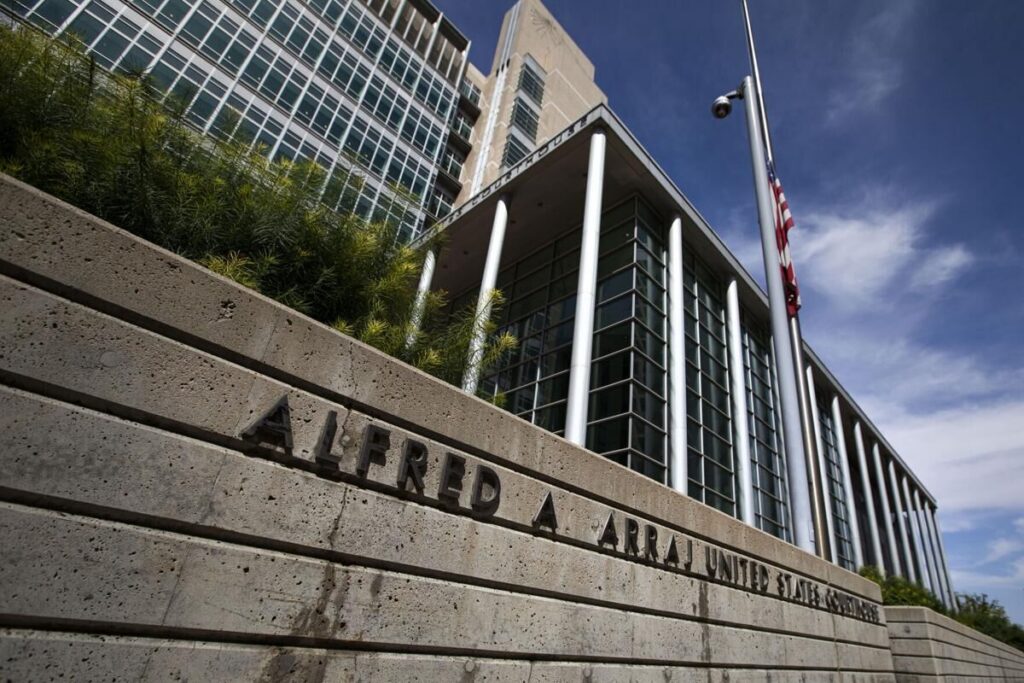
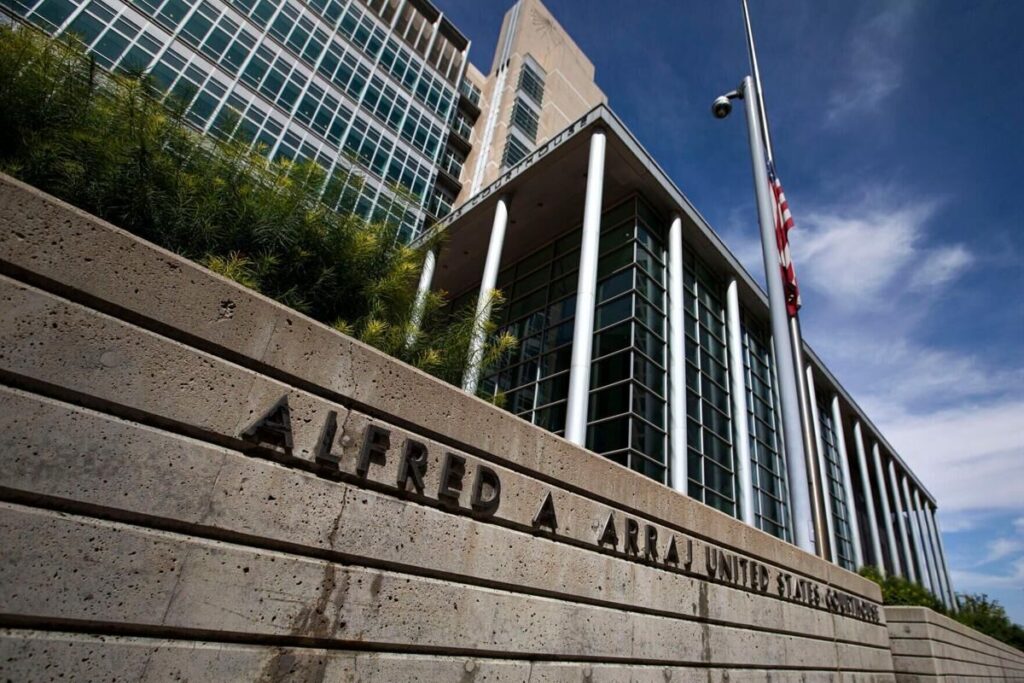
FILE PHOTO: The Alfred A. Arraj U.S. Courthouse in downtown Denver.
Colorado Politics file photo

FILE PHOTO: The Alfred A. Arraj U.S. Courthouse in downtown Denver.
Both sides moved for summary judgment, asking Martínez to end the case in their favor without a trial. First, Martínez turned to Kaiser’s claim against Local 7 and the union’s rejoinder that there was “no way” to read the collective bargaining agreement as placing an obligation on the union for adequate staffing.
“Quite the contrary, Kaiser largely makes staffing decisions without, and in spite of, input from Local 7,” wrote the union’s attorneys.
Martínez deemed the question a “very close call,” but concluded the collective bargaining agreement clearly referred to the parties’ “mutual and ethical responsibility to provide sufficient staffing.”
“In other words, Kaiser alone can hire, fire, or lay off staff,” he wrote in a June 17 order. But the agreement “obligates the Union to work in tandem with Kaiser to provide adequate staffing to meet the demands of providing appropriate patient care.”
It was not clear whether the union’s opposition to Kaiser’s staffing decisions constituted a breach of the agreement, so Martínez green-lit the claim for trial.
Second, Martínez evaluated whether Local 7’s claim could proceed against Kaiser, and specifically whether a breach occurred after October 2018 — the three-year statute of limitations prior to the lawsuit’s filing. Kaiser argued the union’s own allegations and the evidence suggested staffing concerns were an issue well before 2018.
“The Union does not dispute that certain staffing issues were first identified and/or first raised long ago,” Local 7’s lawyers acknowledged, while maintaining that some specific problems arose repeatedly or for the first time within the statute of limitations.
In a July 9 order, Martínez once again agreed a trial was necessary to sort out “when certain staffing inadequacies arose, evolved, and/or ended, and when Local 7 learned of certain staffing issues.”
A nine-day bench trial is scheduled to begin in January. The union is asking Martínez to order Kaiser to increase staffing to comply with the contract, while Kaiser is asking the union to provide sufficient staffing.
The case is United Food and Commercial Workers International Union Local No. 7 v. Kaiser Foundation Health Plan of Colorado et al.

Federal judge green-lights civil trial against ex-Fort Collins DUI officer
Michael Karlik
michael.karlik@coloradopolitics.com
Updated 2 days ago
A federal judge ruled on Thursday that Fort Collins’ former “DUI officer” will face a civil trial for allegedly investigating a motorist for impaired driving without any reasonable suspicion to do so. In recent years, several people arrested by Officer...

Colorado Supreme Court suspends Mesa County judge pending misconduct investigation
Michael Karlik
michael.karlik@coloradopolitics.com
Updated 18 hours ago
The Colorado Supreme Court suspended Mesa County Court Judge Michael J. Grattan on Thursday amid a misconduct investigation. The court’s Sept. 10 order gave Grattan 21 days to explain why his paid suspension should not continue through the end of...
Colorado Supreme Court changes course, dismisses case about special district bonds
Michael Karlik
michael.karlik@coloradopolitics.com
Updated 18 hours ago
The Colorado Supreme Court declined on Friday to decide a dispute between a large-scale Commerce City development and the various districts financing it, after initially showing interest in the ongoing case. Colorado has roughly 2,800 special districts, which are local...
10th Circuit tosses GEO Group’s pretrial appeal in human trafficking lawsuit
Michael Karlik
michael.karlik@coloradopolitics.com
Updated 2 days ago
The Denver-based federal appeals court dismissed an attempt by The GEO Group on Wednesday to appeal a trial judge’s non-existent decision two months before the company is scheduled to face a civil trial over alleged trafficking violations at the Aurora...
Denver sues Trump to block armed ICE agents from polling sites
Deborah Grigsby
deborah.smith@denvergazette.com
Updated 3 days ago
The city of Denver, along with several groups, sued the Trump administration Thursday, seeking to block U.S. Immigration and Customs Enforcement officers who are armed from polling sites during the upcoming midterm elections. In fact, there are no official orders...

Federal judge takes no action against ICE in Colorado after hearing about mistakes, not ‘blatant violations’
Michael Karlik
michael.karlik@coloradopolitics.com
Updated 16 hours ago
A federal judge declined to take action against U.S. Immigration and Customs Enforcement on Thursday after hearing that a pattern of alleged lawbreaking amounted to mistakes and a misunderstanding of the government’s position in court. For nearly a year, Colorado’s...
Colorado doctors, dentists challenge state law on gender‑transition services in new federal lawsuit
Marissa Ventrelli
marissa.ventrelli@coloradopolitics.com
Updated 13 hours ago
A group of Christian doctors and dentists has filed a federal lawsuit challenging a Colorado law they say requires them to provide gender‑transition services that conflict with their religious and ethical beliefs. The lawsuit, filed by the Christian Medical and...
Federal judge directs plaintiff to revise complaint alleging Denver officers’ constitutional violations
Michael Karlik
michael.karlik@coloradopolitics.com
Updated 16 hours ago
A federal judge directed a plaintiff to revise his allegations on Wednesday to more precisely state what two Denver officers and the city itself allegedly did to violate his constitutional rights by facilitating his prosecution for murder until prosecutors dropped...

Lawsuit challenges Douglas County commissioners’ ballot actions
Nicholas Fogleman
nicholas.fogleman@denvergazette.com
Updated 3 days ago
A new lawsuit against Douglas County commissioners seeks to invalidate the board’s intervention in efforts to expand the commission from three members to five and restore the original ballot language approved by more than 20,000 petition signers. The suit marks...
Federal judge explores new sanctions against ex-Colorado judicial discipline director
Michael Karlik
michael.karlik@coloradopolitics.com
Updated 18 hours ago
A federal judge on Wednesday directed Colorado’s former judicial discipline director, for the third time this year, to explain why she should not sanction him for his latest conduct in his litigation against the state’s judiciary. Christopher S.P. Gregory, who served...