

Adam Frisch again laps fellow Colorado congressional candidates in fundraising period | TRAIL MIX
The $1 million Democrat Adam Frisch raised in contributions during the just-completed, roughly two-month pre-primary fundraising period didn’t measure up to the towering totals the Colorado congressional candidate regularly posted last year, when he was running to unseat Republican Lauren Boebert, but it still buried the competition.
Reports were due on June 13 for fundraising by Colorado’s federal candidates in the nearly nine-week stretch from April 1 to June 5 in what’s known as the pre-primary filing. It amounts to a brief departure from the Federal Election Commission’s standard quarterly filing requirements, under the theory that the public should get a look under candidates’ campaign finances hoods before the state’s primary election on June 25, rather than having to wait until the mid-July deadline for reports covering the three months ending on June 30.
Candidates had to submit the filings whether they’re embroiled in primaries or not, and they’ll have to file another report in a month to reflect what they raise and spend for the remainder of the second quarter.
It’s a chance to gauge who’s hot, who’s not, and where things stand less than two weeks before ballots are counted and the fall general election line-up is set.
As he has in each of the quarters since the beginning of last year, Frisch hauled in more — and spent more — than any of the other candidates running for Colorado’s eight U.S. House seats, though his fundraising has fallen off considerably since Boebert decamped to former Republican U.S. Rep. Ken Buck’s district in January, rather than face a rematch with the Democrat who nearly defeated her two years ago.
For the pre-primary period, Frisch raised just over $1 million, spent an eye-popping $3 million and had $3.7 million left to spend. Frisch’s fundraising for the abbreviated period was roughly similar to the pace Frisch set in the year’s first quarter, when he raised $1.4 million over three full months. Still, it’s a far cry from the nearly $3 million in contributions Frisch logged in the final quarter of 2023, the last quarter when he could use his rivalry with Boebert to motivate donors.
Frisch isn’t facing a primary this month — his lone Democratic rival withdrew from the race in January — so can spend his contributions positioning himself for the four-month sprint to the general election, when he’ll take on the winner of a six-way Republican primary in the 3rd Congressional District.
The pre-primary period’s second-best fundraiser, first-term Democratic U.S. Rep. Yadira Caraveo, is in a similar situation, with an unimpeded glide path to the nomination in what’s expected to be the state’s most competitive seat, the nationally targeted 8th Congressional District, where she’ll face the winner of a two-way GOP primary in the fall. Caraveo raised $562,932, spent $229,549 and had over $2.3 million banked for the general election.
Ike McCorkle, one of three Democrats running for a full term in Buck’s old seat, the solidly Republican 4th Congressional District, turned in the third-highest totals, raising $464,633. He spent nearly as much, $459,042, and reported $163,213 in the bank.
Boebert, the favorite to win a six-way primary in the same district, finished behind McCorkle with $333,791 in contributions. After spending $632,243, she headed into the primary home stretch with $681,347 on hand.
Before her near miss — Boebert won a second term last cycle in the Republican-leaning 3rd CD by fewer than 600 votes — the headline-grabbing Republican had been the leading fundraiser among Colorado’s congressional candidates, but that all changed in early 2023, when Frisch launched his second run for the Western Slope-based seat.
In quarter after quarter last year, Frisch bulldozed state fundraising records, each time raising multiples of what Boebert brought in — first raking in nearly twice what Boebert raised, then three times her total, then four times, then five times. Along the way, Frisch routinely reported more in quarterly contributions than all of the state’s other congressional candidates combined, including Boebert. At one point, he also distinguished himself as the leading fundraiser nationwide among congressional challengers.
At the end of last year, however, Boebert announced she was moving across the Continental Divide to run in the 4th CD. That was after Buck’s announcement last fall that he wasn’t seeking reelection but before his abrupt resignation in March, which created a vacancy. That triggered this month’s special election, which is being held at the same time and on the same ballots as the primary.
The candidates running in the special election to fill the six months remaining in Buck’s term also reported their fundraising numbers this week, in what will be the only report they file before one of them is elected on June 25 to represent the Eastern part of the state from the 4th CD.
The special election’s Democratic nominee, Trisha Calvarese, led the pack with $98,813 in contributions. She spent $77,957 and had $53,247 in the bank, with $51,352 in debts. Republican nominee Greg Lopez, a two-time gubernatorial candidate, raised $40,189, spent $26,172 and had $14,016 left to spend in the election’s final few weeks. The two minor-party candidates, Libertarian Hannah Goodman and Approval Voting Party nominee Frank Attwood, didn’t file reports by the June 13 deadline, indicating they raised or spent less than the $5,000 threshold.
Calvarese is also running in the Democrats’ three-way primary for a full term in the 4th CD. In addition to McCorkle, that primary includes John Padora, who reported raising $55,738, spending $62,111 and had $42,344 cash on hand, plus $2,001 in debt.
The Republicans running against Boebert in the primary in the same district trailed the incumbent from another district. Deborah Flora raised $70,213, spent $19,784 and reported $117,536 on hand. State Rep. Mike Lynch, R-Wellington, raised $54,057, spent $53,384 and reported $3,709 in the bank. Former state Sen. Jerry Sonnenberg, a Logan County commissioner, raised $43,695, spent $176,103 and finished with $91,994 at the end of the period.
House Minority Whip Richard Holtorf, R-Akron, raised $10,150, spent $37,085 and reported $71,482 on hand, including a $48,003 loan from the candidate. Peter Yu raised just $225, spent $3,161 and had $272,720 left unspent, including the $250,000 he loaned his campaign.
The six Republicans vying for the chance to face Frisch in the 3rd CD were led by State Board of Education member Stephen Varela, who raised $193,529, spent $116,213 and reported $100,340 left to spend. Jeff Hurd raised $151,224 for the period, spent $459,269 and had $219,692 in the bank. Russ Andrews raised $55,901, spent $163,943 and finished with $19,747 on hand, with $262,000 in loans to his own campaign.
Lew Webb reported raising $41,050, spent $127,763 and was left with $43,622, along with a $150,000 candidate loan. Former state Rep. Ron Hanks, R-Cañon City, raised $13,780, spent just $4,043 and had $15,472 on the books, including $6,892 in loans. Curtis McCrackin raised $9,808, spent $14,493 and finished the period with $4,684 in the bank.
In the battleground 8th CD’s Republican primary, state Rep. Gabe Evans, R-Fort Lupton, led with $121,366 in contributions, spent $235,737 and had $225,068 left over, along with $3,360 in debt. Former state Rep. Janak Joshi, R-Colorado Springs, raised $13,733 for the period, spent $97,700 and had $82,743 on hand, including $168,221 in candidate loans and other debt.
The reliably Republican 5th Congressional District, covering El Paso County, features primaries in both major parties for the seat held by retiring Republican Doug Lamborn.
In the GOP primary, Jeff Crank raised $208,480, spent $299,598 and had $136,635 in the bank, along with a $21,500 loan from the candidate. His opponent, Dave Williams, the Colorado Republican Party chairman, raised $65,131, spent $55,875 and reported $148,390 on hand. Williams also reported $158,244 in debt.
On the Democratic side, River Gassen raised $20,814, spent $20,788 and had $6,028 left to spend. Joe Reagan raised $18,581, spent $14,252 and finished the period with $14,252, including a $5,100 loan.
In the state’s four other, Democratic-held U.S. House districts, the incumbents each topped six figures for the quarter, adding to already hefty bank balances. None of their Republican challengers came close.
U.S. Rep. Diana DeGette, seeking her 15th term, raised $159,945 in the Denver-based 1st Congressional District, spent $91,206 and had $381,442 on hand. Republican Valdamar Archuleta raised $1,917, spent $1,447 and finished the period with $2,485.
In the 2nd Congressional District, three-term U.S. Rep. Joe Neguse raised $201,448 for the period, spent $109,464 and reported more than $1.8 million in the bank. GOP challenger Marshall Dawson raised $1,905, spent $324 and had $13,019 on hand.
Three-term U.S. Rep. Jason Crow, who represents the Aurora-based 6th Congressional District, brought in $209,945, spent $210,731 and had just over $1.6 million on hand. Republican John Fabbriatore raised $23,341, spent $20,904 and reported a balance of $27,356.
Seeking her second term, U.S. Rep. Brittany Pettersen raised $213,965 in the Jefferson County-based 7th Congressional District, spent $105,283 and had $889,112 in the bank. Her Republican challenger, Sergei Matveyuk, raised $9,109, spent $3,126 and reported $6,174 on hand.
Colorado Libertarians won't 'spoil' race if pledge-signer Janak Joshi wins GOP primary | TRAIL MIX
Nancy Pallozzi's bid to rebuild Jeffco GOP hits snag amid uproar over Kristi Noem book | TRAIL MIX
Colorado House Republicans Lauren Boebert, Doug Lamborn diverge on support for Johnson | TRAIL MIX


Group submits signatures for proposed Colorado graduated income tax
Marianne Goodland
marianne.goodland@coloradopolitics.com
Updated 1 hour ago
The measure, which eliminates Colorado’s flat tax, is expected to raise $2 billion in new revenue The proposal to amend the Colorado constitution to change the state’s flat rate into a graduated income tax came in under the wire Monday,...
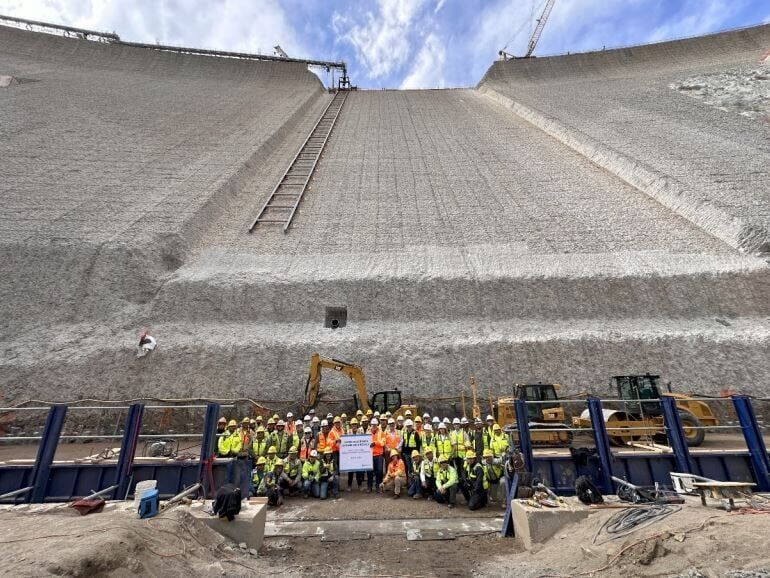
10th Circuit weighs Gross Reservoir expansion, judge’s ‘punishment’ of Denver Water
Michael Karlik
michael.karlik@coloradopolitics.com
Updated 3 hours ago
Members of the Denver-based federal appeals court considered on Friday whether they could intervene in ongoing infrastructure project to enlarge a Boulder County dam after a trial judge deemed the underlying permit unlawful nearly two years ago. Denver Water has...
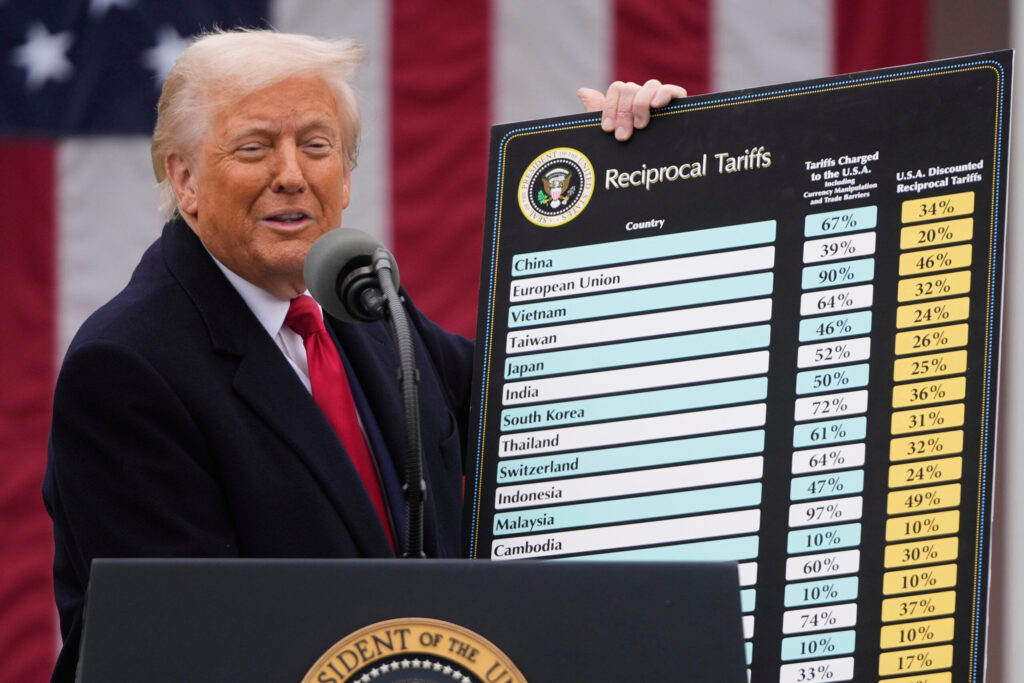
Colorado joins 2 lawsuits against Trump administration over TANF, tariffs authority
Marissa Ventrelli
marissa.ventrelli@coloradopolitics.com
Updated 2 hours ago
Colorado has joined a coalition of states in filing two new lawsuits against the Trump administration. The first lawsuit alleges the Trump administration’s move to expand the U.S. health department’s oversight of the Temporary Assistance for Needy Families would illegally...
Democratic group maps out path to Colorado House and Senate supermajorities
Marissa Ventrelli
marissa.ventrelli@coloradopolitics.com
Updated 3 hours ago
A national organization that works to elect Democrats to state legislatures has its sights on Colorado, unveiling a road map to establish a supermajority in both the House and Senate. Democrats have held a majority in the House since 2013...
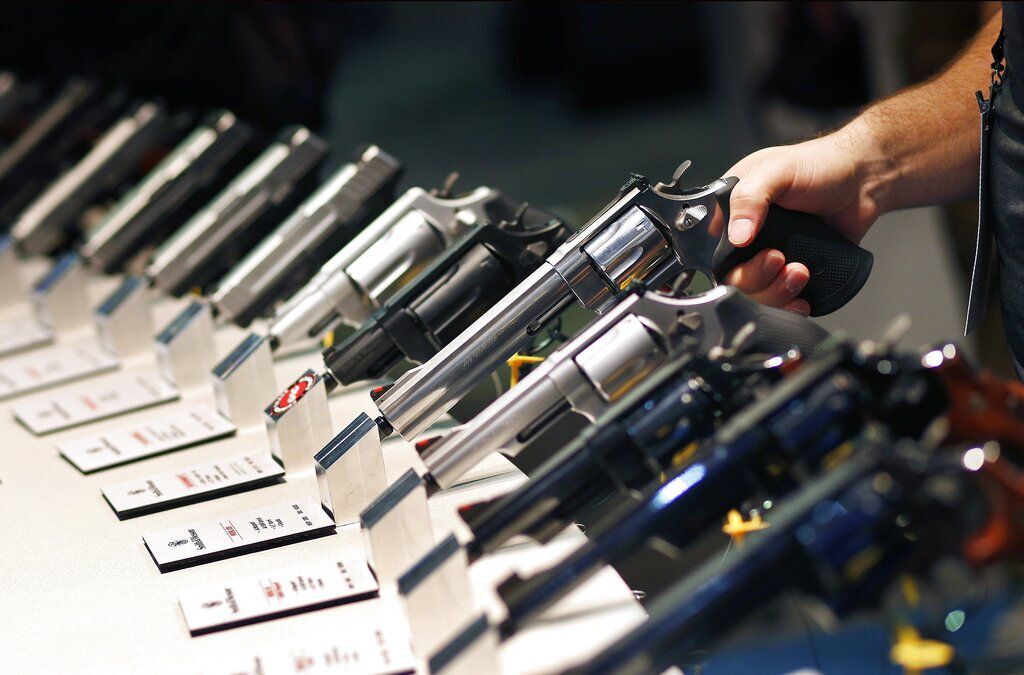
10th Circuit upholds federal prohibition on juvenile handgun possession
Michael Karlik
michael.karlik@coloradopolitics.com
Updated 4 hours ago
The Denver-based federal appeals court concluded on Monday that Congress acted within its constitutional powers to make it a crime for juveniles to possess handguns in most instances. The decision from the U.S. Court of Appeals for the 10th Circuit...

Board of Peace demands Netanyahu cease Gaza airstrikes
The Washington Examiner
the-washington-examiner@coloradopolitics.com
Updated 6 hours ago
The Board of Peace is struggling to get Israel on board with its peace plan for Gaza as Israeli militia airstrikes continue to bombard the war-torn strip despite expectations for a ceasefire and de-escalation. Gaza City was hit repeatedly by...

Trump wants to give Iran ‘last chance’ to strike a deal before ‘decapitation’
Christian Datoc
christian-datoc@coloradopolitics.com
Updated 6 hours ago
President Donald Trump said this week’s talks with Iran will be the “last chance” for the Middle Eastern country to avoid a severe escalation in the war. Trump called off plans to strike Iran’s energy infrastructure over the weekend after...
Fauci told Congress higher COVID-19 fatality rate than he calculated in diary: ‘More like 0.2-0.3%’
Mia Cathell
mia-cathell@coloradopolitics.com
Updated 6 hours ago
Dr. Anthony Fauci privately calculated that COVID-19 had a significantly lower fatality rate than what he told Congress a month later at the outset of the pandemic. On March 11, 2020, the day that the World Health Organization declared COVID-19...

Senate advances judicial nominee, Montezuma County judge agrees to discipline | COURT CRAWL
Michael Karlik
michael.karlik@coloradopolitics.com
Updated 8 hours ago
Welcome to Court Crawl, Colorado Politics’ roundup of news from the third branch of government. A U.S. Senate committee advanced a judicial nominee from Colorado, plus a Montezuma County judge agreed to receive discipline for his misconduct that stops short...

Iran’s leaders show a united front over the war but are divided over what the goal is
The Associated Press
the-associated-press@coloradopolitics.com
Updated 10 hours ago
CAIRO (AP) — With escalating attacks against U.S. bases and its allies over the past week, Iran’s leaders are showing considerable unity over their war strategy: hanging tough, determined to show Iran can endure more than America and its allies...