

Colorado Republicans have a history of winning packed primaries with slim pluralities | TRAIL MIX
Voters in two of Colorado’s eight congressional districts will be faced with historically long primary ballots in June, when half a dozen candidates in each primary will vie for the Republican nominations to replace Lauren Boebert and Ken Buck.
With six GOP candidates to choose from in the open 3rd Congressional District and the same number of Republicans on the ballot in the open 4th Congressional District, the primaries are as crowded as any of the state’s top-ticket primaries have ever been.
It’s only happened three times that even as many as five potential nominees have appeared on the ballot in Colorado’s congressional or statewide primaries — with just a single instance in each of the last three decades.
Before this year, the undisputed record-holder was the 1998 Republican primary in the then-deep red 6th Congressional District, when Tom Tancredo emerged from a six-candidate field with about one-quarter of the vote.
Eight years later, Doug Lamborn claimed victory in 2006 in a five-way primary in the traditionally Republican 5th Congressional District , again with about one-quarter of the vote.
In 2016, Darryl Glenn secured the Republican U.S. Senate nomination by defeating four other hopefuls — although in this case, he got a little over one-third of the vote.
Notice a pattern?
While both major parties have witnessed a few four-way primaries over the years — the 2018 gubernatorial primaries, for instance, featured four Democrats and four Republicans — the handful of more crowded primaries have all been on the Republican side. Moreover, in every case the GOP nominee made it to the general election after winning a narrow plurality, with a solid majority of primary voters checking the box for someone else.
The similarities don’t end there.
Tancredo, Lamborn and Glenn each corralled the largest share of voters in their respective packed primaries by solidifying the Republican base, an achievement made evident by powerhouse endorsements that jolted their campaigns across the finish line.
In each case, veteran Republican strategist Dick Wadhams says, the winning candidates had a solid floor and definite ceiling, but none of their primary opponents could consolidate enough support in the crowded fields to take the lead.
The two U.S. House candidates — Tancredo and Lamborn — were running in districts represented by long-serving Republican incumbents who weren’t seeking reelection. In the 6th CD, then a safe Republican seat that covered most of Jefferson and Arapahoe counties, Dan Schaefer was retiring after eight terms, and in the 5th CD, a strong GOP district centered around El Paso County, Joel Hefley was leaving Congress after 10 terms.
Tancredo, a former state representative and federal official, was heading up the Independence Institute when he launched his campaign. He finished about 1,700 votes ahead of state Sen. Bill Schroeder, with state Rep. Martha Kreutz, former ambassador Sam Zakehm and state Rep. Barry Arrington trailing, in that order.
Wadhams recalls that it was an endorsement from his former boss, retired two-term U.S. Sen. Bill Armstrong, that made the difference for Tancredo. Even though he’d left office eight years earlier, Armstrong still commanded tremendous respect among the party faithful, so when he took to the airwaves with a radio ad that sang Tancredo’s praises, it was enough to push the contender over the top.
That November, Tancredo easily defeated Democrat Henry Strauss and went on to win four more terms before running for president in 2008 and later mounting three unsuccessful bids for governor.
Lamborn, a state senator, beat second-place finisher Jeff Crank, a former top Hefley staffer, by fewer than 900 votes in a primary field that also included retired Air Force Maj. Gen. Bentley Rayburn, Colorado Springs Mayor Lionel Rivera, former El Paso County Sheriff John Anderson and former El Paso County Commissioner Duncan Bremer, who finished in that order.
Conservative anti-tax organization Club for Growth’s support might have been enough to swing it for Lamborn, though his campaign also battered his rivals with a series of blistering attacks that left the local GOP divided for years. Although Lamborn easily won eight more terms, he only rarely made it without first facing a primary, including a rematch in 2008 against Crank and Rayburn.
Lamborn announced his retirement at the beginning of this year. Crank is taking another shot at the seat, this time facing state GOP Chairman Dave Williams in the primary.
An El Paso County commissioner, Glenn rocketed from relative obscurity to the 2016 Senate nomination, beating former CSU Athletic Director Jack Graham by about 40,000 votes, with banker Robert Blaha, former state Rep. Jon Keyser and former Aurora City Councilman Ryan Frazier dividing up the rest of the votes.
Wadhams, who managed Graham’s campaign, says he’s convinced his candidate would’ve won a two-man race but acknowledges that Glenn’s backing by the GOP’s tea party wing — including endorsements from Texas Sen. Ted Cruz, former Alaska Gov. Sarah Palin and the Senate Conservatives Fund — was enough to provide his margin of victory.
“What Jack had to do was make sure the other guys didn’t get any real traction, but the fact is, it was going to be really hard to beat Glenn in that kind of a primary,” Wadhams said.
Glenn went on to lose in November to Democrat Michael Bennet by a closer-than-expected 6 points. In 2018, Glenn unsuccessfully challenged Lamborn in a primary, and last year he came in fourth in the first round of voting for Colorado Springs mayor.
It’s an open question whether this year’s pair of six-way Republican congressional primaries will take the same shape, since Colorado’s electoral landscape has evolved in what could prove to be crucial ways in the intervening years — chiefly, the ability since 2018 of unaffiliated voters to cast ballots in either major party’s primary.
Adopted by voters in a 2016 ballot initiative, the state’s semi-open primary system was sold, in part, as a way to nudge Democratic and Republican nominees closer to the middle by giving voters who don’t belong to either party a say in who makes it to November.
The unusual dynamics of extremely crowded primaries, however, could test that hypothesis, since it’s possible that a candidate who attracts fiercely partisan adherents can still prevail if his or her rivals divvy up the rest of the vote.
In the Republican-leaning 3rd CD — covering most of the Western Slope, Pueblo County and the San Luis Valley — the GOP candidates hoping to fill Boebert’s open seat run the ideological gamut, from the more centrist style of conservative Republican that once defined the party in Colorado to hard-core followers of Donald Trump and the former president’s MAGA agenda.
In the former category falls first-time candidate Jeff Hurd, a Grand Junction attorney and the primary’s fundraising leader, whose endorsers include former Gov. Bill Owens and former U.S. Sen. Hank Brown, while the latter style of Republican is most clearly epitomized by former state Rep. Ron Hanks, who lost a two-way U.S. Senate primary in 2022 even as he carried the vote in the 3rd CD.
In between sits State Board of Education member Stephen Varela, a former Democrat from Pueblo who led a PAC that attacked Boebert during her first run in the district but has since embraced the Trumpier wing of his party. Others who qualified for the ballot include political newcomers Russ Andrews, Curtis McCrackin and Lew Webb, who are all mostly self-funding their campaigns.
The seat is open because Boebert announced at the end of last year that she was moving hundreds of miles into the more favorable 4th CD — covering Douglas County, Loveland and the Eastern Plains, it’s the state’s most heavily Republican district — after barely winning a second term two years ago in the closest congressional race in the country.
The winner of the June 25 primary will face the Democrat who nearly unseated Boebert last time, former Aspen City Council member Adam Frisch, whose record-setting fundraising last year helped persuade Boebert to seek greener pastures.
Boebert made her move a couple of months after Buck announced he wouldn’t seek a sixth term, which spurred a gold rush for that rarest of opportunities in a state where Republicans have suffered historic losses in recent years: a safe Republican seat.
Nearly a dozen Republicans threw their hats in the ring, and six made it to the primary ballot. Along with Boebert, they are state Reps. Richard Holtorf of Akron and Mike Lynch of Wellington, Logan County Commissioner and former state Sen. Jerry Sonnenberg, former talk radio host and parents’ rights advocate Deborah Flora and business consultant Peter Yu, the 2018 GOP nominee in the neighboring 2nd Congressional District. Both Flora and Yu made unsuccessful runs for the U.S. Senate in 2022, but neither qualified for the primary.
Just weeks before mail ballots go out at the beginning of June, Boebert can claim several advantages, including Trump’s endorsement and a massive fundraising lead over her primary rivals.
“She’s got that 30-35% floor she won’t go below, and she’s also got that ceiling she won’t go above,” Wadhams said. “It’s going to be very difficult to beat her in the primary.”
He added that while a couple of her opponents could make it a race, that outcome is unlikely with five of them splitting the vote.
The GOP nominee will face the winner of a Democratic primary between Trisha Calvarese, John Padora and Ike McCorkle, who is making his third run for the seat.
Throng of petitioning Republicans could yield historic primary ballot to replace Ken Buck | TRAIL MIX
Buck's early exit tees up rare Colorado special election, recalls race to replace Swigert | TRAIL MIX
Biden, Trump roll toward nominations as Colorado voters return Super Tuesday ballots | TRAIL MIX


10th Circuit tosses Pueblo County sheriff defendants’ appeal in fatal shooting lawsuit
Michael Karlik
michael.karlik@coloradopolitics.com
Updated 36 minutes ago
The Denver-based federal appeals court rejected an attempt from Pueblo County sheriff’s employees on Wednesday to rely on their own version of the facts to escape liability for fatally shooting an unarmed man outside a middle school. A trial judge...

Backers of Colorado road-funding initiative reject withdrawal deadline, negotiations with lawmakers continue
Marissa Ventrelli
marissa.ventrelli@coloradopolitics.com
Updated 42 minutes ago
The standoff over Colorado’s road‑funding initiative will continue after supporters declined state lawmakers’ request to withdraw the measure, while both sides signaled they are still willing to pursue a broader agreement ahead of the fall deadline. Initiative No. 175, backed...
Colorado justices uphold strict interpretation of consumer protection law against debt collector
Michael Karlik
michael.karlik@coloradopolitics.com
Updated 3 hours ago
The Colorado Supreme Court concluded last month that a debt collector failed to comply with state law by suing a woman for an unpaid credit card debt without documentation that it owned her account. Portfolio Recovery Associates, LLC filed a...

Colorado lupus patients can’t afford ‘most favored nation’ drug pricing | PODIUM
Colorado Politics
colorado-politics@coloradopolitics.com
Updated 16 hours ago
By Kristy Kibler When you live with lupus, you learn quickly waiting is not an option. Lupus is unpredictable: flares can escalate overnight, organs can be damaged quickly, and access to the right treatment at the right time can determine...

The Latest: US military launches strikes against Iran in response to downing of American helicopter
The Associated Press
the-associated-press@coloradopolitics.com
Updated 22 hours ago
The U.S. military announced that it has begun strikes against Iran following the crash of a U.S. Army Apache helicopter off the coast of Oman. In a statement posted to social media, U.S. Central Command said the strikes would be...
Colorado governor signs bill requiring pollution controls, cost reporting for extended coal operations
Scott Weiser
scott.weiser@gazette.com
Updated 23 hours ago
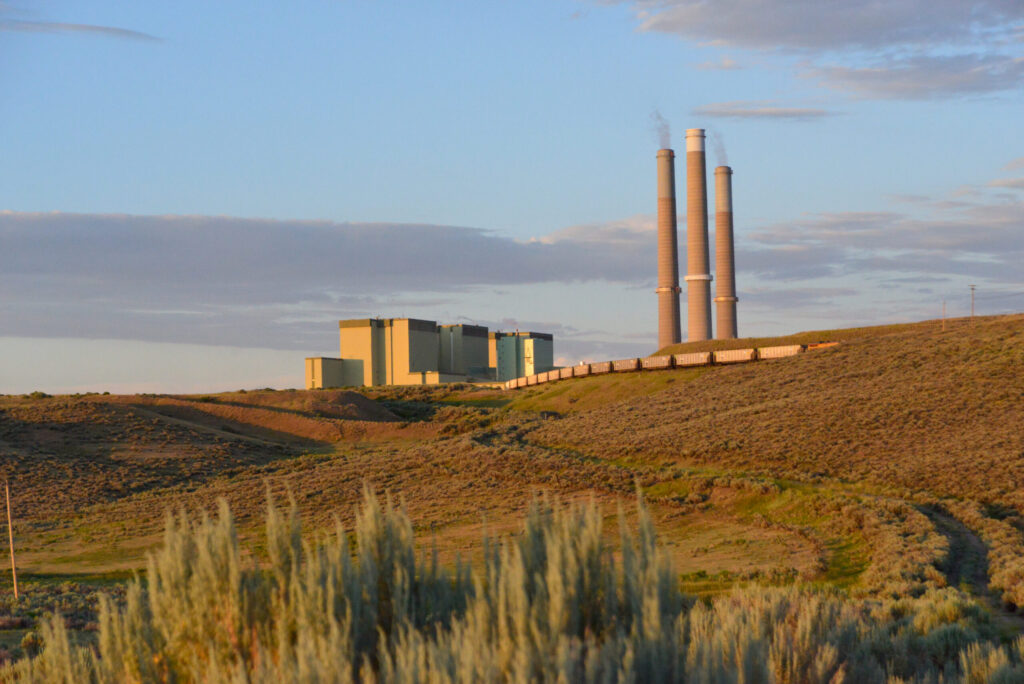
Gov. Jared Polis signed into law a bill in reaction to orders from the U.S. Department of Energy to keep older coal units online. The federal government’s instructions applied to Craig Unit 1 in Colorado, one of five coal units...

Mental Health Colorado names 2026 legislators of the year
Marissa Ventrelli
marissa.ventrelli@coloradopolitics.com
Updated 21 hours ago
Six state lawmakers have received recognition from the advocacy organization Mental Health Colorado for their work during the 2026 legislative session. “Mental Health Colorado’s work to pass laws, change practices, and build a movement depends on courageous advocates and bipartisan...
Colorado justices say judges can nearly eliminate parenting time without it being a ‘restriction’
Michael Karlik
michael.karlik@coloradopolitics.com
Updated 21 hours ago
The Colorado Supreme Court concluded last month that judges can reduce the number of days a parent spends with their child post-divorce to just above zero without it rising to the level of a “restriction” that requires more rigorous justification...
Geo Group sues Colorado over new immigration detention facility inspection law
Marissa Ventrelli
marissa.ventrelli@coloradopolitics.com
Updated 21 hours ago
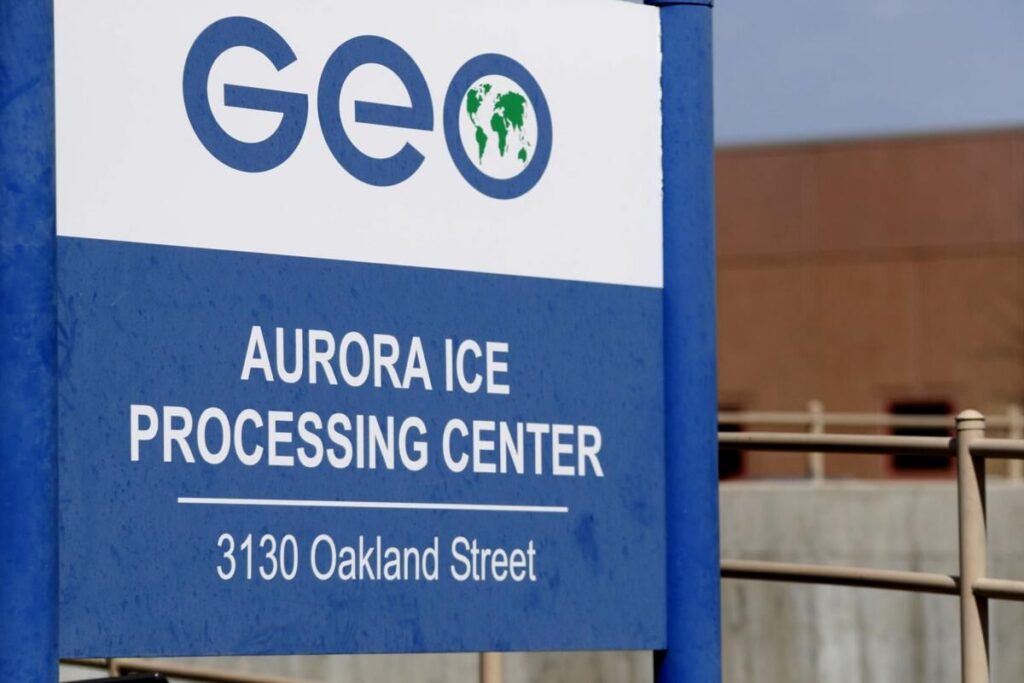
The private prison company that operates the U.S. Immigration and Customs Enforcement center in Aurora has filed a lawsuit against Colorado to stop the enforcement of a new law requiring additional health and safety inspections of immigration detention facilities. The...

Trump will get another pick on influential federal appeals court
Jack Birle, Washington Examiner
jack.birle.washington.examiner@gazetteedit.wpenginepowered.com
Updated 24 hours ago
President Donald Trump will have the opportunity to nominate another judge to a key federal appeals court after one of the judges announced this week that he would take senior status. Circuit Judge Kurt Engelhardt, who was nominated to the...