

For second year in a row, Colorado lawmakers kill proposal permitting ‘safe injection sites’
For the second year in a row, a Senate committee at the state Capitol ended the legislative path to allow facilities where people can use illegal drugs under the supervision of medical professionals.
The Senate Health & Human Services Committee on Thursday night voted, 5-4, to postpone House Bill 1028 indefinitely.
The same committee also killed the 2023 version of the bill, albeit on a 6-3 vote. Two of the three Democrats who voted against it in 2023 were the deciding votes to end the 2024 bill, as well: Sens. Kyle Mullica of Northglenn and Joann Ginal of Fort Collins.
Under HB 1028, drug users would have been allowed to bring and use “controlled substances” under the supervision of medical providers at these facilities, which would also provide “life-saving care,” including access to drug paraphernalia, kits to test for fentanyl, counseling and treatment referrals.
It would have allowed municipalities to authorize these sites within their boundaries.
So far, only the city of Denver has shown an interest in setting what supporters called an “overdose prevention center.” Denver needs approval from the state to start such a facility.
The overdose crisis has spiraled out of control in Colorado in the last few years. Last year alone, Denver witnessed 582 overdose deaths, 129 more than the previous year, according to Denver’s medical examiner data. It’s the worst since the city began keeping overdose records a century ago.
The bill was intensely debated in its committee hearings and on the House floor earlier this month.
During Thursday’s hearing, Ginal said the bill, which is only one page, lacks the guardrails needed to protect communities. That was a significant part of the amendments offered by House Republicans when the bill was debated earlier this month.
Several amendments sought to ensure those facilities would no be near schools or daycare centers. Democrats, however, rejected amendments seeking a geographic barrier of 2,000 feet or 2,500 feet or allowing residents who live near those centers to have a vote on the issue.
Sen. Kevin Priola, D-Henderson, noted lawmakers come across people who are overdosing in the state Capitol neighborhood. These centers can be found in 17 countries and at 150 sites and they claimed no one has ever died of an overdose in one of these facilities, he noted. He also acknowledged the 2024 version is unchanged from the 2023 bill.
Municipalities and law enforcement opposed the measure, which was backed by several entities in the healthcare arena. The Colorado Freedom Fund, which hired lobbyists to work on it, also supported it. It was sponsored in the House by its executive director, Rep. Elisabeth Epps of Denver.
Dana Steiner, the policy counsel for the Freedom Fund who favored the measure, told the committee the problem of toxic and deadly drug supply cannot be fixed by arresting or treating people out of it. She said new solutions are needed and asked lawmakers to “support infrastructure that meets people where they’re at.”
Chief Adam Turk of the Greeley Police Department, who opposed it, countered: “These controversial facilities are designed to provide a safe environment for individual individuals to consume illegal drugs under supervision.” Turk said there is mounting empirical evidence that these centers pose significant dangers to communities and will not make Greeley — or any community — in Colorado safer.
He also spoke about the boundary issue and the lack of treatment. In some cases, he said, medical and other interventions for methamphetamine and cocaine overdoses require much more medical treatment, which may require federal or state licenses these centers won’t have.
Ginal, in her comments before the vote, pointed to the lack of guardrails in the bill, as well as a lack of data.
“It should work,” she said, but the bill is too ambiguous and is a “minimal amount of legislating” on the issue. She said the bill ought to be comprehensive, rather than a one-page proposal.
“I’m a scientist,” she said. “I look at numbers and data, and I haven’t seen data.”
She pointed out that Oregon recently repealed a measure that decriminalized drug use. In 2020, Oregon passed a measure that handed those found possessing hard drugs a $100 citation or a health assessment. The law became effective in 2021, under which drug offenses may only be punished by a fine — no jail, supervision or any other criminal penalty.
Behind the measure is the belief that a “health-based approach to addiction and overdose is more effective, humane and cost-effective than criminal punishments.” State data later showed that few opted for health assessments and paid the fine. More consequently, overdose deaths skyrocketed in Oregon — from 472 in 2020 to 738 in 2021, the year decriminalization law took effect.
By 2022, the state saw 956 overdose deaths. Last year, Oregon recorded 628 deaths by June, which means 1,250 people are on track to die from overdoses, assuming the trend holds. Oregon’s lawmakers — some of whom recounted having family members who have died of overdoses, have since decided to recriminalize drugs.
“This is what I struggle with,” Ginal said, noting Oregon’s addiction and overdose rates following that state’s decriminalization experiment. “I didn’t hear any data to confirm that this would work.”

Colorado measure redirects sales tax revenue from sporting goods, equipment to conservation programs
The Denver Gazette
the-denver-gazette@coloradopolitics.com
Updated 11 hours ago
A proposal to redirect sales tax revenues from sporting goods and equipment toward wildfire and conservation programs will appear on the ballot this November, election officials in Colorado confirmed. The measure, if approved by voters, would reduce the amount available...
Firefighters’ deaths prompt debate over 100% suppression wildfire strategy
Rachael Wright, Special to Colorado Politics
rachael.wright@coloradopolitics.com
Updated 8 hours ago
On July 22, 2026, the chief of the U.S. Forest Service testified before a House Agriculture subcommittee that his agency pursues a “full suppression” strategy to contain all fires while they are still small, rather than allowing them to burn...
A summertime all-you-can-eat political buffet | SONDERMANN
Eric Sondermann
eric-sondermann@coloradopolitics.com
Updated 5 days ago
We find ourselves in the doldrums of August with a complete dearth of political news. Yeah, right. These days, that train never stops moving. It is a 24/7/365 express amplified by 24/7/365 media. Let me respond with one of my...
GOP worker pleads guilty to campaign funds embezzlement scheme | A LOOK BACK
Rachael Wright, Special to Colorado Politics
rachael.wright@coloradopolitics.com
Updated 5 days ago
Forty-five Years ago this week: After pleading not guilty to a Denver federal grand jury indictment of five counts of bank embezzlement, Eve Lynn Lincoln, a Colorado Republican Party employee, decided to plead guilty to one count: using bank credit...
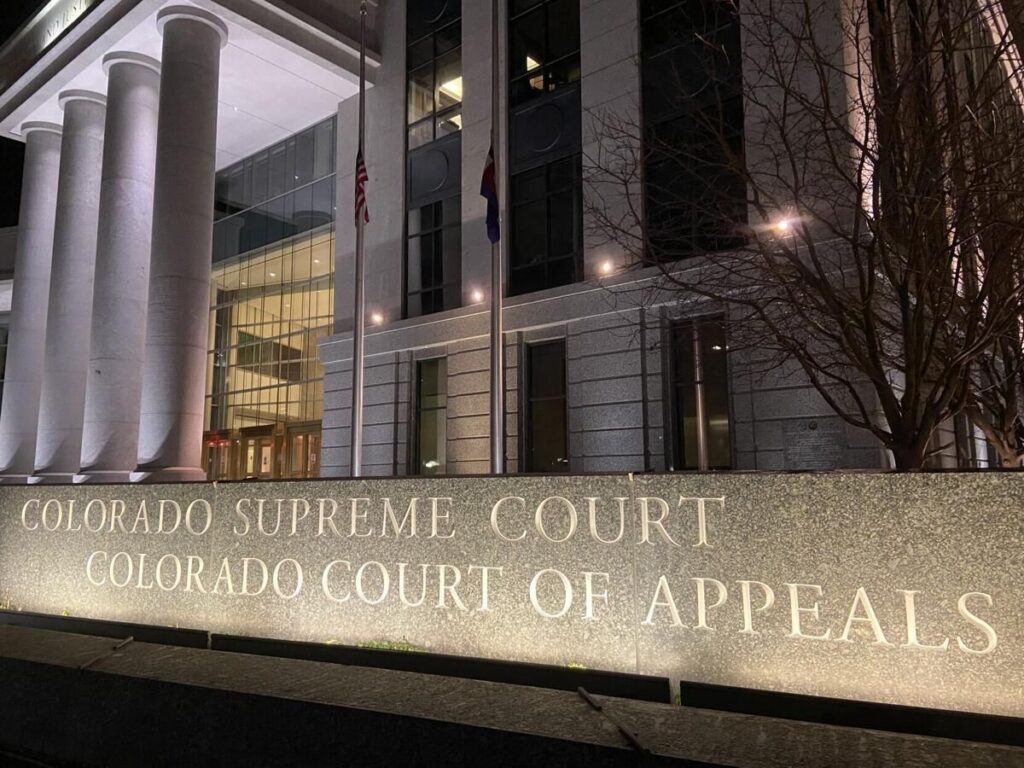
Schoolchildren’s presence at child sex-related trial did not harm Arapahoe County defendant, appeals court says
Michael Karlik
michael.karlik@coloradopolitics.com
Updated 1 day ago
Colorado’s second-highest court decided on Thursday that the presence of a group of schoolchildren on the first day of a child sexual exploitation trial did not violate an Arapahoe County defendant’s constitutional right to a fair trial. Prosecutors charged Jerry...
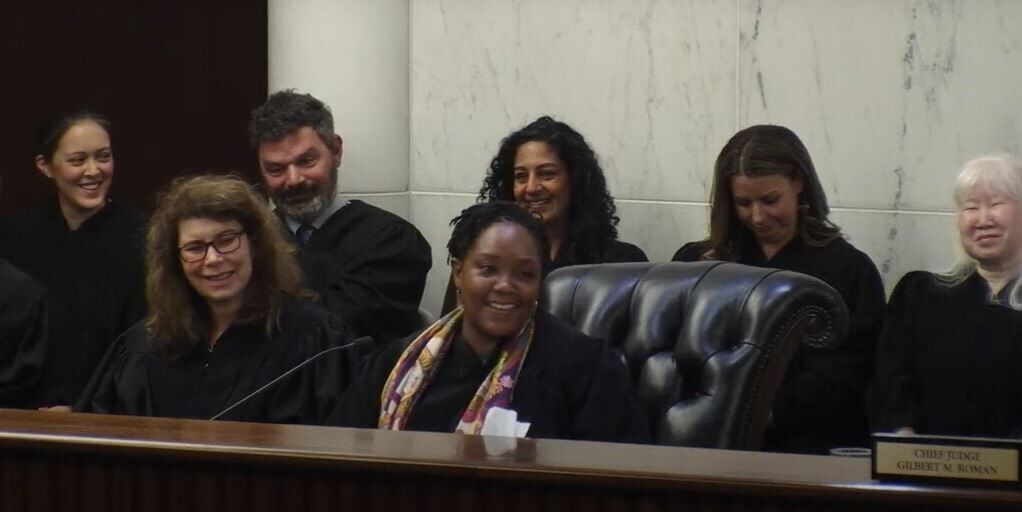
Appeals court cites week-old Colorado law to reinstate child neglect case at child, father’s request
Michael Karlik
michael.karlik@coloradopolitics.com
Updated 1 day ago
Colorado’s second-highest court invoked a new state law for the first time on Thursday and reinstated a child neglect case that both the child and her father wished to reopen. House Bill 1227 took effect on Aug. 12, reversing a...
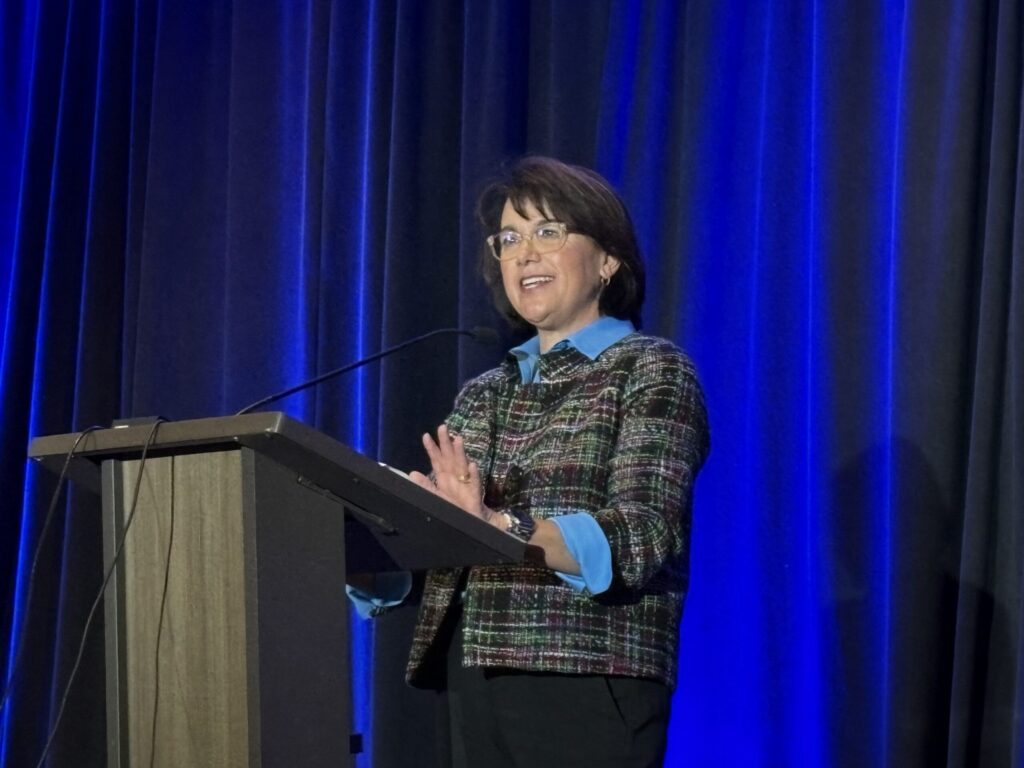
Democratic candidate in Colorado’s 4th CD urges long-term water planning
Marianne Goodland
marianne.goodland@coloradopolitics.com
Updated 1 day ago
The Democrat hoping to become the next representative of Colorado’s 4th Congressional District on Thursday made her case on the final day of Colorado Water Congress in Steamboat Springs. Eileen Laubacher, who spent 34 years in the U.S. Navy and...

Castle Rock council declines to censure member accused of misconduct
Nicholas Fogleman
nicholas.fogleman@denvergazette.com
Updated 2 days ago
A Castle Rock Town Council meeting Tuesday became consumed by allegations that a councilmember attempted to trade a town policy decision for the withdrawal of a recall effort against him. The allegations against Councilmember Mark Davis surfaced during public comment...
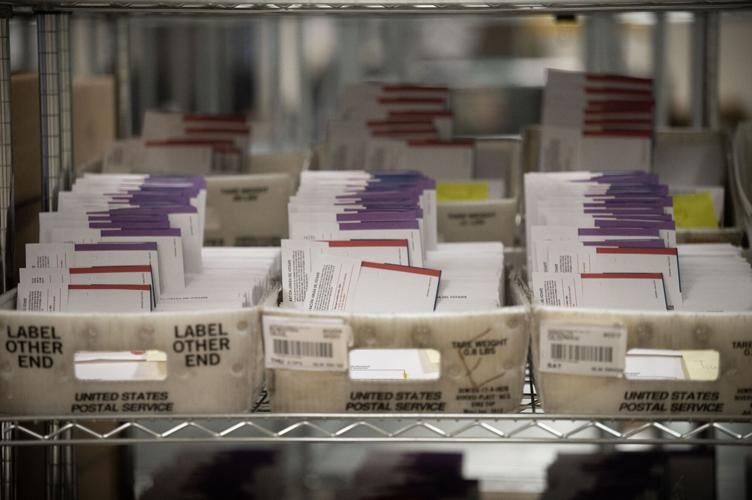
Proposal to cap Colorado income tax rate qualifies for November ballot
Thelma Grimes
thelma.grimes@coloradopolitics.com
Updated 15 hours ago
Election officials on Thursday confirmed that the proposal to cap the state’s income tax at the current rate submitted signatures and voters will consequently decide its fate this November. The fight over tax rates is part of the tug and...

Trump reaches deal to halt tariffs on beef for 90 days in bid to lower prices
Rena Rowe
rena.rowe@washingtonexaminer.com
Updated 3 days ago
President Donald Trump announced Friday that he had reached a deal to temporarily ease tariffs on beef imports, saying the move would help lower prices for families as the United States faces a severe cattle shortage and record-high beef prices....