

Property tax growth cap fails to fund constitutionally mandated programs | POINT


One of the most consequential policies in Colorado over the past few years has been property taxes. Prior to its repeal in 2020, the Gallagher Amendment was approved by voters in 1982 as homeowners were concerned about residential property tax rate increases. The pressure resulted in a study committee that produced a policy that divided the states residential and commercial property tax rates. This amendment mandated 45% of the state’s property taxes be collected from residential properties and the remaining 55% from commercial properties with the commercial rate capped at 29%.
One of the ballot initiatives being proposed to combat the cost increases in property taxes this year would limit property tax revenue to 4% growth above the prior year’s statewide property tax revenue. It would also require voter approval if the property tax revenue was expected to be increased by more than 4%. Sounds easy enough, right?
Stay up to speed: Sign-up for daily opinion in your inbox Monday-Friday
What is not being discussed in this proposal is how the 4% growth cap is not going to collect nearly enough revenue to fund the constitutionally mandated programs and needs our property taxes support. A recently published fiscal note prepared by the General Assembly’s office of Legislative Council, estimated the cost of this proposal at $3 billion for 2025. Yes, you read that correctly. A 4% cap on property taxes will leave the state in a position to back-fill local governments the outstanding balance of $3 billion. It is estimated the back-fill will then increase to $3.1 billion in 2026 and increase by larger amounts in future years. Picture the chart in your head right now; the anticipated growth rate is the steep line while the allowable growth rate percentage is the flat line.
We need to cap property taxes | COUNTERPOINT
Though the proponents of this measure make the argument Colorado’s budget is $40 billion and that they should “find” the money to fill the gap, there is much to know about the state budget to understand the absurdity of that directive. First, Colorado’s General Fund is only $15.1 billion and is really the only area the legislature has discretion over. Next, Colorado has a constitutional mandate to balance the budget every year. This means our state cannot carry a deficit. Colorado voters also have passed an amendment to mandate K-12 education funding. Colorado also has a constitutional mandate to fund Senior Homestead and Veteran Property Tax Exemptions, the Old Age Pension, as well as setting aside constitutionally mandated TABOR refunds, and more. And all of this comes before funding those on Medicaid, transportation and infrastructure, public safety and a multitude of services Coloradans depend on.
This is a consequential and difficult topic with a lot of nuance and choices to be made. But we assign a catchy phrase to it and legislate to simplify the problem — and the solution. Policies that sound easy and catchy but in practice will bankrupt programs Coloradans rely on while simultaneously destroying quality of life need more than a bumper sticker solution.
Lisa LaBriola is a principal at Husch Blackwell Strategies and was a Senate Democrat staffer for close to a decade. She served as chief of staff to former Senate Minority Leader Lucia Guzman and former Senate President Leroy Garcia. Opinions expressed here are her own and do not reflect the opinions of any other organizations.

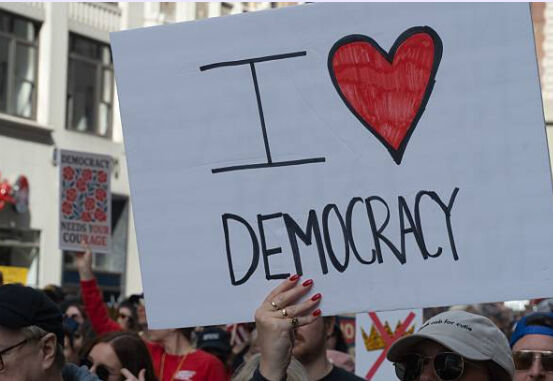
Can deliberation save democracy? | Vince Bzdek
Vince Bzdek
vince.bzdek@gazette.com
Updated 4 hours ago
In September 2019, 523 Americans traveled to Dallas, Texas, for an experiment called “America in One Room.” The gathering was designed to test a theory: Could representative citizens deliberate productively even in an era of intense polarization? The event took...
Redistricting scheme would give Colorado Democrats seven House members, split El Paso County
Bob Loevy
bob-loevy@coloradopolitics.com
Updated 12 hours ago
A proposed redistricting plan, which could give Colorado seven Democratic members of the U.S. House of Representatives and only one Republican, would split El Paso County into two parts and thereby weaken the county’s influence in Congress. El Paso County,...

Is Trump a builder or just a latter-day headhunter? | SONDERMANN
By Eric Sondermann
by-eric-sondermann@coloradopolitics.com
Updated 2 days ago
It was well under 100 hours after President Donald Trump’s overly long, overly theatrical State of the Union speech that he unleashed American bombers across Iran. As I write, it is now less than 100 hours since those bombers started...
Pueblo board violates Open Meetings Law | Dennis Maes
Dennis Maes
dennis-maes@coloradopolitics.com
Updated 1 day ago
By Dennis Maes I recently witnessed two serious violations of the Colorado Open Meetings Law by the Pueblo Urban Renewal Authority (PURA) board. Both were brought to the attention of the board in an open meeting and entered on the...

Legislation would undermine educational opportunity | OPINION
Colorado Politics
colorado-politics@coloradopolitics.com
Updated 2 days ago
By Norton Rainey and Weston Kurz New legislation under consideration by Colorado lawmakers could have far-reaching consequences for Colorado students and families looking for new educational options. HB26-1292, currently under consideration by the Colorado General Assembly, would severely limit the...

Medicaid cuts for critical care hurts providers, reduces access to the best care for patients | OPINION
Colorado Politics
colorado-politics@coloradopolitics.com
Updated 2 days ago
By Gurdev Rai This year, the legislative session started with one thing on everyone’s minds: the state budget, and the major hole created by Congress’ HR 1 law. Costs, including for health care, have ballooned across the board, and we...
Not-so-public comment in Douglas County | Paula Noonan
Paula Noonan
paula-noonan@coloradopolitics.com
Updated 2 days ago
Let’s do some high and low history. First, the high history. England’s King George III didn’t like the complaining he heard from the American colonies, so he went to war to shut the people up. President Donald Trump doesn’t like...
Why Colorado should stop charging swipe fees on sales taxes | OPINION
Colorado Politics
colorado-politics@coloradopolitics.com
Updated 3 days ago
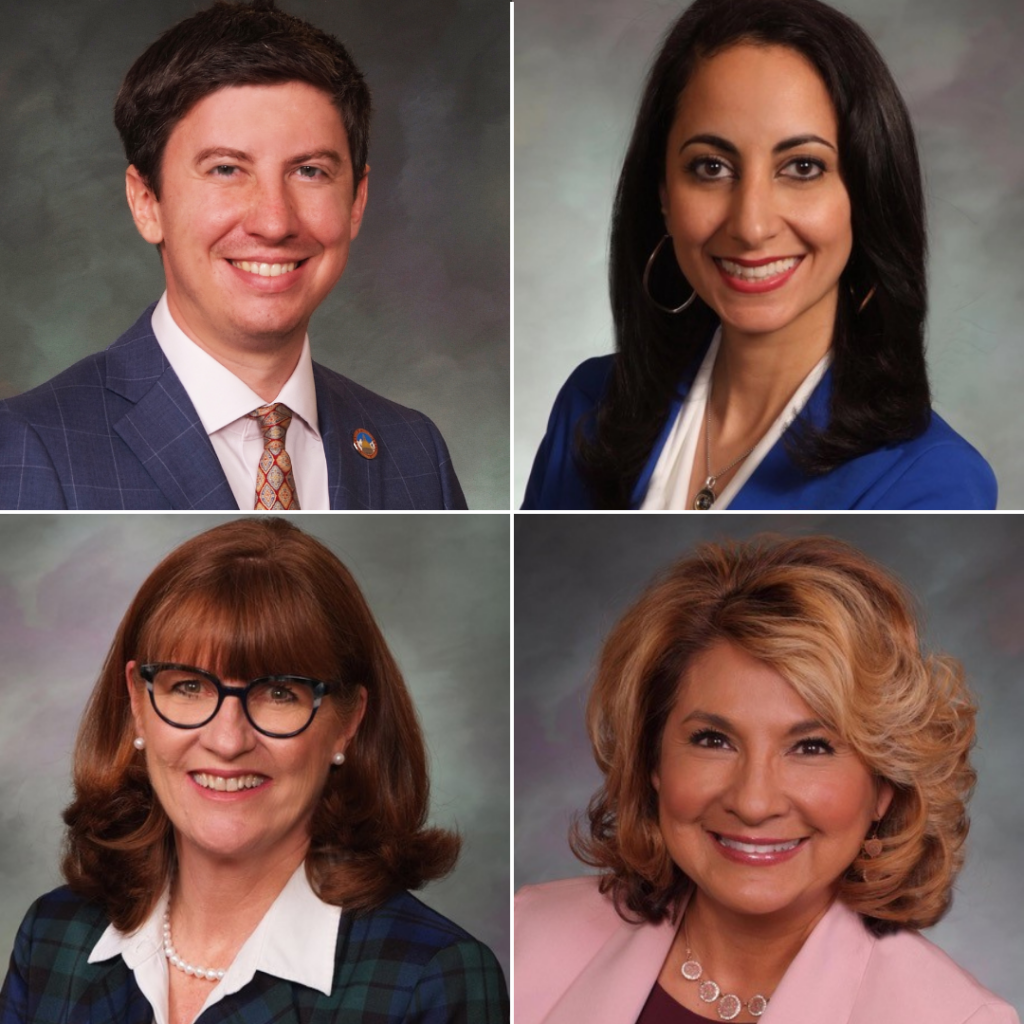
By William Lindstedt, Iman Jodeh, Julie McCluskie and Monica Duran Small businesses across Colorado are working harder than ever right now to keep their doors open, hire local workers and serve their communities. But every day, they are forced to...
Colorado can be a gamechanger in regulating GLP-1 weight loss drugs | OPINION
Colorado Politics
colorado-politics@coloradopolitics.com
Updated 3 days ago
By Nancy Glick “As goes California, so goes the nation” is a phrase reflecting California’s reputation as a bellwether in setting regulations that often become a precedent for national policy. Now, Colorado can play this role, setting new safety standards...
Colorado can be a gamechanger in regulating GLP-1 weight loss drugs | OPINION
Colorado Politics
colorado-politics@coloradopolitics.com
Updated 3 days ago
By Nancy Glick “As goes California, so goes the nation” is a phrase reflecting California’s reputation as a bellwether in setting regulations that often become a precedent for national policy. Now, Colorado can play this role, setting new safety standards...
PREV
PREVIOUS

We need to cap property taxes | COUNTERPOINT
Sage Naumann Our government — both at the county and state level — is enjoying record revenues. Is your family enjoying the same? While central planners cringe at their potential windfalls being cut down to reasonable levels, Coloradans rejoice. Homeowners deserve predictability in their property taxes, even if it means bureaucrats are left disappointed. The proposed cap […]
Capitol Democrats say no to school options for special needs kids | DUFFY
Sean Duffy Can a political party cynically slam the schoolhouse door in the face of special needs kids and get away with it? Colorado Democrats just did, with apparently no political penalty and not even a nudge from their collective conscience. A bill sponsored by state Sen. Barb Kirkmeyer addressed a significant need in Colorado’s […]