

Court lifts coal sales moratorium in setback for Dems, environmentalists | OUT WEST ROUNDUP

MONTANA
Appeals court lifts US coal sales moratorium
BILLINGS — A U.S. appeals court on Feb. 21 struck down a moratorium on coal leasing from federal lands in a move that could open the door to future coal sales from vast, publicly owned reserves of the fuel that’s a major source of climate-changing greenhouse gases.
The ruling from a three-judge panel of the 9th U.S. Circuit Court of Appeals is a setback for environmentalists and Democratic officials who worked for years to curtail the federal coal leasing program.
Yet it’s uncertain how much demand there will be from the mining industry for new leases: Coal production from federal lands dropped sharply over the past decade after many electric utilities switched to less polluting sources of power generation such as natural gas and renewables.
More than 260 million tons of coal, or almost half of the nation’s total, was mined by private companies from leases on federal land in 2022, the most recent figures available. That compares to more than 400 million tons of coal mined from federal lands in 2014.
Colorado's Jared Polis seeks 49 'actions' to curb greenhouse emissions to 'net zero' by 2050
Most of the mining occurs in Western states including Wyoming, Montana and Colorado.
The leasing moratorium — originally enacted in 2016 under former President Barack Obama — didn’t halt mining. Rather, it prohibited federal lease sales that are often crucial for companies seeking to expand their operations.
The moratorium was rescinded under the administration of former President Donald Trump, then revived by a federal district judge in Montana, who in 2022 ordered government officials to conduct a new environmental review before they could hold coal sales on federal lands.
But the Feb. 21 appeals court ruling said the matter was moot when the 2022 order was issued, because Interior Department officials under President Joe Biden already had revoked Trump’s effort to end the moratorium.
UTAH
Small, nonthreatening balloon intercepted by NORAD
SALT LAKE CITY — A small, nonthreatening balloon spotted flying high over the mountainous Western United States was intercepted by a fighter jet over Utah on Feb. 23, according to the North American Aerospace Defense Command.
NORAD fighter pilots sent in the morning to investigate the balloon determined it was “not maneuverable” and did not present a threat to national security, spokesperson John Cornelio said. The balloon was still in the air, under close observation.
NORAD, a joint military command tasked with defending the airspace over the U.S. and Canada, has not said where the balloon came from or why it was flying over Utah and Colorado.
There has been heightened interest in reports of balloon overflights after the military identified — and eventually shot down — a large, white Chinese spy balloon that crossed much of the country last year. But officials said the balloon intercepted on Feb. 23 was not sent by a foreign adversary and posed no threat to aviation or U.S. security.
U.S. Northern Command's top general answers questions about suspected Chinese spy balloon
NORAD said it was continuing to coordinate with the Federal Aviation Administration to track and monitor the balloon, which was detected at an altitude varying between 43,000 feet and 45,000 feet, Cornelio said. NORAD declined to specify where in Utah pilots encountered it.
Early reports of the balloon sighting had raised concern among lawmakers including U.S. Sen. Jon Tester and U.S. Rep. Matt Rosendale of Montana, who said their offices were monitoring the situation. The office of Utah Gov. Spencer Cox said it had been in touch with local military officials.
WYOMING
Bill would prohibit CDC, WHO regulation in state
CHEYENNE — Members of the Wyoming Freedom Caucus signed onto a House bill that would prohibit the Centers for Disease and Control and the World Health Organization from having any jurisdiction in Wyoming.
House Bill 91 was received for introduction on on Feb. 1, sponsored by Rep. Jeanette Ward, R-Casper, and co-sponsored by 14 other Republican lawmakers, 10 in the House and four in the Senate.
Ward said this version of the bill is similar to a previous House bill she introduced in the 2023 general session, HB 143, which failed to pass on third reading. The Casper representative said she anticipates more pushback from lawmakers against the bill, primarily over concerns about how the bill’s passage would jeopardize federal funding.
She said that her constituents should pay attention to which lawmakers “value Wyomingites’ medical freedom.”
Colorado lawmakers say regulation of sodium nitrite sales will help prevent suicide
Rep. Dan Zwonitzer, R-Cheyenne, co-chairman of the legislature’s Joint Labor, Health and Social Services Committee, said he didn’t think the bill’s passage would make a big difference in how things already work.
Zwonitzer added that, should the bill pass, it wouldn’t be a direct loss in federal funding. The bill’s language only says the state isn’t held to CDC and WHO mandates, not that it must resist them entirely.
SOUTH DAKOTA
Tribe bans governor over border remarks
A South Dakota tribe has banned Republican Gov. Kristi Noem from the Pine Ridge Reservation after she spoke about wanting to send razor wire and security personnel to Texas to help deter immigration at the U.S.-Mexico border and also said cartels are infiltrating the state’s reservations.
“Due to the safety of the Oyate, effective immediately, you are hereby Banished from the homelands of the Oglala Sioux Tribe!” Tribe President Frank Star Comes Out said in a Feb. 2 statement addressed to Noem. “Oyate” is a word for people or nation.
Star Comes Out accused Noem of trying to use the border issue to help get former U.S. President Donald Trump re-elected and boost her chances of becoming his running mate.
Many of those arriving at the U.S.-Mexico border are Indigenous people from places like El Salvador, Guatemala and Mexico who come “in search of jobs and a better life,” the tribal leader added.
Aurora council considers telling organizations: Stop bringing immigrants to city
Noem responded in a statement, saying, “It is unfortunate that President (Star) Comes Out chose to bring politics into a discussion regarding the effects of our federal government’s failure to enforce federal laws at the southern border and on tribal lands. My focus continues to be on working together to solve those problems.”
Noem has deployed National Guard troops to the Mexican border three times, as have some other Republican governors.
Bill would let taxidermy animals find new homes
South Dakota’s legislature has made it easier for the city of Sioux Falls to find new homes for more than 150 taxidermy animals of its arsenic-contaminated menagerie.
The mounted lion, tiger, polar bear and gorilla were part of display that filled a natural history museum at the state’s largest zoo. But when testing in August showed detectable levels of arsenic in nearly 80% of the specimens, the city closed the Delbridge Museum.
That set off a heated debate in the community and among museum taxidermy experts, who say the arsenic risk is overblown.
Older taxidermy specimens are frequently displayed, experts say, with museums taking precautions like using special vacuums to clean them — or encasing them in glass. But Sioux Falls officials have expressed concerns about the cost. And the display occupies prime real estate near the Great Plains Zoo’s entrance, which officials are eyeing as they look for a spot to build an aquarium and butterfly conservatory.
'Disturbing discovery:' More than 115 bodies found improperly stored at Colorado funeral home
The situation is complicated by a morass of state and federal laws that limit what can be done with the mounts.
One issue is that the Endangered Species Act protects animals even in death, so the collection can’t be sold. Under federal law, they could be given to another museum. But state law stipulates that exhibits like this must remain within the state.
And that stipulation is what the new legislation aims to address. The bill, passed on Feb. 22 by the Senate and headed to Gov. Kristi Noem, would allow the city to donate the collection to an out-of-state nonprofit. The bill would take effect July 1.
No decision has yet been made as to the collection’s future. Great Plains Zoo spokesperson Denise DePaolo said a city working group “will take this new possibility and weigh it against other options before making a recommendation to the city council and mayor in the coming months.”
Avalanche forecasters try to curb deaths amid backcountry surge | OUT WEST ROUNDUP
Federal wildlife officials won't restore protections for gray wolves in Rockies | OUT WEST ROUNDUP
Some say it’s time for unpaid New Mexico state lawmakers to get a salary | OUT WEST ROUNDUP


Immigration reporting measure fuels debate over Colorado’s role with ICE
Marissa Ventrelli
marissa.ventrelli@coloradopolitics.com
Updated 3 hours ago
A coalition of advocacy groups and several district attorneys rallied outside the Colorado Capitol on Thursday to oppose a ballot measure that, if approved by voters in November, would require state and local law enforcement to cooperate with federal immigration...

Colorado Politics Calendar Sept. 14-20
Rachael Wright, Special to Colorado Politics
rachael.wright@coloradopolitics.com
Updated 3 days ago
CoPo’s weekly political calendar will help you find political and public-policy events throughout Colorado. It includes candidate and issue campaign events, public policy meetings, court hearings, state and local party conventions, assemblies, debates, rallies, parades, speaking engagements, traveling dignitary appearances,...
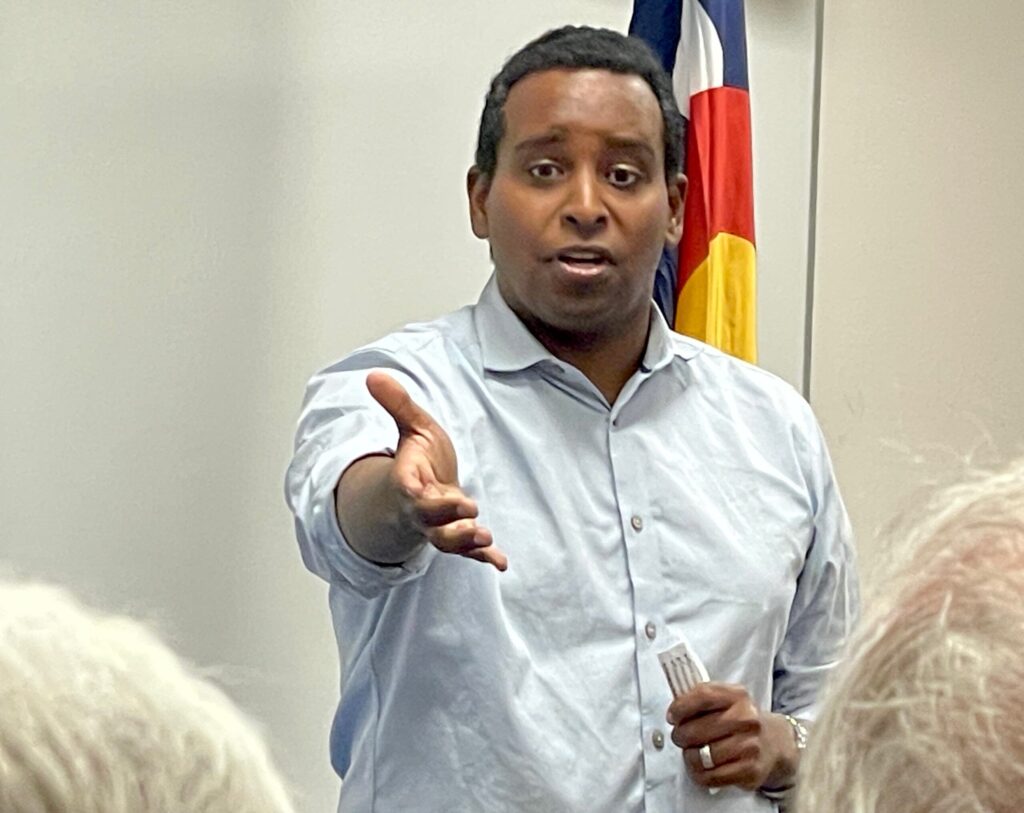
The African roots of three Colorado leaders | SONDERMANN
Eric Sondermann
eric-sondermann@coloradopolitics.com
Updated 2 days ago
Colorado’s political transformation is measured in many ways. A once reliably red state (with asterisks) became purple and is now a rather deep blue. For better or worse, probably the latter, power is ever more consolidated along the Front Range...
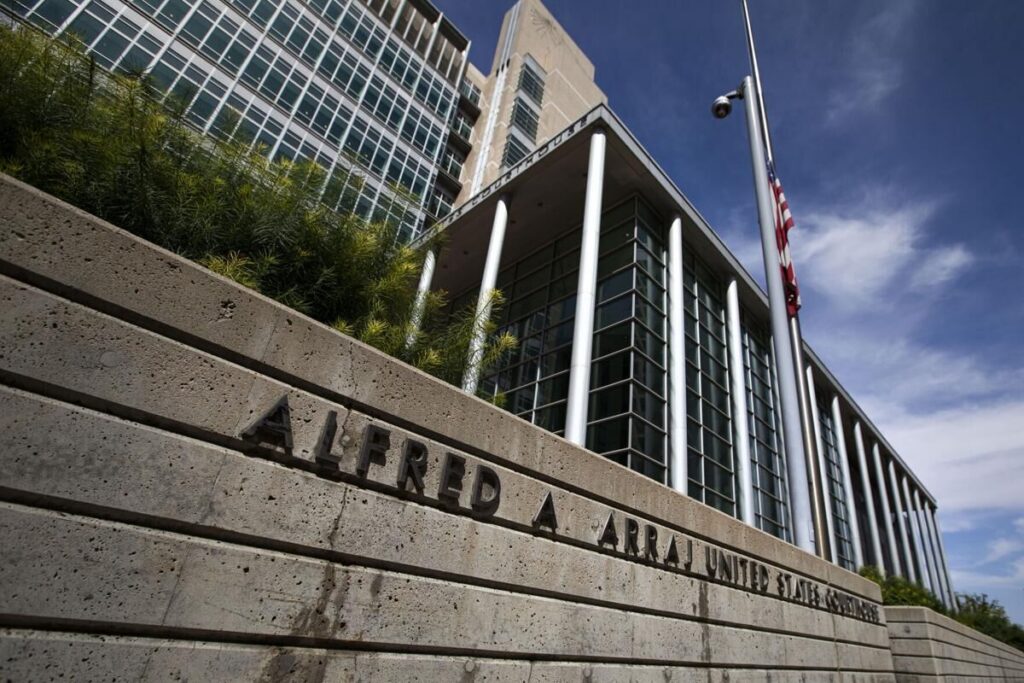
Federal judge green-lights civil trial against ex-Fort Collins DUI officer
Michael Karlik
michael.karlik@coloradopolitics.com
Updated 1 day ago
A federal judge ruled on Thursday that Fort Collins’ former “DUI officer” will face a civil trial for allegedly investigating a motorist for impaired driving without any reasonable suspicion to do so. In recent years, several people arrested by Officer...

Denver police reopen 13 sex assault cases after retesting Missy Woods’ CBI work
Jenny Deam
jenny.deam@gazette.com
Updated 1 day ago
Thirteen previously closed Denver sexual assault cases have been reopened after the city’s crime lab retested DNA evidence once analyzed by former Colorado Bureau of Investigation forensic analyst Yvonne Woods. A police spokesperson told The Denver Gazette the once-closed cases...

Ballot measure aims to shift Colorado sporting goods tax revenue to land, water and wildfire projects
Marissa Ventrelli
marissa.ventrelli@coloradopolitics.com
Updated 3 hours ago
Colorado voters this November will decide whether to direct a share of sales tax revenue from sporting goods — including bicycles and skiing equipment — toward land and water conservation, wildfire prevention and expanding outdoor recreation. Supporters say the measure...

Colorado Supreme Court suspends Mesa County judge pending misconduct investigation
Michael Karlik
michael.karlik@coloradopolitics.com
Updated 5 hours ago
The Colorado Supreme Court suspended Mesa County Court Judge Michael J. Grattan on Thursday amid a misconduct investigation. The court’s Sept. 10 order gave Grattan 21 days to explain why his paid suspension should not continue through the end of...

Trump honors the fallen of the 9/11 terrorist attacks during Pentagon speech
Mabinty Quarshie
mabinty-quarshie@coloradopolitics.com
Updated 1 day ago
President Donald Trump and first lady Melania Trump honored the roughly 3,000 Americans killed during the Sept. 11, 2001, terrorist attacks during a ceremony at the Pentagon. The event marking the 25th anniversary of the deadliest attack on American soil...
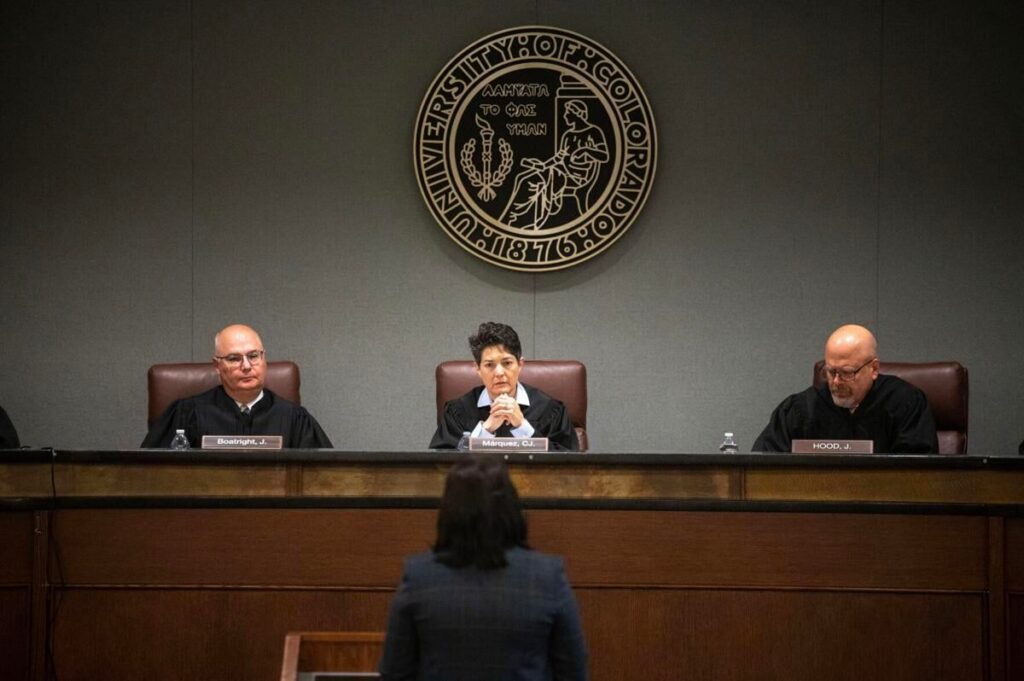
Colorado Supreme Court changes course, dismisses case about special district bonds
Michael Karlik
michael.karlik@coloradopolitics.com
Updated 5 hours ago
The Colorado Supreme Court declined on Friday to decide a dispute between a large-scale Commerce City development and the various districts financing it, after initially showing interest in the ongoing case. Colorado has roughly 2,800 special districts, which are local...
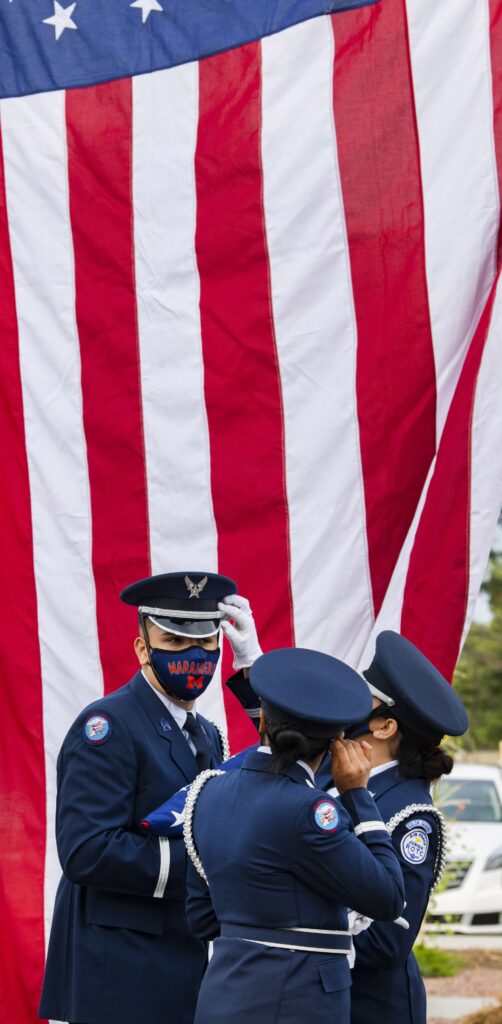
Colorado leaders express outrage and pain following 9/11 attacks | A LOOK BACK
Rachael Wright, Special to Colorado Politics
rachael.wright@coloradopolitics.com
Updated 2 days ago
Twenty-Five Years Ago This Week: “Responding to the 9/11 terrorist attacks, Colorado Gov. Bill Owens told reporters in a statement, “I join all Coloradans in expressing outrage and horror at the senseless terrorist bombings in New York and Washington D.C....
PREV
PREVIOUS

State GOP chair attempts to influence local recall race in his county | A LOOK BACK
Twenty Years Ago This Week: The Colorado Republican Party waded into local political drama when state GOP Chairman Ted Halaby submitted a letter for publication in The Colorado Statesman directing Arapahoe County Republicans to vote in favor of recalling Arapahoe County Clerk and Recorder Tracy Baker. The effect was elevating the county recall election to […]

Colorado lawmakers eye expansion of 'right to repair' laws
A proposal in the Colorado House could mean a major expansion to the state’s “right to repair” laws, notably in the area of electronic equipment, such as mobile phones and other devices. House Bill 1121 would expand the state’s right to repair laws to include digital electronic equipment, such as cellphones, computers, and kitchen appliances. The […]