

Colorado Supreme Court tells Delta County judge to revisit alternate suspect order in light of recent decision
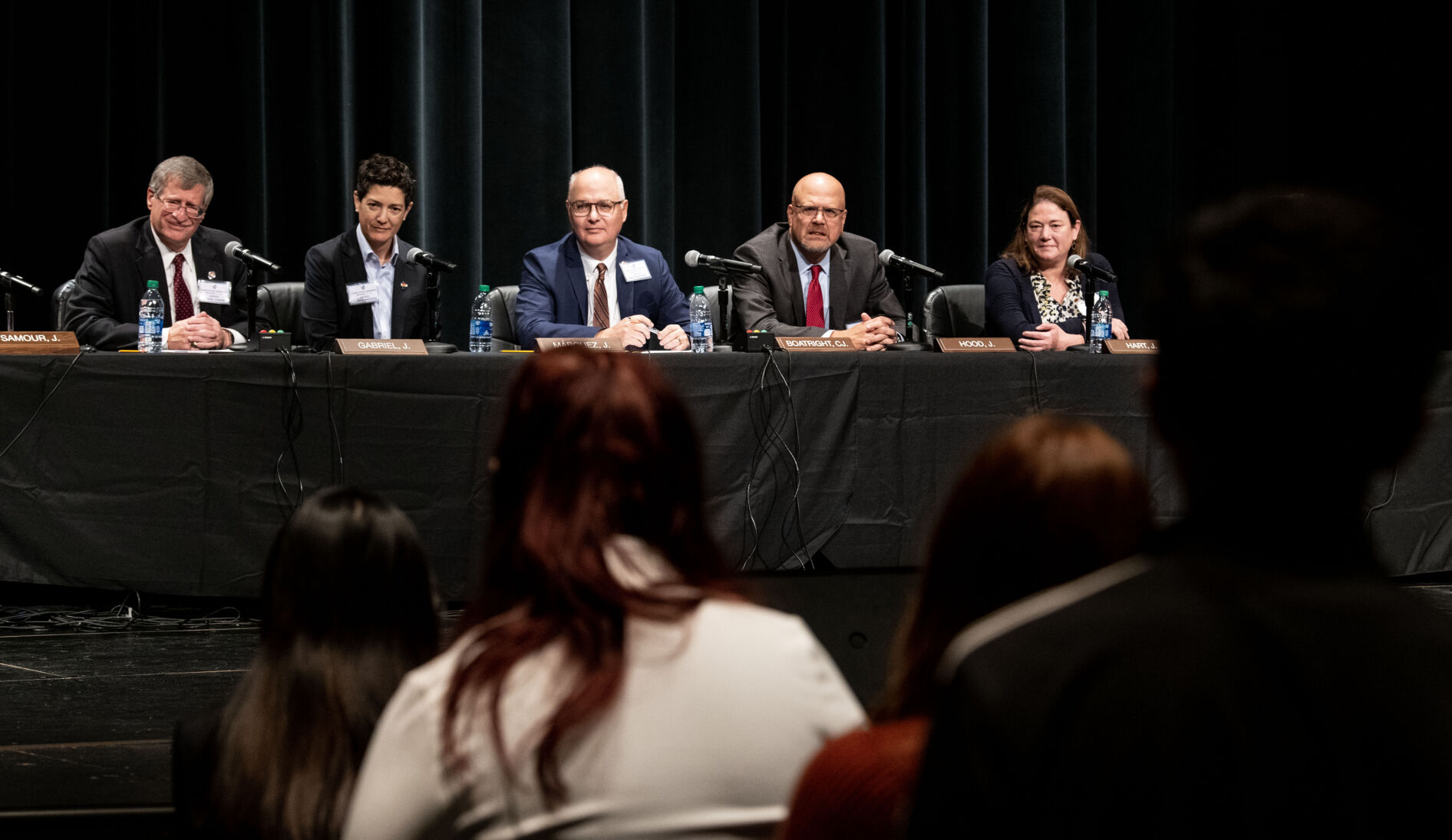
The Colorado Supreme Court directed a Delta County judge on Thursday to revisit his order requiring a defendant accused of murder to disclose evidence to the prosecution about an alleged alternate suspect.
In a brief Feb. 29 order, the justices told District Court Judge Steven L. Schultz to follow the guidance the Supreme Court issued in January, which rejected the idea that trial judges may force defendants to reveal all of their alternate suspect evidence to the prosecution ahead of trial.
Mark Burns stands accused of murdering Michael Arnold and Donna Gallegos in 2022. Burns intends to dispute that he was the killer, and that an alternate suspect was really responsible.
In July, Schultz ordered the defense to disclose the identity of the alternate suspect, the facts applicable to the suspect and the “evidentiary hypothesis” supporting the suspect’s guilt.
To allow the defense to keep such information to themselves until trial “would literally turn the established pre-trial process into the wild west, and reinstate a system based on trial by ambush,” Schultz wrote.
Burns then sought the Supreme Court’s direct intervention. Procedural rules require disclosure of the “nature” of a defense, but he argued Schultz’s order went far beyond that. It would violate Burns’ due process rights, his lawyers explained, to force him to assist the government in proving its case.
While Burns’ request was pending, the Supreme Court handed down a ruling earlier this year in a similar appeal out of Weld County. In that case, People v. Dye, the trial judge directed the defense to hand over “all evidence” of an alternate murder suspect to the prosecution.
Justice Carlos A. Samour Jr., writing for the court, clarified that defendants must state their intent to rely on an alternate suspect prior to trial, identify any alternate suspects and disclose the addresses of any alternate suspects expected to testify. Although trial judges may need to hold hearings in advance about the admissibility of specific evidence, defendants do not have to do anything more to assist the government.
“From there, it is up to the prosecution to conduct its own investigation into any alternate suspect identified,” Samour wrote.
The Supreme Court directed Schultz to proceed in Burns’ case with an understanding of the narrow obligation the defense has to reveal alternate suspect information.
The case is People v. Burns.


Colorado Supreme Court signals intervention in dispute over treatment for trans children
Michael Karlik
michael.karlik@coloradopolitics.com
Updated 18 hours ago
The Colorado Supreme Court ordered Children’s Hospital Colorado on Tuesday to explain why it should not direct the organization to resume providing certain types of services to transgender children in compliance with the state’s non-discrimination law. Last month, a Denver...

Judge nixes latest policy requiring 7 days’ notice for Congress members to visit ICE facilities
Michael Kunzelman
michael.kunzelman@associatedpress.com
Updated 19 hours ago
WASHINGTON (AP) — A federal judge agreed on Monday to temporarily suspend the latest version of a Trump administration policy that requires members of Congress to provide a week’s notice before they can visit immigration detention facilities. U.S. District Judge...
Judge nixes latest policy requiring 7 days’ notice for Congress members to visit ICE facilities
Michael Kunzelman
michael.kunzelman@associatedpress.com
Updated 17 hours ago
WASHINGTON • A federal judge agreed on Monday to temporarily suspend the latest version of a Trump administration policy that requires members of Congress to provide a week’s notice before they can visit immigration detention facilities. U.S. District Judge Jia...
Colorado Supreme Court clarifies restraining order violations can always support burglary charge
Michael Karlik
michael.karlik@coloradopolitics.com
Updated 2 days ago
The Colorado Supreme Court’s majority ruled on Monday that a violation of a restraining order can also serve as a basis for finding a defendant guilty of burglary. Under state law, a person commits second-degree burglary by unlawfully entering or...

10th Circuit judge creates vacancy, district court gets new chief judge | COURT CRAWL
Michael Karlik
michael.karlik@coloradopolitics.com
Updated 1 day ago
Welcome to Court Crawl, Colorado Politics’ roundup of news from the third branch of government. A longtime member of the Denver-based federal appeals court will give the president a vacancy to fill, plus Colorado’s federal trial court will see a...

Morgan County man accused of killing wife, staging her suicide charged with first-degree murder
Kyla Pearce
kyla.pearce@gazette.com
Updated 16 hours ago
A grand jury announced the indictment of 52-year-old Ronald Lowry, who is accused of killing his wife in October 2023 and staging the crime scene to look like a suicide. Lowry, who was arrested Friday in Morgan County, was charged...
Gov. Jared Polis moves to end ICE subpoena fight over Colorado workers’ personal data
Marianne Goodland
marianne.goodland@coloradopolitics.com
Updated 5 days ago
The effort by Gov. Jared Polis to comply with an administrative subpoena from U.S. Immigration and Customs Enforcement for information held by several state agencies is over. Polis, in a motion filed Feb. 20, asked for a permanent injunction and...

Ex-Colorado Sen. Sonya Jaquez Lewis avoids prison, gets probation for forged ethics letters
Marianne Goodland
marianne.goodland@coloradopolitics.com
Updated 5 days ago
Former state Sen. Sonya Jaquez Lewis, D-Longmont, was sentenced Friday to two years of supervised probation and 150 hours of community service, and a $3,000 fine, to be waived if she completes an additional 100 hours of community service. The...

Toll to sexual assault survivors rises if they feel blamed and disbelieved
Jenny Deam
jenny-deam@coloradopolitics.com
Updated 5 days ago
Natalie, a single mother, dropped off her son at daycare, went to therapy and then returned home. She swallowed a fistful of pills, washing them down with a six-pack of beer. She was ready to end her life. “I just...

Colorado rape cases rarely result in an arrest and prosecution
Evan Wyloge
evan-wyloge@coloradopolitics.com
Updated 2 days ago
Authorities say they are especially difficult cases. In Colorado, most go nowhere. Over the past decade, for every 10 reports of rape, there is only one arrest. Warning: This story contains descriptions of sexual violence. Kiersten May remembered a fuzziness...
PREV
PREVIOUS

No constitutional right to plead guilty, appeals court says in upholding El Paso County convictions
An El Paso County judge was not constitutionally obligated to accept a defendant’s guilty plea, Colorado’s second-highest court concluded last week. Appealing his convictions, Timothy Ray Scott Jr. argued his trial judge violated his constitutional right to “autonomy” by not letting him plead guilty. The U.S. Supreme Court has previously interpreted the Sixth Amendment’s guarantee of […]

Federal judge finds no bias in CU-Denver student's expulsion
A federal judge last week sided with the University of Colorado Denver, concluding a student failed to provide evidence his expulsion was the product of bias that infringed on his constitutional right to due process. Chadwick Jordan, representing himself, alleged CU-Denver denied him an impartial decision-maker in various disciplinary proceedings. Specifically, he believed David Steward, […]