

Nebraska governor reverses course, will take federal funding to feed children | OUT WEST ROUNDUP
NEBRASKA
Governor says state will take federal funding to feed children
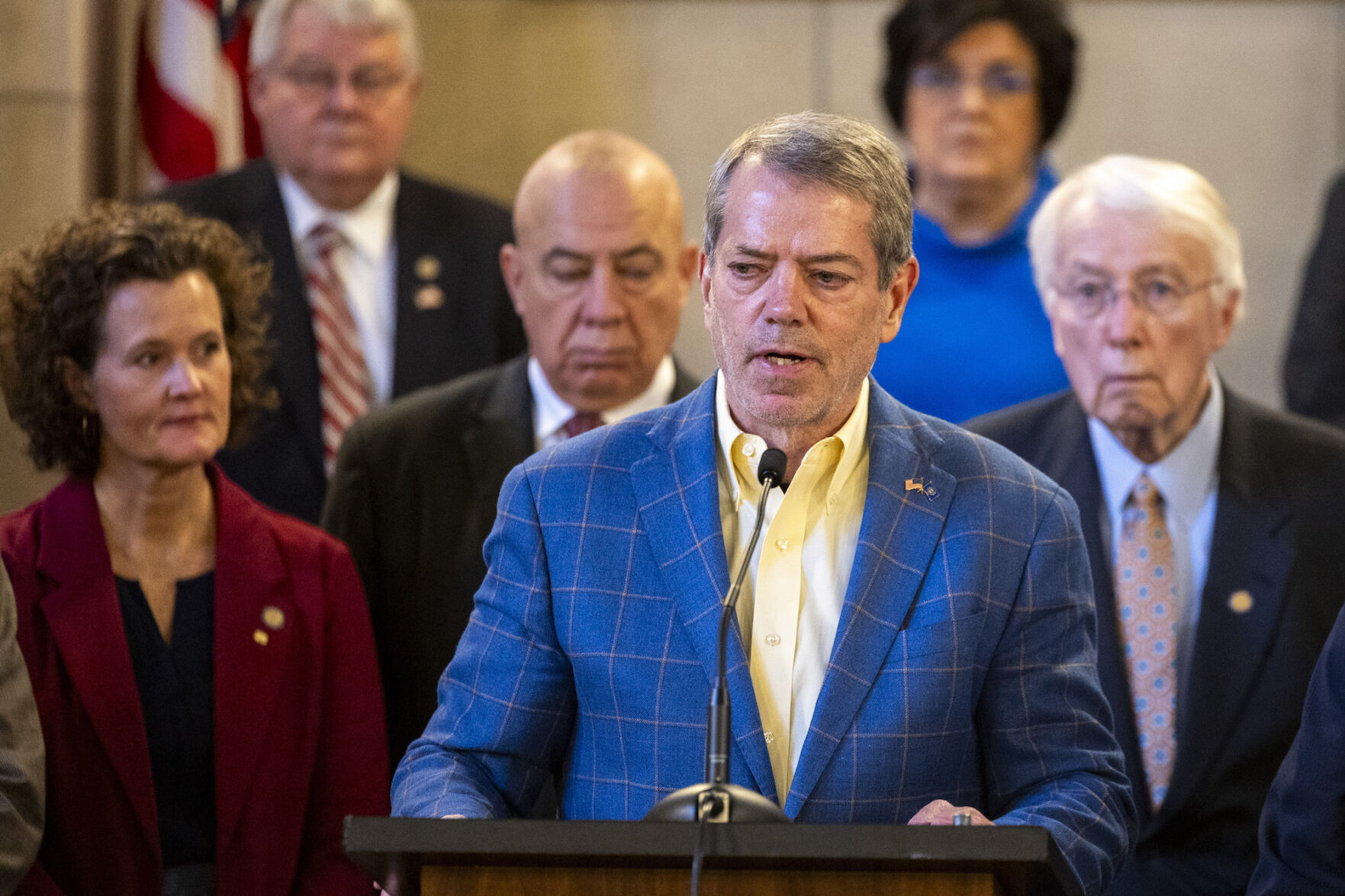
LINCOLN – Nebraska Gov. Jim Pillen reversed course on Feb. 12 and announced that the state will accept roughly $18 million in federal funding to help feed hungry children over the summer break.
Pillen announced in December that the state would reject the funding, defending his position by stating, “I don’t believe in welfare.” But he came under intense pressure, including from some members of his party, to accept the money.
At a news conference, Pillen said he decided to accept money allocated through the U.S. Department of Agriculture after meeting with a group of high school students from around Nebraska who visited the state Capitol.
The Summer Electronic Benefits Transfer for Children – or Summer EBT – program provides pre-loaded EBT cards to low-income families, those whose children are eligible for free and reduced-price lunches at school, and those who are already on food assistance, Medicaid and other assistance programs. Those families would receive $40 per eligible child for each of three summer months. The cards can be used to buy groceries, similar to how SNAP benefits are used.
Pressure from lawmakers, particular those from rural areas, also played a part in Pillen’s about-face. The governor previously argued that Nebraska would continue to help food-insecure children through the Summer Food Service Program, a separate program that provides meals and snacks at various sites when school is not in session. But critics countered that not all families have access to the on-site programs, particularly in Nebraska’s vast rural stretches.
A bill from state Sen. Jen Day of Omaha, a Democrat in the officially nonpartisan Legislature, would have forced the state to accept the federal funding. The bipartisan support for the program became clear when Republican state Sen. Ray Aguilar, of Grand Island, made Day’s bill his priority for the session.
Bill would ban corporations from buying single-family homes
A Nebraska lawmaker whose north Omaha district has struggled for years with a housing shortage is pushing a bill that, if passed, could make Nebraska the first in the country to forbid out-of-state hedge funds and other corporate entities from buying up single-family properties.
Sen. Justin Wayne’s bill echoes legislative efforts in other states and in Congress to curtail corporate amassing of single-family homes, which critics say has helped cause the price of homes, rent and real estate taxes to soar in recent years. Wayne said that has been the case in his district, where an Ohio corporation has bought more than 150 single-family homes in recent years – often pushing out individual homebuyers with all-cash offers. The company then rents out the homes.
Experts say the scarcity of homes for purchase can be blamed on a multitude of factors, including sky-high mortgage interest rates and years of underbuilding modest homes.
Wayne’s bill offers few specifics. It consists of a single sentence that says a corporation, hedge fund or other business may not purchase single-family housing in Nebraska unless it’s located in and its principal members live in Nebraska.
Currently, about 13% of single-family homes in Lincoln are owned by out-of-state corporate firms, he said.
As in other states, Wayne’s bill likely faces an uphill slog in the deep red state of Nebraska. At a Feb. 12 hearing before the Banking, Insurance and Commerce Committee, several Republican lawmakers acknowledged a statewide housing shortage, but they cast doubt on Wayne’s solution.
WYOMING
Ballot initiative to halve property taxes misses deadline
CHEYENNE – A citizen-led ballot initiative designed to cut property tax bills in half for Wyoming homeowners won’t appear on this year’s general election ballot.
A spokesperson with the Wyoming Secretary of State’s Office confirmed on Feb. 14 that the ballot initiative, “People’s Initiative to Limit Property Tax in Wyoming through a Homeowner’s Property Exemption,” was not filed with the office by the deadline.
Brent Bien, a former candidate for Wyoming governor, is the main force behind the initiative. He told the WTE he was unaware of the deadline, and said the ballot initiative was close to gathering the needed 29,730 signatures, with 15% of voters from at least 16 of Wyoming’s 23 counties. All signatures have to be certified before the ballot initiative is approved.
Bien and his committee of applicants had 18 months since “they first received petitions to gather the requisite number of signatures to appear on the ballot in a future election,” according to an email from Joe Rubino, chief policy officer and general counsel of the Secretary of State’s Office.
Bien said the initiative has gathered more than 40,000 voter signatures since they began collecting after Secretary of State Chuck Gray officially certified the property tax initiative in late September. Despite missing the filing deadline, Bien said they still have plans to put the initiative on the 2026 general election ballot.
Many lawmakers have criticized the proposed ballot measure, saying it would result in severe loss of revenue that funds local county services. Rep. Liz Storer, D-Jackson, told the WTE in September it was “highly unlikely” this loss in revenue would be backfilled by the Legislature.
NEW MEXICO
Albuquerque police investigate embattled DWI unit
ALBUQUERQUE – The police department in New Mexico’s largest city opened a new internal investigation related to an ongoing federal inquiry into allegations of possible corruption in the department’s DWI unit.
The internal investigation will look into the conduct of current and former officers in the unit, according to a Feb. 16 release from the Albuquerque Police Department. Chief Harold Medina temporarily reassigned one target, a lieutenant in the Internal Affairs Division, to an unspecified position.
No officers had been charged. Medina previously said five officers were on administrative leave.
According to documents obtained by the Albuquerque Journal, the federal probe began after a stop by an officer in August in which he allegedly told the driver to contact a certain attorney to ensure that no case would be filed in court by police.
The FBI investigation has partly focused on DWI criminal cases filed by certain officers that ended up being dismissed in court, according to the Journal. More than 150 cases alleging that motorists drove while intoxicated have been dismissed as part of the federal investigation.
Three Albuquerque police officers combined filed 136 of the 152 DWI cases, and at least 107 of those were filed last year, which was 10% of such cases for the department that year.
ARIZONA
Tribes, environmentalists ask court to block transmission project
ALBUQUERQUE – A federal judge is being asked to issue a stop-work order on a $10 billion transmission line being built through a remote southeastern Arizona valley to carry wind-generated electricity to customers as far away as California.
A 32-page lawsuit filed on Jan. 17 in U.S. District Court in Tucson, Arizona, accuses the U.S. Interior Department and Bureau of Land Management of refusing for nearly 15 years to recognize “overwhelming evidence of the cultural significance” of the remote San Pedro Valley to Native American tribes including the Tohono O’odham, Hopi, Zuni and San Carlos Apache Tribe.
The suit was filed shortly after Pattern Energy received approval to transmit electricity generated by its SunZia wind farm in central New Mexico through the San Pedro Valley east of Tucson and north of Interstate 10.
The project has been touted as the biggest U.S. electricity infrastructure undertaking since the Hoover Dam.
Pattern Energy officials said on Jan. 23 that the time has passed to reconsider the route, which was approved in 2015 following a review process.
Plaintiffs in the lawsuit are the Tohono O’odham Nation, the San Carlos Apache Tribe and the nonprofit organizations Center for Biological Diversity and Archaeology Southwest.
The valley represents a 50-mile stretch of the planned 550-mile conduit expected to carry electricity from new wind farms in central New Mexico to existing transmission lines in Arizona to serve populated areas as far away as California.
SunZia expects the transmission line to begin commercial service in 2026, carrying more than 3,500 megawatts of wind power to 3 million people. Project officials say they conducted surveys and worked with tribes over the years to identify cultural resources in the area.


10th Circuit warns lawyers after finding fake case in filing
Michael Karlik
michael.karlik@coloradopolitics.com
Updated 1 hour ago
The Denver-based federal appeals court warned attorneys to be more careful last month after discovering one lawyer cited a fake case in his arguments. In recent months, federal and state judges in Colorado have begun cautioning lawyers explicitly about the...

Colorado legislators drove up cost of Medicaid program
Marissa Ventrelli
marissa.ventrelli@coloradopolitics.com
Updated 2 hours ago
Some of Colorado’s spending woes in Medicaid can be traced to lawmakers who had approved new or expanded programs in the last few years, driving up state costs to the tune of tens of millions of dollars. Just three measures...

Colorado leaders weigh next steps after US Supreme Court rules against state’s ‘conversion therapy’ ban
Marissa Ventrelli
marissa.ventrelli@coloradopolitics.com
Updated 26 minutes ago
Colorado leaders and advocacy groups remain divided after the U.S. Supreme Court on Tuesday ruled against the state’s ban on conversion therapy for minors, ruling 8-1 that the 2019 law violates the First Amendment. While it is a victory for...
Supreme Court rules against Colorado ban on ‘conversion therapy’ for LGBTQ kids
Lindsay Whitehurst
lindsay.whitehurst@associatedpress.com
Updated 3 hours ago
WASHINGTON (AP) — The Supreme Court on Tuesday ruled against a law banning “conversion therapy” for LGBTQ+ kids in Colorado, one of about two dozen states that ban the discredited practice. An 8-1 high court majority sided with a Christian...

A perfect storm: Pine beetles thriving following warm, dry winter in Colorado
O'Dell Isaac
odell.isaac@gazette.com
Updated 59 minutes ago
The warmest winter in Colorado history could lead to record-breaking proliferation of a tiny insect, about the size of a grain of rice, that has killed millions of acres of trees across the Centennial State and contributed to the rapid...
Newly formed PAC promises a stronger voice for southern Colorado businesses
Breeanna Jent
breeanna-jent@coloradopolitics.com
Updated 3 hours ago
A new political action committee has launched in southern Colorado, aiming to strengthen and elevate the voices of local businesses and their regional influence on state-level policy. Over the last two years, the Colorado Legislature has enacted more than 1,000...

10th Circuit rules cognitively impaired man’s risk of lobotomy, mistreatment in Mexico not ‘torture’
Michael Karlik
michael.karlik@coloradopolitics.com
Updated 14 hours ago
The Denver-based federal appeals court concluded last month that a man’s risk of mistreatment or forced lobotomy in his native Mexico did not amount to “torture” that should shield him from deportation. A three-judge panel of the U.S. Court of...
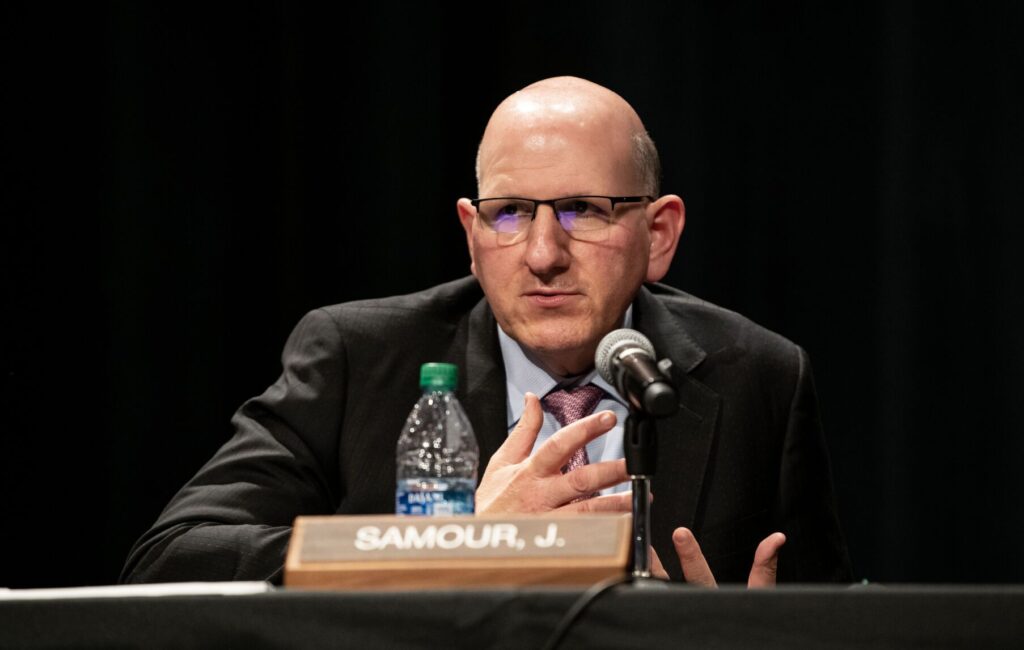
Colorado justices side with news organizations for disclosure of high-level child abuse data
Michael Karlik
michael.karlik@coloradopolitics.com
Updated 19 hours ago
The Colorado Supreme Court ruled on Monday that the state must disclose the number of child abuse reports at individual group living facilities in response to an open records request, as the addresses are already in the public domain. The...

Colorado auto thefts drop 56% from 2021 levels
Scott Weiser
scott.weiser@gazette.com
Updated 3 hours ago
Colorado once ranked as the worst state in the nation for motor vehicle thefts per capita in 2021. The state has since seen a dramatic improvement, with auto thefts dropping 56% from 2021 levels. The state reported 16,291 motor vehicle...
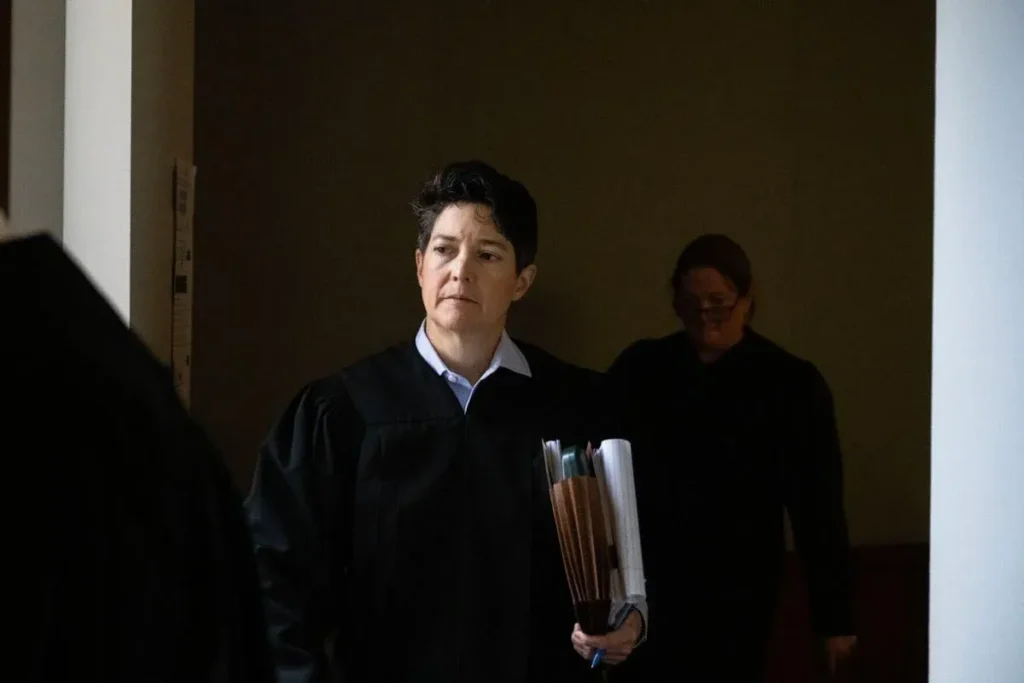
Divided Colorado Supreme Court finds Denver detective did not violate defendant’s Miranda rights
Michael Karlik
michael.karlik@coloradopolitics.com
Updated 14 hours ago
The Colorado Supreme Court determined on Monday that a Denver detective did not improperly resume questioning of a defendant in custody after he invoked his right to counsel. By 4-3, the justices reversed a trial judge’s order that found a...
PREV
PREVIOUS
In a world short on heroes, we just lost one | SONDERMANN
Sometimes, the best-laid plans can be disrupted by the news of the day. My queue of topics to address is long. For this week, I had in mind to write on the growing illiberalism of academia or the rethinking on the part of a retiring Colorado congressman or a coming ballot measure to revamp major […]

Hundreds in Denver rally for Ukraine, Trump easily wins South Carolina primary, lawmakers tackle 'orphan' drugs | WHAT YOU NEED TO KNOW
Today is Feb. 26, 2024, and here’s what you need to know: Hundreds of Ukraine supporters gathered at a rally at the Colorado state Capitol in Denver on Saturday to mark the second anniversary of Russia’s invasion of the U.S. ally. “Today, we are asking members of U.S. Congress to step up and vote for […]