

In a world short on heroes, we just lost one | SONDERMANN
Sometimes, the best-laid plans can be disrupted by the news of the day.
My queue of topics to address is long. For this week, I had in mind to write on the growing illiberalism of academia or the rethinking on the part of a retiring Colorado congressman or a coming ballot measure to revamp major elements of Colorado’s election process.
But that was before we learned of the assassination of a leading dissident halfway around the globe. Those other columns will wait for another day. In this moment, I want to pay tribute to Alexei Navalny and discuss the broader lessons of his murder.
Our world seems mighty short of heroes these days. For anyone who values freedom and respects true courage, Alexei Navalny was such a rare paragon.
Navalny’s story paints in sharp relief the timeless battle between good and evil; hope and fear; autonomy and totalitarianism; virtuous guts and wretched inhumanity.
His formidable combination of principle and bravery, to go along with a gift for social media, made Navalny the state’s public-enemy-number-one in Vladimir Putin’s Russia.
Navalny was a corruption fighter in a system corrupt to its core. Lest you think that Putin’s brand new, Peterhof-like, billion-dollar palace on the Black Sea was paid for with lottery winnings. Beyond that, Navalny was a freedom fighter in a Putin-led country that disdains the very concept of individual liberty.
In Putin’s Russia, two things have been made abundantly clear. First, political opposition will not be tolerated and such opposition that gains any legs will be dealt with harshly. Second, life is cheap whether it is in the hinterlands of Ukraine or for any who dare cross the anointed leader.
After a series of early campaigns and brief imprisonments, Navalny was positioned to be a top challenger to Putin in the 2018 presidential election. The year prior saw a series of arrests, short sentences and then a ruling – surprise – at the end of 2017 from Russia’s Central Election Commission barring Navalny’s candidacy.
To accompany the legal harassment, Navalny suffered an attack in which assailants sprayed him with green dye mixed with other caustic ingredients causing a major chemical burn to his right eye.
Gee, I wonder who might have sent the goons.
All of this is prelude to the August 2020 poisoning of Navalny when he took ill on a flight within Russia and was delivered to a clinic in Omsk where we was placed in an induced coma. He was subsequently transferred to a hospital in Berlin where he recovered, unexpectedly, and was released a month later.
Found in Navalny’s blood was a new form of the Novichok nerve agent, a weapon developed in Russia and used to poison other opponents of Putin’s regime.
After all that, and with a beautiful family, one might excuse Navalny for calling it a wrap and choosing a quieter life in exile. But that would have been an underestimation of the man and his mission.
Five months after being airlifted to Germany, Navalny returned to his native country, certainly knowing that a lengthy prison term was a certainty and death a distinct possibility.
He explained himself in a Facebook post around his return, “I don’t want to give up either my country or my beliefs. I cannot betray either the first or the second. If your beliefs are worth something, you must be willing to stand up for them. And if necessary, make some sacrifices.”
What lay ahead was sacrifice indeed. One trumped-up prison sentence was layered on top of another, each longer. It all finally led to a Siberian gulag north of the Arctic Circle and his death there several days ago.
Authorities called it “sudden death syndrome,” whatever that means. If he truly passed away of natural causes, even induced by brutal conditions, you would think those in charge would move a bit faster to issue autopsy results and release the body to his grieving mother.
Alexei Navalny’s life is over, but his story is not. There is much to be gleaned from the reaction to his killing.
To think of Putin as anything short of a modern-day Stalin requires a robust capacity for self-delusion. Navalny is far from alone in paying the ultimate price for incurring Putin’s wrath.
Read of what befell Kremlin critic and Navalny compatriot Boris Nemtsov in early 2015. Or far more recently, in fact, in the intervening days since Navalny’s slaying, Maxim Kuzminov, a Russian helicopter pilot who defected to Ukraine, was shot dead in coastal Spain.
Don’t forget the plane crash that took Wagner Group head and Putin rival Yevgeny Prigozhin permanently off the playing field last August. No doubt, it was just a routine aeronautical mishap.
Putin’s state security thugs are busy beavers, for sure.
Juxtapose all of this with Tucker Carlson’s fawning, fanboy treatment of Putin in that so-called interview. Even Putin, not given to sentiment, appeared put off by the lack of intellectual sparring.
Then Carlson, with camera crew in tow, visited a Russian grocery and came away starry-eyed by the store’s ability to keep its carts on the premises. Yes, and Hitler made the trains run on time.
To call Carlson a “useful idiot” is to do a disservice to both utility and idiocy. (Look it up if you are unfamiliar with the phrase.)
True to form, our own aspiring autocrat, Donald Trump, could not be bothered to offer a comment on Navalny’s demise, much less a condemnation, for a full 72 hours. When Trump did finally note the event, it was only to compare Navalny’s suffering with his own legal travails.
With Trump, it’s always about Trump and only about Trump. In that way, he is a font of consistency.
All of which brings us to the dithering of the U.S. Congress, that failed assemblage, on continued military aid to Ukraine. For what are not even pennies in the scope of the federal budget, we can continue to arm brave Ukranians who are shedding their own blood to save their country and halt Putin’s adventurism.
That seems a far better course than confronting Putin in Poland or the Baltic states where we would be obligated to send American troops, per NATO covenants.
Whether fueled by Trump or just funneled by him, the isolationist instinct among too many Americans is particularly ill-timed. Experience has shown that a volatile world is far better served when America is engaged and shines its light.
Isolationist periods and their champions have not worn well. Would you rather be FDR or Charles Lindbergh in the history books? JFK (never mind his father) or Robert Taft? Ronald Reagan or Pat Buchanan?
We’ll return to more customary fare next week. Before doing so, let me close with a suggestion. The aristocrats of Norway should close nominations and award the 2024 Nobel Peace Prize to Alexei Navalny. This would require an exception to their rule against posthumous recognition. But for someone who willfully bore the consequences of protest and dissent, it would be fitting honor.
Eric Sondermann is a Colorado-based independent political commentator. He writes regularly for ColoradoPolitics and the Gazette newspapers. Reach him at EWS@EricSondermann.com; follow him at @EricSondermann

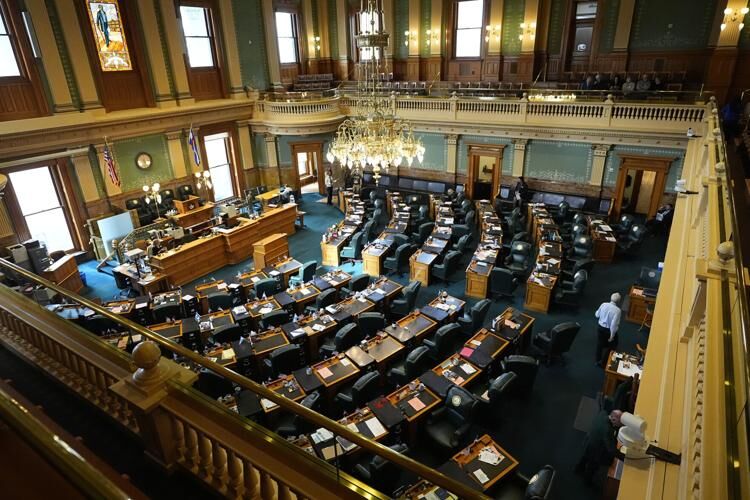
Colorado House Democrats focus on rising prison costs amid declining crime rates during budget discussion
Marissa Ventrelli
marissa.ventrelli@coloradopolitics.com
Updated 11 hours ago
Colorado’s House Democrats pressed budget writers Tuesday over a nearly $70 million increase for the Department of Corrections, questioning why the state plans to add 941 prison beds and explore new prison capacity at a time when crime rates are...
Federal judge warns of increasingly inadequate immigration bond hearings
Michael Karlik
michael.karlik@coloradopolitics.com
Updated 7 hours ago
A federal judge ordered the immediate release of a man in immigration custody last week and, seemingly for the first time in Colorado, warned that the government is increasingly conducting inadequate bond hearings for detainees. Colorado’s federal trial court is facing...
Inside the GOP caucus: Colorado legislator explains why a bigger budget still means cuts
Marianne Goodland
marianne.goodland@coloradopolitics.com
Updated 9 hours ago
Tasked with explaining a budget driven by rising caseloads, shifting federal dollars and a $1.5 billion shortfall, Joint Budget Committee member Rep. Rick Taggart spent Tuesday’s Republican caucus meeting detailing why the 2026–27 spending plan appears larger on paper, even...

10th Circuit upholds dismissal of Barry Morphew’s civil lawsuit against prosecutors, investigators
Michael Karlik
michael.karlik@coloradopolitics.com
Updated 7 hours ago
The Denver-based federal appeals court agreed on Monday that Barry Morphew, who now stands accused for a second time of murdering his wife, failed to state viable claims against the government officials involved in his first, unsuccessful prosecution. Morphew was...
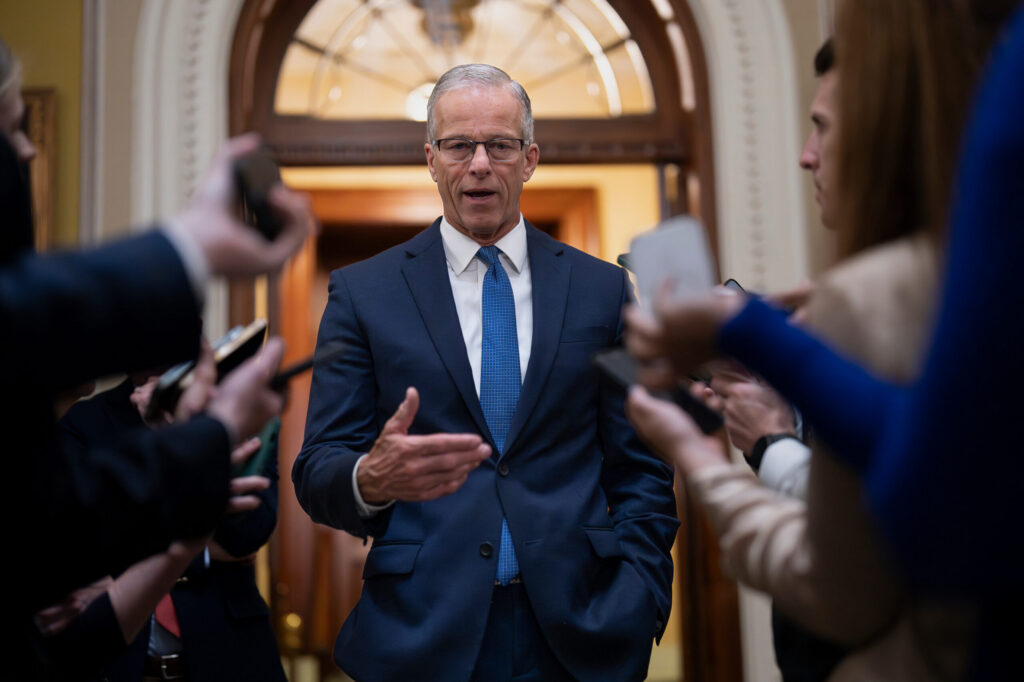
Johnson won’t reopen DHS until Thune makes good on megabill promise
Lauren Green, Washington Examiner
lauren.green.washington.examiner@gazetteedit.wpenginepowered.com
Updated 13 hours ago
Speaker Mike Johnson (R-LA) is unlikely to move legislation ending a partial shutdown of the Department of Homeland Security until Senate Majority Leader John Thune (R-SD) kickstarts the party-line budget reconciliation process to pass another megabill. A source familiar told...
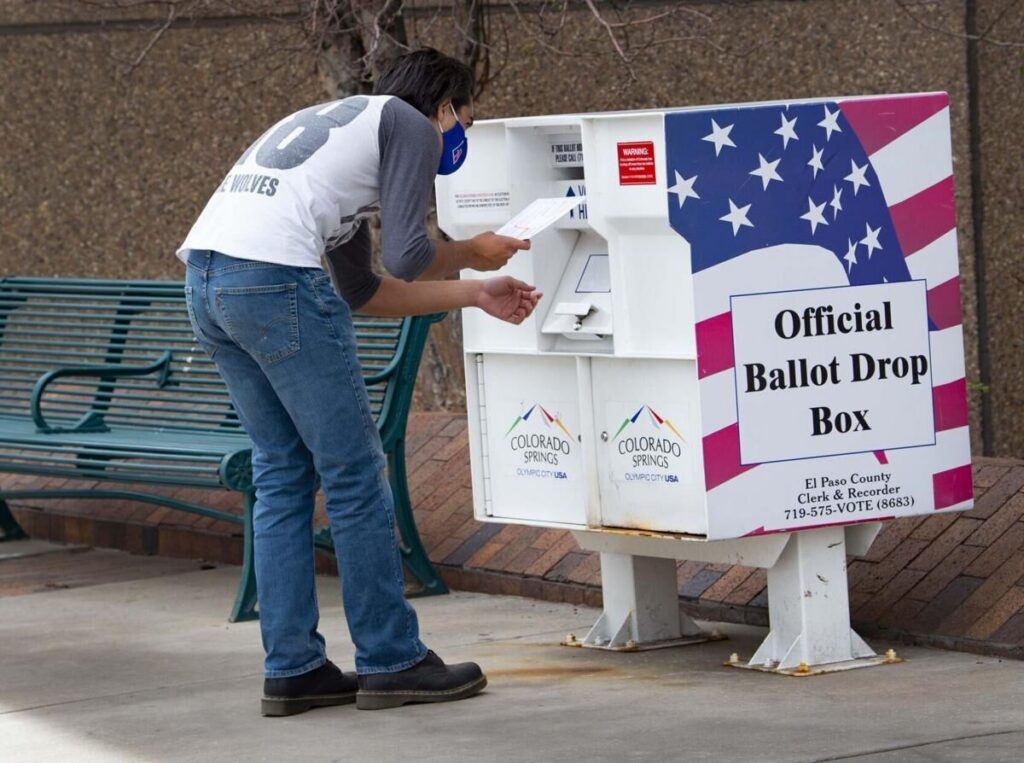
Trump’s mail-in ballot executive order reveals why DOJ is pushing for state voter data
Kaelan Deese, Washington Examiner
kaelan.deese.washington.examiner@gazetteedit.wpenginepowered.com
Updated 13 hours ago
President Donald Trump’s new executive order on mail-in voting is offering the clearest explanation yet for why the Justice Department has spent months aggressively seeking access to state voter rolls, while also triggering a sweeping legal challenge from Democrat-led states....

Trump quietly drops steel and aluminum tariffs for bikes, e-bikes, and frames
Christian Datoc, Washington Examiner
christian.datoc.washington.examiner@gazetteedit.wpenginepowered.com
Updated 13 hours ago
EXCLUSIVE — The Trump administration has quietly backed off from President Donald Trump’s threat to impose 50% steel and aluminum tariffs on imported bicycles, e-bikes, and bicycle frames. In August 2025, the administration added e-bikes to the list of products covered...
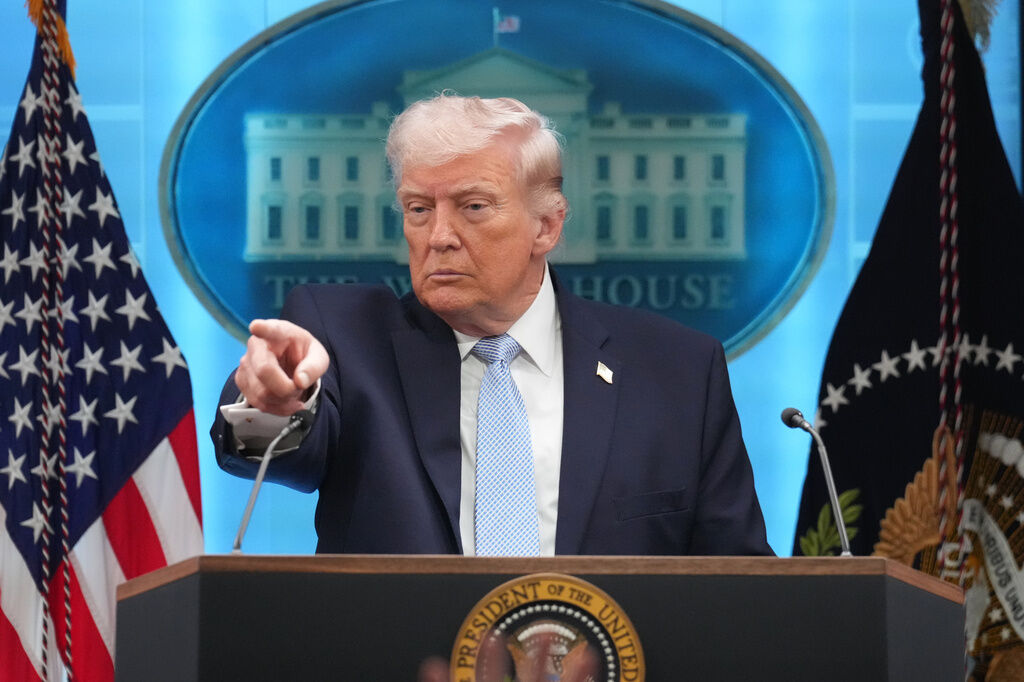
Trump warns Iran’s ‘whole civilization will die tonight’ unless deal is struck with US
Hailey Bullis, Washington Examiner
hailey.bullis.washington.examiner@gazetteedit.wpenginepowered.com
Updated 14 hours ago
President Donald Trump issued a bleak warning ahead of his Tuesday night deadline for Iran to reach a peace deal with the United States, saying “a whole civilization will die” unless Iranian leadership yields. “A whole civilization will die tonight,...
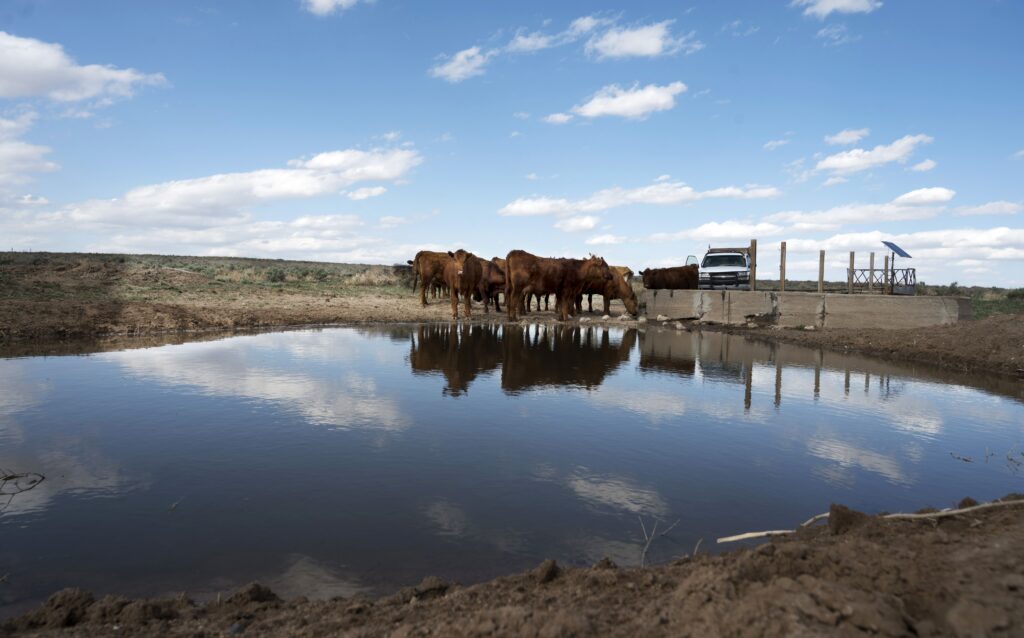
Senate-passed farmworkers overtime bill easily clears Colorado House committee
Marianne Goodland
marianne.goodland@coloradopolitics.com
Updated 10 hours ago
A proposal to ease Colorado’s overtime requirements for agricultural employers cleared a key House committee Monday, setting up a broader fight over whether the state should scale back a labor policy adopted just five years ago. The House Agriculture, Water...
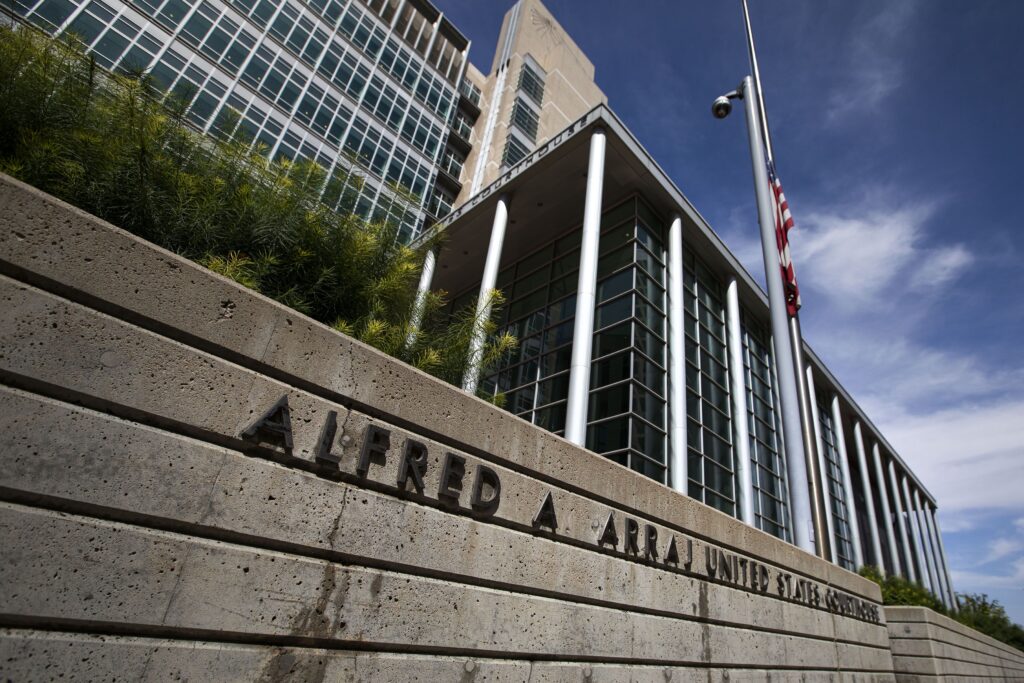
Federal judge blocks evidence from Aurora police’s unconstitutional search
Michael Karlik
michael.karlik@coloradopolitics.com
Updated 7 hours ago
A federal judge ruled last month that prosecutors cannot use firearm evidence against a defendant because Aurora police searched him without having any reasonable basis to believe he was armed and dangerous. In evaluating the constitutionality of the search, U.S....
PREV
PREVIOUS

Hundreds in Denver rally to support Ukraine on 2nd anniversary of Russian invasion
Hundreds of Ukraine supporters gathered at a rally at the Colorado state Capitol in Denver on Saturday to mark the second anniversary of Russia’s invasion of the U.S. ally. “Today, we are asking members of U.S. Congress to step up and vote for help to Ukraine,” said Marina Dubrova, president of Ukrainians of Colorado, which […]

Nebraska governor reverses course, will take federal funding to feed children | OUT WEST ROUNDUP
NEBRASKA Governor says state will take federal funding to feed children LINCOLN – Nebraska Gov. Jim Pillen reversed course on Feb. 12 and announced that the state will accept roughly $18 million in federal funding to help feed hungry children over the summer break. Pillen announced in December that the state would reject the funding, […]