

Colorado House committee revives single-payer healthcare system discussions

Some of Colorado’s lawmakers want to explore anew the possibility of implementing a single-payer health care system in Colorado roughly eight years after voters soundly rejected the idea.
The bill, House Bill 1075, received approval on Wednesday from the House Health and Human Services Committee.
In pushing for the measure, sponsors cited a 2019 study that concluded a “full publicly financed and privately delivered health care system could yield significant healthcare savings.” In 2016, roughly 80% of Colorado’s voters rejected a ballot measure that would have created a single-payer system financed by new taxes to the tune of $25 billion a year.
If the bill is enacted, the the Colorado School of Public Health would be tasked with analyzing draft model legislation for implementing a single-payer, not for-profit, publicly financed and privately delivered universal health care payment system that directly compensates providers.
It would also create a task force that would advise the School of Public Health during its analysis.
Bill sponsor Rep. Karen McCormick, D- Hygiene, said it would expand on the findings of study initiated by House Bill 19-1176, also known as the “Health Care Cost Savings Act.” That study, which was also conducted by the School of Public Health, claimed that implementing a single-payer health care system would extend broader coverage to Coloradans and result in substantial cost savings.
McCormick and the bill’s co-sponsor, Rep. Andrew Boesenecker, D- Berthoud, previously sponsored a similar bill, House Bill 23-1209, which cleared the House, but the legislative session ended while it was being discussed in the Senate.
Dr. Greg Tung, a Professor at the Colorado School of Public Health and a contributor to the 2019 study, supports the 2024 bill. This bill would be a more focused effort to examine the specific cost implications to implement a universal health care system, specifically for stakeholders, such as hospitals and individuals covered by specific payment systems, he said.
Opponents of the bill, including committee member Rep. Brandi Bradley, R- Larkspur, cited Amendment 69, a 2016 ballot measure that proposed creating a payment system designed to finance universal health care in the state. Nearly 80% of Coloradans voted against the measure. Bradley also referenced a committee report on affordable health care that did not recommend a single payer system.
“We keep saying this is gonna work, and we’ve heard our constituents say no,” she said. “We’ve developed commissions — they’ve said no. So, now we have a task force. I’m just wondering when you guys are gonna finally listen.”
During her closing remarks to the committee, McCormick acknowledged concerns stemming from the Amendment 69 vote, revealing that she herself even voted against it at the time. However, she said, she has learned a lot since 2016 and she believes the voters have, as well.
Amendment 69 sought to create a “universal” health care in Colorado, run by a single insurer financed by a 10% payroll tax and split between employers, who would have paid for two-thirds of the tax, and workers paying for the rest. Once fully implemented, the proposed new taxes would have raised $25 billion in new revenue each year.
Also speaking in favor of HB1075 was Hope Stone of the Colorado Consumer Health Initiative.
“The status quo of how we pay for and delivery health care is not working,” she said. “Consumers across Colorado feel the physical, financial and emotional impacts of these market failures every day.”
William Navarrete Moreno, a student from the University of Colorado and a member of the school’s Coalition for Health Advancement and Narrowing Gaps In Equity, spoke of his family’s struggles to afford healthcare due to high costs. Both his mother, who had cancer, and his brother, who struggled with a substance use disorder, died because they were unable to afford treatment for their respective conditions, he said.
“This bill offers a glimmer of hope for our state,” he said. “It opens doors to allow us to create a future health care system that allows future generations to know that health care is not a privilege reserved for the ones who can afford it, but a right for all.”
Meghan Dollar of the Colorado Chamber of Commerce echoed the concerns voiced by committee member Rep. Richard Holtorf, R- Fort Morgan, that the bill’s language alluded to a predetermined outcome.
“While we recognize that the bill is a study, we are concerned that there is some intent in the study to get a predetermined outcome,” she said. “In addition, given all the work that’s been done in the past on improving Colorado’s health care system, why not let some of those policies play out before look at studying a single payer system as well?”
Rachel Beck of the Colorado Competitive Council, said, “Both the data and the voters have made it clear that this is not an efficient way to provide Coloradans with essential health care.”
Four amendments were made to the bill, including one to add three more members to the advisory committee and to allow the School of Public Health to hire an actuarial consultant to help. The amended version of the bill passed along party lines and will now go before the House Appropriations Committee.
In the Senate, the bill is sponsored by Sen. Sonya Jaquez Lewis, D- Lafayette.


Gazette, Centennial Institute cosponsoring Republican gubernatorial debate Tuesday
The Gazette
the-gazette@coloradopolitics.com
Updated 7 minutes ago
The Gazette and the Centennial Institute are cosponsoring a Republican gubernatorial debate Tuesday at Colorado Christian University, featuring candidates state Rep. Scott Bottoms, a Colorado Springs pastor, and longtime GOP insider state Sen. Barb Kirkmeyer. Candidates will field questions on...
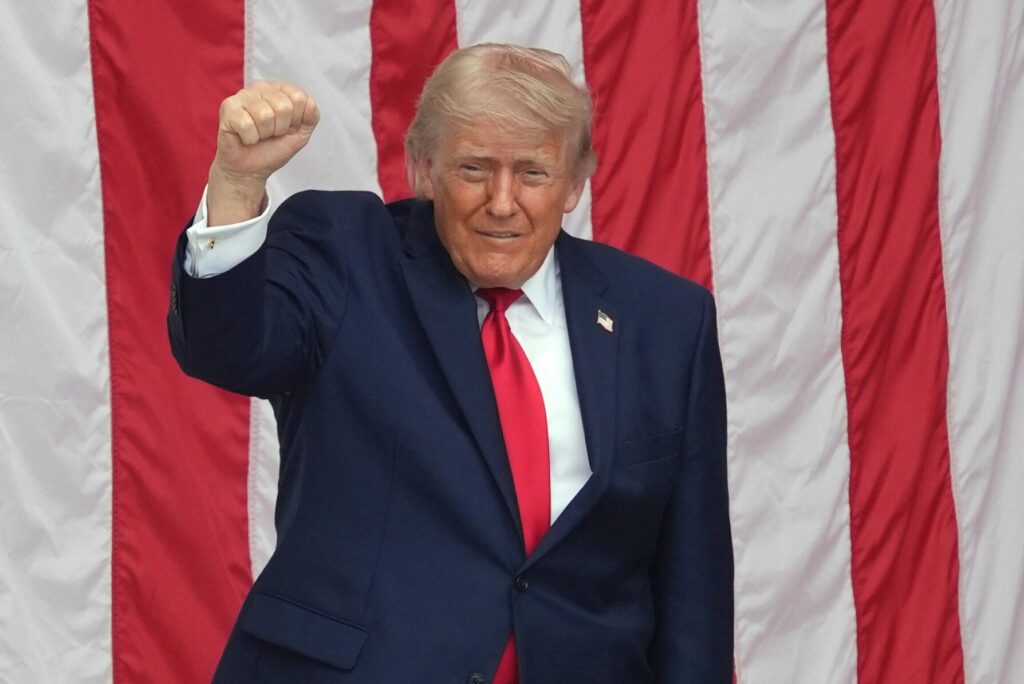
Trump is seeing doctors for his annual physical. What the public finds out is up to him
Collin Binkley
collin.binkley@associatedpress.com
Updated 2 hours ago
WASHINGTON (AP) — President Donald Trump is getting a medical exam on Tuesday, putting his health under renewed public scrutiny after he has worked to dismiss concerns over his age and stamina. The 79-year-old president traveled to Walter Reed National...

Is the ‘penumbra of privacy’ going, going, gone in Colorado? | Hal Bidlack
Hal Bidlack
hal-bidlack@coloradopolitics.com
Updated 18 hours ago
Once again, there are too many things in Colorado Politics that are newsworthy and should be written about. Unless my kindly editor will allow me to write a book-length column this week? (Ed: not so much…) First up, I’d like...

Quiet at the state Capitol doesn’t mean silence on energy policy | GUEST COLUMN
Colorado Politics
colorado-politics@coloradopolitics.com
Updated 19 hours ago
By Carly West By many accounts, Colorado’s 2026 legislative session was unusually quiet on oil-and-natural-gas policy. There was no sweeping new oil-and-natural-gas package. No major new production restrictions. After years of contentious energy debates dominating the Capitol, the relative quiet...
The history, and future, of extinction in Colorado | GUEST COLUMN
Colorado Politics
colorado-politics@coloradopolitics.com
Updated 18 hours ago
By Eric Washburn When I was a kid growing up in Aurora in the late 1960s and early 1970s, one of my favorite things to do was to go to the Denver Museum of Natural History and spend countless hours...

Memorial Day at Fort Logan honors sacrifice of fallen troops
Nicholas Fogleman
nicholas.fogleman@denvergazette.com
Updated 1 hour ago
Hundreds gathered Monday at Fort Logan National Cemetery to honor fallen service members during a Memorial Day ceremony, where speakers emphasized the sacrifice and memory of military personnel and their families. The ceremony took place as the nation approaches the...

Legislature overrules state Supreme Court decisions, federal judges contend with violations of orders | COURT CRAWL
Michael Karlik
michael.karlik@coloradopolitics.com
Updated 2 hours ago
Welcome to Court Crawl, Colorado Politics’ roundup of news from the third branch of government. The Colorado legislature overruled two recent state Supreme Court decisions in this year’s session, plus federal judges are addressing the government’s violations of their orders...
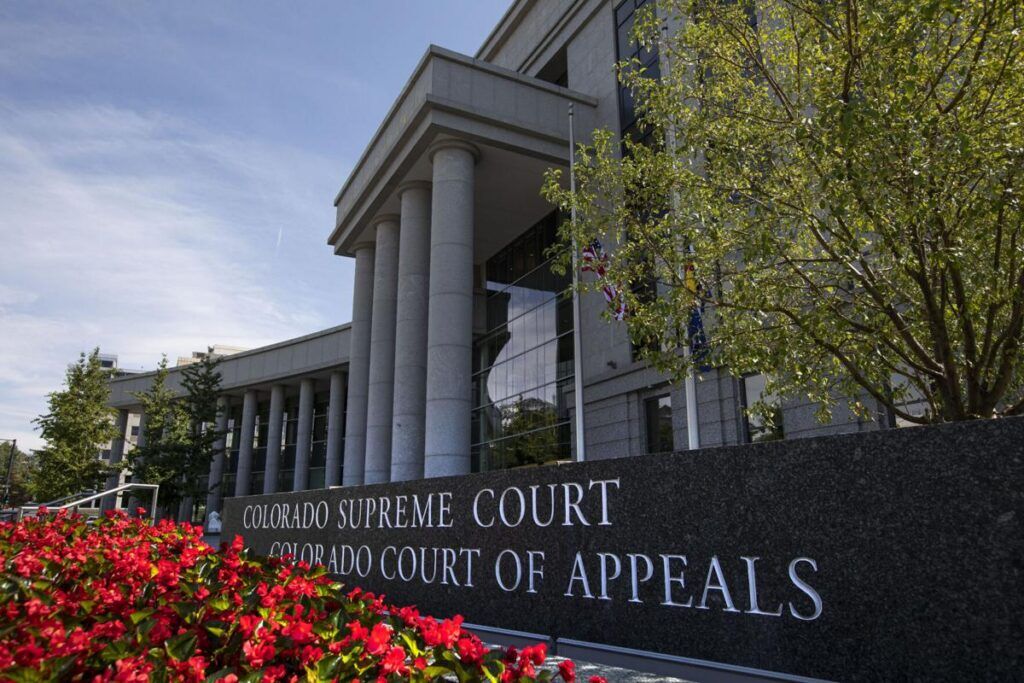
Appeals court reinstates murder case despite ex-DA Linda Stanley’s conduct
Michael Karlik
michael.karlik@coloradopolitics.com
Updated 17 hours ago
Colorado’s second-highest court reinstated the murder and child abuse charges on Thursday against a Fremont County defendant, reasoning that the former district attorney’s misconduct did not warrant dismissal of the charges. A judge previously dismissed the criminal case against defendant...

How a CU Boulder law school program helped free a Denver man after 27 years in ‘shaken baby’ murder case
Matt Kyle
matt.kyle@denvergazette.com
Updated 30 minutes ago
From the first time she looked at Stephen Martinez’s case, Boulder attorney Jeanne Segil knew she had a shot at getting him released from prison. Martinez, 58, spent 27 years behind bars for a crime he now says never happened....

Aurora police communication policy changes raise concerns for public safety, press freedom
Kyla Pearce
kyla.pearce@gazette.com
Updated 60 minutes ago
Proponents argue arestees have a right to privacy until adjudicated An Aurora City Council decision to alter social media policies for the police department has raised concerns from press freedom and public safety advocates, who worry that limiting what police...