

10th Circuit agrees marketplace app not liable for Aurora couple’s murder
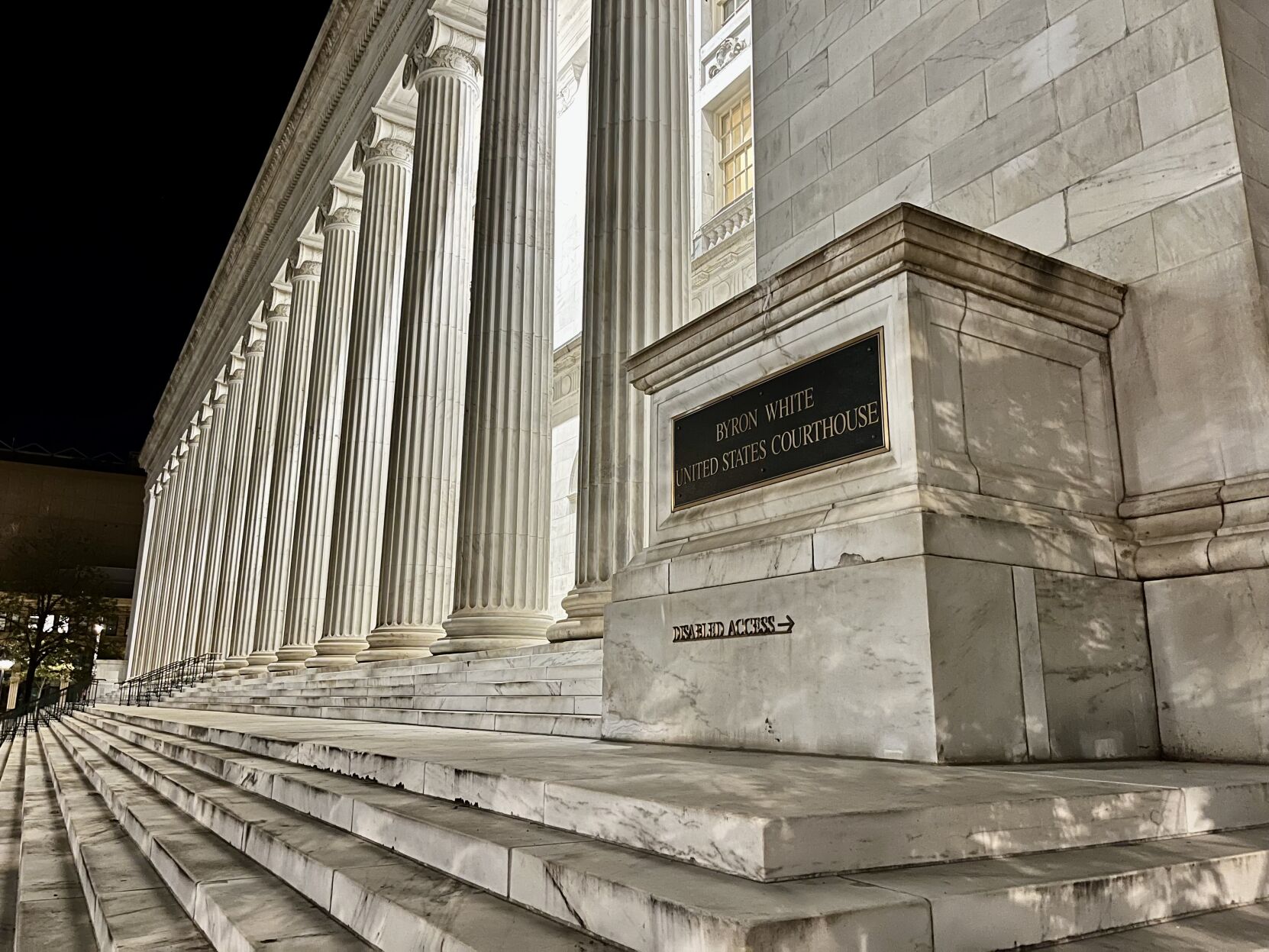
The federal appeals court based in Denver agreed on Thursday that the company behind an online marketplace app that connected an Aurora couple to the man who murdered them cannot be held liable for its own alleged role in placing them in harm’s way.
Joseph and Jossline Roland met up with Kyree Brown to purchase a vehicle using the app Letgo, which is now part of OfferUp. Instead, Brown shot the Rolands to death and stole their money. Arapahoe County jurors convicted Brown and he is serving a life sentence in prison.
The Rolands’ children filed suit against Letgo, Inc., alleging negligence, wrongful death and a violation of the Colorado Consumer Protection Act. Chiefly, they argued Letgo’s labeling of Brown as a “verified” seller gave the Rolands a false sense of security when using the marketplace app.
A trial judge initially dismissed the lawsuit, finding no other instances where online platforms were liable for the actions of a user under similar circumstances. A three-judge panel for the U.S. Court of Appeals for the 10th Circuit agreed the Rolands’ children had not stated a viable legal claim against the app company.
“Letgo had safety guidelines on its platform, warning users to take steps to protect themselves before buying or selling online, to meet in a public place during the day, to find another buyer or seller if there are any doubts about a user’s authenticity, and to take proper precautions even if most Letgo users are trustworthy,” wrote Judge Timothy M. Tymkovich in the panel’s Feb. 1 order. “Thus, in context, Letgo’s statements are not an expression of approval that its platform is safe and that all users are trustworthy.”
The panel did not address an issue that could have had far-reaching implications for online platforms: whether Letgo “created” any information itself on Brown’s profile, thereby giving up its immunity under federal law.
Lawyers for the plaintiffs and Letgo did not respond to emails seeking comment.
As described in the lawsuit, Brown, then 18, created a Letgo account under the false name “James Worthy.” He did not have a “verified user” badge, which users could earn when they accumulated 50 points through a variety of verification mechanisms. Worthy’s profile instead showed he was “verified” with only a phone number.
Joseph Roland corresponded with Brown over the app to purchase a used Toyota RAV4 for $3,000, which, unbeknown to Roland, was stolen. On Aug. 14, 2020, the Rolands met Brown at a shopping center after 11 p.m., with Jossline Roland intending to drive the RAV4 home following the purchase.
At Brown’s request, the couple followed him to a new location, where Brown attempted to rob the Rolands at gunpoint. He then shot them and fled with the $3,000 in cash. Both Joseph and Jossline Roland died that night.
“Defendants encouraged Letgo users to trust its ‘verified sellers’ even though Defendants knew all that is required to be ‘verified’ under its policies is a functioning email address,” wrote attorneys in the Roland children’s civil lawsuit against the app company. “Defendants induced Letgo users to believe a verification process is undertaken. These material and false representations were untrue, deceptive, and misleading.”

In response, Letgo argued multiple theories for why it could not be held liable. It first observed Brown’s profile made clear he had not accumulated the 50 points needed to receive a “verified user” badge, and instead contained the true statement that Brown had verified his account solely with a phone number.
Letgo also claimed it was entitled to immunity under Section 230 of the Communications Decency Act, a 1996 law that prohibits online platforms, including social media giants like X and Facebook, from being held liable for the content of their users.
It was clear, the company argued, “everything that was allegedly misleading about that profile and ad was created and developed entirely by Brown himself.”
In December 2022, Chief U.S. Magistrate Judge Michael E. Hegarty dismissed the lawsuit. He concluded Letgo was not immune from liability because it did create the “verified” label on Brown’s profile, but, regardless, it was Brown’s criminal actions that caused the Rolands’ deaths.
“Plaintiffs have not cited a single case in which a court held an internet platform potentially liable for violent criminal acts perpetrated by a platform user who lured an innocent consumer into a scheme through means of misrepresentations made by the criminal,” he wrote.
The Roland children appealed to the 10th Circuit, arguing Letgo’s assurances of verification were why their parents chose to use the platform for their transaction over competitors like craigslist.
Letgo made it seem as if “they were speaking to someone who was reputable, credible. That, in fact, had been vetted,” said attorney Daniel Tapetillo during oral arguments.
“And what was the basis for that perception?” asked Tymkovich.
“All of the advertisement and marketing that they do to distinguish themselves from their competitors,” responded Tapetillo.
Ultimately, the panel agreed Letgo’s statements about verification were “insignificant” compared to the actual cause of the Roland’s murders — Brown’s criminal conduct.
“The profile had no reviews and no profile photo. The designation on Mr. Brown’s profile that he was ‘verified with’ his phone number, taken in context, is not an expression of approval that he was trustworthy and did not increase the risk of harm to the Rolands,” wrote Tymkovich.
The panel did not address Letgo’s immunity under Section 230.
The case is Roland et al. v. Letgo, Inc. et al.

Federal judge partially allows second World Cup trafficking lawsuit to move forward
Michael Karlik
michael.karlik@coloradopolitics.com
Updated 6 hours ago
A federal judge allowed some claims to move forward last month against companies operating out of Colorado that allegedly participated in a human trafficking venture involving Filipino laborers who constructed facilities for the 2022 World Cup in Qatar. There are...
Federal judge dismisses lawsuit seeking to force Colorado secretary of state to screen out scam filings
Michael Karlik
michael.karlik@coloradopolitics.com
Updated 43 minutes ago
A federal judge dismissed a lawsuit last week that sought to require Colorado’s secretary of state to verify corporate filings in the state’s database to reduce the risk of future fraud. Bernard Butts of Florida, who was 83 when he...
Federal judge finds no constitutional violation by Huerfano County well inspectors
Michael Karlik
michael.karlik@coloradopolitics.com
Updated 4 hours ago
A federal judge concluded last month that two Huerfano County employees did not engage in an unconstitutional search when they approached the plaintiffs’ camper within 40 feet to investigate a potential code violation. In July 2021, the county’s building inspector,...

Federal judge warns of increasingly inadequate immigration bond hearings
Michael Karlik
michael.karlik@coloradopolitics.com
Updated 1 day ago
A federal judge ordered the immediate release of a man in immigration custody last week and, seemingly for the first time in Colorado, warned that the government is increasingly conducting inadequate bond hearings for detainees. Colorado’s federal trial court is facing...

10th Circuit upholds dismissal of Barry Morphew’s civil lawsuit against prosecutors, investigators
Michael Karlik
michael.karlik@coloradopolitics.com
Updated 1 day ago
The Denver-based federal appeals court agreed on Monday that Barry Morphew, who now stands accused for a second time of murdering his wife, failed to state viable claims against the government officials involved in his first, unsuccessful prosecution. Morphew was...
Federal judge blocks evidence from Aurora police’s unconstitutional search
Michael Karlik
michael.karlik@coloradopolitics.com
Updated 1 day ago
A federal judge ruled last month that prosecutors cannot use firearm evidence against a defendant because Aurora police searched him without having any reasonable basis to believe he was armed and dangerous. In evaluating the constitutionality of the search, U.S....

Colorado justices confirm lawyers may ‘borrow’ allegations from elsewhere
Michael Karlik
michael.karlik@coloradopolitics.com
Updated 2 days ago
The Colorado Supreme Court ruled on Monday that plaintiffs’ lawyers can use allegations made elsewhere to bolster their own clients’ claims, so long as the attorney first performs some degree of investigation into the “borrowed” assertions. Under Colorado’s rules for...
Appeals Court rules Douglas County violated open meeting laws
Nicholas Fogleman
nicholas.fogleman@denvergazette.com
Updated 1 day ago
The Colorado Court of Appeals ruled that Douglas County Commissioners violated Colorado open meeting laws in a series of closed meetings leading up to the county’s failed home rule special election. The Thursday ruling reversed a trial court’s denial of...

Colorado justices restore RTD subcontractor’s award, reject ‘drastic’ view of public works law
Michael Karlik
michael.karlik@coloradopolitics.com
Updated 2 days ago
The Colorado Supreme Court on Monday restored a $5.7 million award to a company that helped build a commuter rail line and, in doing so, rejected a view of state law that would nullify a subcontractor’s entitlement to any compensation...
El Paso County defendant’s speedy trial rights violated, Colorado justices find in overturning convictions
Michael Karlik
michael.karlik@coloradopolitics.com
Updated 2 days ago
The Colorado Supreme Court concluded on Monday that an El Paso County prosecutor made an unjustified decision to file a mid-case appeal, pushing the trial beyond the legal deadline and requiring that the defendant’s convictions be overturned. In Colorado, the...
PREV
PREVIOUS
Appeals court upholds restrictions on court access for man who threatened 2 judges
Colorado second-highest court agreed last month that the restrictions imposed upon a man who harassed multiple Western Slope judges did not unconstitutionally infringe upon his right to access the courts. As part of his probationary terms for the offense of retaliating against a judge, Brett Andrew Nelson was required to obtain a court’s permission before […]
Gunnison landlords escape contempt, but federal judge remains concerned about non-discrimination compliance
Although a trio of Gunnison landlords recently avoided being held in contempt of court, a judge has registered new concerns about their ongoing failure to comply with a non-discrimination agreement they entered into with the federal government. On Jan. 17, the U.S. Department of Housing and Urban Development asked for a status conference with David […]