

Management of public lands ought not be for sale | GABEL
The U.S. Securities and Exchange Commission’s (SEC) proposed rule allowing for natural asset companies (NACs) to be traded on the New York Stock Exchange is reckless and politically motivated, exactly the opposite of the purpose of the SEC. The management of public lands ought not be for sale.
The SEC – despite their congressional creation to ensure transparency, fair prices for trading, and a high degree of liquidity for traders following the 1929 stock market crash – needs to understand the creation of NACs will harm the economy, especially in rural areas. The SEC has no authority to peddle the management of public lands.
According to the proposed rule filing, NACs will be corporations that hold the rights to the ecological performance (i.e., the value of natural assets and production of ecosystem services) produced by natural or working areas, such as national reserves or large-scale farmlands. NACs also have the authority to manage the areas for conservation, restoration or sustainable management. These rights can be licensed like other rights, including “run with the land” rights (such as mineral rights, water rights, or air rights), and NACs are expected to license these rights from sovereign nations or private landowners.
This proposed rule places public lands into private investment portfolios, including national parks. This proposed rule would provide a vehicle to investors, including foreign governments, to further climate crisis policies and take a new approach to President Joe Biden’s embattled 30×30 agenda.
Stay up to speed: Sign up for daily opinion in your inbox Monday-Friday
The preservation of land is removing it from all use, not just the uses the environmental types are particularly dismayed with – mineral extraction and grazing. NACs are not in any way conservation of resources; it is allowing the entity with the most money to control natural resources. Conservation and preservation are two distinctly different things. Total non-management of lands is not management at all. It is not fair to the land, the wildlife, the livestock or the communities that rely on any combination of those resources.
The proposed rule grants management authority to the NAC, which gives private investors or investment companies management authority over federal lands. It is Congress alone that has the authority to manage these lands. Additionally, management must be, according to the proposed rule, for conservation, restoration or sustainable management. This grants the highest bidder the ability to remove from federal lands not only qualified management, but also any productive use.
Though the Bureau of Land Management (BLM) was formed in 1946, the agency’s mission was clarified by the passage of the Federal Land Policy and Management Act or FLPMA. According to FLPMA, public lands and their resources are to be managed for multiple uses. Just as sloppy federal land grabs thinly veiled as monument designations are inappropriate, so is the elimination or preclusion of multiple-use activities and access. Public lands are central to the economies of many rural communities in the western U.S. that rely on dollars from all of the multiple uses, be in grazing, recreation, mineral extraction, sustainable energy production or timber. Each time a restriction is placed on public lands, reasonable or not, the local economy is affected, and the principle of multiple use is eroded. If NACs are allowed, those with radical climate goals and deep pockets will be allowed to prevent use of public lands, a direct assault on FLPMA and the centuries of combined expertise and experience that drove it and continues to heed it. A wiser columnist may surmise the deadline for Biden’s climate-driven goal of preserving 30% of lands and waters by 2030 is nearing and not quickly enough for some radicals. This rush is also illustrated in the hurried public comment period of a mere 21 days. Such a battering of property rights ought to at least warrant a longer comment period.
Through NACs, any investor, including adversarial nations, would be able to purchase the management rights to public lands, crippling this country’s ability to feed and fuel itself and making the United States dependent upon foreign countries. As Sen. Pat Roberts from Kansas said, “show me a nation that can’t feed itself, and I’ll show you a nation in chaos.”
The public comment period ends on Thursday.
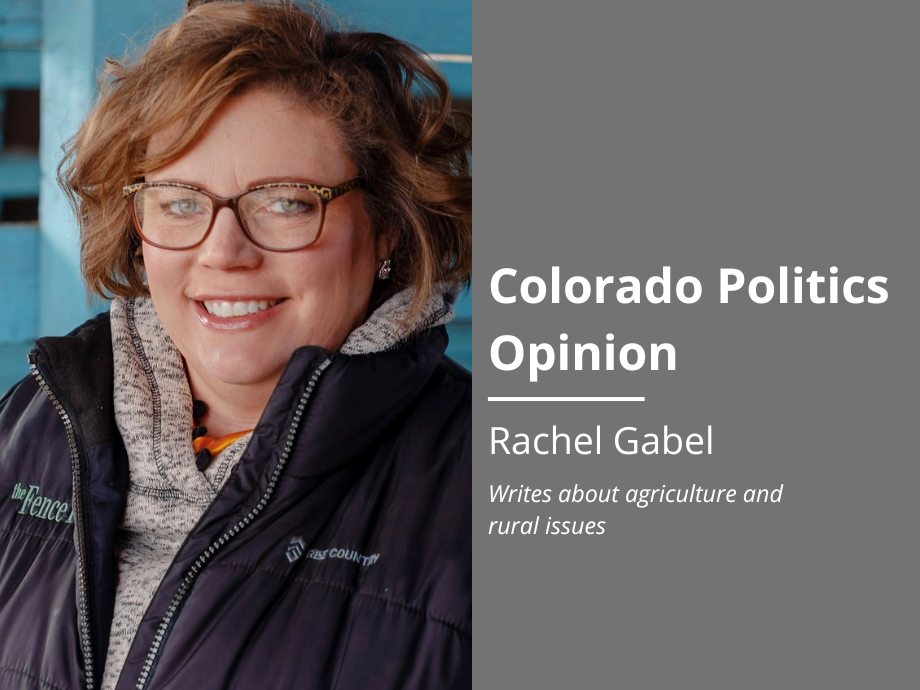
Rachel Gabel writes about agriculture and rural issues. She is assistant editor of The Fence Post Magazine, the region’s preeminent agriculture publication. Gabel is a daughter of the state’s oil and gas industry and a member of one of the state’s 12,000 cattle-raising families, and she has authored children’s books used in hundreds of classrooms to teach students about agriculture.


Political interference, activism a constant under Polis’ Colorado Parks & Wildlife | Rachel Gabel
Rachel Gabel
rachel-gabel@coloradopolitics.com
Updated 15 hours ago
Colorado Parks & Wildlife can’t catch a break. If polling were used to measure public trust in agencies, it would be a dreary picture. This, however, is the result of political interference with the agency, not as a result of...

Democratic-socialist experiments in New York, Seattle well worth watching | Miller Hudson
Miller Hudson
miller-hudson@coloradopolitics.com
Updated 15 hours ago
Despite writing just once a week, I find myself trying to make content choices two or three weeks ahead — if for no other reason than gathering information. Late last year I theorized Zohran Mamdani just might replace our Tangerine...

French Revolution comes to Colorado Democrats | Jon Caldara
Jon Caldara
jon-caldara@coloradopolitics.com
Updated 4 days ago
The border skirmishes are increasing, and we could be looking at full-blown combat. The simmering civil unrest inside Colorado’s Democratic ranks is heating up, and during this legislative session it might boil over into all-out civil war. If it does,...
Colorado oilmen may play key role in Trump’s Venezuelan oil takeover plan
Vince Bzdek
vince.bzdek@gazette.com
Updated 2 days ago
When President Donald Trump summoned oil executives to the White House recently to push for major investment in Venezuela, an interesting sprinkling of smaller independent companies from Denver was invited along with the big names of American oil. One of...
How best to prepare for Colorado’s energy future | OPINION
Colorado Politics
colorado-politics@coloradopolitics.com
Updated 4 days ago
By Carly West Colorado is at an inflection point on energy. As the state enters its 150th year, decisions about how energy is produced, delivered and regulated are becoming more immediate — and more consequential — for communities across the...

Big Marijuana in Colorado is all about spin, denial | PODIUM
Luke Niforatos
luke-niforatos@coloradopolitics.com
Updated 4 days ago
Where there’s weed smoke, there’s fire. In Leadville last month, this was literally the case, as a pot shop incinerated along with its mind-altering wares. The acrid smoke was so harmful to residents that homes were evacuated. The local public...
U.S. careening off the rails under Trump’s stewardship | Paula Noonan
Paula Noonan
paula-noonan@coloradopolitics.com
Updated 5 days ago
Does anyone in Colorado or the United States feel like life is anywhere near normal anymore? Our aberration is not from a pandemic. It’s from our government. It’s at war with us, the people. Let’s take Renée Good’s tragic fate....
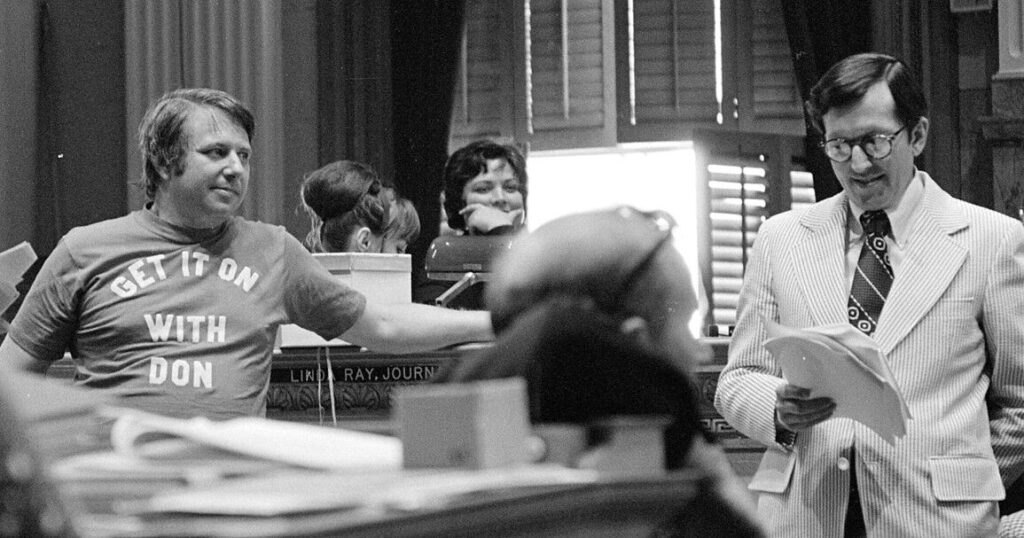
RIP Frank Traylor — a model for political life | FEEDBACK
Colorado Politics
colorado-politics@coloradopolitics.com
Updated 6 days ago
It is with great sadness I read of the death of Frank Traylor. From the moment we met at the beginning of the 1975 legislative session, I knew he was special. As a doctor, he knew medical issues better than...

Free speech isn’t a presidential call | Hal Bidlack
Hal Bidlack
hal-bidlack@coloradopolitics.com
Updated 1 week ago
There are so many things I want to write about this week. My kindly editor strongly desires that, in Colorado Politics, I write on Colorado politics (Ed: absolutely!). That’s quite reasonable and he is the boss so here goes… So,...

Modern public safety tools strengthen the freedoms we cherish | OPINION
Colorado Politics
colorado-politics@coloradopolitics.com
Updated 1 week ago
By Samuel G. Michael As someone who has spent years working alongside Ethiopian families across Colorado, I’ve heard a common story. Many of us came to this country seeking two things that define the American promise — safety and freedom....
PREV
PREVIOUS

The 'Colorado Rebound' nears | CALDARA
Jon Caldara Never since the passage of our Taxpayer’s Bill of Rights in 1992 have I been more optimistic about the possibility of Coloradans winning back the lost personal and economic freedoms stolen by the government leviathan. And no, I have not been ingesting the state’s newly deregulated psychedelic mushrooms. I make this observation after […]
After slow start, time to deliver on Polis's transit vision | HUDSON
Miller Hudson Listening to opening day remarks delivered by party leaders at the start of the second regular session of Colorado’s General Assembly last week, I couldn’t help but be struck by how much difference a year made. Perhaps the enthusiasm of arriving at the Capitol directly from elections in 2023 energized legislators now chastened […]