

Cali prop causes Front Range pork production to pivot | GABEL
California’s Proposition 12 is fully enacted, requiring all pork sold in the state come from sows housed according to the standards set forth by the proposition. This has forced the entire pork industry to pivot, investing millions of dollars to meet the space requirements. When hogs leave the farm and enter the food supply, they aren’t specifically bound for a certain state but rather a certain processor which has forced all pork production to meet California’s standards if the company wishes to sell into the large market.
You might imagine I’m not a fan.
There is a businessman in Eustis, Nebraska, though, who looked at Prop 12 and saw potential for beef bacon. Not a breakfast staple, beef bacon is made from the shortplate, a cut of beef from the belly, not terribly unlike a pork belly used to make bacon. The shortplate isn’t a sought-after cut in the American beef market and is typically ground rather than marketed as a cut, making beef bacon’s use of the cut truly a value-added wonder.
Stay up to speed: Sign up for daily opinion in your inbox Monday-Friday
To make beef bacon, the shortplate is brined, smoked, sliced and later cooked at home like pork bacon. One of the most interesting parts of the story is its place in the halal meat market. Halal beef is processed just as conventional beef, but there are differences during the actual slaughter process, such as not allowing the use of cap and bolt stunning and requiring the animal be live when the carotid artery is severed. The halal market grows annually at about 11% and is underserved, due mostly to the small amount of beef slaughtered in accordance with halal requirements.
Several years ago, I wrote about a small independent meat processor near the Front Range that also catered to customers in the halal market. Customers could actually walk through the pens and corrals and view the live animals and choose one to have processed using the methods in line with their beliefs. The beef industry has long touted the value of knowing your rancher, and this took that even a step further. This company also serves a large Ethiopian customer base from the Front Range and sources a large number of lambs, goats and cattle from Centennial Livestock, supporting all sorts of producers in the process.
In Eustis, which is touted as the wurst capital of the state, McCook-based Copperstone Foods was processing value-added products like beef snack sticks in a plant. At about the same time, the Ricketts family, known as owners of T.D. Ameritrade and the family of immediate-past Nebraska Gov. Pete Ricketts, purchased the Village PieMaker business and leased Copperstone’s plant to increase their capacity. When the Ricketts moved the pie production out of town, both plants stood empty.
This was about the time Cal Siegfried, the owner of Copperstone Foods, found a Bozeman, Montana company, Saddle Peak Steak’n, a startup company that had formulated the beef bacon product. Siegfried said at first bite, he immediately thought of the kosher and halal markets as outlets for the product, though it will also be marketed to traditional markets as well.
Dawson Public Power and the Nebraska Enterprise Fund secured $15 million in post-pandemic funding from the USDA Meat and Poultry Intermediary Lending Program. Of that, $5 million from this funding, along with owner equity and investments, will finance the necessary building expansion and equipment purchases for Copperstone Foods.
Copperstone partnered with Chicago’s Crescent Foods, a family-owned halal distributor interested in carrying the beef bacon product. An all-natural halal process was hammered out for the beef bacon, which is a bit lower sodium than bacon. In the halal market, though, which Siegfried said is an incredibly underserved market worldwide, it’s a win-win. The whole beef plate will be sourced from a halal certified plant, which he concedes does present some concerns about the availability of the cut, given the high demand for halal-certified beef and the low supply.
The funds from the loan, when repaid, will be reinvested in Nebraska food businesses as part of a revolving loan aimed at shoring up the security of the food supply. It’s not a solution currently terribly feasible on a giant scale, but it creates nearly 20 jobs and will keep pumping dollars back into the beef state on the back end of the dinner plate.
In today’s beef market, finding unique ways to add value to products is one way not only to diversify, but also to create income in a business that has long been filled with price takers rather than price makers.
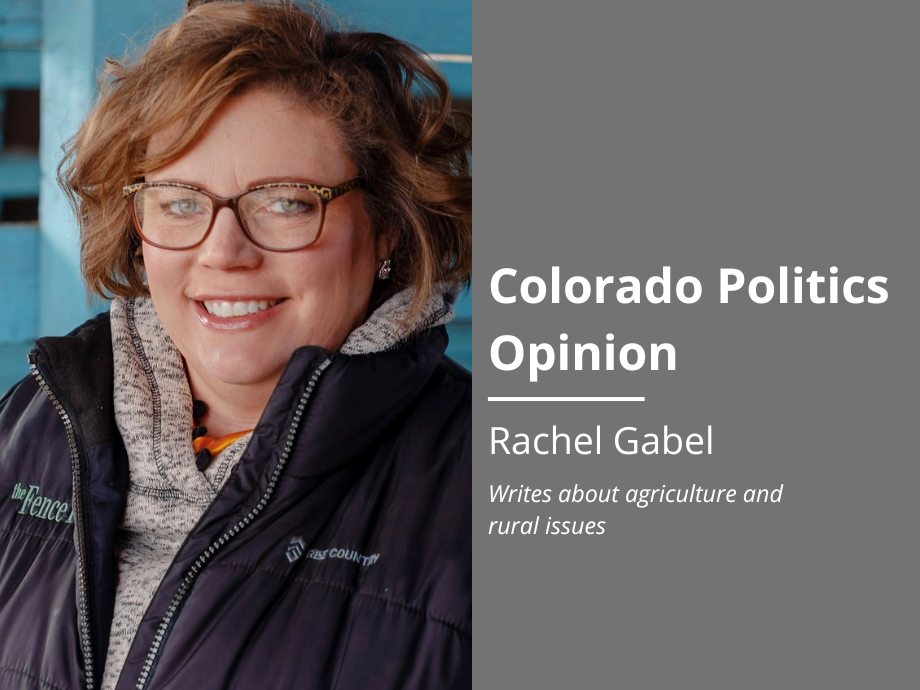
Rachel Gabel writes about agriculture and rural issues. She is assistant editor of The Fence Post Magazine, the region’s preeminent agriculture publication. Gabel is a daughter of the state’s oil and gas industry and a member of one of the state’s 12,000 cattle-raising families, and she has authored children’s books used in hundreds of classrooms to teach students about agriculture.

Pardon me? Nah, Gov. Polis — Tina Peters deserves her time | Hal Bidlack
Hal Bidlack
hal-bidlack@coloradopolitics.com
Updated 8 hours ago
As my regular reader (Hi, Jeff!) will recall, I’ve oft praised Gov. Jared Polis for exercising great skill in balancing the outcomes of the many, many issues that cross his desk. As a moderate myself, I’ve stood by Mr. Polis...
Demand action to stop fentanyl deaths — No. 1 killer of Americans aged 18-45 | OPINION
Colorado Politics
colorado-politics@coloradopolitics.com
Updated 8 hours ago
By Kim Haarberg It took me about an hour to write this. And in that time, 10 people in the United States died from fentanyl overdoses. That’s 10 sons, daughters, parents and friends gone because of a counterfeit tablet laced...

Polis’ removal of sex ed funding endangers LGBTQ+ youth | OPINION
Colorado Politics
colorado-politics@coloradopolitics.com
Updated 14 hours ago
By Shara Smith At a time when the LGBTQ+ community is attacked by public policy driven by religious extremists, I am deeply concerned by the removal of funding in the governor’s budget for Colorado’s Comprehensive Human Sexuality Education (CCHSE) grant...
Political interference, activism a constant under Polis’ Colorado Parks & Wildlife | Rachel Gabel
Rachel Gabel
rachel-gabel@coloradopolitics.com
Updated 23 hours ago
Colorado Parks & Wildlife can’t catch a break. If polling were used to measure public trust in agencies, it would be a dreary picture. This, however, is the result of political interference with the agency, not as a result of...

Democratic-socialist experiments in New York, Seattle well worth watching | Miller Hudson
Miller Hudson
miller-hudson@coloradopolitics.com
Updated 23 hours ago
Despite writing just once a week, I find myself trying to make content choices two or three weeks ahead — if for no other reason than gathering information. Late last year I theorized Zohran Mamdani just might replace our Tangerine...

French Revolution comes to Colorado Democrats | Jon Caldara
Jon Caldara
jon-caldara@coloradopolitics.com
Updated 4 days ago
The border skirmishes are increasing, and we could be looking at full-blown combat. The simmering civil unrest inside Colorado’s Democratic ranks is heating up, and during this legislative session it might boil over into all-out civil war. If it does,...
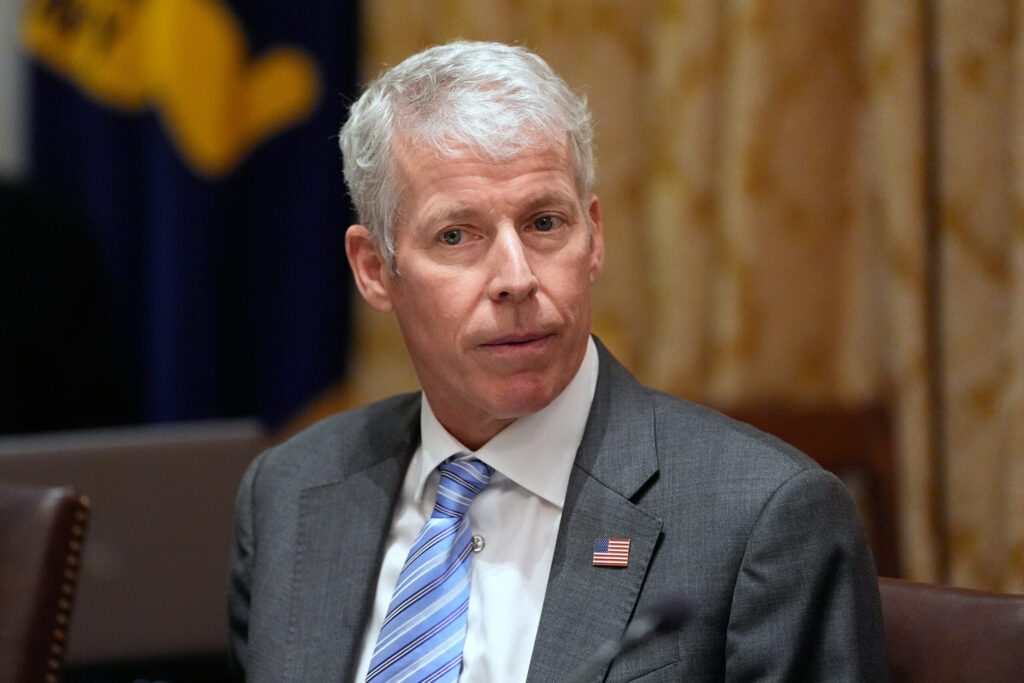
Colorado oilmen may play key role in Trump’s Venezuelan oil takeover plan
Vince Bzdek
vince.bzdek@gazette.com
Updated 3 days ago
When President Donald Trump summoned oil executives to the White House recently to push for major investment in Venezuela, an interesting sprinkling of smaller independent companies from Denver was invited along with the big names of American oil. One of...
How best to prepare for Colorado’s energy future | OPINION
Colorado Politics
colorado-politics@coloradopolitics.com
Updated 5 days ago
By Carly West Colorado is at an inflection point on energy. As the state enters its 150th year, decisions about how energy is produced, delivered and regulated are becoming more immediate — and more consequential — for communities across the...
Big Marijuana in Colorado is all about spin, denial | PODIUM
Luke Niforatos
luke-niforatos@coloradopolitics.com
Updated 5 days ago
Where there’s weed smoke, there’s fire. In Leadville last month, this was literally the case, as a pot shop incinerated along with its mind-altering wares. The acrid smoke was so harmful to residents that homes were evacuated. The local public...
U.S. careening off the rails under Trump’s stewardship | Paula Noonan
Paula Noonan
paula-noonan@coloradopolitics.com
Updated 5 days ago
Does anyone in Colorado or the United States feel like life is anywhere near normal anymore? Our aberration is not from a pandemic. It’s from our government. It’s at war with us, the people. Let’s take Renée Good’s tragic fate....
PREV
PREVIOUS

Colorado GOP is determined to lose | CALDARA
Jon Caldara Politics is the art of addition, not subtraction. The job of electing someone is all about getting people who aren’t all that crazy for you to vote for you. Proving to voters you despise them oddly doesn’t win them over. Just like government cannot tax a people into prosperity, a political party cannot […]
Split-personality Boebert's carpetbag bet dubious at best | HUDSON
Miller Hudson I didn’t expect to be drafting my first 2024 column wondering whether it might be overtaken by the outbreak of a Middle Eastern conflagration, perhaps even a World War. We are living in perilous times. Even if we dodge a bullet this week, there’s always the following weeks. Closer to home, Congressional Republicans […]