

Excessive force lawsuit against Denver deputy can move forward, federal judge rules
A federal judge last week allowed an excessive force lawsuit against a Denver Sheriff’s deputy to move forward for punching and shoving a man to the ground after he allegedly spat on the deputy in 2019. But in a related order, she granted summary judgment to Denver on the piece of the lawsuit seeking to hold the city liable for the deputy’s actions.
Judge Charlotte Sweeney’s decision in favor of Denver reversed course from a decision earlier this year in which she declined to dismiss the claims against the city.
Video footage from 2019 captured sheriff’s Deputy Jason Gentempo punching Serafin Finn multiple times and shoving Finn, who was in a wheelchair, to the ground after Finn allegedly spat on Gentempo. The resulting 2021 civil rights lawsuit alleges Gentempo used excessive force against Finn and that Denver’s own policies and practices facilitated Gentempo’s conduct. Holding a municipality liable for the conduct of its officials requires that the person acted unconstitutionally pursuant to a policy or custom.
Judge says Denver may be held liable for failing to train officer who punched man in wheelchair
Finn died in 2021 for unrelated reasons, but the administrator of his estate filed suit against Gentempo for excessive force. The plaintiff, Melissa Schwartz, also sought to hold Denver liable for its role in Finn’s injuries, which requires that a governmental policy or custom be behind Gentempo’s actions.
Gentempo sought a summary judgment motion in his favor, arguing qualified immunity should shield him from the case. Qualified immunity protects government employees from civil liability for their actions unless they have violated clearly established constitutional or statutory rights.
He argued no previous court cases in the 10th Circuit Court of Appeals have squarely established a level of force that’s appropriate in response to being spit on by a detainee, and other federal courts have decided an officer can use the same level of force as in this case. The parties agreed there hasn’t been a case in the 10th Circuit or U.S. Supreme Court that addresses the exact fact pattern in this situation.
But Sweeney disagreed with Gentempo’s argument, writing the cases cited by Gentempo all involved people who were violently resisting or noncompliant in addition to spitting, at officers, or threatening too. The 10th Circuit has clearly established physical force is inappropriate on a subject who is restrained and not violently resisting, Sweeney wrote.
She also disagreed with Gentempo’s argument that Colorado law precludes Finn’s estate from receiving noneconomic compensatory damages.
Federal judge sends unlawful arrest, excessive force claims against Denver officers to jury
Gentempto and another deputy arrived at Denver Health on March 20, 2019 to retrieve Finn and take him to the Downtown Detention Center. Finn had been arrested the previous day but had several seizures at the jail, prompting his transport to Denver Health.
The deputies moved Finn outside in a wheelchair while he was handcuffed and restrained. At one point in the transport, surveillance video showed Finn turning and appearing to spit on Gentempo.
The video then captured Gentempo punching Finn multiple times, grabbing his face and pushing him, still seated, into the ground. Other deputies arrived and put a “spit sock” on Finn’s head. At the jail’s intake office, Gentempo allegedly neglected to disclose his use of force, and further video footage there showed Finn seizing and collapsing on the floor.
Gentempo’s lawyers admitted to the force in response to the lawsuit, and said Gentempo had then “laid on top of Mr. Finn and applied pressure points to the head and neck.”
The lawsuit claimed Denver bore responsibility on two fronts. First, the city allegedly failed to train deputies whether and how to use force when spat upon. The evidence presented by Schwartz’ lawsuit primarily consisted Gentempo’s statement to departmental investigators that “there was no layout, there’s nothing in our policy that will tell you what exactly to do when you’re being spit on.”
Second, the lawsuit raised the “ratification” theory, which can hold government policymakers liable when they approve of a subordinate’s illegal actions. The lawsuit said that following Gentempo’s use of force, internal investigators found Gentempo had committed three policy violations for inappropriate force and deception. However, a committee that allegedly included the interim sheriff and the current sheriff revised those findings and cleared Gentempo of wrongdoing.
When she addressed the claims against Denver, Sweeney wrote a reasonable jury could find the city failed to train deputies adequately on whether, and how, to use force if they were spat on. But she decided the lawsuit hasn’t sufficiently shown the inadequate training caused Gentempo to use excessive force, or that his actions were an obvious consequence of the deficiency.
“Put simply, the spitting incident giving rise to this case does not fall within the ‘narrow range of circumstances’ where Deputy Gentempo’s alleged excessive force was a ‘highly predictable’ or ‘patently obvious’ consequence of his deficient training,” Sweeney wrote.
Court rules civil claims against Aurora, police officers for 2020 protests can move forward
Colorado Politics Must-Reads:


Victor Marx says he’ll only debate Phil Weiser once in Colorado governor’s race — without a moderator
Ernest Luning
ernest.luning@coloradopolitics.com
Updated 16 hours ago
Colorado Republican gubernatorial nominee Victor Marx said on Tuesday that he will participate in only one debate with Attorney General Phil Weiser before the November election — and he challenged the Democratic nominee to hold the event without a moderator....

Denver seeks to move more than $18 million to cover George Floyd protest claims
Deborah Grigsby
deborah.smith@denvergazette.com
Updated 51 minutes ago
City officials want to move millions from Denver’s General Fund contingency account to the City Attorney’s Liability Claims Fund to cover legal settlements and claims stemming from the 2020 George Floyd protests. The hefty shift of cash, proposed in Council...
10th Circuit finds no fair housing violation by Littleton landlord for worker’s alleged rape of tenant
Michael Karlik
michael.karlik@coloradopolitics.com
Updated 18 hours ago
The Denver-based federal appeals court concluded on Monday that Littleton’s housing authority could not be held liable for a maintenance worker’s alleged rape of a tenant, as the worker’s employment did not provide any special access to the victim. A...
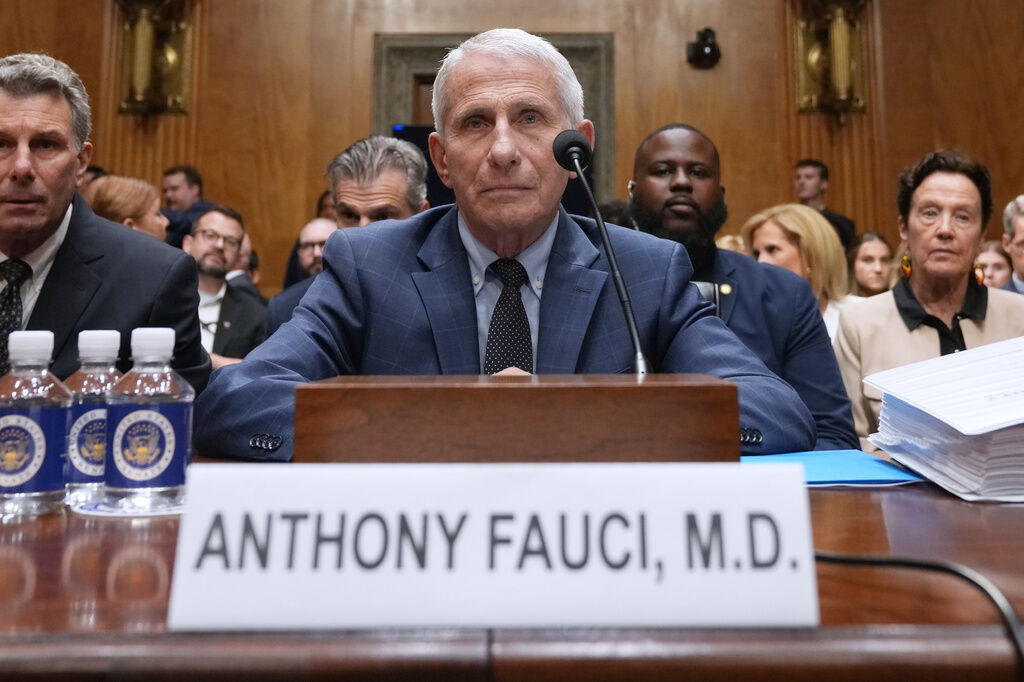
Fauci’s Fifth Amendment answers may test Biden pardon as GOP eyes contempt
Kaelan Deese
kaelan-deese@coloradopolitics.com
Updated 17 hours ago
Dr. Anthony Fauci invoked his Fifth Amendment right against self-incrimination more than 100 times on Wednesday, a move legal experts described as strategically sound despite the politically damaging optics. Sen. Rand Paul (R-KY), chairman of the U.S. Senate Committee on...

Democrats must win 57 out of 77 competitive House seats to take majority: Cook Political Report
Hailey Bullis
hailey-bullis@coloradopolitics.com
Updated 20 hours ago
Democrats’ path to retaking the House in November has significantly slimmed as a result of the mid-decade redistricting war this cycle, a new analysis found. The nonpartisan Cook Political Report found that under the newly drawn maps across 10 states,...

Small Colorado town grapples with ICE detention center opening
Nico Brambila
nico.brambila@denvergazette.com
Updated 17 minutes ago
Thirty miles northeast of downtown Denver — where the Front Range loosens its grip, subdivisions give way to open fields and pickups outnumber Teslas — is the town of Hudson. Population 1,652. Hudson still feels like the kind of place...

Jeffco Public Schools sues Trump administration to protect funding after alleged transgender policies violation
Matt Kyle
matt.kyle@denvergazette.com
Updated 19 minutes ago
In the wake of several threats by the Trump administration to revoke federal funding, Jeffco Public Schools filed a lawsuit against the Department of Education seeking to protect that badly needed money. Jeffco has been under investigation by the DOE’s...

Denver labor acknowledgment proposal faces council committee questions
Deborah Grigsby
deborah.smith@denvergazette.com
Updated 24 hours ago
A proposal to add a labor acknowledgment to Denver City Council proceedings has been delayed by the Finance and Business Committee after members raised questions about its wording, intentions and place in the council’s opening proceedings. The proposal, put forth...
Fauci invokes the Fifth Amendment and declines to testify in GOP-led Senate panel’s COVID-19 hearing
The Associated Press
the-associated-press@coloradopolitics.com
Updated 1 day ago
WASHINGTON (AP) — Dr. Anthony Fauci on Wednesday invoked the Fifth Amendment and declined to answer questions from senators in a Republican-led committee hearing about his handling of the COVID-19 pandemic. The move injects new drama into the lingering tensions...

Colorado residents rush to buy guns ahead of new restrictions, breaking sales records for several stores
By Debbie Kelley
by-debbie-kelley@coloradopolitics.com
Updated 24 hours ago
Colorado residents are lining up to buy guns ahead of the latest weapons restrictions set to take effect this Saturday. The new law mandates individuals seeking to purchase semiautomatic firearms with detachable magazines to first complete a firearm safety course...
PREV
PREVIOUS
Republican debate: Winners and losers of fourth GOP matchup in Alabama
A trimmed-down field of four candidates took the stage at the fourth Republican presidential debate in Tuscaloosa, Alabama, hoping to make their cases to voters as primaries start next month. All four sit far behind front-runner Donald Trump, whose lead is such that he hasn’t bothered even to take the stage. The aspirants hoped to […]

Colorado River Drought Task Force offers slate of potential fixes to drought-proof ailing waterway
Colorado could spend millions more to replace water-hungry lawns, keep extra water in streams to protect fish and their habitats, and repair water-wasting farm and city delivery systems, according to a list of potential fixes from a state task force hoping to drought-proof the Colorado River. The 17-member panel finished its preliminary list of recommendations […]