

Colorado Supreme Court sides with defendants in appeals of high-dollar awards
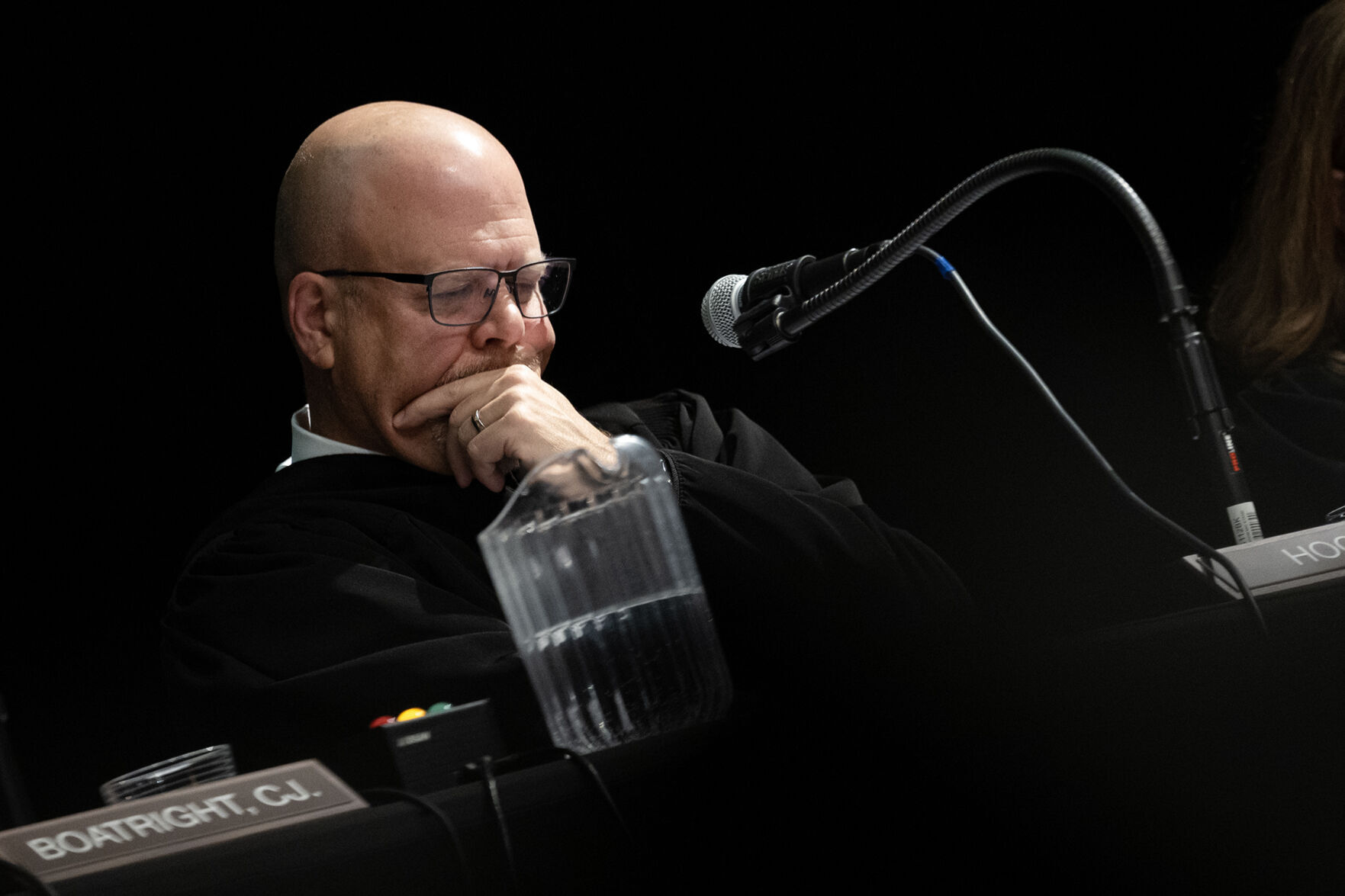
The Colorado Supreme Court on Monday upheld a state law that caps the amount of money defendants must secure while they appeal their loss in a civil case.
The decision implicated two competing concerns: First, ensuring that the losing party in a civil case has the meaningful ability to appeal a high-dollar verdict against them. Second, guaranteeing that the prevailing party will receive the money owed to them at the conclusion of the appeals process.
When a losing party appeals, it will normally post a bond – a certain amount of money or collateral as insurance – to prevent the judgment from taking effect while an appellate court considers the case. In 2003, Colorado lawmakers responded to an increase in high-dollar awards by capping the money a losing party must secure at $25 million.
Nearly two decades later, after Antero Treatment LLC won $240 million in breach-of-contract damages against Veolia Water Technologies, Inc., a Denver judge agreed Veolia only had to post a $25 million bond while it appealed the decision.
Antero Treatment challenged that cap directly to the Supreme Court. It pointed to a judicial rule generally requiring losing parties to put up 125% of the money owed while they appeal. If the rule took precedence over state law, Veolia would have needed to secure $350 million to appeal – $325 million more than the trial judge required.
The Supreme Court, answering the question for the first time, concluded it was unnecessary to declare one provision or the other as void. The rule merely sets the default amount a losing party has to secure while they appeal, and the law ensures that amount cannot exceed $25 million.
The legislature’s decision to impose a cap “was a judgment call rooted in public policy,” wrote Justice William W. Hood III in the Dec. 4 opinion.
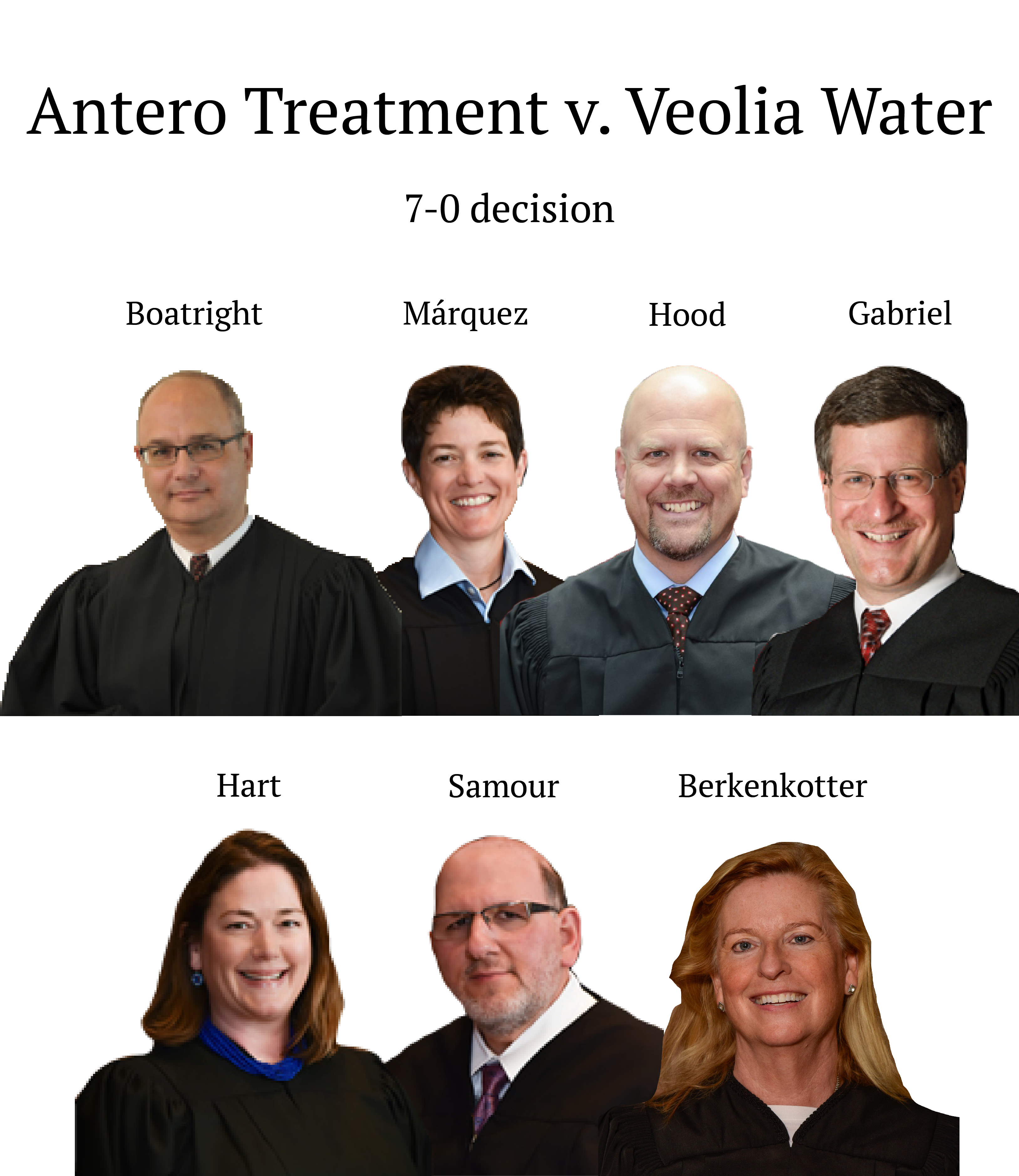
The case received interest from several outside organizations that attempted to sway the court toward preserving the ability to appeal extra-large, possibly erroneous trial awards, on the one hand, and – to the other side – protecting prevailing parties from the possibility that the loser will thwart the victory by getting rid of its assets while the case is appealed.
At the time the General Assembly enacted the $25 million cap on bonds in 2003, it heard about a recent rise in large-dollar awards. Lawmakers voiced concerns about losing parties having to decide whether to appeal and “set the record right,” even if securing enough money to do so could bankrupt them.
Now, more than two dozen states have similar caps for all civil cases, with the most common amount being $25 million. No court has struck down any legislatively enacted cap.
After a trial judge required Veolia to only secure $25 million to prevent it from having to pay the judgment while it appealed, Antero Treatment sought to strike down the cap as unconstitutional. It noted the Colorado Constitution gives the Supreme Court the authority to issue rules about “practice and procedure.” Arguably, the legislative cap infringed on the court’s prerogative to set the bond amount at 125%, as it did shortly after the law’s passage.
Moreover, contended the Colorado Trial Lawyers Association in a supportive brief, the legislature had arbitrarily allowed defendants who owe millions or billions of dollars in damages to appeal, despite guaranteeing a far lower percentage of the award – less than 10% in Veolia’s case.
“This treatment is unfair and inequitable,” wrote attorney Nelson Boyle.
Veolia countered that its chief executive had already given assurances the company would not get rid of any assets to avoid paying the full amount if the Veolia loses its appeal. Antero was only trying to “make it more expensive for Veolia to appeal,” the company claimed.
The Supreme Court concluded the law and its rule could be synthesized to establish an absolute limit of $25 million – with an explicit exception in the law if there is evidence a losing party is getting rid of its assets to evade paying damages. Even if the law was at odds with the rule, Hood elaborated, the legislature’s actions did not wade into court procedure, but appropriately addressed the rights of litigants instead.
“The amount implicates two matters of public policy: the appellee’s right to protect its interest in the judgment,” he wrote, “and the appellant’s practical ability to appeal.”
Hood acknowledged it may be “tough” to prove that a losing party is intentionally trying to get out of its obligation to pay, but that was the procedure the General Assembly envisioned.
The case is Antero Treatment LLC v. Veolia Water Technologies, Inc.

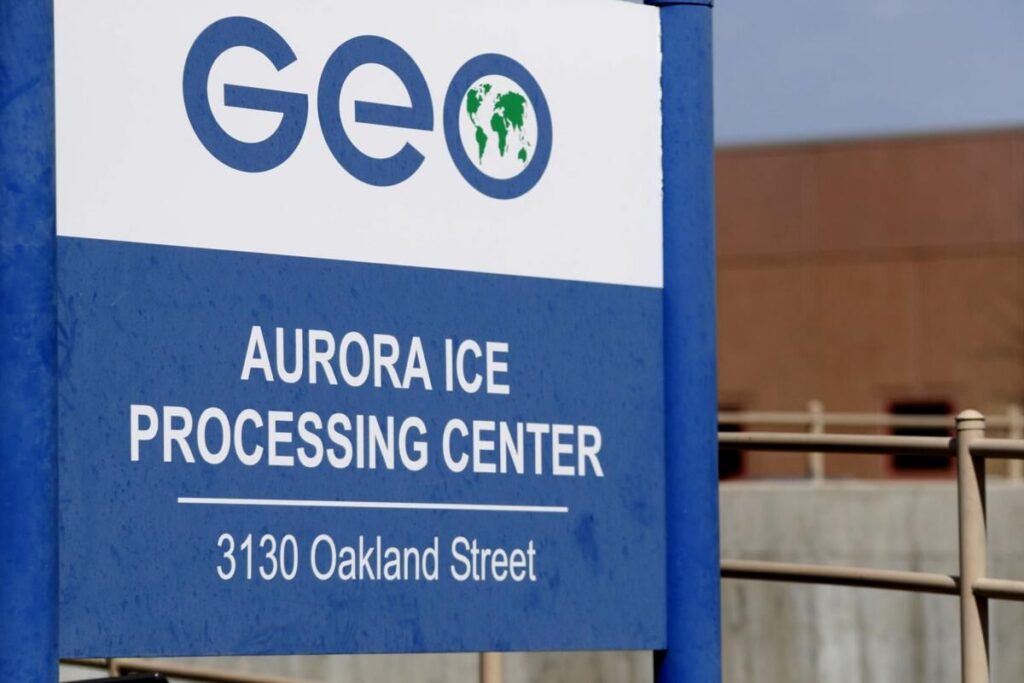
Judge grants partial injunction to GEO in fight against state health inspection law
Kyla Pearce
kyla.pearce@gazette.com
Updated 10 hours ago
A judge ruled Thursday that The GEO Group does not have to follow parts of a new state law requiring more frequent health and safety inspections at the U.S. Immigration and Customs Enforcement processing center in Aurora. Under the order...

Parker man faces 20 years to life for serial sexual assaults
Nicholas Fogleman
nicholas.fogleman@denvergazette.com
Updated 13 hours ago
A 25-year-old Parker man who sexually assaulted three women in 2025 pleaded guilty Wednesday and will serve 20 years to life in prison. Javier Rodriguez-Andrade pleaded guilty to charges stemming from three sexual assaults involving women ages 19 to 24. ...
Divided appeals court upholds warrantless DNA collection in Colorado cold case, cautions of government overreach
Michael Karlik
michael.karlik@coloradopolitics.com
Updated 11 hours ago
Colorado’s second-highest court upheld the warrantless collection of a suspect’s DNA from a discarded soda can as constitutional on Thursday, while warning about potential abuse of DNA privacy in the absence of further guardrails. By 2-1, a three-judge Court of...
Man charged in Northglenn homicide of wife
Matt Kyle
matt.kyle@denvergazette.com
Updated 13 hours ago
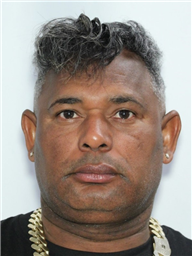
A man has been formally charged with murder and burglary relating to a homicide last week in Northglenn. Alexei Munive-Rodriguez, 48, was arrested Sunday after he was at large following the homicide, which occurred Friday. Police were dispatched around 10:30...

10th Circuit grants immunity to officers for fatal Manitou Springs shooting
Michael Karlik
michael.karlik@coloradopolitics.com
Updated 15 hours ago
The Denver-based federal appeals court ruled on Wednesday that responding officers from Manitou Springs and El Paso County cannot be held constitutionally liable for shooting and killing a man after a 20-minute standoff. Wilford Deweese allegedly pulled out a gun...
10th Circuit rejects invitation for full-court review of tax-avoidance case
Michael Karlik
michael.karlik@coloradopolitics.com
Updated 1 day ago
The Denver-based federal appeals court declined to reconsider the standards for holding entities liable for their tax-avoidance schemes, with a majority of judges voting against full-court review on Monday. In April, a three-judge panel of the U.S. Court of Appeals...

Colorado judge blasts state forensics lab in dismissing child sex case
Jenny Deam
jenny.deam@gazette.com
Updated 1 day ago
In a potentially widely consequential action, a Weld County district judge dismissed a child sexual assault case, citing the ongoing scandal at the Colorado Bureau of Investigation’s forensic lab that “has left a dark mark on the history of Colorado...
10th Circuit sympathetic to Colorado consumer protection law governing interest rates
Michael Karlik
michael.karlik@coloradopolitics.com
Updated 3 days ago
Members of the Denver-based federal appeals court appeared sympathetic on Tuesday to Colorado’s assertion that it can lawfully require certain out-of-state banks to abide by the state’s own ceilings on interest rates when they lend to consumers in Colorado. The...
Colorado justices to decide insurance companies’ obligation to disclose relevant policies
Michael Karlik
michael.karlik@coloradopolitics.com
Updated 2 days ago
The Colorado Supreme Court announced on Monday that it will decide whether an insurance company violated state law by withholding an at-fault driver’s policy for nearly a year when there was no dispute that the policy was not in effect...

Judicial performance evaluations released, Montezuma County judge disciplined | COURT CRAWL
Michael Karlik
michael.karlik@coloradopolitics.com
Updated 3 days ago
Welcome to Court Crawl, Colorado Politics’ roundup of news from the third branch of government. Colorado’s citizen-led judicial performance commissions released their voter narratives for the judges standing for retention in November, plus a disciplinary panel imposed consequences on a...
PREV
PREVIOUS

Boebert primary challenger Jeff Hurd wins endorsement from former Colorado Lt. Gov. Jane Norton
Former Colorado Lt. Gov. Jane Norton on Monday endorsed fellow Republican Jeff Hurd, who is challenging U.S. Rep. Lauren Boebert in next year’s primary. Calling the Grand Junction attorney a “principled, conservative leader,” Norton said that Hurd understands rural issues and stands to be an effective champion for the 3rd Congressional District. Boebert is seeking […]

Jarvis Caldwell announces candidacy for House District 20
Jarvis Caldwell, who worked for the Colorado House Republicans as a legislative aide and later as communications director, announced Monday he will seek the House District 20 seat. Rep. Don Wilson, R-Monument, who currently serves the district, announced recently he will not seek a second term and will instead run for El Paso County commissioner. […]