

Witness claims Trump stoked Jan. 6 rioters; Polis opposes ‘safe injection sites’ | WHAT YOU NEED TO KNOW
Today is Nov. 1, 2023, and here’s what you need to know:
An expert on political extremism testified on Tuesday in Denver District Court that Donald Trump stoked his followers into staging a violent attack on the U.S. Capitol on Jan. 6, 2021, during a hearing in a lawsuit seeking to declare the former president ineligible to appear on next year’s Colorado ballot.
A group of Republican and unaffiliated Colorado voters sued last month to prevent Colorado’s secretary of state from including Trump on the state’s 2024 primary ballot, alleging that he’s disqualified under a rarely invoked post-Civil War clause of the U.S. Constitution that bars certain officials who have “engaged in insurrection” from ever holding federal office.
Representing the petitioners, Eric Olson, a former Colorado solicitor general, argued on the second day of a planned weeklong hearing that attempts by Trump’s followers to keep Congress from certifying Democrat Joe Biden’s 2020 election amounted to an insurrection. The petitioner’s star witness asserted that evidence showed the mob had been under Trump’s command.
Trump’s lead attorney, Scott Gessler, a Republican former Colorado secretary of state, countered that Trump’s remarks in the run-up to and on Jan. 6 were typical political speech, including phrases and sentiments commonly expressed by Democrats.
The Opioid and Other Substance Use Disorders Study Committee turned down the “safe injection sites” proposal, identified in draft legislation as “overdose prevention centers,” based on concerns about a possible veto from Gov. Jared Polis.
A similar effort in the 2023 session died in a Senate committee last spring also for the same reason – a veto threat from the governor.
The draft legislation considered by the committee Monday would have established a five-year pilot program in municipalities that have authorized those facilities.
Five years ago, the Denver City Council authorized such centers, the only local government to do so. However, those centers never opened because the city is waiting on required state authorization to put its plan into motion.
In a statement to Colorado Politics, Polis spokesman Conor Cahill said the governor “has been clear with Coloradans and the legislature that he is opposed to these drug use sites.”
In the last three weeks, backers and critics of the proposal offering property tax relief using state refund dollars were practically neck and neck in raising money through their campaign finance committees that seek to persuade voters to back the measure in next week’s election.
Proposition HH will ask voters next week whether to use Taxpayer’s Bill of Rights surplus revenue – which is usually refunded to taxpayers – to reduce property taxes, fund school districts and backfill counties, water districts, fire districts, ambulance or hospital districts and other local governments.
Property Tax Relief Now raised about $2.5 million through Oct. 30, while the anti-Prop HH committees collectively raised about $2.37 million.
However, another $566,000 has been spent on TV and newspaper ads by the anti-Prop HH group Advance Colorado Action and not through their committee, No on HH. That spending is reported separately to the Secretary of State’s office.
That boost for the pro-Prop HH campaign came courtesy of several “dark money” groups, including the Sixteen Thirty Fund, which contributed $350,000 on Oct. 20. That brought the group’s contribution total to $600,000.
A Douglas County judge was wrong to let a man represent himself at trial without ensuring he understood the basic elements of his case first, Colorado’s second-highest court ruled on Thursday in overturning the defendant’s convictions.
The Court of Appeals’ decision was the second time this year it ordered a new trial for David Antonio Ruffin based on how various trial judges responded to Ruffin’s insistence that he wanted to proceed “pro se,” or without an attorney.
In August, a three-judge panel for the Court of Appeals reversed Ruffin’s convictions for assault and indecent exposure in the Arapahoe County jail because the trial judge did not adequately advise Ruffin about the consequences of proceeding pro se, nor did he account for Ruffin’s mental illness when allowing Ruffin to give up his constitutional right to counsel.
The most recent case to reach the Court of Appeals bore some resemblance to those flawed proceedings.
Colorado House Republican leaders on Monday called for an investigation into why Colorado’s higher education agency allegedly failed to timely report a massive data breach this summer.
In a two-page letter hand-delivered to Gov. Jared Polis and Attorney General Phil Weiser, five state representatives also urged an inquiry into why thousands potentially affected by the breach still have not yet been told individually, as the law mandates.
“I am extremely concerned that the state took so long to notify the public of this breach and the failure to contact potentially impacted individuals in a timely manner appears to be in direct violation of the law,” stated the letter from GOP leadership, a copy of which was provided to The Denver Gazette.
The letter was signed by House Minority Leader Mike Lynch, R-Wellington, and Republican Reps. Rose Pugliese, the House assistant minority leader, Mary Bradfield of Colorado Springs, Don Wilson of Monument and Anthony Hartsook of Parker. Bradfield, Wilson and Hartsook are members of the House Education Committee.


Trump order aims to help more people get retirement savings plans in time for new federal match
Collin Binkley
collin.binkley@associatedpress.com
Updated 3 hours ago
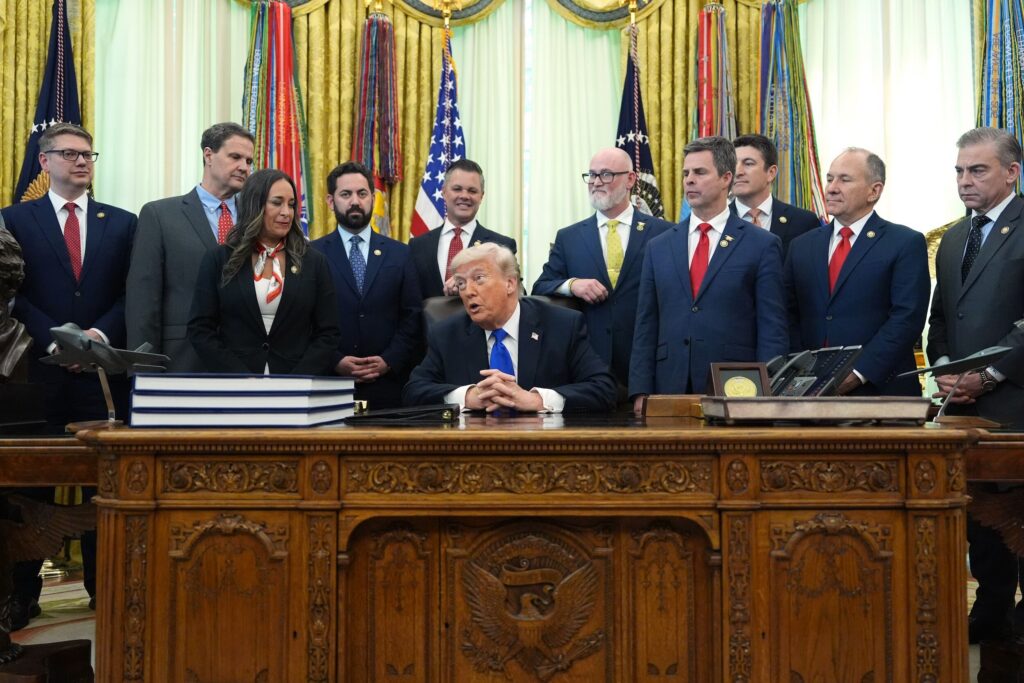
WASHINGTON • President Donald Trump signed an executive order on Thursday calling for a new government website where people in the United States can find and compare private-sector retirement savings accounts, aiming to help millions of workers whose employers do not offer such...

Colorado Politics Calendar May 4-10
Rachael Wright, Special to Colorado Politics
rachael.wright@coloradopolitics.com
Updated 3 days ago
CoPo’s weekly political calendar will help you find political and public-policy events throughout Colorado. It includes candidate and issue campaign events, public policy meetings, court hearings, state and local party conventions, assemblies, debates, rallies, parades, speaking engagements, traveling dignitary appearances,...
Gov. Lamm scolds own party over losing modernization battle against GOP | A LOOK BACK
Rachael Wright, Special to Colorado Politics
rachael.wright@coloradopolitics.com
Updated 3 days ago
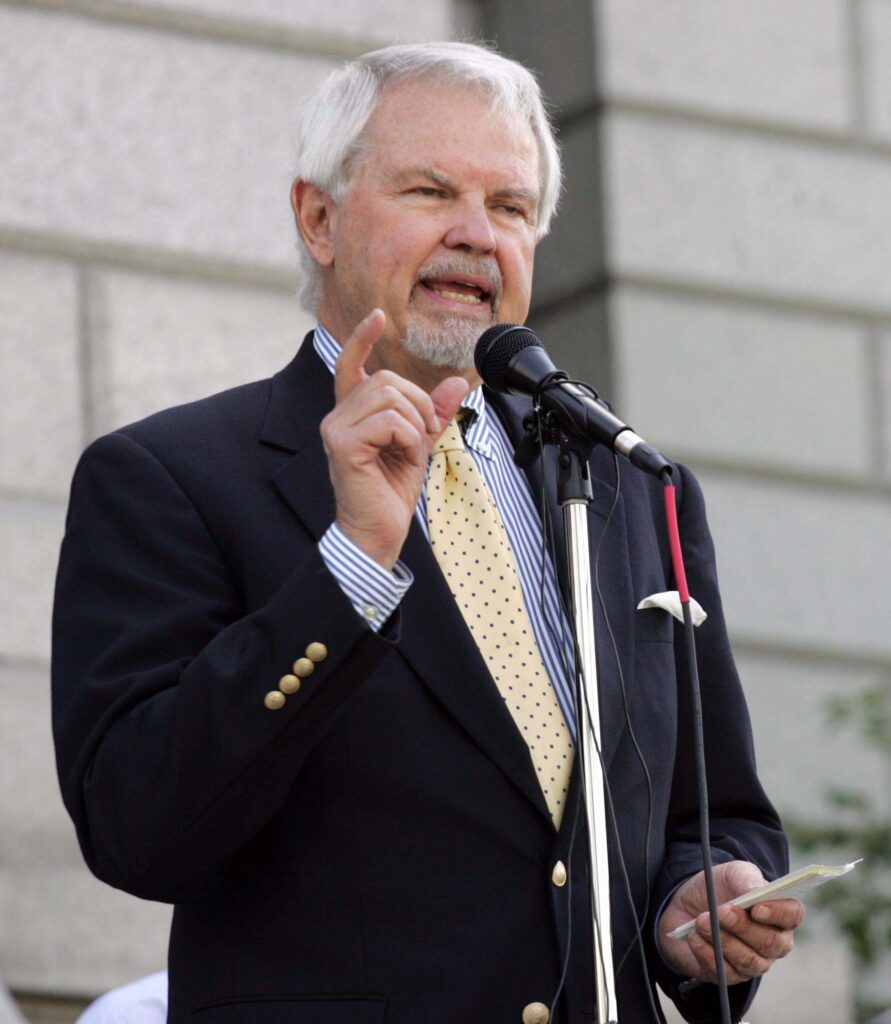
Forty-Five Years Ago This Week: “The Democratic Party lost the battles of ideas and political technology last November,” Gov. Dick Lamm told the Boulder County Democratic Party at the annual Harry S. Truman Memorial Dinner. Lamm argued that the Democratic...

The need for a governor to say “no” to his friends | SONDERMANN
By Eric Sondermann
by-eric-sondermann@coloradopolitics.com
Updated 2 days ago
A wise man once remarked that the real test of a governor is his willingness to turn down and reject the pleadings of political friends and allies. That gentleman knew something of what he spoke. He occupied the corner-office executive...

Dismissal sought in Michael Clark’s second trial
Jenny Deam
jenny-deam@coloradopolitics.com
Updated 11 hours ago
The murder conviction of Michael Clark should be dismissed due to a 32-year delay that led to crucial evidence being lost or destroyed, a bungled police investigation and “outrageous conduct” at the state crime lab, according to defense motion filed...

Colorado to get $75 million from opioid settlement with Purdue Pharma
Marissa Ventrelli
marissa.ventrelli@coloradopolitics.com
Updated 2 hours ago
A $7.4 billion settlement reached with the pharmaceutical company Purdue Pharma and the Sackler family — its owners — is now legally effective a decade after attorneys general from multiple states launched an investigation and seven years after Colorado filed...

Committee approves reworked version of previously vetoed rideshare bill
Marissa Ventrelli
marissa.ventrelli@coloradopolitics.com
Updated 1 day ago
Members of the Colorado House Business Affairs and Labor Committee voted across party lines to pass a modified version of a bill establishing regulations on rideshare companies. Last year, Reps. Jenny Willford, D-Northglenn, and Meg Froelich, D-Englewood, introduced House Bill...
Fight over credit card ‘swipe fees’ attracts nearly 200 lobbyists in Colorado
Marianne Goodland
marianne.goodland@coloradopolitics.com
Updated 1 day ago
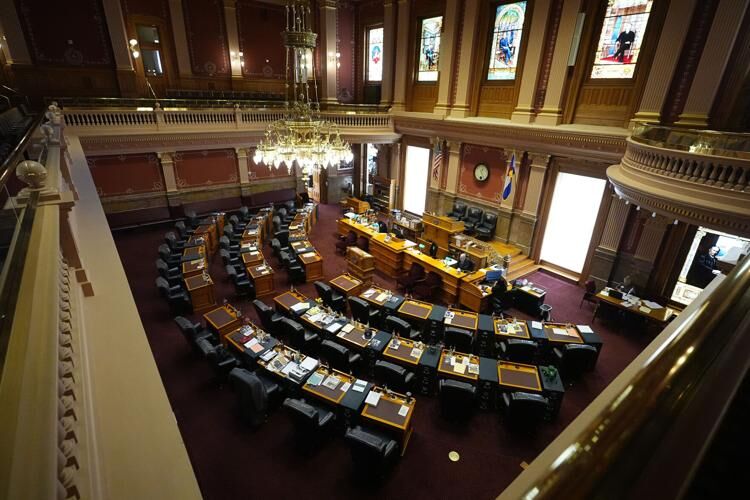
One of the most expensive fights of the 2026 session got a little closer to being over on Friday, when the Colorado Senate took a second final vote on the proposal to eliminate “swipe fees” on sales taxes. It’s not...

Veto likely as union-backed bill heads to Colorado governor’s desk — again
Marissa Ventrelli
marissa.ventrelli@coloradopolitics.com
Updated 1 day ago
For the second year in a row, a bill that would make it easier for labor organizations to impose fees on all workers, regardless of union membership, is headed for Gov. Jared Polis’ desk. The governor, who vetoed the legislation...

Aurora mental health nonprofit cuts 100-plus jobs after Colorado agency reduces reimbursement rate
Marianne Goodland
marianne.goodland@coloradopolitics.com
Updated 1 day ago
A nonprofit that provides services through 11 mental health centers in Aurora announced Thursday that it is eliminating 111 jobs effective June 30, the result of federal and state budget reductions. Aurora Mental Health & Recovery said the positions being...
PREV
PREVIOUS

Douglas County judge wrongly let man represent himself, appeals court rules in reversing convictions
A Douglas County judge was wrong to let a man represent himself at trial without ensuring he understood the basic elements of his case first, Colorado’s second-highest court ruled on Thursday in overturning the defendant’s convictions. The Court of Appeals’ decision was the second time this year it ordered a new trial for David Antonio […]

District attorney races focus on spike in crime and prison versus reform
Dozens of local prosecutor races will take place across Kentucky, Mississippi, Virginia, New York, and Pennsylvania in a few days, pitting progressives against centrist Democrats and Republican candidates frustrated that incumbents have created a landscape that lets crimes slide and prefers reform over prison. In the South, there will be 123 local prosecutor races taking […]