

Opening statements given in trial over Elijah McClain’s death
After three-and-a-half days of jury selection, opening statements began Wednesday in the trial of two Aurora police officers charged in the 2019 death of Elijah McClain.
Randy Roedema and Jason Rosenblatt each face charges of criminally negligent homicide, manslaughter and assault causing serious bodily injury in connection with McClain’s death.
McClain, a 23-year-old Black man, died several days after the encounter with officers on the night of Aug. 24, 2019 as he walked home from buying iced tea at a Mini Mart. He wore a running mask and a jacket because he was often cold, prosecutors said, and was dancing to the music in his earphones.
Roedema and Rosenblatt, along with Officer Nathan Woodyard, responded to a 911 call by a teenager who reported a person acting suspiciously. The area where the caller reported seeing McClain is considered a high-crime area, requiring a three-officer response, according to the Aurora Police Department’s policy, their defense attorneys said in opening statements.
Woodyard was the first officer to contact McClain, while the other two acted as “cover officers” for Woodyard’s protection. He grabbed McClain when he didn’t stop walking.
The officers then took him to the ground and put him in a type of neck hold that can induce temporary unconsciousness and is intended to gain control of a person by temporarily cutting off blood flow to their brain. McClain threw up into his mask several times while pinned to the ground.
An Aurora Fire Rescue paramedic called to the scene injected McClain with 500 milligrams of ketamine.
About 18 minutes after the officers first stopped him, McClain was unresponsive in an ambulance. He stopped breathing and went into cardiac arrest. He was taken off life support a few days later in the hospital and died Aug. 30.
Woodyard and paramedics Jeremy Cooper and Peter Cichuniec also face charges for McClain’s death.
Opening statements expected Wednesday morning in Aurora police officers’ trial
In his opening statement Monday, prosecutor Johnathan Bunge said Roedema and Rosenblatt broke the Aurora Police Department’s policies and training at every part of the encounter: They didn’t have reasonable suspicion McClain had committed any crime to stop him. A carotid hold is only meant to be used if someone is violently resisting and less severe tactics haven’t been effective. The officers didn’t check McClain’s vital signs after using it, and ignored his repeated cries that he could not breathe. A person saying they cannot breathe is meant to be treated as a medical emergency, Bunge said.
“With that badge comes accountability to the people they have pledged to protect and serve. In this case, that promise was broken,” Bunge said.
Bunge is a partner at Quinn Emanuel in Chicago and is serving as a special assistant attorney general for the case.
He said there is no evidence McClain resisted. Bunge played body-worn camera footage that captured McClain saying to the officers, “Why are you grabbing me? I’m just going home,” and “You guys started to arrest me, and I was stopping my music to listen.”
Defense attorneys for Roedema and Rosenblatt pointed the finger at paramedics during their opening statements, seeking to direct responsibility for McClain’s death solely to them.
Before the paramedics arrived and made the decision to inject McClain with a dose of ketamine too high for his 140-pound weight without examining or speaking to him, the attorneys argued, the officers followed their department’s policies and training to the letter.
The forensic pathologist who performed McClain’s autopsy, Dr. Stephen Cina, originally prepared a report finding the cause and manner of his death undetermined. He later amended his report to say he believed an overdose of ketamine caused McClain’s death, but he didn’t believe police’s restraint of McClain contributed.
With all the circumstances put together, the officers reasonably found McClain’s behavior strange, defense attorneys said: Wearing a jacket and mask before the COVID-19 pandemic was a glimmer on anyone’s radar on a warm August night in a high-crime area.
The officers reacted appropriately to what they believed was McClain refusing to obey officers’ commands, said Reid Elkus of Elkus & Sisson, who represents Roedema. Roedema told Rosenblatt at the scene that McClain tried to grab Rosenblatt’s gun, a sign of intent to harm or kill the officers that could have justified a more extreme use of force than taking McClain to the ground, Elkus said. He argued the officers actually showed restraint in their response.
Roedema was the most senior officer of the three who stopped McClain.
Roedema and Rosenblatt also told their sergeant, who arrived later at the scene, that McClain had “incredible strength,” though Rosenblatt said he did not feel McClain grab his gun. Elkus said at one point, McClain did a “push up” to throw the officers off him.
McClain’s death is a tragedy, Elkus said, and “nobody here is going to tell you different.”
“Just because a tragedy occurred does not mean criminality occurred.”
Rosenblatt’s attorney, Harvey Steinberg, said in his opening statement the officers followed the Aurora Police Department’s policies following the use of a carotid hold by putting McClain in the “recovery position” and calling their supervisor and the fire department. He also emphasized Rosenblatt was the most junior officer on the scene, with the department for about two years at the time.
Rosenblatt is accused of kneeling on McClain’s legs for several minutes to hold him down.
“I’m to ask one thing. Please be fair,” Steinberg told the jury. “Please be fair and don’t allow emotion or sympathy to enter into it. And don’t allow politics to enter into this. Please, please.”
Jury pool whittled in trial of Aurora officers charged in Elijah McClain’s death
The jury appears to have no Black members out of the 14-member panel chosen, which includes 12 regular jurors and two alternates. The jury selection process began Friday and lasted well into Wednesday.
Opening statements were delayed by a private tussle over the defense attorneys’ dismissal Wednesday morning of a prospective juror who said during questioning he believes he has been racially profiled by police, including in Aurora. The man, who appeared to be Black, said he could make an impartial decision in the case nevertheless if chosen.
Each side had the ability to excuse a limited number of prospective jurors without giving a reason, and the man was among the jurors excused by defense attorneys. Judge Mark Warner agreed late Wednesday morning to allow further questioning of the man in a session closed to the public.
The man ultimately was not seated on the jury.
At the defense attorneys’ request, Warner then reviewed the prosecutors’ choices for juror dismissals without cause, known as peremptory challenges, for bias. He found no pattern of racial bias in their choices, he said.
Although attorneys do not need to state a reason for their peremptory challenges, they cannot use them to exclude potential jurors based on protected identities, such as race or religion.
Jury selection begins in first of three criminal trials for Elijah McClain’s 2019 death

Colorado Supreme Court accepts cases about reliability of gun-to-bullet matching
Michael Karlik
michael.karlik@coloradopolitics.com
Updated 13 hours ago
The Colorado Supreme Court announced on Monday that it will hear two cases questioning the reliability of expert testimony that purports to identify whether a specific bullet was fired from a specific gun. At least three of the court’s seven...
Colorado District Attorneys unveil 2026 legislative priorities | WHAT’S YOUR AGENDA?
Marissa Ventrelli
marissa.ventrelli@coloradopolitics.com
Updated 2 days ago
Welcome to What’s Your Agenda?: The Colorado Politics’ weekly publication of trade association priorities for the state’s 2026 legislative session. The Colorado District Attorneys’ Council provides training, resources, and legislative support to every prosecutor in the state. In order to...
Appeals court clarifies what materials judges may rely on for postconviction decisions
Michael Karlik
michael.karlik@coloradopolitics.com
Updated 1 day ago
Colorado’s second-highest court clarified on Thursday that trial judges who are deciding whether to grant relief to convicted defendants may rely on the materials attached to, or referenced in, the parties’ arguments. In contrast to direct appeals of criminal convictions,...
Colorado justices skeptical of challenge to water enterprises’ eminent domain power
Michael Karlik
michael.karlik@coloradopolitics.com
Updated 13 hours ago
Members of the Colorado Supreme Court appeared receptive on Wednesday to the notion that water-related enterprises have the legal authority to exercise the governmental power of eminent domain over private property. An enterprise is a government-owned business that provides fee-based...
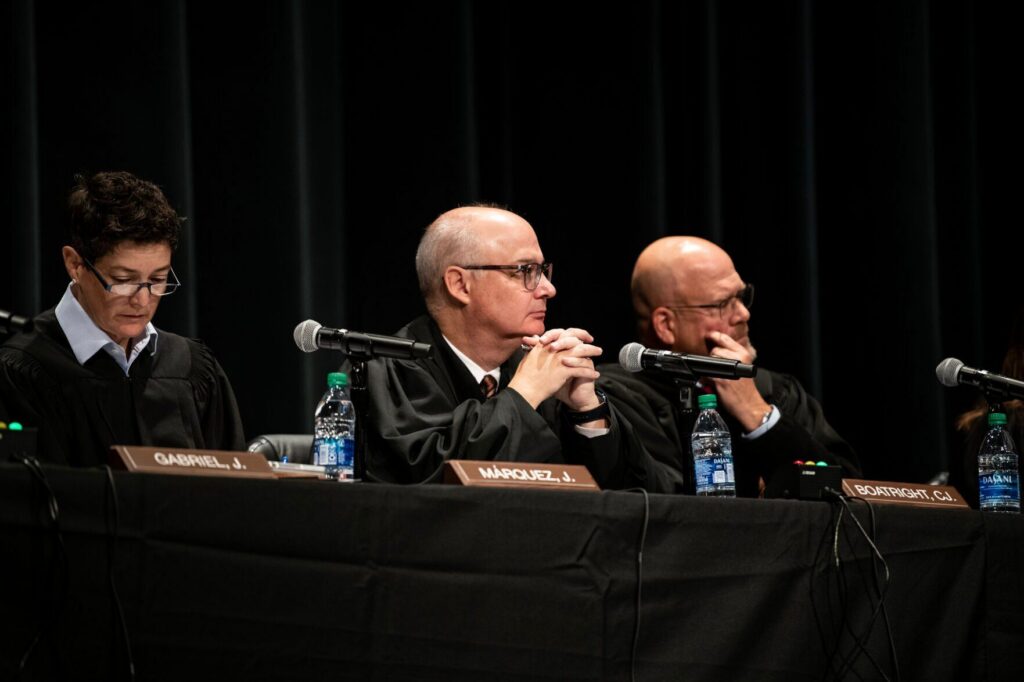
Colorado justices skeptical that intimate messages relevant to assault case
Michael Karlik
michael.karlik@coloradopolitics.com
Updated 1 day ago
Members of the Colorado Supreme Court seemed to agree on Tuesday that a Douglas County judge acted reasonably by blocking evidence of a defendant’s BDSM-related conversations with the victim in his trial for assault and false imprisonment. Jurors found Donald Louis...
Second appeals judge voices concerns about new ‘reasonable doubt’ instruction
Michael Karlik
michael.karlik@coloradopolitics.com
Updated 2 days ago
Another member of Colorado’s second-highest court registered his concern on Thursday that a portion of the recently revised “reasonable doubt” definition improperly lowers the prosecution’s burden to prove a defendant guilty. Judge Daniel M. Taubman wrote that the current instruction...
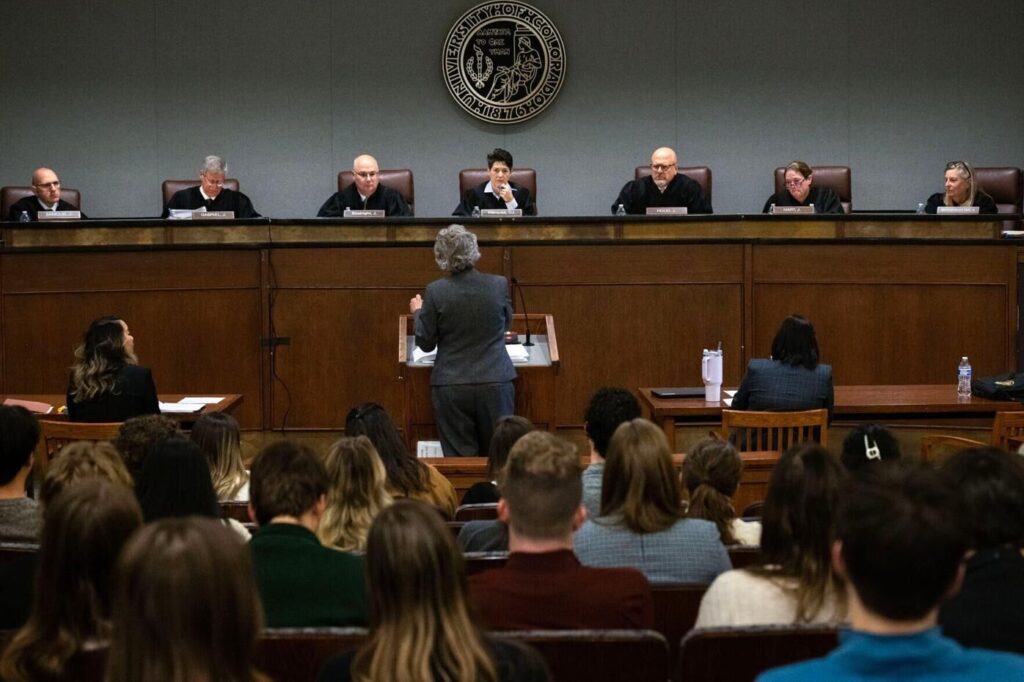
Colorado Supreme Court blocks ‘child-to-parent violence’ testimony in Boulder County case
Michael Karlik
michael.karlik@coloradopolitics.com
Updated 3 days ago
The Colorado Supreme Court concluded on Friday that a Boulder County judge incorrectly green-lit a psychologist’s expert testimony when the defendant had not laid the necessary groundwork for the evidence. State law requires criminal defendants to provide notice and undergo...
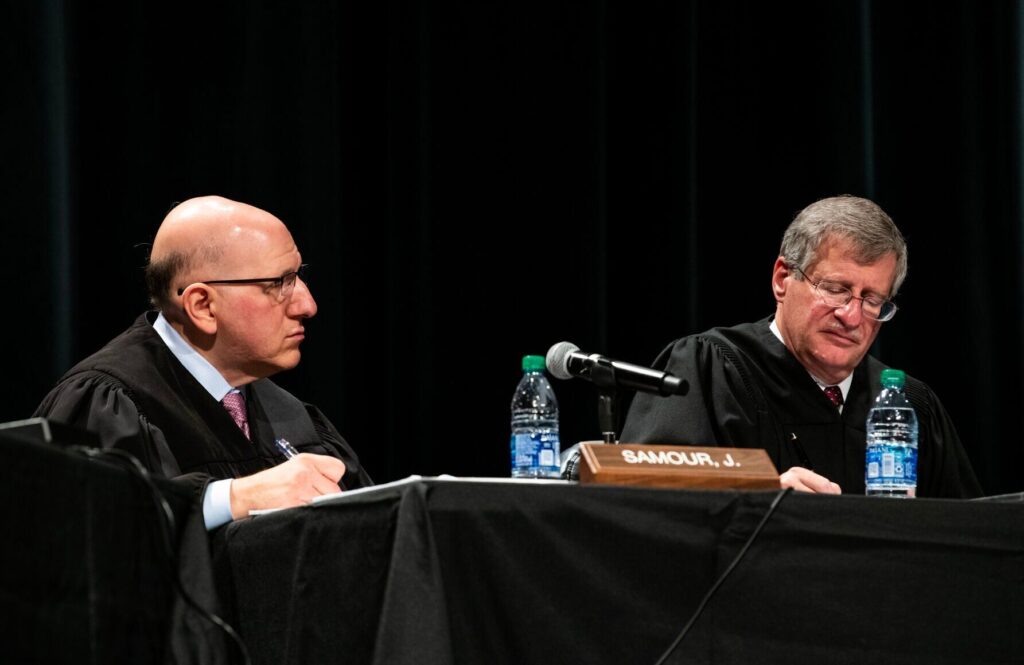
Colorado justices concerned about retrying defendant after jury signaled acquittal
Michael Karlik
michael.karlik@coloradopolitics.com
Updated 3 days ago
Some members of the Colorado Supreme Court appeared uncomfortable on Tuesday with allowing a criminal defendant to stand trial a second time after a Larimer County jury signaled it was deadlocked on some counts but had found him not guilty...
Missy Woods pleads not guilty; trial set for fall
Jenny Deam
jenny-deam@coloradopolitics.com
Updated 3 days ago
The former Colorado Bureau of Investigation DNA expert charged with more than 100 felonies entered a plea of not guilty to all of them Wednesday in a packed Jefferson County courtroom. The plea was entered by her defense attorney Tom...
Colorado justices question process for parole board appeals
Michael Karlik
michael.karlik@coloradopolitics.com
Updated 2 days ago
The Colorado Supreme Court considered on Tuesday whether criminal defendants whose parole is revoked must appeal the decision internally to the state’s parole board before seeking review by a judge. The process for returning someone to incarceration for violating the...
PREV
PREVIOUS
Denver school board to consider lawsuit against Instagram, Facebook, TikTok, Snapchat, YouTube
Denver’s educations officials are weighing joining a national class action lawsuit against social media companies, claiming their platforms have hurt students’ mental health and caused adverse effects on schools. The Denver Public Schools board is set to consider a contract for legal services with attorneys involved in the lawsuit – among them Beasley, Allen, Crow, Methvin, […]

Doug Lamborn appointed to conference committee tasked with reconciling defense policy bill
U.S. Rep. Doug Lamborn has again been named to sit on the conference committee that will work out differences between the House and Senate versions of the 2024 National Defense Authorization Act. A 16-year member of the House Armed Services Committee, the Colorado Springs Republican was appointed on Tuesday by House Speaker Kevin McCarthy to […]